A forest stewardship fragrance is a forest-inspired home scent, whether a candle, reed diffuser, or room spray, blended to evoke wood, resin, pine, moss, and needle notes using clean, vegan, phthalate-free ingredients. The phrase “forest stewardship” in this context signals a commitment to responsible sourcing and ingredient transparency, not a regulatory certification. If you want to try one right now, Wickandglow’s hand-poured soy candles and diffusers are a strong starting point. The sections below cover scent anatomy, the science behind why these fragrances feel restorative, a practical shopping checklist, safety considerations, and what to expect from Wickandglow’s products.
Key Takeaways
Forest stewardship fragrance means a forest-inspired home scent, candle, diffuser, or spray, made with clean, vegan, phthalate-free ingredients and sourced with transparency about where those forest-derived materials come from.
| Point |
Details |
| What the term means |
A forest-inspired home scent (candle, diffuser, spray) made with clean, vegan, phthalate-free ingredients. |
| Top shopping signals |
Look for named ingredients, phthalate-free and vegan claims, a stated wax type, and specific sourcing language. |
| Safety and pets |
Ventilate during use; keep cats and birds away from active diffusion; consult a vet for pets with respiratory issues. |
| Sample first |
Start with a small-format candle or travel spray and test for 30 minutes before committing to a full size. |
| Wickandglow |
Hand-poured soy candles, reed diffusers, and sprays with curated R&B playlists; phthalate-free and vegan formulations. |
Table of Contents
What gives a forest fragrance its character?
The forest character in a home scent comes from a layered combination of wood, resin, pine and needle, balsam, moss, and green aromatic notes, brightened by citrusy top notes. Understanding how these are built helps you read a product label with confidence.
Typical notes in a forest accord:
- Pine, Douglas fir, spruce, and fir needle (sharp, green, resinous)
- Cedar and hinoki (warm, dry, slightly sweet wood)
- Balsam and resin (rich, deep, slightly sticky-sweet)
- Vetiver and oakmoss (earthy, grounding base)
- Green leaves and mushroom/earth (wet forest floor)
- Limonene-forward citrus (bergamot, lemon) to lift and brighten
These notes map to specific aromatic compounds you may see on an INCI list. Here is a quick reference:
| Scent note |
Dominant compound |
Character |
| Pine needle |
α-pinene |
Sharp, green, resinous |
| Citrus top note |
Limonene |
Bright, clean, slightly sweet |
| Cedar / hinoki |
Cedrol |
Warm, dry, woody |
| Balsam / resin |
β-caryophyllene |
Spicy, deep, earthy |
Essential oil vs. fragrance oil vs. blended accord: A single-source essential oil (like steam-distilled Scots pine) delivers one plant’s full terpene profile. A fragrance oil or parfum uses synthetic or blended aroma molecules to recreate or enhance that profile, often with better consistency and longer throw. A designer accord layers both approaches to mimic the complexity of a real forest walk. None of these is automatically better; what matters is whether the formula is phthalate-free, vegan, and transparently labeled. For a deeper look at how fragrance notes work in candles, Wickandglow’s scent guide breaks down top, middle, and base note structure in plain language.
Why do forest scents feel so restorative?
Forest notes can feel restorative for two overlapping reasons: the chemistry of tree-derived volatile compounds and the emotional weight of personal memory.

On the chemistry side, terpenes such as α-pinene and limonene are the dominant volatiles in conifer forests. Lab studies on wood odors found that α-pinene and pine needle oil were rated as pleasant and increased self-reported feelings of happiness and contentment during short exposures, even when physiological measures showed mixed results. A separate study of Douglas fir and Hinoki essential oils found variable, small effects on mood and cognition across two controlled trials with a combined sample of 102 participants. The effects were real but modest, and the research is still developing.
The cultural layer matters just as much. Pine scent carries centuries of association with therapeutic spaces, from 19th-century sanatoria to mid-century domestic cleaning products, which helps explain why it reads as “healthy” and familiar to so many people. Olfactory memory is also deeply personal: when an odor is first encountered during a positive emotional event, it tends to carry that emotional charge forward. That is why the same cedar note can feel grounding to one person and neutral to another.
Practical takeaway:
- Choose a forest scent that matches a specific memory where you felt safe or restored, whether a childhood camping trip, a mountain hike, or a rainy afternoon in a pine grove. The emotional impact of forest scents is driven as much by association as by chemistry.
Woodsy notes feel grounding indoors partly because they create a sensory contrast with built environments, signaling nature and open space to a brain that spends most of its time surrounded by synthetic materials.
How to choose the right forest fragrance for your home
Prioritize ingredient transparency and memory fit over marketing buzzwords. Here is a practical checklist:
-
Confirm clean labeling. Look for “phthalate-free,” “vegan fragrance,” and a named wax type (soy, coconut, or another plant-based wax). Avoid products that list only “fragrance” with no further detail.
-
Read the ingredient list. Check for essential oils or aroma chemicals you prefer or want to avoid, especially if you have sensitivities to limonene or certain terpenes.
-
Choose the right format. Candles work well for focused rooms and evening rituals. Reed diffusers provide continuous, lower-intensity scent for living spaces. Room sprays give instant control and work well in small or transitional spaces.
-
Consider throw and burn time. A strong-throw candle in a small bedroom can feel overwhelming. Match the product’s suggested room size to your actual space, and follow the manufacturer’s recommended burn time to avoid scent fatigue.
-
Start with a sample or smaller size. Most artisanal brands offer travel sizes or sample kits. Burn or diffuse for 30 minutes, then leave the room and return. Fresh perception tells you more than a continuous exposure.
Pro Tip: Before testing multiple forest scents back to back, reset your nose with a few slow breaths of fresh air or unscented coffee grounds between samples. This prevents olfactory fatigue from flattening the differences between a cedar-forward accord and a pine-forward one.
For layering forest scents across formats, Wickandglow’s guide on mixing diffuser and candle scents covers how to build depth without competing notes.
Safety, allergies, and pets: what to watch for
Most forest fragrances are safe when used responsibly, but a few specific considerations apply to this scent family.
| Concern |
What to watch |
What to do |
| Terpene sensitivity |
α-pinene and limonene can irritate skin or airways in some people |
Ventilate the room; start with short burn/diffuse sessions |
| Pet respiratory health |
Cats and birds are especially sensitive to airborne volatiles |
Keep pets out of the room during active diffusion; use sprays sparingly |
| Botanical sensitizers |
Some moss, resin, or oakmoss extracts are known allergens |
Check IFRA compliance on the product label |
| Candle burn safety |
Soy candles still produce heat and some particulates |
Follow the 4-hour maximum burn guideline and trim wicks to 1/4 inch |
For any medical concern, consult a healthcare professional. For pets with existing respiratory conditions, check with your veterinarian before introducing any new home fragrance.
What to expect from Wickandglow’s forest stewardship fragrances
Wickandglow’s products are hand-poured in small batches using soy wax, vegan fragrance formulations, and phthalate-free ingredients. Every product page lists ingredient and format details so you know exactly what you are burning or diffusing.
What the product lineup covers:
-
Soy wax candles with cotton wicks, available in multiple sizes; hand-poured for consistent scent throw
-
Reed diffusers with clean base formulations for continuous, lower-intensity room scenting
-
Room sprays for instant, controllable scent in any space
- Ingredient signals to trust: “phthalate-free,” “vegan fragrance,” full ingredient disclosure on product pages
-
Plant-based ingredient candles are a core part of the brand’s formulation philosophy
The brand differentiator that sets Wickandglow apart from standard artisanal candle makers is the pairing of each scent with a curated R&B playlist. A forest-inspired candle is not just a scent; it arrives with a sonic mood to match. That combination of olfactory and auditory cues creates a more complete sensory environment than scent alone.
How “forest stewardship” connects to fragrance production and branding
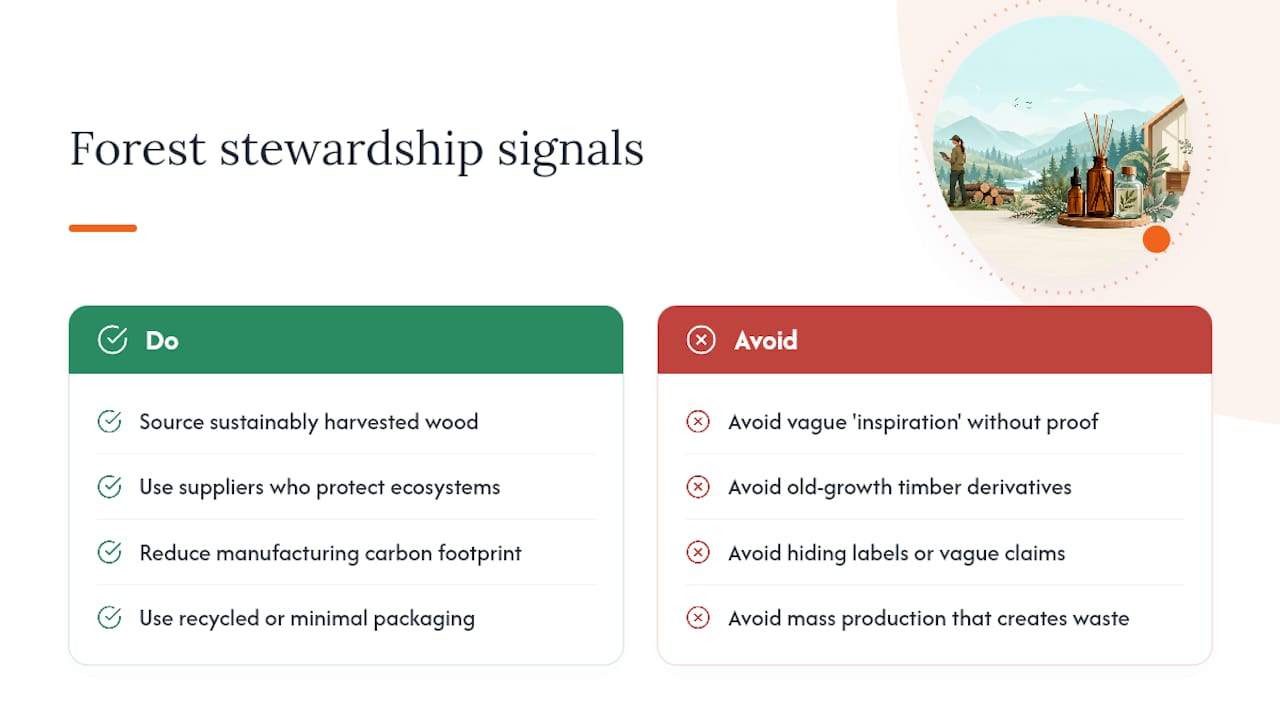
In fragrance branding, “forest stewardship” signals that a brand takes the sourcing and environmental impact of its forest-derived ingredients seriously. This covers decisions like using sustainably harvested cedarwood rather than old-growth timber derivatives, choosing suppliers who replant or protect the ecosystems they draw from, and formulating with ingredients that have a lower environmental footprint.
For shoppers, the practical meaning is straightforward: a brand using “forest stewardship” language should be able to point to specific sourcing commitments, not just aesthetic inspiration. Sustainable fragrance production involves choosing responsibly sourced raw materials and reducing the carbon footprint of the manufacturing process. The concept also extends to packaging, with recycled or minimal packaging being a common signal of genuine commitment.
Wickandglow’s approach to sustainably sourced fragrance reflects this philosophy: clean ingredients, transparent labeling, and small-batch production that avoids the waste typical of mass manufacturing.
How to tell an authentic forest stewardship fragrance from a generic one
Generic forest-inspired scents often rely on a single synthetic pine or cedar note layered over a standard fragrance base. Authentic forest stewardship fragrances are more specific and more transparent. Here is what separates them:
-
Named ingredients, not just “fragrance.” An authentic product lists specific essential oils (Scots pine, Virginian cedarwood) or named aroma molecules, not a catch-all “parfum.”
-
Sourcing language that is specific. “Sustainably harvested cedarwood from Virginia” is verifiable. “Inspired by nature” is not.
-
Phthalate-free and vegan claims with documentation. Any brand making these claims should be able to back them with supplier certifications or third-party testing, not just label copy.
-
Scent complexity. A real forest accord has top, middle, and base notes that evolve over time. A generic pine spray smells the same from first spray to last.
-
Ethical fragrance practices, as outlined in consumer guides on choosing mindful scents, include transparency about both ingredients and sourcing chains.
If a brand cannot answer basic questions about where its cedarwood or pine oil comes from, the “forest stewardship” label is aesthetic, not substantive.
The craft behind Wickandglow’s forest-inspired scents
At Wickandglow, the intention behind every scent is to create a full sensory moment, not just a pleasant smell. Each fragrance is developed with a specific emotional story in mind, whether that is the grounding feeling of a pine forest at dusk or the clean, cool air of a cedar grove after rain. That story is then paired with a curated R&B playlist, because music-inspired candle collections work on the same emotional memory pathways as scent. The result is a home fragrance experience that is genuinely layered.
Small-batch, hand-poured production means every candle gets individual attention during the pour, which affects scent distribution and burn consistency in ways that factory production cannot replicate. The brand’s blog covers sustainable sourcing, ingredient transparency, and intentional home fragrance in depth, because the belief is that a shopper who understands what they are buying will make a better choice and get more from the product.
Wickandglow forest scents: where to start
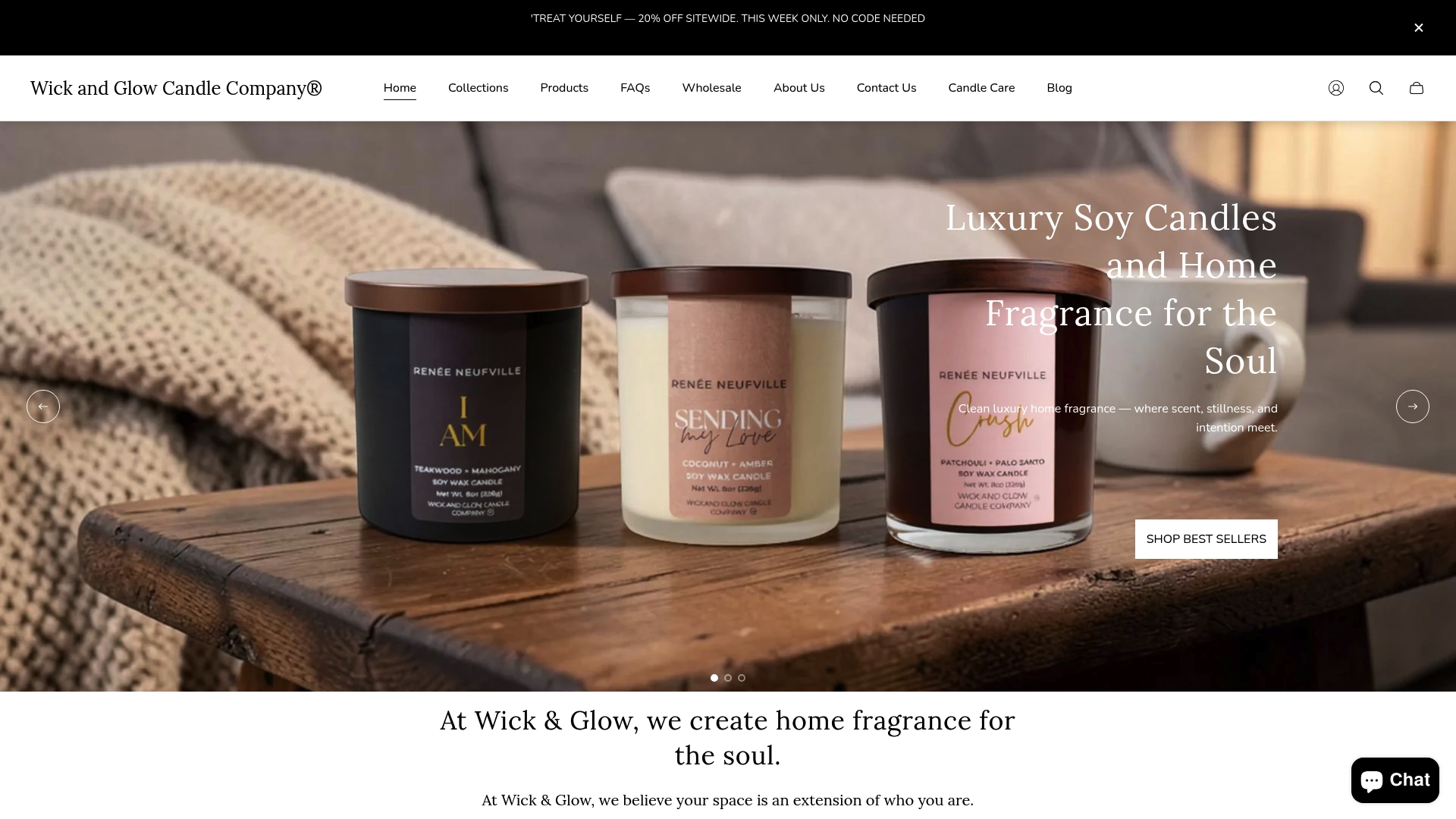
The lowest-friction way to start is a small-format candle or a room spray sized for the room you want to scent. Commit to one format first, live with it for a week, and then layer.
Starter format suggestions:
-
Bedside: A small soy candle with a pine or cedar-forward accord; burn for 60–90 minutes before sleep
-
Living room: A reed diffuser for continuous, low-intensity forest scenting without active monitoring
-
Car or closet: A travel spray for instant, controllable scent in a confined space
Wickandglow’s Men Love Candles Too collection is a strong entry point for wood-forward and forest-adjacent scents. For a multi-scent sampler experience, the R&B Mixtape: Self-Care Edition candle set lets you test several moods before committing to a full-size purchase. Check the product pages for current availability and return policy details before ordering.
Sources
The studies cited in this article are small-sample, controlled lab investigations. They support a plausible restorative effect from forest-derived terpenes and wood odors, but results are mixed and should not be read as medical claims.
Recommended


