Light citrus, green/herbaceous, and fresh ozonic notes are the scents that make rooms feel larger. They work because their high volatility and bright, clean character trigger associations with open air and wide spaces. Start here:
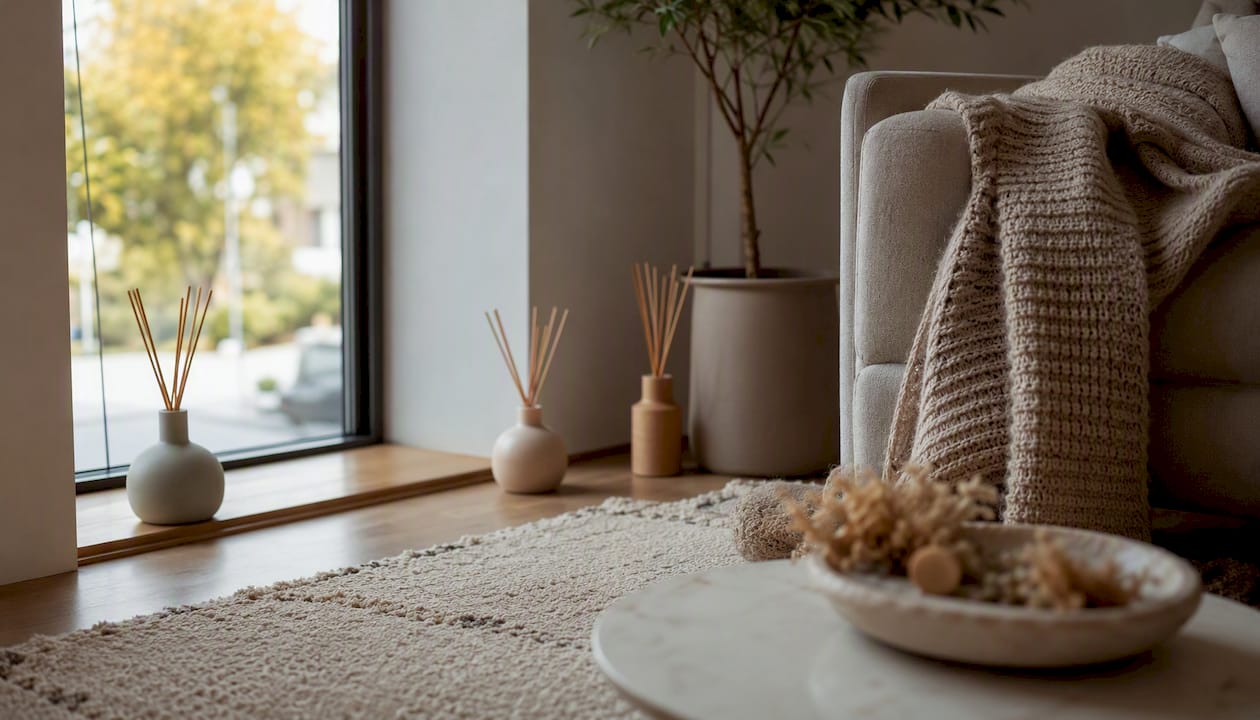
- Drop a citrus or linen reed diffuser near your front entrance
- Run an electric diffuser on its lowest setting in the living room with a bergamot or green tea blend
- Mist a fresh-linen room spray into the center of a room before guests arrive
If you pick just one thing to do today, place a citrus or ozonic reed diffuser near your main entrance. That first breath sets the entire tone of the space.
Key Takeaways
Light, volatile scent families like citrus, ozonic, and fresh linen reliably make rooms feel larger when used at low intensity with multiple distributed scent points.
| Point |
Details |
| Choose the right scent family |
Citrus, ozonic, green/herbaceous, and light aquatic notes expand perceived space; heavy oud, amber, and thick musk compress it. |
| Use multiple low-output points |
Two diffusers on low beats one diffuser on high in open-plan rooms; distribute sources across the room’s footprint. |
| Start lower than you think |
Begin with 4–5 reed sticks or the lowest diffuser setting, then adjust upward slowly over a week. |
| Rotate and refresh weekly |
Flip reed sticks every 1–2 weeks and rotate scents regularly to prevent nose fatigue and maintain perceived freshness. |
| Wickandglow formats |
Reed diffusers, room sprays, and soy candles from Wickandglow map directly to the delivery formats recommended for each room in this guide. |
Table of Contents
Why does scent change how big a room feels?
Fragrance character directly shapes spatial perception. Scent can signal openness or compression depending on its weight, concentration, and the memories it triggers. A light, volatile note disperses quickly and evenly, which the brain reads as “open.” A dense, resinous note lingers in layers and reads as “enclosed.”
The mechanism is largely associative. Citrus and fresh-linen scents carry memories of outdoor air, clean laundry on a line, or a breezy morning. Those memories are spatially generous. Heavy oud or thick amber, by contrast, evoke warmth and enclosure, which is exactly what you want in a cozy den but the opposite of what you want in a room you’re trying to open up.
Understanding how fragrance affects home atmosphere and mood helps you use it deliberately rather than accidentally. Two contrasts worth keeping in mind:
-
Notes that compress: heavy oud, dense amber, thick musk, warm gourmand (vanilla-heavy), and smoky incense
-
Notes that expand: bergamot, lemon, grapefruit, green tea, ozonic accord, fresh linen, light eucalyptus, and sea-air aquatics
One more thing to watch: scent fatigue. When you stop noticing a fragrance, your brain has adapted to it, but guests still register it at full intensity. Overscenting a room doesn’t make it smell better; it makes it feel smaller and slightly oppressive.
Which scent families make rooms feel larger?
Aromatherapy practitioners recommend light, uplifting notes like citrus, mint, and aquatic accords for creating perceived openness. Here’s how each family works and what to look for on a product label:
Citrus. Lemon, grapefruit, bergamot, and yuzu are the workhorses. They’re highly volatile, meaning they disperse fast and wide, and they carry an almost universal association with clean, open air. Look for: bergamot, lemon zest, grapefruit, yuzu, orange blossom.

Green and herbaceous. Notes like green tea, basil, cut grass, and vetiver (used lightly) read as outdoorsy and fresh. They add a natural brightness without the sharp sweetness of citrus. Look for: green tea, basil, fig leaf, tomato leaf, fresh herbs.
Ozonic and fresh linen. These are synthetic accords designed to mimic sea breeze, clean cotton, or rain-washed air. They’re among the most effective aromas that expand rooms because they have almost no base-note density. Look for: ozonic accord, sea breeze, clean cotton, fresh linen, white musk (light).
Light aquatic. Sea salt, driftwood (used sparingly), and water lily create a sense of horizontal distance, the olfactory equivalent of a view. Look for: sea salt, water lily, marine accord, cucumber.
Mild florals with airy top notes. Not all florals open a space. Peony, white tea, and light jasmine work. Heavy rose or gardenia can tip into density. Look for: peony, white tea, light jasmine, freesia.
Avoid these in rooms you want to feel larger:
- Heavy oud or dark woods used as the dominant note
- Dense amber or resinous base-heavy blends
- Thick musk or powdery gourmand (heavy vanilla, caramel)
- Smoky or incense-forward profiles
Citrus notes are specifically noted as energizing and space-expanding, while lavender and sandalwood lean toward relaxation and enclosure, making them better suited to bedrooms than communal spaces.
How do you scent a large room effectively?
The biggest mistake in large rooms is using one powerful source. A single high-output diffuser in the center of an open-plan space creates a dense scent pocket rather than an even, airy presence. Multiple low-output scent points distribute fragrance more evenly and keep the room feeling breathable.
Format guidance by room size:
-
Under 200 sq ft: one reed diffuser (6–8 sticks) or a small electric diffuser on low
-
200–400 sq ft: one large-capacity reed diffuser plus a timed room spray, or two small electric diffusers set to low
-
400+ sq ft / open-plan: two electric diffusers placed at opposite ends on low output, or one diffuser plus two reed diffusers near natural airflow paths (doorways, windows)
Placement rules:
- Place near entrances and airflow paths so scent travels naturally through the room
- Keep diffusers away from direct heat sources (radiators, sunny windowsills), which burn off fragrance too fast and distort the scent profile
- In rooms with high ceilings, position at least one scent point at a lower level so the fragrance doesn’t just rise and disappear
Pro Tip: Layer a subtle background diffuser with an occasional room spray. The diffuser handles the baseline; the spray gives you a quick refresh before guests arrive or when the room needs a reset. This approach, covered in detail in mixing diffuser and candle scents, keeps breadth without tipping into overwhelm.
For a simple placement concept: imagine two diagonal corners of your room as the primary scent points, with a third near the main entrance. That triangle distributes fragrance across the full footprint without stacking intensity in one spot.
How do you control intensity so the room stays airy?
Start lower than you think you need to. A room that smells faintly of citrus reads as clean and open. A room that smells strongly of anything reads as small. The goal is a fragrance you notice when you walk in and stop noticing after a few minutes.
Format-specific dosage:
-
Reed diffusers: begin with 4–5 sticks in a 6-oz vessel for a medium room; add sticks one at a time over a week until you hit the right level
-
Electric diffusers: start at the lowest output setting and run in 30-minute intervals rather than continuously
-
Room sprays: two short bursts into the center of the room, not directly onto fabrics or near vents
-
Candles: match candle diameter to room size; a 3-inch candle suits a bedroom, a 4-inch suits a living room
Longevity tactics. Refresh reed diffusers every 1–2 weeks by flipping the sticks. Rotate your primary scent regularly to prevent nose fatigue. Lightly misting curtains or a fabric throw with a room spray extends perceived freshness between diffuser refills. For more on building this into a routine, making your home smell consistently good comes down to small, regular habits rather than one big effort.
Pro Tip: Leave one adjacent room completely unscented. The contrast makes the scented space feel more intentional and, paradoxically, more open. Rotate which room gets the fragrance weekly so your nose stays calibrated.
Quick checklist before you commit to a scent:
- Does the room smell neutral after 10 minutes of ventilation?
- Is the diffuser on its lowest setting?
- Can you still smell it faintly from the doorway after 20 minutes?
- Does the scent feel lighter or heavier than the room’s visual tone?
What scent works best in each room?
Room-specific scent selection matters because each space has a different function, dwell time, and competing odor environment. Here’s a quick reference:
| Room |
Scent family |
Best format |
Intensity tip |
| Living room |
Citrus or warm bright floral |
Low-output diffuser or large reed |
Keep it comfortable for long stays; aim for “barely there” |
| Kitchen |
Herbaceous or citrus |
Timed spray or small diffuser away from stove |
Avoid anything that clashes with cooking; refresh after meals |
| Bedroom |
Subtle linen or light lavender |
Low-output diffuser or bedside reed |
Run diffuser 30 min before sleep; switch off overnight |
| Bathroom |
Fresh/ozonic or eucalyptus |
Small reed or quick spray |
Ventilate after showering; pair with an airy visual palette |
| Hallway/entrance |
Citrus or fresh linen |
Reed diffuser near the door |
One reed diffuser is enough; this is a first-impression space |
The bathroom deserves a specific note. Pairing soft florals and fresh scent families with an airy visual palette amplifies the sense of cleanliness and space. A small ozonic or eucalyptus reed in a bathroom with light-colored walls reads as spa-like rather than cramped. For a nautical or coastal bathroom, aquatic-themed design elements pair naturally with sea-salt or marine-accord fragrances to reinforce that open, breezy feeling.
The kitchen is the trickiest room. Cooking smells are strong and variable, so a competing fragrance can create an unpleasant clash. Herbaceous notes like basil or rosemary actually complement most cooking aromas rather than fighting them. Place a small diffuser on a shelf away from the stove, and use a timer so it runs only when the kitchen is idle.
What do experts and perfumers say about this?
Experts converge on one principle: light, volatile top notes and fresh accords create airiness; heavy base notes do the opposite. P&G researchers and leading perfumers found that consumers consistently prefer lavender and fresh-linen notes for bedrooms and citrus and fresh-air notes for communal living spaces, a preference strong enough to guide product development at a major consumer goods company.
That framing, drawn from design coverage of scentscaping, is the key shift. Fragrance is an architectural element. You’re not just making a room smell good; you’re shaping how it feels to move through it.
Three expert-backed scent pairings worth testing immediately:
-
Bergamot + green tea: citrus brightness anchored by a grassy, slightly vegetal note; works in living rooms and home offices
-
Fresh linen + light peony: ozonic softness with a barely-there floral lift; ideal for bedrooms and hallways
-
Eucalyptus + sea salt: clean, aquatic, and slightly medicinal in the best way; perfect for bathrooms and small entryways
The role of fragrance in interior design is increasingly treated with the same seriousness as lighting or color, and for good reason. Scent reaches the brain faster than any other sensory input and bypasses the analytical filter that visual design has to pass through.
How do you test a scent in your room before buying full size?
A 24–48 hour home test tells you far more than a sniff at a store counter.
-
Get a sample or small format. A travel-size spray, a single-wick votive, or a sample reed diffuser with 2–3 sticks is enough. Avoid testing multiple new scents simultaneously.
-
Place it at the room’s entrance. The entry point is where first impressions form. Set the diffuser or light the candle there, on its lowest effective setting.
-
Ventilate normally for the first hour. Don’t seal the room. Let the scent behave the way it will on a typical day, with doors occasionally opening and normal airflow.
-
Live with it for 24–48 hours before judging. Your nose adapts within minutes, so your first reaction isn’t reliable. Check in after a night’s sleep. Does the room feel lighter or heavier? Do you notice any headaches or irritation?
-
Observe three things: perceived openness when you re-enter after being away, mood on entering, and any physical sensitivity signals.
Seasonal note: in winter, when windows stay closed, reduce diffuser output by about a third compared to summer settings. Fabrics absorb more fragrance in dry, heated air, so textiles will hold scent longer and the room will read as more intensely scented than the same diffuser setting in summer.
The part most people skip
Most fragrance guides tell you to pick the right scent. Fewer tell you that how little you use matters more than which scent you choose. A room that smells faintly of bergamot feels open and considered. The same room saturated with bergamot feels like a spa that has forgotten to turn off the diffuser.
The intentional home fragrance approach treats restraint as the skill. I keep a citrus-forward blend running at low output in the main living area and rotate to a fresh-linen note in the hallway every week or so. The bedroom gets a subtle lavender reed only on nights when I want to wind down; otherwise it stays unscented. That contrast is what makes the scented spaces feel deliberate rather than just “smelly.”
Start small. Pick one room, one format, one scent family from the citrus or ozonic column. Run it for a week at the lowest effective setting. Track whether the room feels different when you walk back into it after being outside. That single observation will tell you more than any guide can.
And always prioritize ventilation. No fragrance, however well chosen, improves a stuffy room. Open a window for 10 minutes before you start diffusing, and the scent will carry further on less product.
The formats that work best for creating an airy, spacious feel are exactly what Wickandglow offers: long-lasting reed diffusers for entrances and hallways, room sprays for quick refreshes, and hand-poured soy candles for living rooms and bedrooms. Every product is made with clean, phthalate-free ingredients, so you get the scent effect without the chemical load that can make a room feel heavy.
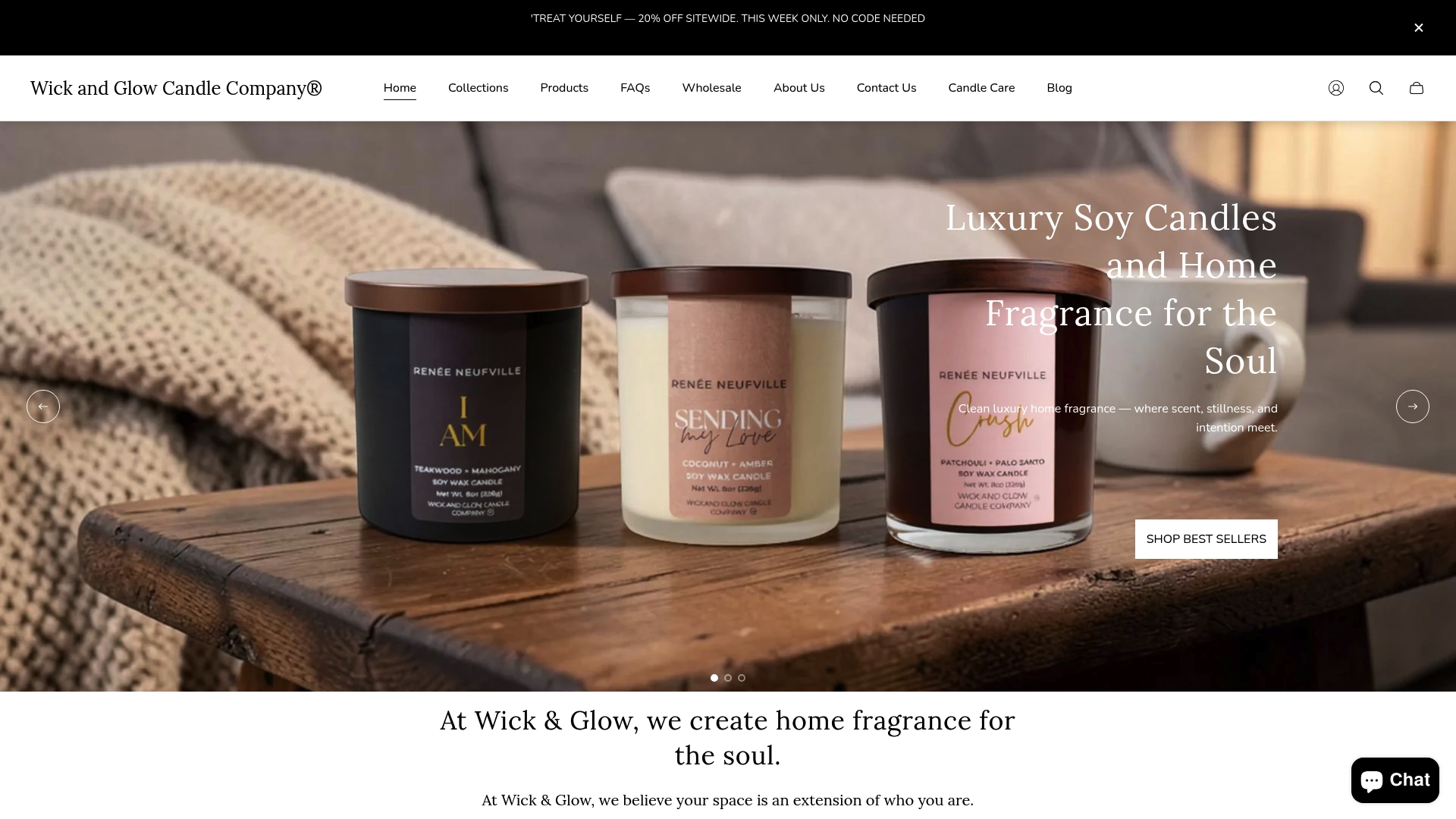
If you’re not sure where to start, the Scenting My Love Trio lets you test three distinct fragrance profiles before committing to a full-size format. It’s the practical equivalent of the 24–48 hour home test described above, already curated for you. Each Wickandglow fragrance also comes paired with a playlist, so the sensory experience extends beyond the nose. Browse the full collection at Wick and Glow Candle Company and find the format that fits your space.
Sources
Recommended


