A sustainably sourced fragrance is one where every stage of its life — from where the raw ingredients grow to how you dispose of the container — has been evaluated for environmental, social, and ethical impact. No single U.S. law defines the phrase, which means the burden of proof falls on brands to show their work. Here is what that looks like in practice:
-
Ingredients and provenance: Where botanicals and other raw materials are grown, harvested, and extracted
-
Social and ethical sourcing: Whether farmers and workers receive fair wages and work in safe conditions
-
Formulation and green chemistry: How ingredients are processed, and whether the method conserves resources and avoids harmful byproducts
-
Packaging and end-of-life: Whether vessels are refillable, recyclable, or biodegradable rather than destined for a landfill
Table of Contents
What does sustainably sourced fragrance actually cover?
Sustainability in fragrance is not a single attribute. It is a chain of decisions, and a weak link anywhere undermines the whole.
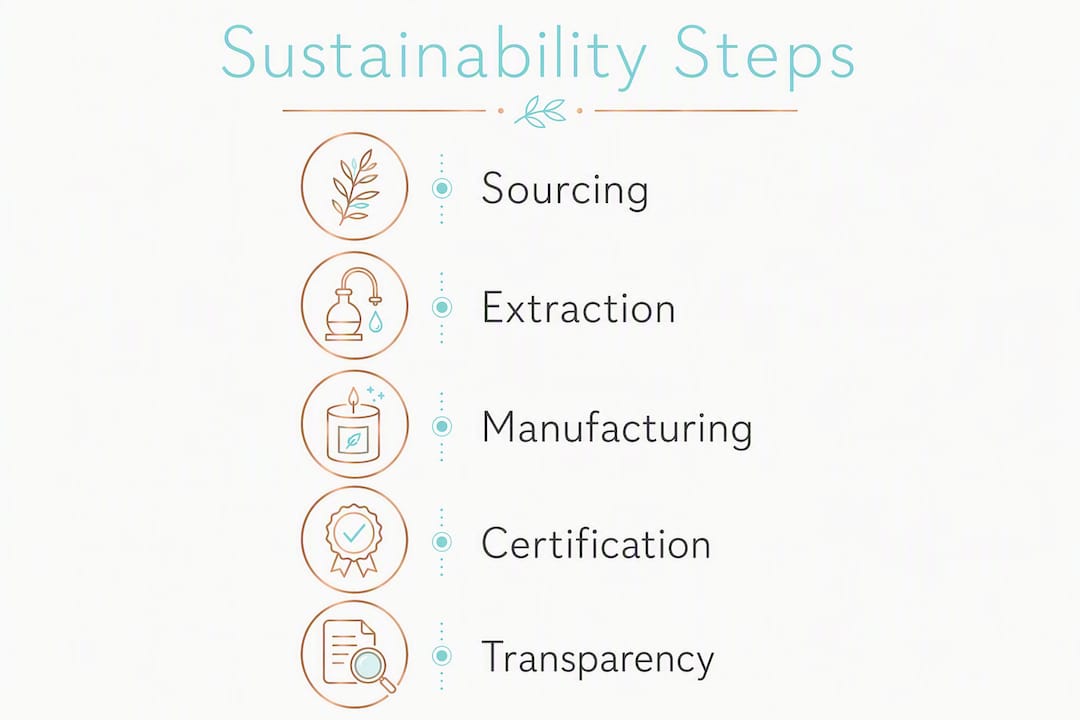
Sourcing (farm to ingredient): The story starts at the source. Sandalwood, rose absolute, and vanilla are among the most resource-intensive botanicals in perfumery. Responsible sourcing means knowing whether those crops were grown on land that displaced native ecosystems, whether water use was managed, and whether the people harvesting them were paid fairly. Supply-chain traceability — provenance stories, QR codes linking to farm partnerships — is how brands make this visible.
Extraction and formulation: Steam distillation is relatively low-impact. Solvent extraction is not. Green chemistry asks whether a brand chose the least resource-heavy path to get from plant to finished scent. Upcycling and biotech are opening new routes: some manufacturers now derive fragrance compounds from food-industry byproducts or use fermentation instead of harvesting scarce botanicals at all.

Manufacturing: Energy sources, water recycling, and waste management at the production facility all count. A beautifully sourced ingredient processed in a high-emission factory is still a problem.
Packaging and circularity: Refillable vessels cut packaging waste more reliably than recyclable ones, because recycling rates for glass and mixed materials vary widely across U.S. municipalities. A brand that sells refills is making a structural commitment; one that prints “recyclable” on a single-use jar is not.
One point worth stating plainly: “natural” does not automatically mean sustainable. Overharvested wild botanicals, energy-intensive CO₂ extraction, and long-haul shipping can give a “100% natural” fragrance a larger footprint than a thoughtfully made synthetic or blended alternative.
Sustainable fragrance is a holistic concept that must integrate ecological health, social equity, and long-term well-being across the product lifecycle — it goes well beyond ‘natural’ or ‘organic’ labels, and no single U.S. regulation currently defines it.
How to verify claims when you shop
Most brands will use the word “sustainable” somewhere on their site. The question is whether anything backs it up.
-
Full ingredient or INCI list: If a brand won’t publish every ingredient, that’s a reason to pause. The fragrance industry’s “fragrance loophole” allows undisclosed synthetics under a single “fragrance” listing — complete transparency closes it.
-
Provenance or origin statements: Look for named sourcing regions, farm partnerships, or supplier stories for key botanicals — not just “sustainably sourced ingredients” as a standalone claim.
-
Third-party certifications: Seals from recognized bodies carry more weight than self-issued badges. See the table below.
-
Refill or reuse options: Refillable formats are one of the most effective ways to cut packaging waste from home fragrance products.
-
Green chemistry or biodegradability statements: Useful, but read carefully. IFRA guidance notes that biodegradability testing for formulated fragrance mixtures is technically complex, so claims need context.
| Certification |
What it verifies |
Key limit |
| COSMOS / Ecocert |
Natural and organic ingredient standards, manufacturing practices |
Does not cover full supply-chain labor conditions |
| Fairtrade / Fair for Life |
Fair wages and community benefit for farmers and workers |
Applies to specific certified ingredients, not the whole product |
| FSC (packaging) |
Responsibly managed forests for paper and wood packaging |
Covers packaging only, not fragrance ingredients |
| Leaping Bunny |
No animal testing at any stage of production |
Does not address environmental sourcing |
Pro Tip: When comparing home fragrances, prioritize longevity and refillability over “natural” buzzwords. A long-burning, clean non-toxic candle you refill twice beats three single-use “organic” jars on every sustainability measure.
Why sustainable sourcing matters for home fragrance
The case goes beyond marketing. Fragrance ingredients touch some of the world’s most biodiverse ecosystems, and the people harvesting them are often among the most economically vulnerable in global supply chains.
-
Biodiversity and land use: Crops like vetiver, patchouli, and ylang-ylang grow in tropical regions where agricultural pressure threatens native habitats. Responsible sourcing supports regenerative farming rather than monoculture expansion.
-
Fair wages and community resilience: Ethical sourcing means farmers and harvesters earn living wages, which builds the kind of long-term supplier relationships that actually align with UN Sustainable Development Goals and reduce supply-chain risk for brands.
-
Reduced carbon and waste: Circular packaging and refill systems cut both manufacturing emissions and landfill volume. Buying one well-made vessel and refilling it is structurally better than buying four cheaper ones.
-
Product quality: High-quality, responsibly sourced raw materials tend to produce more complex, longer-lasting scents. Scent longevity is itself an ethical choice — it means you consume less to get the same result.
Intentional home fragrance fits naturally here. Choosing one scent you love and live with, rather than cycling through trend-driven impulse buys, is a consumption habit that compounds over time.
Questions to ask brands and red flags to watch for
Before you buy, a few direct questions reveal a lot.
- Where does this specific ingredient come from, and can you name the supplier or region?
- Do you publish a full INCI or ingredient list for every product?
- Has your supply chain been audited by a third party? Who?
- Do you offer refills, a take-back program, or reusable packaging?
- Can you point to documented farmer or grower partnerships?
Red flags worth walking away from:
- Vague language like “eco-conscious” or “green” with no supporting detail
- A missing or incomplete ingredient list
- Self-issued sustainability badges with no named certifying body
- Heavy single-use packaging and no refill option mentioned anywhere
- Claims that “natural” automatically equals safe or sustainable
A credible brand will answer sourcing questions specifically, not defensively. Believable evidence looks like named farms, published ingredient lists, third-party audit reports, or documented refill programs — not a paragraph of mission-statement language. IFRA’s guidance on natural fragrance terminology is a useful reference for understanding what claims like “biodegradable” or “natural” can and cannot guarantee.
Pro Tip: Check whether a brand’s “about” page names specific sourcing partners or certifications. Generalities are easy to write; named relationships are harder to fake.
How Wickandglow demonstrates these principles
Wickandglow builds its products around the same checklist outlined above. Every formula is phthalate-free and vegan, with clean ingredient standards that close the fragrance loophole rather than hide behind it. The brand publishes candle-care guidance and non-toxic formulation resources so shoppers can understand exactly what they are burning in their homes.
The hand-poured, small-batch production model matters here too. Small batches mean less overproduction, tighter quality control, and a closer connection between the maker and the finished product. Collaborations with artists like Renée Neufville add a layer of creative accountability — these are not anonymous factory runs.
At Wickandglow, the commitment to clean ingredients is not a marketing layer added at the end. It is the starting point for every scent, every pour, and every product decision.
Shoppers can use the checklist in this article directly when browsing Wickandglow collections: look for the ingredient transparency, the phthalate-free and vegan claims, and the intentional sourcing philosophy that runs through every product description.
Key Takeaways
Sustainably sourced fragrance is a lifecycle commitment, not a label — and transparency, refillability, and third-party verification are the three most reliable signals a brand is doing the work.
| Point |
Details |
| No U.S. legal definition exists |
Verification depends on ingredient transparency, traceability, and third-party certifications. |
| “Natural” does not equal sustainable |
Provenance, extraction method, and packaging circularity matter as much as ingredient origin. |
| Refillable formats cut the most waste |
Refill systems reduce packaging waste more reliably than recyclable single-use vessels. |
| Certifications have limits |
Each seal covers a specific scope — check what it verifies and what it leaves out. |
| Wickandglow’s approach |
Phthalate-free, vegan, small-batch formulas with published ingredient standards and clean sourcing commitments. |
Why intentional fragrance is worth caring about
The fragrance industry has a transparency problem that most shoppers never see. Ingredient lists get buried, “natural” claims go unchallenged, and packaging recyclability gets treated as a finish line rather than a floor. What actually moves the needle is simpler: brands that publish what is in their products, source ingredients from named partners, and build refill systems into their model from the start.
Wickandglow’s music-inspired approach to home fragrance is not just an aesthetic choice. Pairing a scent with a curated playlist, hand-pouring in small batches, and formulating without phthalates reflects a philosophy that intentional home fragrance is worth making well. Buying less and buying better is the most durable sustainability habit a home fragrance shopper can build.
Wickandglow’s clean scents, ready for your space
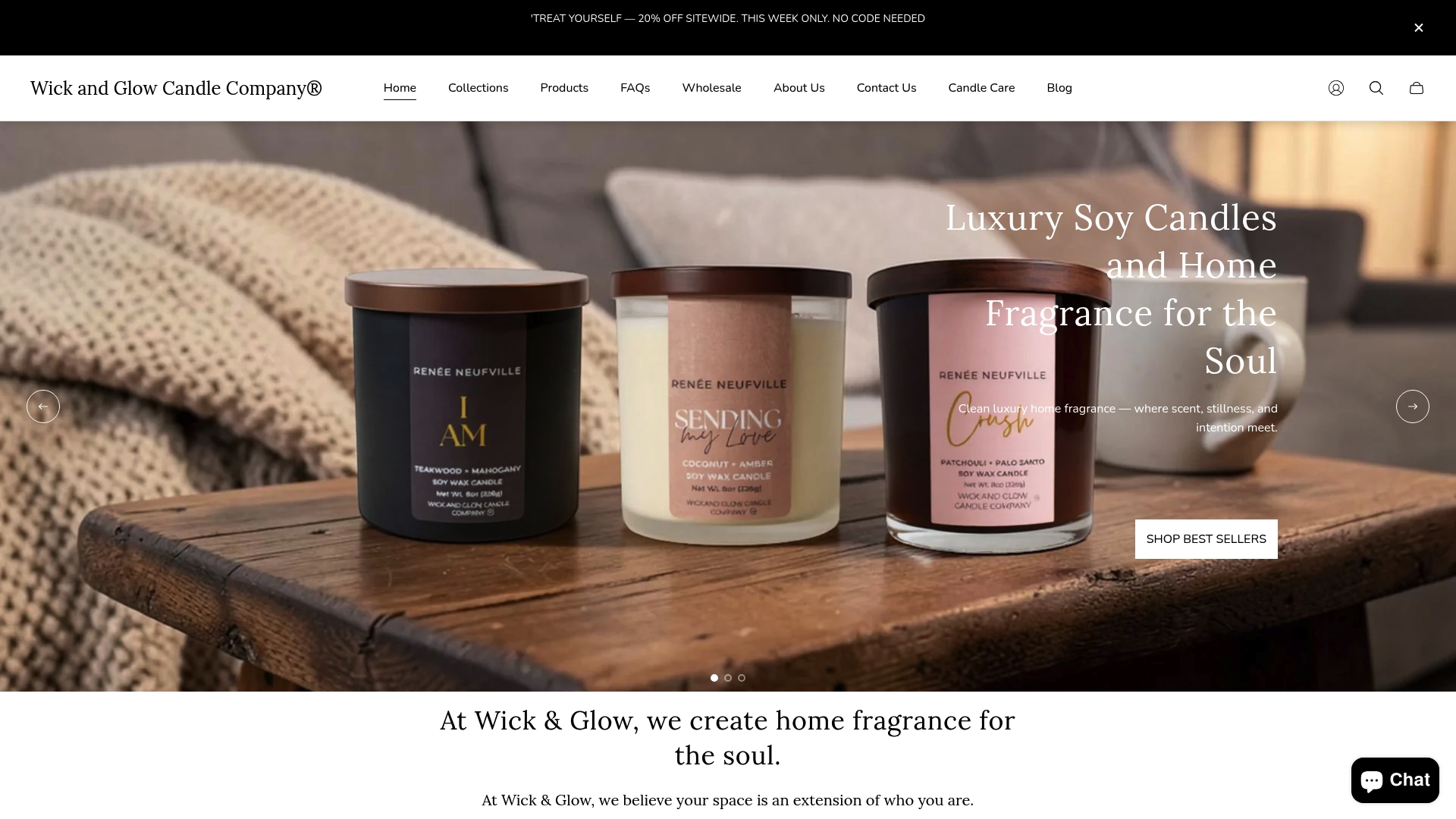
Wickandglow’s hand-poured candles, reed diffusers, and room sprays are built on the same principles this article lays out: full phthalate-free and vegan formulas, clean ingredient standards, and small-batch production that prioritizes quality over volume. Each product pairs a lasting, intentional scent with a curated R&B playlist, so the experience goes beyond what you smell.
If you want a starting point, the Come Inside luxury candle is a strong one — a 16 oz clean-burning candle that delivers the kind of longevity the checklist above recommends. Or browse the Men Love Candles Too collection for a curated range of scents built with the same standards. Every order is a direct vote for the kind of home fragrance that is worth making well.
Recommended


