Fragrance is an intentional design element that shapes mood, memory, and spatial identity. Luxury designers now treat scent with the same deliberate attention as lighting and materials, using it to create what some call a “silent signature” for a home. The four core design functions are mood modulation, wayfinding and zoning, memory anchoring, and identity building. Get those right, and scent stops being an afterthought and starts working as invisible architecture.
A few immediate actions to orient yourself:
- Pick one room and one format (a reed diffuser or a single candle) before committing to a whole-home approach.
- Write down two or three emotional keywords for that room (“calm,” “focused,” “welcoming”) before choosing a fragrance family.
- Smell the fragrance in the actual space, not at a store counter, since temperature and airflow change everything.
Pro Tip: The most effective scent designs register as “clean” or “welcoming” rather than identifiable by name. If a guest can immediately name your fragrance, it is probably too strong.
Table of Contents
1. Why scent shapes mood and memory more than you think
Smell reaches the brain’s emotional centers faster than any other sense. The olfactory nerve connects directly to the amygdala and hippocampus, the structures responsible for emotion and memory, which means a scent can trigger an emotional response before you have consciously registered what you are smelling. No other sensory input works that quickly.
Research published in peer-reviewed neuroscience literature shows that odor-evoked memories tend to be more emotionally vivid than memories triggered by sight or sound. Practically, this means the fragrance you use consistently in your home becomes encoded alongside every experience that happens there. Designers who understand this use scent to reinforce the emotional character of a space rather than leaving that association to chance.
“Fragrance can lift mood, reduce anxiety, and foster a sense of comfort and belonging when applied thoughtfully in the home. Designers use scent to support wellbeing and to help transition between work and rest.”
— Vogue, on scentscaping
The psychological effects designers leverage most include:
-
Calm: lavender, chamomile, and sandalwood lower perceived stress.
-
Energy: citrus and peppermint increase alertness and perceived productivity.
-
Focus: eucalyptus and rosemary are associated with clearer thinking.
-
Nostalgia: warm notes like vanilla and amber evoke comfort and familiarity.
-
Perceived cleanliness: light florals and fresh greens signal hygiene without chemical sharpness.
-
Luxury: resins, oud, and vetiver read as expensive and considered.
One important caveat: individual responses vary, and cultural context matters. Jasmine reads as romantic in many Western contexts but carries funerary associations in parts of Southeast Asia. Knowing your household and your guests is part of good scent design.
Fragrance can also trigger neurochemicals like serotonin and dopamine, which is why a well-chosen home fragrance can genuinely shift how a space feels to live in, not just how it smells.
2. How designers use fragrance strategically across a home
The practice has a name: scentscaping. It means assigning fragrance roles to zones the way a lighting designer assigns fixture types, with each scent serving a specific behavioral or emotional goal.
| Design Role |
Goal |
Suggested Notes |
Format |
| Welcome / entry |
First impression, warmth |
Amber, neroli, light woods |
Reed diffuser |
| Energize / work |
Alertness, focus |
Citrus, peppermint, eucalyptus |
Electric diffuser |
| Relax / sleep |
Wind-down, calm |
Sandalwood, lavender, vanilla |
Candle |
| Social / living |
Comfort, conversation |
Warm spice, soft musk, fig |
Candle or diffuser |
| Luxury / identity |
Signature, memorability |
Oud, vetiver, resins, iris |
Bespoke diffuser blend |
| Transition / zoning |
Neurological cue to shift modes |
Contrast note to adjacent room |
Room spray |
Scent can also demarcate transitions in multi-use homes. A home office that smells of eucalyptus and a bedroom that smells of sandalwood create an invisible boundary that helps the brain shift between work mode and rest mode. That is a practical tool for anyone working from home.
Real-world designers often describe choosing notes that echo the materials already in a room. A space with warm oak floors and linen upholstery calls for soft, woody, or botanical notes. A minimalist white-and-concrete kitchen reads better with a clean green or light citrus than with a heavy resin.
Pro Tip: Before choosing a fragrance, look at your dominant material palette. Warm tones (wood, brass, terracotta) harmonize with amber, vanilla, and spice. Cool tones (marble, steel, linen) pair better with aquatic, green, or floral notes.
3. Room-by-room: what to use, what to avoid, and how strong
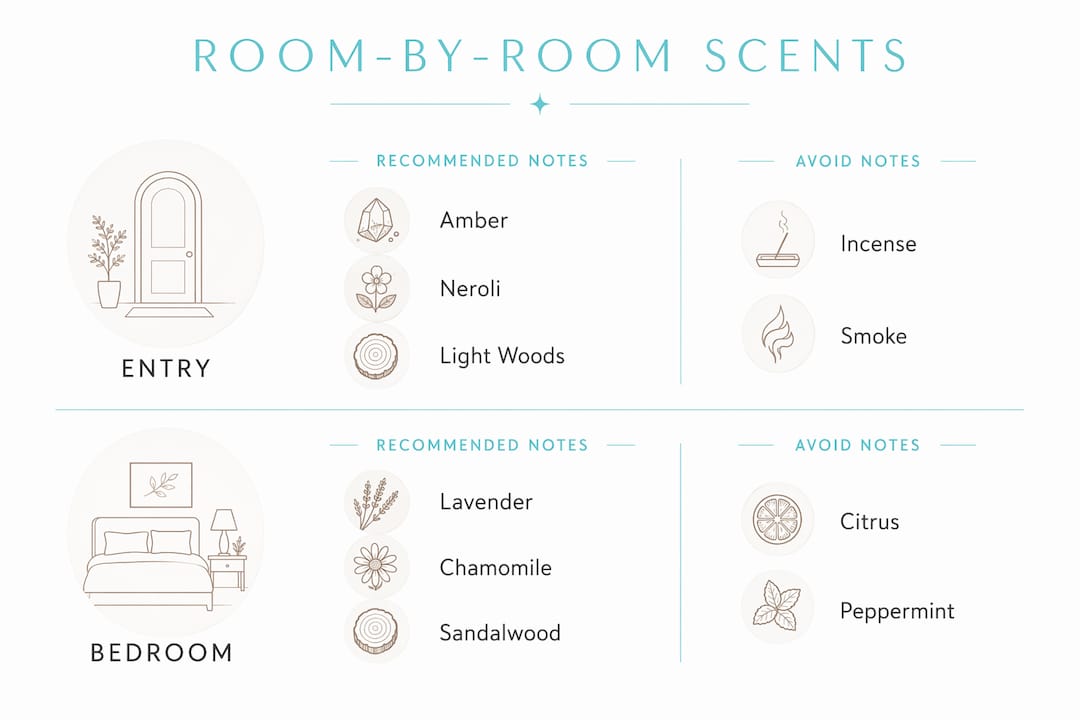
Entry
The entry sets the emotional tone for every room that follows. Warm, welcoming notes like amber, neroli, and light woods work well here. A reed diffuser is the right format: it runs continuously without supervision and never creates a fire hazard near a front door.
Avoid: heavy incense or smoke-adjacent notes. They read as overwhelming in a small, enclosed entry.
Living room
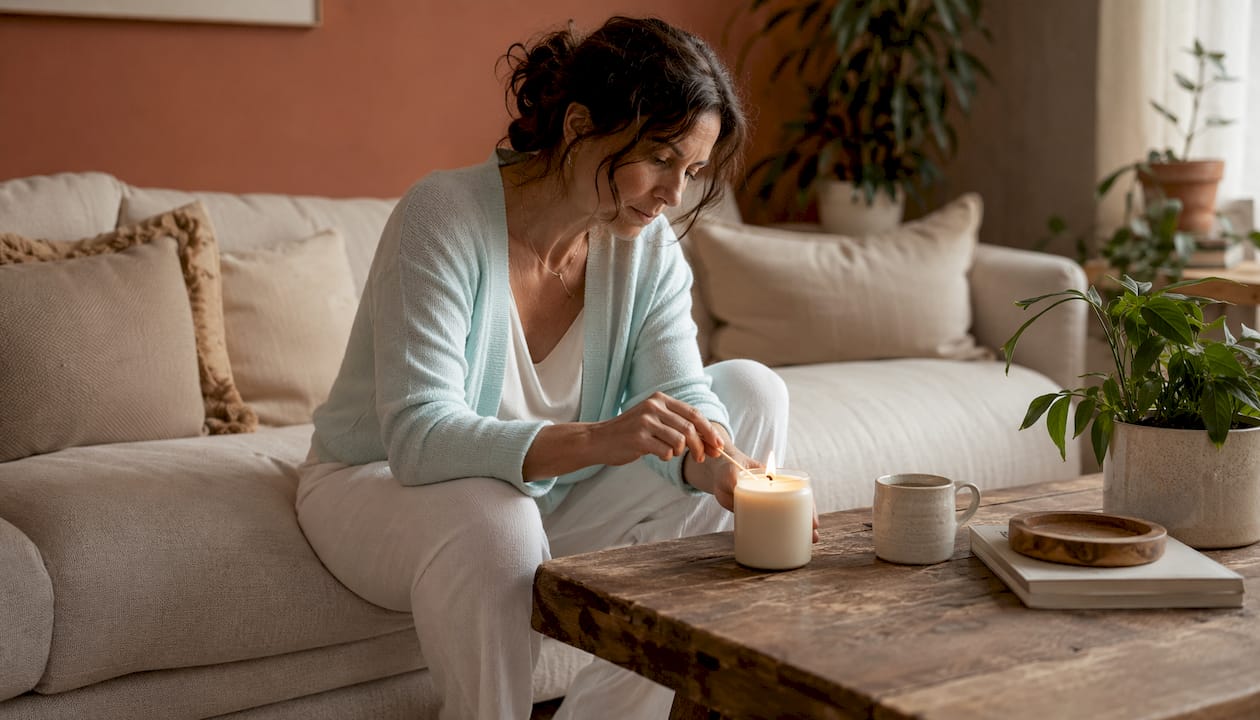
This is your highest-traffic, most socially visible space. Soft musk, fig, warm spice, or a light floral all work. Candles are ideal here because the visual element (the flame, the vessel) contributes to the overall aesthetic.
Avoid: anything too sharp or medicinal. Eucalyptus in a living room can feel clinical rather than inviting.
Kitchen
The kitchen already produces its own aromas. The goal is not to compete with cooking but to neutralize between meals. Light citrus, clean herbs like basil or thyme, or a fresh green note work without clashing.
Avoid: heavy florals or sweet gourmand notes, which can combine unpleasantly with food smells.
Bedroom
Calm and sleep-supporting notes are the priority: lavender, chamomile, sandalwood, and vanilla. Keep intensity low. A candle burned for 30–45 minutes before sleep, then extinguished, is enough.
Avoid: energizing notes (citrus, peppermint) and anything with a strong throw in a small, enclosed room.
Bathroom
Fresh, clean, and light. Eucalyptus, mint, light florals, or marine notes all work. A small reed diffuser or a room spray used after each shower is sufficient.
Avoid: heavy orientals or resins, which can feel suffocating in a humid, enclosed space.
Home office
Citrus, rosemary, and peppermint support alertness and focus. An electric diffuser with a timer is the most practical format here since you can set it to run only during working hours.

Avoid: relaxing notes like lavender and vanilla during work hours. They will undercut the focus you are trying to build.
Implementation checklist:
- Identify the primary emotional goal for each room before selecting a fragrance.
- Choose one format per room and test it for a full week before adding a second.
- Calibrate intensity: you should barely notice the scent when you first enter, but feel its absence when it runs out.
- Rotate seasonal accents (lighter, fresher notes in summer; warmer, richer notes in fall and winter) while keeping your base notes consistent.
- Never layer two competing fragrances in adjacent open-plan spaces.
Each format has a different throw, lifespan, and aesthetic contribution.
| Format |
Throw |
Best for |
Watch out for |
| Candles |
Medium, warm |
Living room, bedroom |
Flame safety; soot on walls |
| Reed diffusers |
Low, continuous |
Entry, bathroom, hallway |
Needs refreshing every 4–6 weeks |
| Electric diffusers |
Adjustable |
Home office, bedroom |
Can over-perfume small spaces |
| Room sprays |
Immediate, short |
Linen, quick refresh |
Fades within 1–2 hours |
| HVAC scenting |
Whole-home |
Large open-plan homes |
High cost; hard to adjust per zone |
Layering across formats is what creates a cohesive olfactory profile. A reed diffuser in the entry, a candle in the living room, and a matching room spray on the linen all using the same base note will feel unified without being repetitive. Natural materials like wood, linen, and unfinished stone absorb and release scent more softly than glass or synthetic surfaces, so placement near these materials extends diffusion.
For placement, height matters. Scent molecules are heavier than air and tend to settle. Place diffusers at mid-height (a console table, a bookshelf) rather than on the floor or at ceiling height. Keep candles away from air vents, which will burn them unevenly and push the scent in one direction.
A simple three-step intensity test:
- Place your diffuser or light your candle and leave the room for 10 minutes.
- Re-enter and take one breath. If you notice the scent immediately and can name it, reduce intensity or move the source further from the door.
- If you notice it only after a few seconds and it reads as “pleasant” rather than “fragrant,” the level is right.
Pro Tip: For luxury reed diffusers, flip the reeds every 7–10 days rather than daily. Daily flipping accelerates evaporation and can overwhelm a small space within weeks.
5. Scent etiquette, allergies, and safety
Fragrance is a sensory experience, and not everyone shares yours. A thoughtful approach protects guests, children, and pets while still letting you use scent as a design tool.
Safety checklist:
- Never leave a burning candle unattended or within 12 inches of curtains, paper, or other flammables.
- Keep candles and diffuser oils out of reach of children and pets.
- Ventilate rooms with open windows for at least 10 minutes daily when using any fragrance product.
- Store essential oils and fragrance concentrates in a cool, dark place away from direct sunlight.
- Read ingredient labels: look for phthalate-free, paraben-free, and third-party-tested formulations.
Allergy and sensitivity guidance:
- When hosting guests, reduce intensity by 50% or switch to a room spray used only before they arrive, not during.
- Opt for natural or naturally derived fragrance ingredients where possible. Synthetic fragrance compounds can include undisclosed chemicals that trigger sensitivities.
- If someone in your household has asthma or chemical sensitivities, electric diffusers with pure essential oils at low concentration are safer than synthetic candles.
- Patch-test new products in a single room before using them throughout the home.
Pet-specific cautions: Several essential oils are toxic to cats and dogs, including tea tree, eucalyptus, clove, and cinnamon. If you have pets, choose fragrance products that explicitly state they are pet-safe, and always ensure the room is well ventilated.
6. How to build a signature home scent
A signature home scent is not a single product. It is a consistent olfactory profile that a visitor associates with your home every time they walk in.
The process:
-
Define your emotional keywords. Choose two or three words that describe how you want your home to feel: “calm and grounded,” “warm and social,” “clean and energizing.”
-
Select base, middle, and top notes. Base notes (sandalwood, vetiver, amber) are the foundation and last longest. Middle notes (rose, jasmine, spice) carry the character. Top notes (citrus, herbs, light florals) are the first impression and fade fastest.
-
Choose formats for each zone. Reed diffusers for continuous background; candles for social moments; room spray for linens and quick refreshes.
-
Test and adjust over two weeks. Live with the scent before committing. Noses adapt quickly, so ask a friend for an honest reaction after the first few days.
An example layering structure: a base of sandalwood and amber, a middle of soft rose or fig, and a top of bergamot or neroli. This combination reads as warm, welcoming, and slightly sophisticated without being heavy.
Designers who build scent wardrobes keep their base notes consistent year-round and rotate seasonal accents. In winter, a spiced middle note replaces a light floral. In summer, a green or aquatic top note replaces a warm amber. The home still smells like itself, just dressed for the season.
Pro Tip: Layering candle and room spray from the same fragrance family is the fastest way to build cohesion without hiring a perfumer. Match your hand soap and cleaning products to the same base note and the whole home will feel intentional.
A consistent signature scent also functions as an emotional bookmark for visitors. The memory of being welcomed into your home becomes tied to a specific olfactory cue, which is exactly what hospitality brands have understood for decades.
7. Wick & Glow’s approach to scenting interiors
Wickandglow was built on a premise that most home fragrance brands ignore: scent should be personal, not generic. Each fragrance is inspired by an R&B song and comes with a curated playlist, so the olfactory and auditory experience of a space are designed together. That is a genuinely different approach to intentional home fragrance than what you find in mass-market candles.
The brand’s aesthetic is warm minimalism: soft neutral tones, copper accents, hand-lettered typography. The visual language of the products is designed to sit on a shelf or console table as a decor object, not just a functional item. That matters in interior design terms because the vessel is part of the room.
Practical applications from Wickandglow’s product range:
-
Entry: A glass reed diffuser placed on a console table at mid-height, using a warm amber or neroli-forward scent, creates a continuous welcome without supervision.
-
Living room: A hand-poured candle during social hours adds both scent and visual warmth. The flame contributes to the atmosphere in a way a diffuser cannot.
-
Bedroom linens: A room spray applied to pillowcases and curtains 15 minutes before sleep creates a consistent sleep-association cue over time.
-
Home office: A lighter, citrus-forward candle burned during focused work hours, extinguished at the end of the workday, reinforces the transition between work and rest.
Implementation checklist for designers:
- Sample at least three scents in the actual space before committing to one.
- Run the chosen format for a full week and ask a household member who has been away for a day to give a first-impression reaction.
- Conduct the three-step intensity test (described in section 4) before adding a second format.
- Pair the fragrance’s base note with the room’s dominant material palette for cohesion.
Wickandglow’s collaboration with artist Renée Neufville is a good example of how craft and curation intersect. When a fragrance is developed alongside a musical reference, the emotional associations are layered in from the start, which is exactly the kind of intentionality that separates design-minded home fragrance from a commodity candle.
8. Sustainability and eco-friendly considerations
Sustainability in home fragrance is not just about the wax. It covers the full lifecycle: ingredients, packaging, manufacturing, and disposal.
What to look for:
-
Clean wax bases: soy, coconut, or beeswax burn cleaner and more slowly than paraffin, which is a petroleum byproduct that releases more particulates.
-
Phthalate-free fragrance oils: phthalates are plasticizers sometimes used to extend fragrance throw. They are associated with endocrine disruption and are worth avoiding, especially in enclosed spaces.
-
Cotton or wood wicks: these burn more cleanly than metal-core wicks and produce less soot.
-
Recyclable or reusable vessels: a glass candle vessel that can be cleaned and repurposed reduces waste significantly over time.
-
Transparent ingredient disclosure: brands that list all fragrance components, not just “fragrance” as a catch-all, give you the information you need to make an informed choice.
Reed diffusers tend to have a lower environmental footprint than candles because they require no combustion and produce no soot. Electric diffusers used with pure essential oils are another low-impact option, though the energy use and the sourcing of the oils both matter.
When sourcing fragrance materials, look for brands that use sustainably harvested botanicals and work with suppliers who can document their supply chains. Sandalwood, oud, and certain musks have historically been over-harvested. Responsible brands use synthetic alternatives or certified sustainable sources for these notes.
Pairing your home fragrance with other thoughtfully curated interior elements, like the designer collections available through specialty home decor retailers, can help you build a cohesive, considered interior without defaulting to mass-market options.
Key Takeaways
Fragrance works as a deliberate design tool when it is chosen for a specific emotional role, applied at the right intensity, and layered consistently across formats and rooms.
| Point |
Details |
| Start with emotional intent |
Define two or three keywords for each room before selecting a fragrance family. |
| Match notes to materials |
Warm tones (wood, brass) pair with amber and spice; cool tones (marble, linen) suit green and floral notes. |
| Layer across formats |
Matching reed diffusers, candles, and room sprays to the same base note creates a cohesive home scent. |
| Prioritize subtlety |
The right intensity registers as “clean” or “welcoming,” not as an identifiable fragrance. |
| Wickandglow as a starting point |
Wickandglow’s candles, reed diffusers, and room sprays are designed as a coordinated system for intentional home scenting. |
Why scent deserves a seat at the design table
Most people treat fragrance as the last thing they add to a room, after the furniture, the lighting, and the art. That ordering is backwards. Scent shapes how a space feels before a visitor has consciously registered anything else about it. The olfactory system processes emotional information faster than the visual cortex does, which means the fragrance in your entry has already set the emotional tone before your guest has looked at a single piece of furniture.
The practical implication is simple: treat scent as part of your initial design brief, not a finishing touch. When a client describes wanting a bedroom that feels “like a retreat,” that is a fragrance brief as much as it is a lighting or textile brief. A single reed diffuser with the right base note, placed at the right height, can do more for the emotional character of a room than a throw pillow ever will.
For anyone who wants to experiment without committing to a full signature scent, start with one room and one format for two weeks, then decide.
Wickandglow makes intentional home scenting easy to start
Most home fragrance advice ends with a long shopping list and no clear starting point. Wickandglow is built differently: each product is designed as part of a coordinated system, so a candle, a reed diffuser, and a room spray from the same collection share a consistent base note and work together without any guesswork about compatibility.
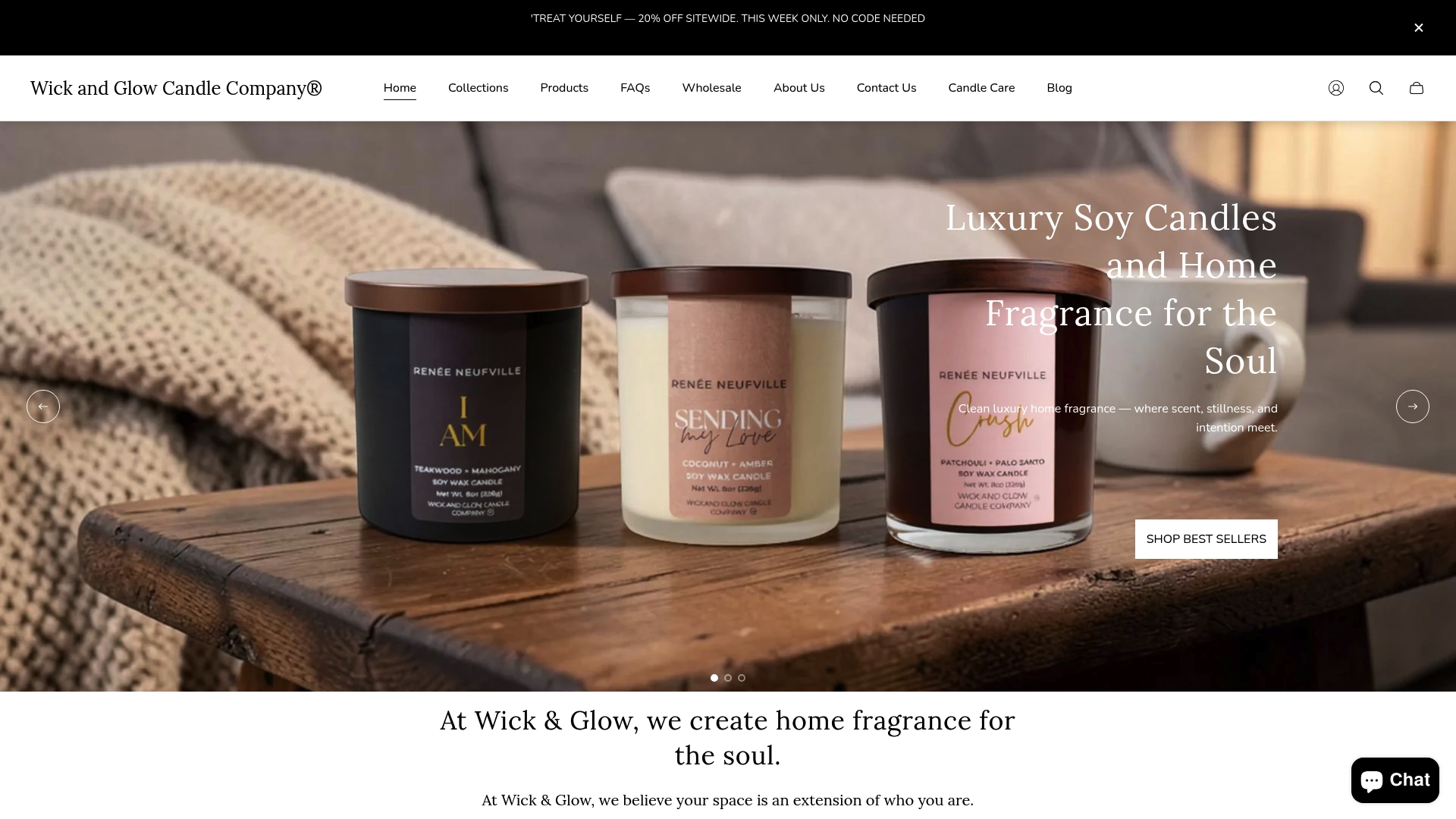
A practical starter approach: place a glass reed diffuser in your entry for continuous background scent, and pair it with a candle from the same fragrance family for your living room. Add a phthalate-free room spray for linens and you have a three-format layered system that covers the most-used spaces in your home. Every product is vegan and non-toxic, which matters when you are running fragrance in enclosed spaces daily. Browse the full collection at wickandglow.com and use the scent descriptions to match your emotional keywords to a fragrance family before you buy.
Recommended further reading
These sources informed the science, design practice, and safety guidance in this article. For anyone who wants to go deeper on the neuroscience or the design application, these are the most authoritative starting points.
-
NIH: Olfactory system and emotional memory — Peer-reviewed research on how the olfactory system connects to emotional and memory centers in the brain.
-
Harvard Medical School: Smell, memory, and health — Accessible overview of the science linking odor-evoked memory to emotional health.
-
PubMed: Scent and physiological calming effects — Clinical research on measurable physiological responses to specific fragrance compounds.
-
The Center for Contemplative Design: Scent in architecture — Practitioner-focused article on how architects and interior designers integrate scent as a spatial element.
-
Vogue: Scentscaping — Consumer-facing overview of the scentscaping trend with designer commentary.
-
The Spruce: How designers make a room smell incredible — Practical designer tips on layering, restraint, and format selection.
-
EWG: What is fragrance? — Safety-focused breakdown of synthetic fragrance ingredients and what to look for on a label.
-
Forbes: Scent in home design — Design journalist perspective on the underrated role of smell in residential interiors.
Where possible, sample fragrances in person at specialty retailers, perfumers, or home decor boutiques. Reading a scent description is useful; smelling it in your actual space is the only test that matters. Pairing fragrance with other curated interior elements, like art and textiles, is also worth exploring through design-focused resources such as this practical guide for collectors and designers.
Recommended


