Where you put a candle matters as much as which one you burn. Placement controls three things at once: the visual intimacy of a room (how light falls and where shadows pool), the scent distribution (how far and how evenly fragrance travels), and the psychological effect on the people in the space. Move a candle from a high shelf to a coffee table and the room feels warmer, closer, more lived-in. That shift is not accidental. It is design.
Three things you can do right now: layer your candle heights so light moves across multiple levels, keep every lit candle away from vents and drafts that scatter scent before it settles, and add a reed diffuser for steady background fragrance while your candle handles the focal moment. Wick & Glow Candle Company® builds its entire product line around this idea: that intentional placement, paired with clean, artist-inspired fragrance, is what turns a room into an atmosphere.
Pro Tip: Before you rearrange anything, stand in the doorway of the room and look in. That sightline is what your guests see first. Place your strongest visual candle exactly where that eye line lands.
Key Takeaways
Candle placement shapes atmosphere through three levers at once: visual depth from layered heights, scent distribution from strategic positioning, and psychological effect from holder pattern and material.
| Point |
Details |
| Layer your heights |
Mix tall, mid, and short vessels so light moves across levels instead of sitting flat. |
| Group in odd numbers |
Clusters of three or five feel intentional; use one anchor candle and supporting votives. |
| Match holder finish to mood |
Frosted glass for calm, warm metallics for drama, patterned ceramic for relaxation. |
| Diffusers for background, candles for focus |
Place diffusers in circulation paths for all-day scent; use candles at gathering points for evening rituals. |
| Wickandglow for intentional fragrance |
Clean, vegan, artist-inspired candles and diffusers designed to pair with the placement strategies above. |
Table of Contents
Why candle placement affects atmosphere: height, grouping, and scale
The single most effective visual move is mixing candle heights. Designers at Simon Pearce recommend layering tall hurricanes, mid-height pillars, and shorter tealight holders so light dances across the room rather than sitting flat at one level. A row of identical candles reads as decoration. A cluster of three at different heights reads as intention.
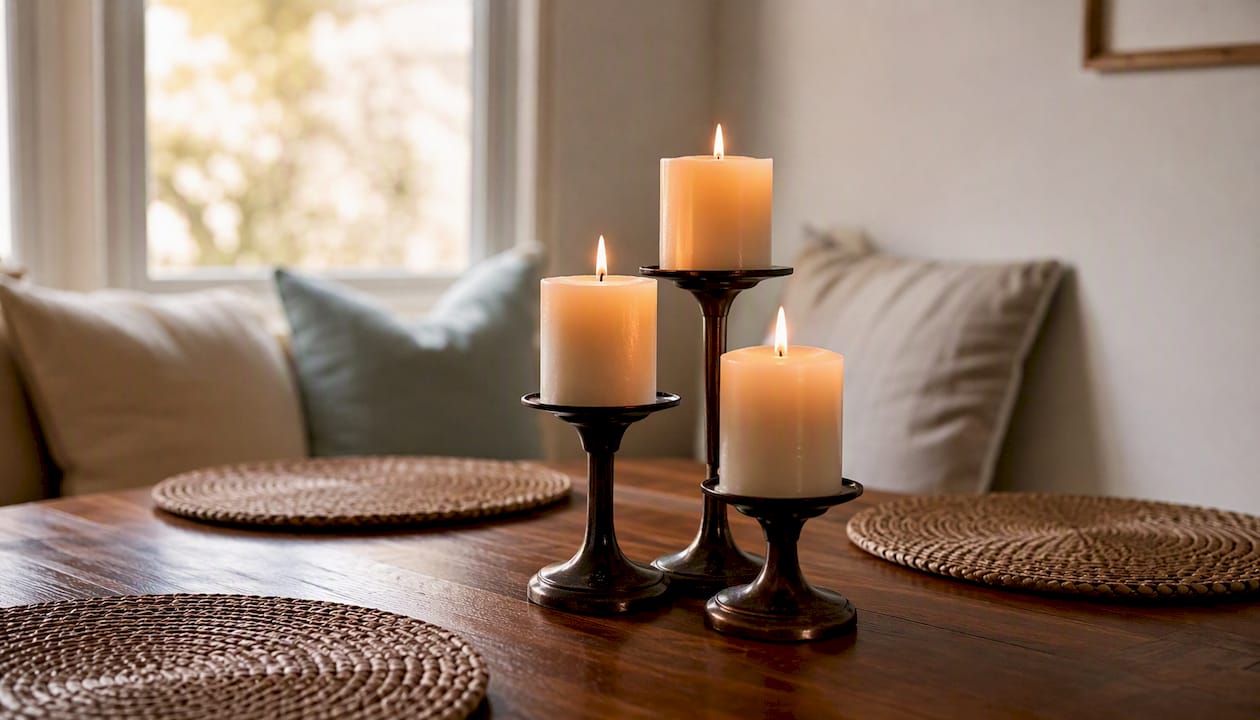
Odd-number groupings (three or five) feel more natural to the eye than even pairs. Use one strong focal candle as the anchor, then support it with two smaller vessels at different heights. For a coffee table, that might be a tall glass jar flanked by two votives. For a mantel, a pair of tall pillars with a low cluster between them.
Scale matters too. A small votive on a wide dining table disappears. A large three-wick jar on a narrow bedside table crowds the space. Match vessel size to surface area: bigger surfaces need bigger candles or a composed cluster, smaller surfaces need a single, well-chosen piece.
-
Tall candles or hurricanes: best for mantels, sideboards, and entry consoles where height reads from across the room
-
Mid-height pillars or jar candles: ideal for coffee tables and dining surfaces where you want presence without blocking sightlines
-
Short votives and tealights: use in clusters of three or five to fill gaps and add warmth at low levels
Pro Tip: Maintain a safe clearance distance around any lit candle to ensure proper airflow and avoid hazards. Staging a cluster looks beautiful; staging it too close to a linen runner does not.
How your candle holder changes the mood before the flame even lights
The container is doing more work than most people realize. A small experimental study published through AHFE Open Access found that patterned candle holders with fractal-like textures increased relaxation and improved concentration in a candle-gazing task compared with plain vessels, based on lab measures and questionnaires from 30 participants. The pattern interacts with the moving flame to create shifting highlights that the eye reads as comforting.
Material changes the quality of light entirely. Clear glass throws a brighter, crisper glow. Frosted glass softens it into a diffuse warmth. Metallic or reflective finishes create dramatic shimmer that reads as festive or ceremonial. Opaque ceramic mutes the light almost entirely, making the scent the star rather than the flame.
A quick selection guide:
-
Frosted glass: calm, spa-like, bedroom or bathroom
-
Clear glass: clean and bright, kitchen or living room
-
Warm metallics (brass, copper): dramatic and social, dining or entry
-
Patterned ceramic or textured vessels: relaxing and grounding, meditation corners or reading nooks
Wickandglow’s hand-poured soy candles come in vessels chosen to match the mood of each fragrance. That pairing is intentional: the holder and the scent are designed together, not selected separately.
Where to position diffusers and candles so scent layers instead of clashes
Scent has architecture. Reed diffusers deliver steady background fragrance without the intensity spike of a freshly lit candle, which makes them the right tool for all-day coverage. Candles deliver immediate, stronger scent and soft light together, which makes them the right tool for an evening ritual or a gathering. Use both, but place them differently.
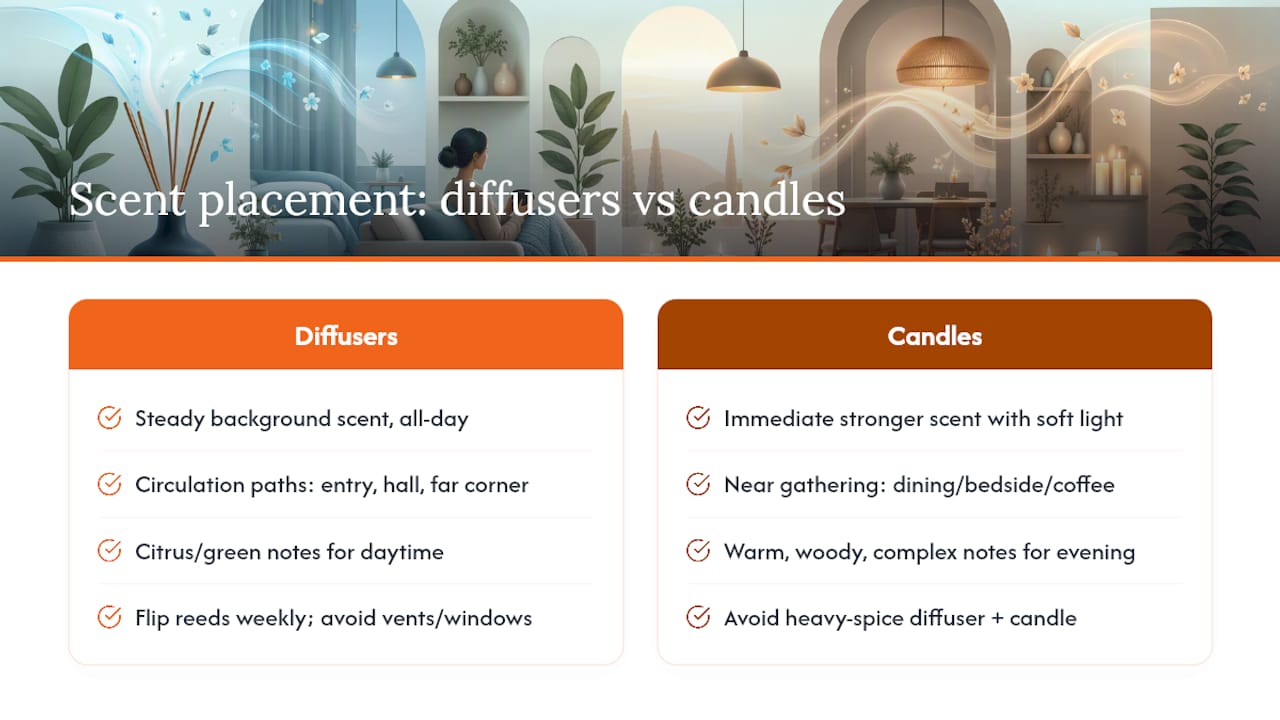
Diffusers belong in circulation paths: entryways, hallways, the far corner of a living room. They release scent passively as air moves through the space. Candles belong near gathering points: the center of a dining table, a bedside surface, the coffee table where people actually sit. Perfumers and home-fragrance experts recommend pairing diffusers for all-day scent with candles for evening ambiance to build a layered fragrance experience rather than a single overwhelming note.
Scent pairing matters as much as placement. Reserve warm, woody, or complex notes for candles during evening rituals. Use lighter citrus or green notes in diffusers for daytime freshness. Mixing a heavy spice candle with a heavy spice diffuser in the same room creates competition, not atmosphere. For more on mixing diffuser and candle scents, Wickandglow’s scent-layering guide covers note families and intensity balance in detail.
Pro Tip: Flip your diffuser reeds once a week and keep them away from windows and vents. Direct airflow dries the reeds faster and pushes scent out of the room before it settles.
Room-by-room placement for the mood you actually want
-
Living room: one focal candle on the coffee table or mantel plus a diffuser in a corner or circulation path. For intimacy during a movie or conversation, pull the candle cluster low and close to seating.
-
Bedroom: a single low candle or votive on the bedside table for a calming pre-sleep ritual. Keep the diffuser on a dresser across the room for steady overnight scent. For calm rituals, candles chosen for meditation spaces work equally well here.
-
Dining room: two matching tall candles or a low cluster centered on the table. Keep the flame below eye level so guests can see each other. Skip the diffuser at the table itself; let the candle carry the scent.
-
Bathroom: one candle for spa-like moments when you want the full light-plus-scent effect. A diffuser handles continuous freshness in a guest bathroom where you cannot monitor a flame.
-
Entryway: a taller decorative candle on the console or a reed diffuser set to moderate intensity. Avoid heavy spice notes near the front door; they can read as overpowering before guests even step inside.
Room-size guidance is straightforward: one candle or diffuser covers a medium room. Larger or open-plan spaces need a diffuser for coverage plus a candle for the focal point. Keep every source away from vents and drafts, which scatter scent before it reaches the people in the room.
How to test whether your placement is actually working
A repeatable test, adapted from DIYProducts101’s scent-throw method, takes about 30 minutes and tells you whether a placement is performing or just sitting there.
- Close windows and set HVAC to a neutral, consistent setting. This is your baseline.
- Mark three observation points: 1 m, 2 m, and 3 m from the candle.
- Trim the wick to about 1/4 inch and place the candle at nose height in the main circulation zone.
- Light the candle and start a timer. Note when you first detect scent at each marker.
- At 30 minutes, record the strongest detection point and the farthest reliable distance.
- Note any visual issues: soot, tunneling, or uneven melt.
If scent is weak at all three markers, try a different surface height or add a diffuser. If it is strong only at 1 m, the vessel may be too small for the room. Keep room conditions identical between tests so you are comparing placement, not weather.
Pro Tip: Test in the evening when the room is at its typical temperature. A cold room in the morning will give you different throw results than the same room at 7 PM.
Four setups you can copy tonight
Cozy movie night. Three odd-numbered votives in a low cluster on the coffee table. Choose a warm, woody candle (cedar, sandalwood, amber). Turn the living-room diffuser down or off so the candle scent reads clearly. Photograph from a low angle, level with the flame, to capture the glow against the room behind it.
Dinner for two. Two matching tall candles centered on the table, or a single low cluster if you prefer a more relaxed look. A subtle warming scent: vanilla, soft spice, or a light floral. No diffuser at the table. Shoot from across the table at seated eye level to show how the flame frames the setting.
Morning uplift. A citrus or green diffuser in the entryway, running before you reach the kitchen. Add a small candle near the breakfast nook for a ritual moment while coffee brews. The layering of candle and room spray works especially well here: a quick spritz of a citrus room spray before lighting keeps the energy bright.
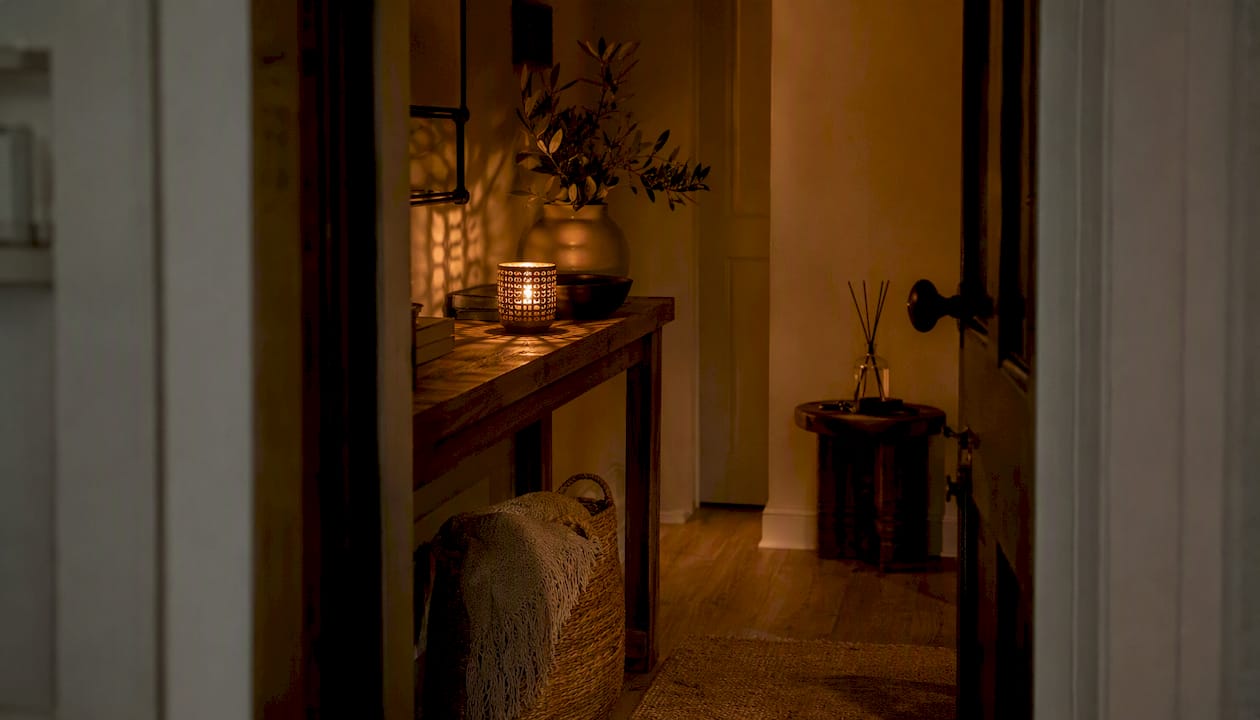
Guest-ready entry. A tall decorative candle on the console, lit 20 minutes before guests arrive. Reed diffuser set to moderate intensity, placed on a shelf or side table nearby. Avoid heavy spices. Photograph from the front door looking in, so the candle is the first thing the eye finds.
Placement is storytelling, not just styling
Most people treat candle placement as an afterthought: the candle goes where there is space. But placement is a choice about what a room communicates. A single candle on a bedside table says something different from a cluster on a coffee table. One is private. The other is social.
The idea behind intentional home fragrance is that scent and light work together as a system. Each placement should have a function: to draw people in, to signal rest, to mark a ritual. When placement is accidental, the atmosphere is accidental too. When it is deliberate, even a single candle can change how a room feels within minutes.
My design manifesto for this: prefer one intentional placement over five decorative ones. A candle that earns its spot does more than five that are simply there.
Wickandglow candles and diffusers, matched to the moods above
Wickandglow’s hand-poured soy candles, reed diffusers, and room sprays are built for exactly the placement strategies covered here. Every product is clean, vegan, and phthalate-free, so the scent you smell is the scent that was intended, not a chemical approximation of it.
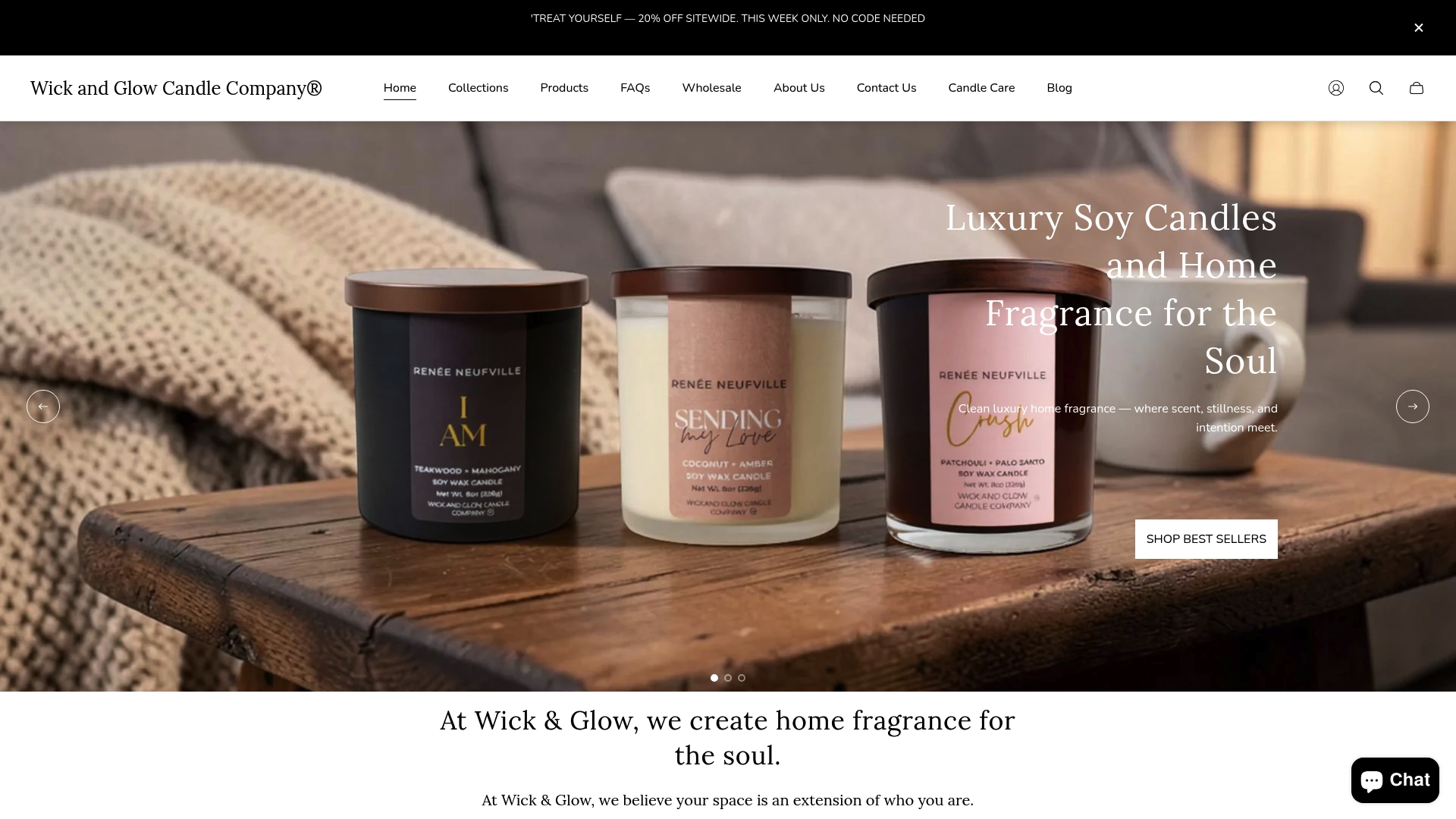
For the frosted-glass calm of a bedroom or reading nook, Wickandglow’s candle collections include vessels and fragrances designed to work together. For a quick focal scent without lighting a flame, the Luxury Room Spray delivers immediate atmosphere in seconds. Artist collaborations, including work with Renée Neufville, mean each fragrance carries a creative intention beyond the generic. Browse the full collections and match a scent to the mood you are building.
Sources
Recommended


