Mixing diffuser and candle scents is the practice of combining two fragrance formats simultaneously to build a layered, multidimensional aroma in your living space. A reed or ultrasonic diffuser runs continuously in the background, releasing a steady, low-intensity scent, while a lit soy candle adds warm, fluctuating fragrance notes on top. Together, they create something neither format achieves alone. This guide covers how each format releases scent differently, which combinations work best, how to scale intensity to your room size, and how to do it all without compromising your indoor air quality.
How do diffusers and candles differ in scent release and intensity?
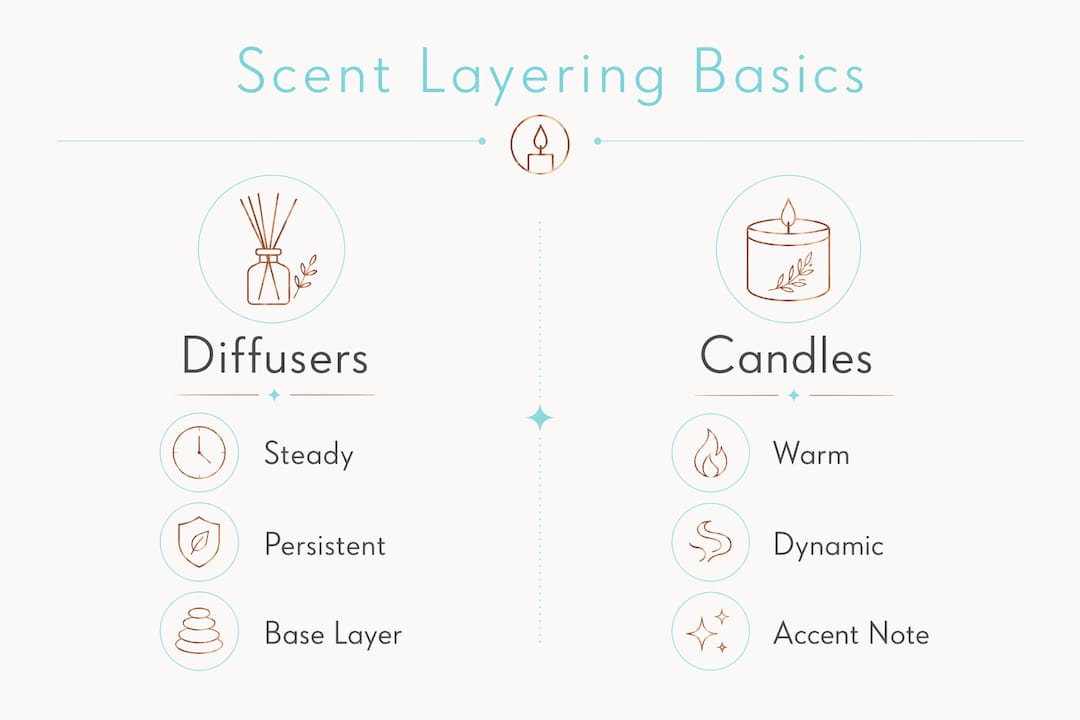
Fragrance layering works because diffusers and candles operate on completely different delivery mechanisms. Understanding that difference is the foundation of every successful blend.
Diffusers: steady and persistent
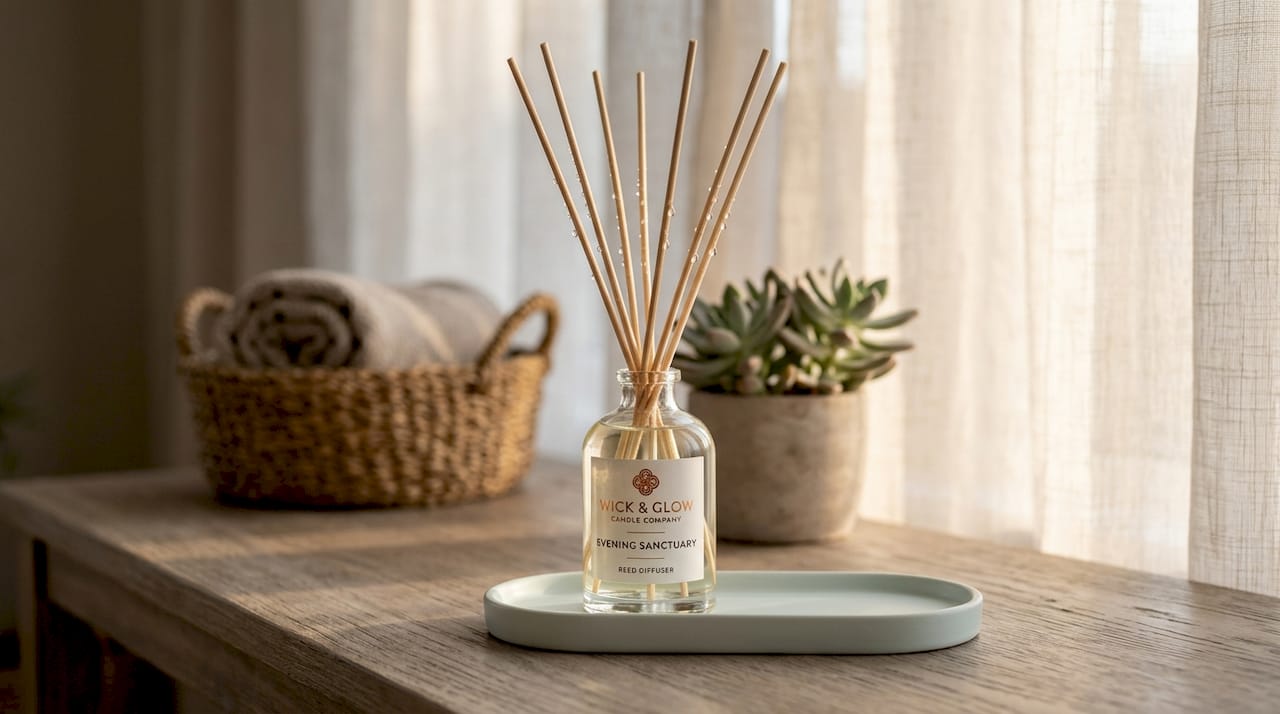
Reed diffusers and ultrasonic oil diffusers release scent slowly and continuously. Reeds absorb fragrance oil and evaporate it passively into the air over weeks or months. Ultrasonic diffusers break water and essential oil into a fine mist, dispersing scent in short, programmable bursts. Neither format produces heat, which means the fragrance profile stays close to its original character without the thermal transformation that a flame creates.
Candles: warm and dynamic
A burning candle heats the wax pool directly beneath the wick, accelerating fragrance evaporation in a way that produces noticeably stronger, warmer scent throws. The aroma from a candle fluctuates with the flame, intensifying when the melt pool is deep and softening when the wick is trimmed or the candle is in a draft. This fluctuation is actually an asset when layering, because it gives your scent environment movement and life.
Why layering these two formats works
Using candles, diffusers, and sprays together offers harmony and depth that a single scent source cannot replicate. The diffuser holds the room’s baseline character all day. The candle, lit in the evening or during a specific activity, adds a warm accent layer on top. The result is a scent environment that feels intentional rather than one-dimensional.
Pro Tip: Run your diffuser for at least two hours before lighting a candle. This lets the background scent settle into the room so you can judge how the candle’s top notes interact with it before committing to the combination.
What are the best practices for blending candle and diffuser scents?
Candle scent blending and diffuser fragrance combinations follow the same logic as perfumery: top notes, middle notes, and base notes each play a distinct role. Essential oil scent note volatility determines which fragrance evaporates first and which lingers, so pairing notes strategically produces a blend that evolves rather than collapses.
Start with two scents, not five
Olfactif recommends two scents as the sweet spot for layering, cautioning against combining two dominant notes simultaneously. This means if your diffuser is running a heavy base note like oud or dense amber, your candle should carry a lighter top or middle note such as bergamot, eucalyptus, or green tea. Stacking two loud, saturating scents creates olfactory fatigue within minutes.
Fragrance families that pair well together
The table below shows proven diffuser and candle pairings organized by fragrance family:
| Diffuser scent |
Candle scent |
Why it works |
| Citrus (bergamot, lemon) |
Herbal (basil, rosemary) |
Bright top notes lift the green earthiness of herbs |
| Vanilla (warm, sweet) |
Amber or sandalwood |
Shared warmth creates a seamless, cozy base |
| Floral (rose, jasmine) |
Green (vetiver, fern) |
Contrast adds texture without clashing |
| Eucalyptus or mint |
White tea or clean musk |
Both are fresh and light, preventing saturation |
| Woody cedar |
Spiced orange or clove |
Earthy base anchors the spice without competing |
Avoid these common pairing mistakes
- Never layer two heavy base notes (oud with patchouli, musk with amber) in the same room at the same time.
- Avoid combining two intensely sweet scents (vanilla candle with a caramel diffuser blend), which reads as cloying rather than warm.
- Do not mix opposing fragrance families without a bridging note. Pairing a sharp pine diffuser with a floral rose candle creates dissonance unless a shared note like cedarwood connects them.
Pro Tip: Test your combination on fragrance strips before committing to a full burn session. Hold one strip with your diffuser oil and one with your candle’s scent, then smell both together at arm’s length. If they work on paper, they will work in the room.
How to match scent intensity to room size
Candle size and scent output should be matched to room dimensions. A 4 oz candle in a 400 square foot open living room will disappear entirely. A 16 oz triple-wick candle in a 100 square foot bedroom will overwhelm. The same principle applies to diffusers.
Room size guidelines for mixing scents
| Room size |
Candle recommendation |
Diffuser recommendation |
| Small (under 150 sq ft) |
4 to 8 oz single wick |
5 oz reed diffuser, 3 to 4 reeds |
| Medium (150 to 300 sq ft) |
8 to 12 oz single or double wick |
7 oz reed diffuser, 6 to 8 reeds |
| Large (300 to 500 sq ft) |
12 to 16 oz double or triple wick |
Two 5 oz diffusers placed at opposite ends |
| Open plan (500 sq ft and up) |
Multiple candles or one large pillar |
Multiple diffusers or an ultrasonic unit |
Placement and airflow considerations
Where you position each scent source matters as much as what you choose. Place your diffuser near an air return or a natural airflow path so the background scent circulates evenly. Position candles away from vents and drafts, which destabilize the flame and reduce scent throw. In large or open-plan spaces, use two diffusers placed at opposite ends of the room rather than one powerful unit in the center.
- In small rooms, light candles intermittently rather than continuously. Thirty minutes of burn time is often enough to layer the warm accent note without saturating the space.
- In medium rooms, run the diffuser on a timer (two hours on, one hour off) to prevent scent fatigue.
- In large rooms, commercial diffuser formulations use fragrance loads of 10 to 40%, with around 25% considered optimal for scent throw without harshness. This benchmark applies to DIY blends as well.
What safety and indoor air quality considerations should you keep in mind?
Burning candles release VOCs and particulate matter that affect indoor air quality. Reducing burn time and keeping wick length trimmed to about one quarter inch lowers soot output and VOC concentration significantly. This is not a reason to avoid candles. It is a reason to use them thoughtfully.
“Natural scents still emit VOCs. ‘Plant-based’ doesn’t mean chemical-free, so ventilation and moderation remain important regardless of the fragrance source.” — Toronto Sun
The myth that soy candles or essential oil diffusers are entirely safe because they are natural is widespread and worth correcting. Soy wax burns cleaner than paraffin, but it still combusts. Essential oils in an ultrasonic diffuser still introduce volatile compounds into the air. The solution is not avoidance but balance: crack a window, limit continuous burn time to two to three hours, and avoid running multiple strong scent sources simultaneously in a sealed room.
Pro Tip: Choose phthalate-free fragrance oils for both your candles and diffusers. Phthalates are synthetic plasticizers used to extend scent throw, and they are among the more studied VOC contributors in scented products. Many quality brands now formulate without them.
Step-by-step guide: how to layer candle and diffuser scents at home
This process works for any room and any fragrance combination. Follow it once, adjust based on your results, and you will develop an instinct for blending within a few sessions.
-
Gather your materials. You need one reed or ultrasonic diffuser with fragrance oil or essential oil blend, one candle in a complementary scent, and fragrance test strips if available. Identify the scent notes in each product before you start.
-
Set your diffuser as the base layer. Start the diffuser one to two hours before you plan to light the candle. This gives the background scent time to settle into the room at a low, even level. Do not run the diffuser at maximum output.
-
Choose complementary scents using note categories. Pair a diffuser carrying a base or middle note (sandalwood, lavender, musk) with a candle carrying a top or middle note (citrus, herbs, light florals). Scent note structure guides which fragrance leads and which supports.
-
Light the candle and observe for fifteen minutes. Do not adjust anything immediately. Let the two scents interact and settle. Notice whether one overpowers the other, whether the combination feels harmonious, or whether there is a clash.
-
Adjust intensity based on what you smell. If the candle dominates, move it to a less central position or extinguish it after thirty minutes. If the diffuser overwhelms, reduce the number of reeds or lower the ultrasonic output setting.
-
Test and refine over multiple sessions. There is no universal method for home scenting. Mixing distribution patterns and formats affects fragrance presence and mood differently in every space. Keep a simple note of what worked and what did not.
Common mistakes to avoid:
- Mixing more than two scent sources at once before you know how each behaves in your space.
- Using a candle and diffuser with identical scents, which amplifies rather than layers and often creates an oppressive single note.
- Ignoring room temperature. Warmer rooms accelerate scent evaporation from both formats, so reduce intensity in summer and increase it in winter.
- Forgetting to trim the wick before each burn, which affects both scent quality and soot output.
Key takeaways
Mixing diffuser and candle scents works best when you run the diffuser as a continuous base layer, light the candle as a warm accent, and choose complementary scents from different fragrance note categories.
| Point |
Details |
| Layer formats, not just scents |
Use the diffuser as background and the candle as accent for a multidimensional result. |
| Stick to two scents at first |
Combining more than two strong scents simultaneously creates olfactory fatigue and muddy blends. |
| Scale to room size |
Match candle weight and diffuser output to square footage to avoid under or over-scenting. |
| Ventilate consistently |
Both natural and synthetic scented products release VOCs, so crack a window during extended sessions. |
| Test before committing |
Fragrance strips and short observation periods save you from a full burn session that does not work. |
Why scent layering changed how I think about home fragrance
Most people approach home fragrance as a single-note decision: pick a candle, light it, done. I spent years doing exactly that, and the results were always fine but never quite right. The room smelled like the candle, full stop. What changed my approach was treating the room itself as the medium, not just the candle.
When you run a diffuser with a woody or herbal base note and then light a citrus or floral candle on top, something genuinely interesting happens. The scent environment has movement. It shifts as the candle burns down and the melt pool deepens. It changes when someone walks through the room and stirs the air. That quality, the sense that the fragrance is alive rather than static, is what separates a layered setup from a single candle burning in the corner.
My honest advice: start simpler than you think you need to. One reed diffuser with four reeds and one 8 oz candle in a complementary scent is enough to experience the full effect of layering. You do not need a complex setup to get a complex result. Patience and small adjustments over several sessions will teach you more about how to blend scents than any guide can. The goal is a room that smells like you chose it, not like a store display.
— Wickandglow
Build your layered scent setup with Wickandglow
If you want to skip the trial-and-error phase of finding compatible scents, Wickandglow has already done the pairing work for you.
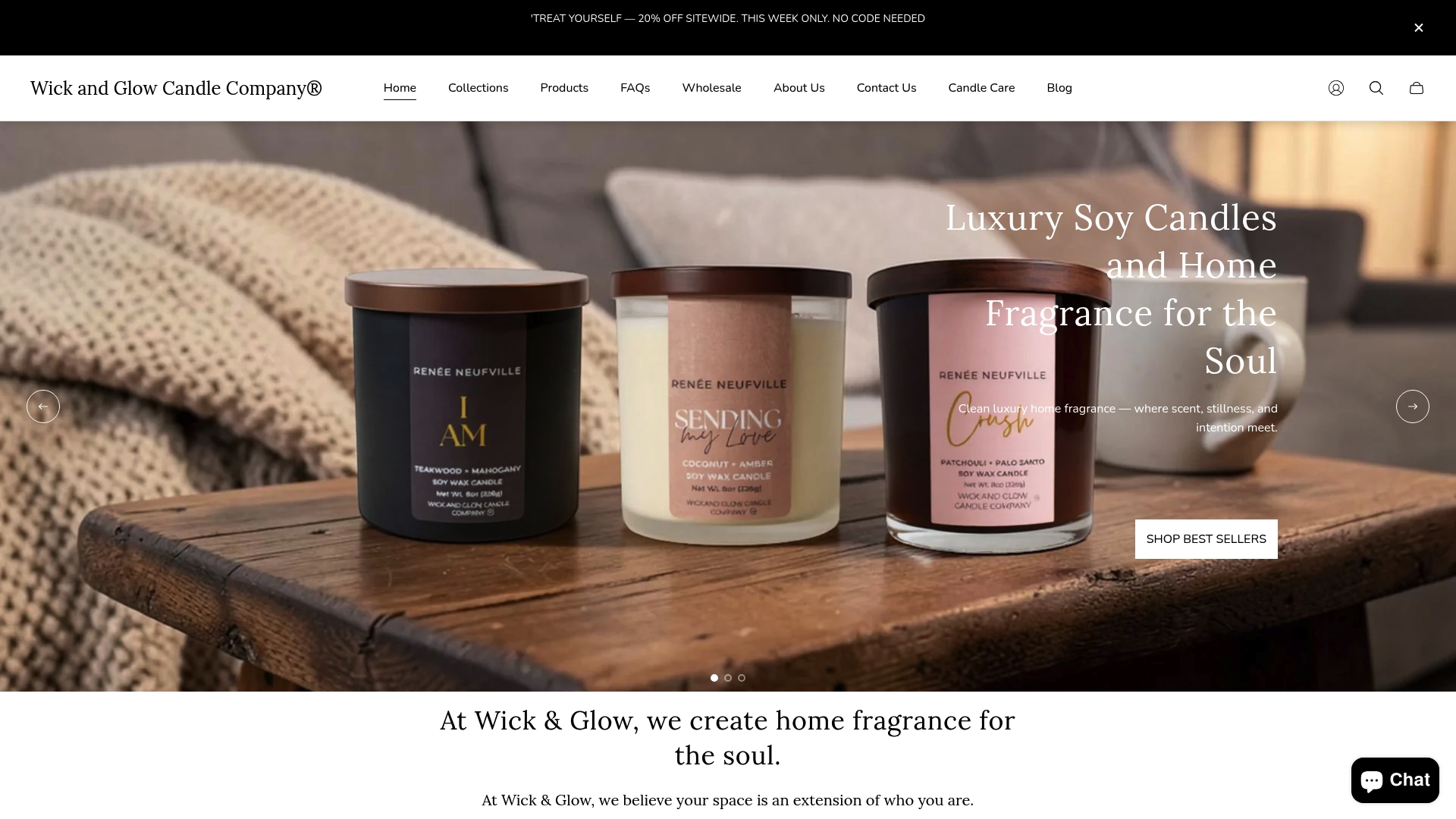
The home fragrance scent bundle from Wickandglow includes a soy candle, reed diffuser, and room spray in a single coordinated scent, so every format you layer is guaranteed to work together. All products are phthalate-free and vegan, with fragrance longevity that holds up across weeks of use. For those who want to build their diffuser layer independently, the 7 oz luxury reed diffuser offers a long-lasting flameless option designed to anchor any candle combination. Browse the full collection at Wickandglow and find the scents that match your space and your mood.
FAQ
What is the best way to start mixing diffuser and candle scents?
Run your diffuser for one to two hours before lighting a candle so the background scent settles first. Start with two complementary scents from different fragrance families rather than layering multiple strong notes at once.
Can you use the same scent in both a diffuser and a candle?
Using identical scents in both formats amplifies rather than layers, which often creates an overpowering single note. Choose complementary but distinct scents for a more balanced and interesting result.
How do I know if my scent combination is too strong?
If you notice a headache, eye irritation, or an inability to distinguish individual notes within fifteen minutes, the combination is too intense. Reduce the number of diffuser reeds, extinguish the candle, and ventilate the room before trying again at lower intensity.
Are natural or essential oil scents safer to layer than synthetic fragrance oils?
Natural scents still emit VOCs, so plant-based does not mean chemical-free. Proper ventilation and moderate burn times matter regardless of whether your fragrance is synthetic or derived from essential oils.
How many reed diffuser sticks should I use when layering with a candle?
In a small to medium room, three to five reeds provide a background scent level that a candle can comfortably layer on top of without competing. Add more reeds only in larger spaces where the candle’s scent throw is also proportionally stronger.
Recommended
Article generated by BabyLoveGrowth


