Intentional home fragrance is the purposeful design of a home’s scent environment to shape mood, memory, and atmosphere through deliberate fragrance placement. The industry term for this practice is scentscaping, and it treats scent as a core design element on par with color, lighting, and texture. Experts like Franky Rousell describe scent as equal to color and texture in guiding emotional response. Rather than reaching for a single candle to make a room smell pleasant, intentional home fragrance assigns specific aromas to specific spaces based on what each room needs to feel like. Wickandglow builds every product around this principle, pairing fragrance with music and memory to create a fully sensory home experience.
What is intentional home fragrance, and how does scentscaping work?
Intentional home fragrance, or scentscaping, is the deliberate design of home aromas by zoning scent profiles to specific areas that match their function. A kitchen benefits from citrus to energize. A bedroom calls for lavender to relax. The practice rejects the one-scent-fits-all approach that most people default to when they buy a single candle and place it in the living room.
Scentscaping borrows from interior design logic. Just as you would not use the same lighting in a home office and a bedroom, you should not use the same fragrance. Each room has a purpose, and the right scent reinforces that purpose at a sensory level. This is what separates intentional fragrance from simply making a space smell good.
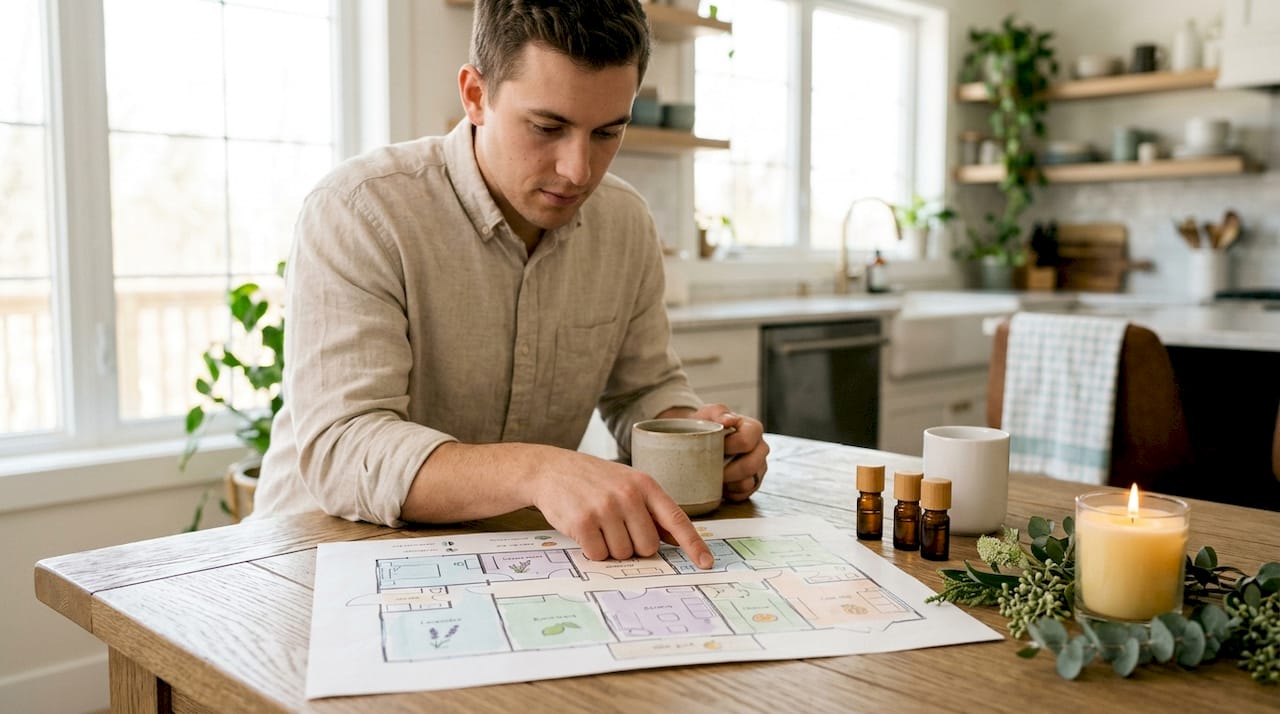
The concept has moved well beyond niche wellness circles. Hospitality brands, retail environments, and luxury hotels have used ambient scent design for years to shape how guests feel and what they remember. The same principles now apply directly to the home, giving you the same level of control over your environment that professional designers have always had.
How does scent psychology influence mood and memory?
The olfactory system connects directly to the brain’s limbic system, which controls emotion and memory. No other sense has that direct a pathway. Sight and sound travel through the thalamus first. Scent bypasses that relay station entirely, which is why a single smell can trigger a vivid memory or shift your mood within seconds.
Research shows that specific scents produce measurable effects. Grapefruit can reduce perceived age by five years, lemon improves work performance, and cinnamon boosts creativity. These are not soft claims. They reflect how the brain processes chemical signals from the nose and translates them into cognitive and emotional states.
“Scent is a powerful tool for creating memorable emotional bookmarks in both commercial and home spaces. A signature welcoming scent in an entryway leaves a long-lasting impression on guests long after they have forgotten the visual details.”
That insight matters for how fragrance shapes atmosphere in practical terms. Visitors to your home will remember how it felt before they remember what it looked like. A well-chosen entryway scent becomes part of your home’s identity. That is the emotional power of intentional scent placement applied at home.
Mindful scent layering also helps separate mental states within the same physical space. Peppermint and sandalwood support focus in a home office. Lavender and chamomile signal rest in a bedroom. For anyone working from home, this kind of scent zoning creates a psychological boundary that physical walls alone cannot always provide.
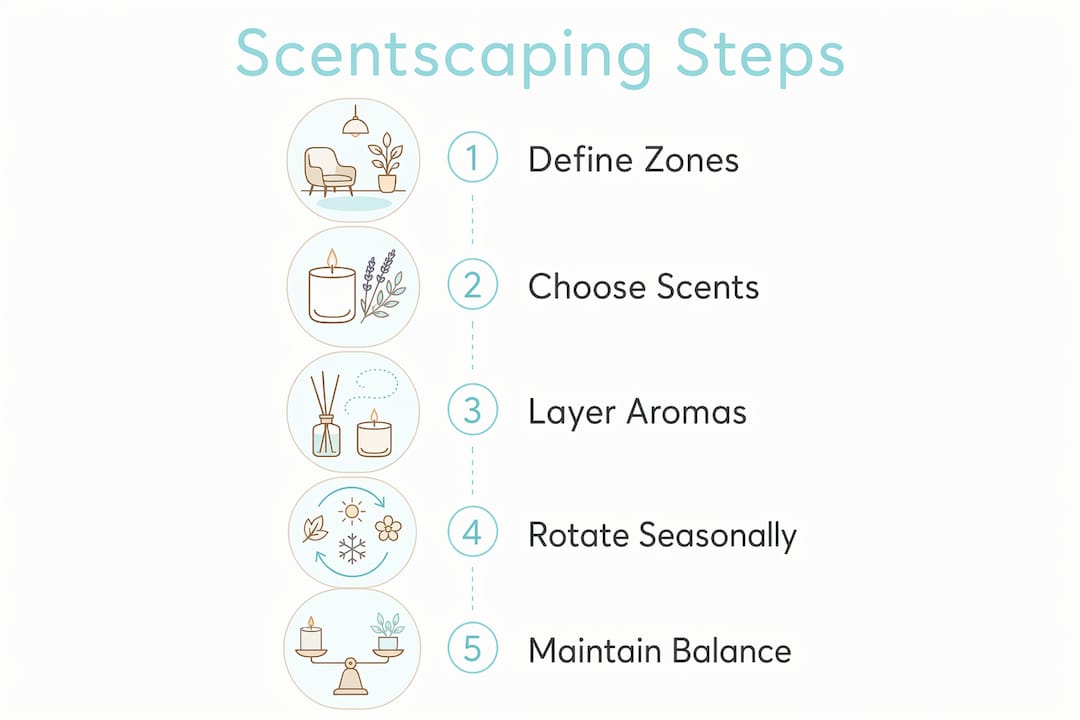
Scentscaping principles: designing your home’s fragrance zones
Scentscaping works by dividing your home into scent zones based on what each space is used for. The kitchen and entryway benefit from energizing top notes like citrus and herbs. Bedrooms and bathrooms call for calming base notes like sandalwood, vanilla, or lavender. Living rooms sit in the middle, suited to warm mid-notes like amber, cedar, or light florals.
Natural scent sources are the preferred foundation. Essential oils like eucalyptus and citrus peels freshen air without synthetic chemicals and carry antibacterial benefits. They work well as a base layer before you add more expressive fragrance formats on top.
Layering is the technique that separates a flat scent from a rich one. Layering uses base notes from slow-burn wax tablets, mid-notes from reed diffusers, and top notes from room sprays or simmer pots. Each format releases fragrance at a different rate, so the overall scent evolves through the day rather than hitting all at once.
| Scent type |
Suitable home zone |
Delivery method |
| Citrus, herb, mint |
Kitchen, entryway, home office |
Room spray, simmer pot |
| Lavender, chamomile |
Bedroom, bathroom |
Reed diffuser, wax tablet |
| Amber, cedar, vanilla |
Living room, dining room |
Candle, wax melt |
| Eucalyptus, pine |
Bathroom, hallway |
Essential oil diffuser |
| Sandalwood, patchouli |
Home office, reading nook |
Reed diffuser, candle |
Seasonal rotation keeps the experience fresh. Use cinnamon and warm spice in fall, pine and cedarwood in winter, and florals and citrus in spring and summer. Adapting fragrance by season aligns your home with natural environmental cues, which deepens the sense of comfort and presence.
Pro Tip: Leave hallways, stairwells, and transition spaces unscented. When you move from an unscented zone into a deliberately fragranced room, the contrast sharpens your perception of the scent and makes the effect far more intentional.
You can also use unconventional delivery methods for a subtle, integrated effect. Adding a few drops of essential oil to a vacuum cleaner filter disperses fragrance gently as you clean. Cedar blocks in linen drawers give closets a clean, grounding scent without any active effort. These low-impact methods complement your primary scent zones without competing with them.
For a deeper guide on matching scents to specific rooms, Wickandglow’s resource on scents for each room covers the full zoning process in detail.
How to choose and apply home fragrances with intention
Choosing a home fragrance starts with sampling before committing. Fragrance notes smell different in the bottle, on a test strip, and after an hour of diffusion in a real room. Always test a scent in the space where you plan to use it, at the time of day you plan to use it. Morning light and evening warmth change how a fragrance reads.
Match fragrance notes to both your personal preference and the room’s existing character. A room with dark wood furniture and warm tones pairs naturally with amber, tobacco, or leather. A bright, minimal space with white walls reads better with clean citrus or light florals. Fragrance should feel like it belongs to the room, not like it was placed there.
Delivery methods each have distinct strengths:
-
Candles provide warmth and visual ambiance alongside scent. They work best in living rooms and dining areas where you are present and attentive.
-
Reed diffusers release fragrance continuously and passively. They suit bedrooms, bathrooms, and offices where you want a consistent background scent without maintenance.
-
Room sprays deliver an immediate, concentrated burst of fragrance. Use them to reset a room quickly or to add a top note layer over a slower-burning base.
-
Simmer pots use water and natural ingredients like citrus peels, herbs, and spices. They are ideal for kitchens and create a fresh, chemical-free scent.
-
Wax tablets and sachets work well in enclosed spaces like closets, drawers, and linen storage.
Pairing a candle with a reed diffuser in the same room is one of the most effective layering techniques for home fragrance. The diffuser holds the base note continuously, while the candle adds depth and warmth when lit. Choose scents from the same fragrance family so they complement rather than clash.
Pro Tip: Use scent as a daily ritual rather than a background detail. Light a specific candle when you sit down to read, or mist a particular room spray before you meditate. Over time, your brain associates that scent with the mental state, and the transition becomes faster and more automatic.
Ventilate rooms regularly to prevent buildup. Replace seasonal scents every three to four months to keep the experience feeling deliberate rather than stale. A room spray for home is the easiest way to refresh a space between deeper fragrance resets.
Common misconceptions about ambient scent and how to avoid them
The most common mistake in home fragrance is using too much of it. Over-scenting causes olfactory fatigue, which dulls the brain’s ability to perceive fragrance at all. When you stop noticing your own home’s scent, you tend to add more, which makes the problem worse for anyone walking in fresh.
A second misconception is that fragrance exists to mask odors. Masking is a short-term fix that creates a layered smell problem. Intentional fragrance works best in a clean, well-ventilated space where it can express itself clearly rather than compete with underlying odors.
| Common error |
What actually happens |
Better approach |
| Over-scenting every room |
Olfactory fatigue; guests perceive it as overwhelming |
Zone scent deliberately; leave some spaces neutral |
| Using fragrance to mask odors |
Competing smells create an unpleasant mix |
Address the source first, then apply fragrance |
| Using one scent throughout |
Flat, undifferentiated experience |
Zone by room function with complementary notes |
| Ignoring individual sensitivity |
Guests or household members may react negatively |
Choose lighter concentrations; test before committing |
| Never rotating scents |
Nose blindness; the scent loses its effect |
Rotate seasonally or every few months |
Individual sensitivity matters more than most guides acknowledge. What reads as a pleasant background scent to one person can feel suffocating to another. Start with lighter concentrations, especially in shared spaces, and build intensity gradually. The goal of intentional fragrance is presence, not dominance.
The difference between ambient scent and overpowering fragrance is restraint. Ambient scent is what you notice when you enter a room and then forget about because it feels natural. Overpowering fragrance is what you notice the entire time you are in the room. Aim for the former. Wellness-focused home styling trends increasingly emphasize calm, intentional scent environments over heavy, statement fragrances.
Key Takeaways
Intentional home fragrance works because it assigns specific, purposeful scents to specific spaces, using the brain’s direct olfactory-to-limbic pathway to shape mood, memory, and atmosphere with precision.
| Point |
Details |
| Scentscaping zones by room function |
Assign citrus to kitchens, lavender to bedrooms, and warm amber to living areas for targeted effect. |
| Layering creates depth |
Combine wax tablets, reed diffusers, and room sprays to build base, mid, and top notes that evolve through the day. |
| Leave transition spaces unscented |
Neutral hallways and stairwells sharpen the contrast when you enter a fragranced room, making the scent more impactful. |
| Over-scenting causes olfactory fatigue |
Start with lighter concentrations and build gradually to keep the experience intentional rather than overwhelming. |
| Rotate scents seasonally |
Changing fragrance every few months prevents nose blindness and keeps your home environment feeling fresh and deliberate. |
Most people spend hours choosing paint colors and furniture, then grab whatever candle is on sale at the checkout counter. That mismatch is worth examining. Scent reaches the emotional brain faster than any visual element, yet it gets the least deliberate attention in most homes.
I have found that the homes that feel the most memorable are rarely the most visually impressive. They have a quality that is hard to name until you realize it is olfactory. There is a specific warmth, or calm, or energy that you pick up the moment you walk in. That quality is almost always intentional, even if the homeowner does not describe it in those terms.
The shift toward fragrance as a daily wellness ritual reflects something real. People are paying more attention to how their environment affects their mental state, and scent is one of the most direct levers available. You do not need a renovation to change how a room feels. You need a considered fragrance choice and the discipline not to overdo it.
The brands doing this well, including Wickandglow, treat fragrance as a creative act rather than a commodity. Pairing scent with music, memory, and specific emotional intentions is not a marketing angle. It is the correct way to think about what fragrance actually does to the brain. Start with one room, one scent, and one clear intention. The results are faster and more noticeable than most people expect.
— B
Wickandglow’s collection for purposeful home scenting
Wickandglow designs every fragrance with a specific emotional intention behind it, which makes the brand a natural fit for anyone building a scentscaping practice at home.
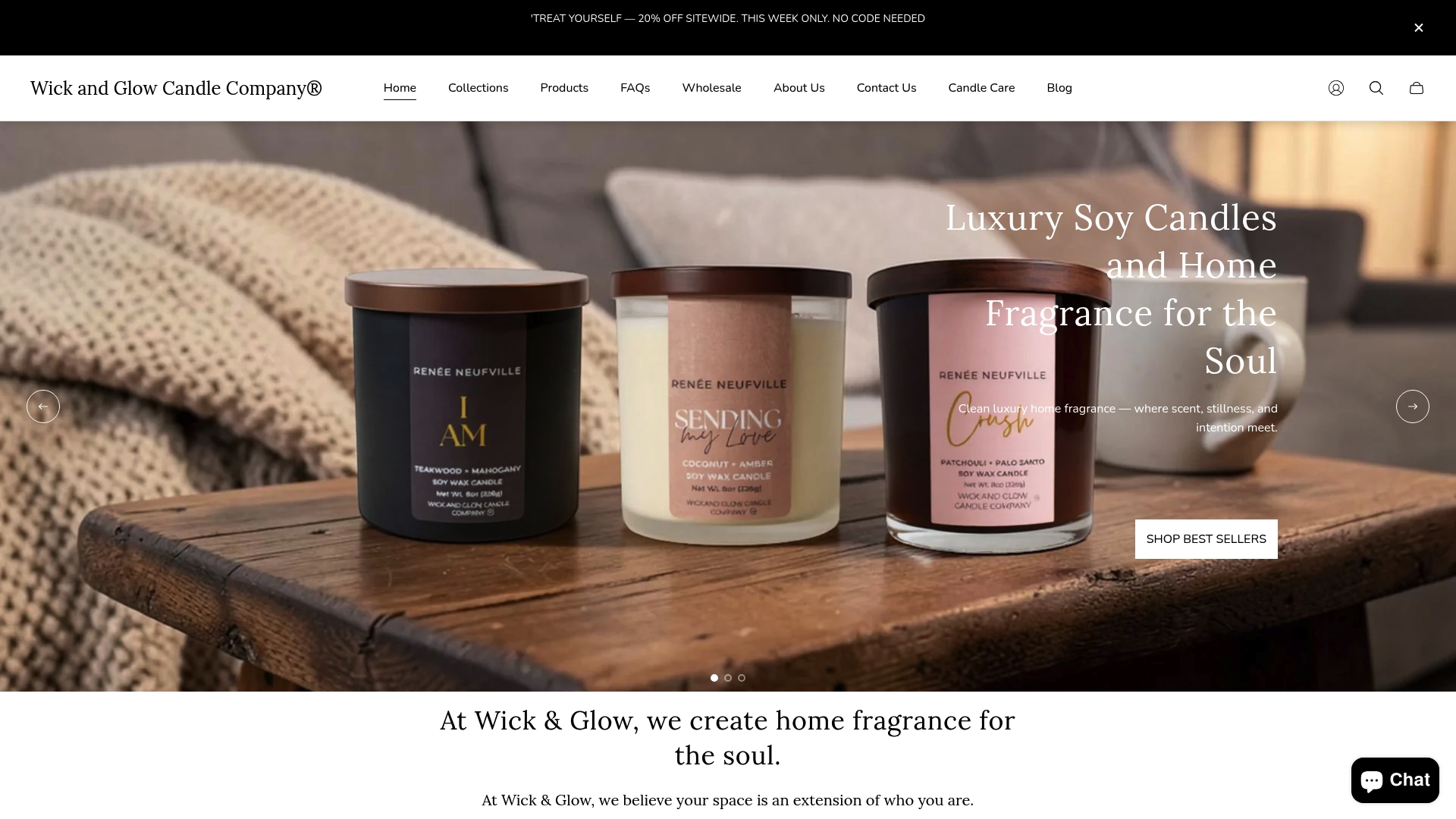
The Scenting My Love Trio brings together three complementary scents designed to layer across different rooms or moods, giving you a ready-made starting point for fragrance zoning. For a flameless, continuous option, the glass reed diffuser delivers long-lasting ambient scent in any room without requiring attention. Each product is made with clean ingredients and paired with a curated playlist, so the sensory experience extends beyond scent alone. Wickandglow also offers a luxury soy candle in Cognac and Tobacco for those building a warm, grounding base note in living spaces or reading rooms.
FAQ
What is the difference between scentscaping and regular home fragrance?
Scentscaping assigns specific scents to specific rooms based on their function, while regular home fragrance typically uses one scent throughout a space without a deliberate strategy. Scentscaping treats fragrance as a design element rather than a finishing touch.
How does intentional home fragrance affect mood?
Scent connects directly to the brain’s limbic system, which controls emotion and memory. Specific scents like lemon, grapefruit, and cinnamon produce measurable effects on performance, perceived age, and creativity.
How many scents should I use in my home?
Most homes work well with three to five distinct scent zones. Using too many creates confusion, while using too few misses the opportunity to tailor each space to its function.
What delivery method works best for bedrooms?
Reed diffusers are the best choice for bedrooms because they release fragrance continuously and passively without requiring a flame. Pair them with a calming scent like lavender or sandalwood for consistent effect.
How often should I change my home fragrance?
Rotating scents every three to four months, or with each season, prevents olfactory fatigue and keeps the experience feeling fresh. Cinnamon and warm spice suit fall, while florals and citrus work well in spring and summer.
Recommended


