Beeswax candles burn cleaner because their natural composition produces less soot and fewer harmful emissions than petroleum-based paraffin, the most common candle wax on the market. The science behind why beeswax candles burn cleaner comes down to molecular structure, combustion chemistry, and what gets released into your indoor air. Paraffin releases trace amounts of benzene and toluene during burning. Beeswax does not. That difference matters if you burn candles regularly at home and care about what you breathe. Understanding the chemistry also helps you separate real benefits from overstated claims, like the popular idea that beeswax actively purifies your air.
Why beeswax candles burn cleaner: the chemistry behind it
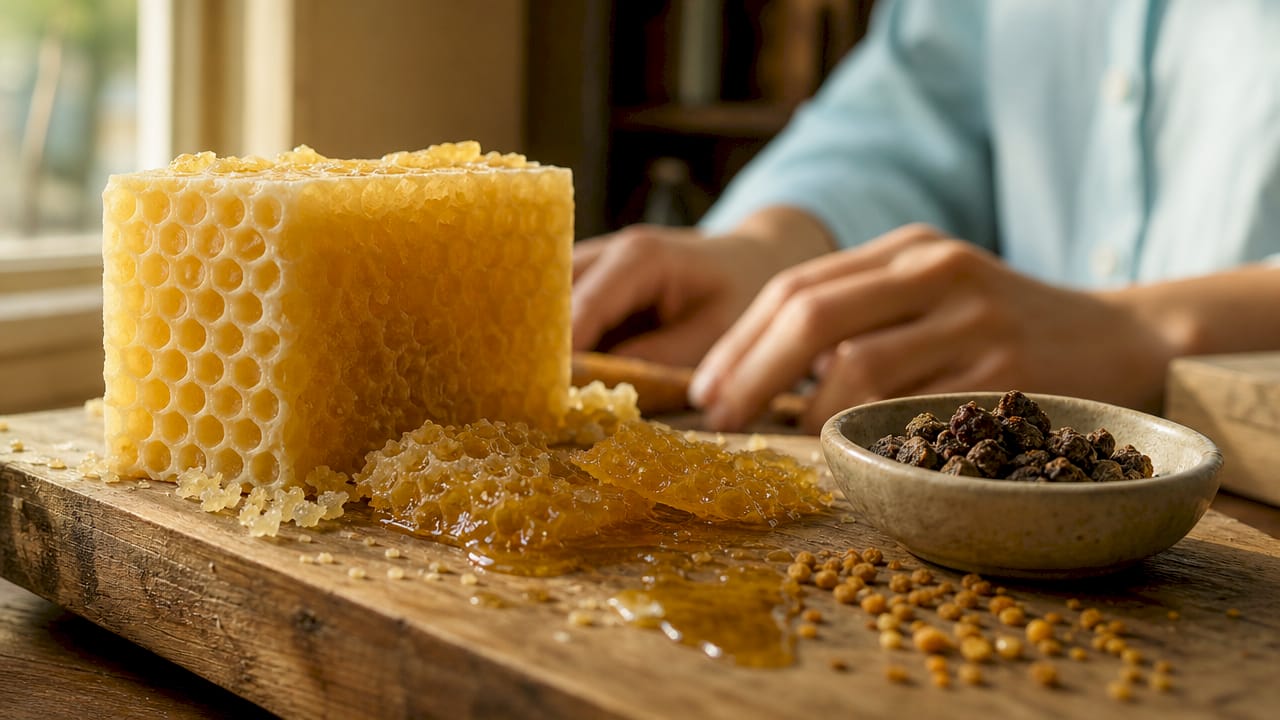
Beeswax is a natural wax secreted by honeybees, composed primarily of long-chain hydrocarbons, fatty acids, and esters. That molecular structure burns more completely than the shorter, more volatile hydrocarbons found in paraffin. More complete combustion means less visible soot and fewer incomplete combustion byproducts released into your room.
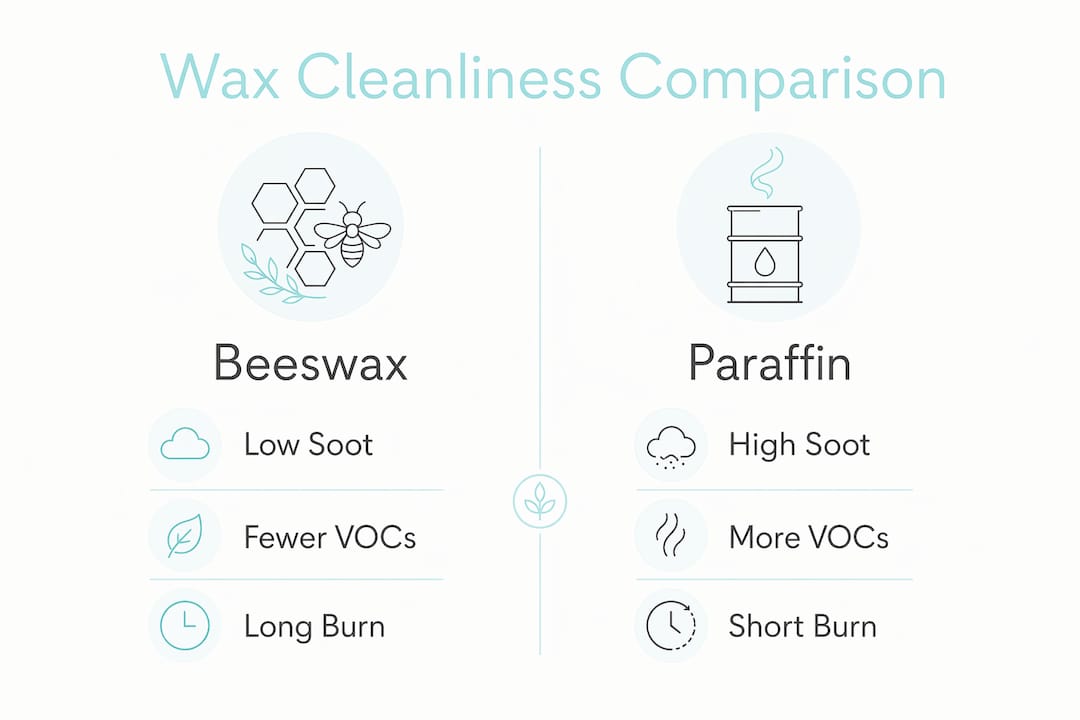
Paraffin is petroleum-derived. Paraffin releases benzene and toluene during combustion, two aromatic VOCs (volatile organic compounds) that are largely absent when burning beeswax or soy under the same conditions. VOCs are the invisible part of the problem. You may not see them, but they accumulate in poorly ventilated spaces.
Beeswax also has a high melting point of around 145°F, which is significantly higher than paraffin or soy. That density slows the burn, produces a brighter flame, and reduces dripping. A slower, hotter burn also means the wax pool stays cleaner and the flame stays more stable.
One important nuance: beeswax in its pure form carries a faint natural honey scent. That scent comes from trace pollen and propolis, not synthetic fragrance. Synthetic fragrance additives can significantly alter the emissions profile of any candle, sometimes more than the wax type itself. A heavily scented beeswax candle may not burn as cleanly as an unscented one.
Pro Tip: When shopping for clean burning candles, look for “100% pure beeswax” on the label. Blended beeswax candles often contain paraffin, which cancels out the cleaner burn benefits.
How wick length and burn conditions affect soot production
The wax type is only half the story. Soot production depends heavily on wick length and flame stability, often more than on the wax itself. Two beeswax candles can behave very differently depending on how they are maintained and where they are burned.
A wick that is too long creates a larger, flickering flame that pulls more wax up faster than it can combust fully. That incomplete combustion produces black soot. The same beeswax candle with a properly trimmed wick burns almost invisibly clean.
Follow these steps to get the cleanest burn from any beeswax candle:
-
Trim the wick to about ¼ inch (6mm) before every single burn. This is the single most impactful thing you can do. A longer wick is the primary cause of soot rings on glass containers.
-
Allow the wax pool to reach the edges before extinguishing. This prevents tunneling and keeps the wick centered in the melt pool, which stabilizes the flame.
-
Keep the candle away from drafts, fans, and air vents. Airflow disrupts the flame, causes uneven burning, and dramatically increases soot output.
-
Burn in a room with moderate ventilation. Completely sealed rooms allow particulate matter to accumulate. A cracked window is enough.
-
Extinguish with a snuffer, not by blowing. Blowing out a candle sends a puff of unburned wax and soot into the air.
A sustainable wick guide covers wick sizing and materials in detail, which matters when you are choosing between cotton, wood, and hemp wicks for different wax types.
Pro Tip: Keep a dedicated wick trimmer next to your candles. Using scissors at the wrong angle leaves uneven cuts that cause the wick to curl and produce more soot.
Do beeswax candles purify air? Separating myth from science
The claim that beeswax candles purify air is one of the most repeated ideas in the natural candle space. The reality is more limited than the marketing suggests.
The theory goes like this: burning beeswax releases negative ions, which attract positively charged airborne particles like dust, pollen, and mold spores, causing them to fall out of the air. There is some truth to this. Negative ions do attract particulate matter to nearby surfaces. The problem is that the particles settle onto your furniture and floor rather than being removed from your environment. They are still there. You just cannot see them floating.
The spatial effect is also very limited. Ion concentration drops off rapidly within 1–3 meters of the candle. A single candle in a living room does not generate enough ions to meaningfully affect air quality across the whole space.
Here is the honest comparison between beeswax air quality claims and the actual evidence:
| Claim |
What the evidence says |
| Beeswax releases negative ions |
True, but effect is localized within 1–3 meters |
| Negative ions remove airborne particles |
Particles settle to surfaces, not eliminated |
| Beeswax candles purify indoor air |
Not supported as a replacement for air filtration |
| Beeswax produces less soot than paraffin |
Well supported by combustion chemistry |
| Beeswax emits fewer VOCs than paraffin |
Supported, especially for unscented varieties |
Evidence for beeswax as an air purifier is limited and should not replace mechanical air filtration like HEPA filters or proper ventilation. Beeswax is a lower-emission choice, not a medical-grade air treatment. That framing is more accurate and still genuinely useful.
Burning any candle, including beeswax, raises indoor PM2.5 levels to some degree. Proper wick maintenance and ventilation reduce that impact significantly. The goal is minimizing what you add to the air, not expecting the candle to clean it.
Beeswax vs paraffin vs soy: which burns cleanest?
Choosing between beeswax, paraffin, and soy comes down to what you prioritize: emissions, cost, scent throw, or burn time. Each wax has a distinct profile.
| Wax type |
Soot output |
VOC emissions |
Burn time |
Fragrance performance |
| Beeswax |
Very low |
Very low (unscented) |
Longest |
Faint natural honey scent |
| Soy |
Low |
Low |
Medium |
Good with added fragrance |
| Paraffin |
Higher |
Higher (benzene, toluene) |
Shortest |
Strongest scent throw |
Paraffin dominates the mass market because it is cheap and holds fragrance well. But that strong scent throw comes with a cost. Paraffin’s petroleum base releases more aromatic VOCs, and its lower melting point means it burns faster and produces more drip and soot residue.
Soy wax sits in the middle. It burns cleaner than paraffin and is a renewable resource, but it does not match beeswax’s burn time or natural scent profile. The benefits of soy wax candles are real, particularly for consumers who want lower emissions but need stronger fragrance options.
Beeswax wins on burn duration and emissions, but it costs more and carries a subtle honey note that not everyone wants with added fragrance. The key takeaway: wax type sets the baseline, but fragrance load and formulation can override that baseline entirely. A heavily fragranced beeswax candle may emit more VOCs than a lightly scented soy candle.
- Beeswax burns brightest and longest due to its high melting point
- Paraffin produces the most soot and aromatic VOCs of the three
- Soy offers a cleaner alternative to paraffin at a lower price point than beeswax
- All three wax types produce more emissions when heavily scented with synthetic fragrance
Practical benefits of beeswax candles for home ambiance and health
The practical case for beeswax candles is strong, especially for people who burn candles daily or live with allergy sufferers. Beeswax emits fewer irritants than paraffin, making it a better fit for sensitive individuals and smaller rooms where air quality matters most.
The benefits stack up across several areas:
-
Cleaner surfaces. Less soot means fewer black rings on jar rims, less residue on walls, and cleaner air near the flame.
-
Longer burn time. The high melting point means beeswax candles last significantly longer than paraffin equivalents of the same size, offering better value over time.
-
No synthetic fragrance required. Pure beeswax carries a natural honey scent that many people find pleasant without any added fragrance, reducing VOC exposure entirely.
-
Better for sensitive people. Those with fragrance sensitivities, asthma, or allergies benefit from the reduced chemical load. Knowing what toxic ingredients to avoid in candles helps you make smarter choices beyond just wax type.
-
Brighter, warmer light. Beeswax burns at a color temperature close to natural sunlight, which creates a noticeably warmer and more flattering ambient light than paraffin.
The combination of lower emissions, longer burn, and natural scent makes beeswax the strongest option for health-conscious consumers who want candles as a regular part of their home environment.
Key Takeaways
Beeswax candles burn cleaner than paraffin because their natural molecular structure produces less soot, fewer aromatic VOCs, and a longer, more stable flame when properly maintained.
| Point |
Details |
| Cleaner combustion chemistry |
Beeswax produces fewer VOCs and less soot than paraffin due to its natural, non-petroleum composition. |
| Wick trimming is critical |
Trim to ¼ inch before every burn to prevent soot and maintain a stable, clean flame. |
| Air purification claims are overstated |
Negative ions settle particles to surfaces but do not remove them; beeswax is not a substitute for air filtration. |
| Fragrance additives change the equation |
Heavily scented beeswax candles may emit more VOCs than lightly scented soy, regardless of wax type. |
| Best for sensitive individuals |
Pure beeswax with no synthetic fragrance reduces VOC exposure and allergy triggers significantly. |
What I’ve learned from burning beeswax candles the right way
The biggest mistake I see people make is buying a quality beeswax candle and then treating it like any other candle. They skip the wick trim, burn it near an open window, and then wonder why there is a soot ring forming on the glass. The candle is not the problem. The care is.
Beeswax rewards attention. When you trim the wick, burn it in a still room, and let the melt pool reach the edges, the difference is visible. The flame is steady, the light is warm, and there is almost no smoke. That is not marketing. That is just combustion physics working in your favor.
I am also cautious about the air purification angle. The negative ion story is appealing, and I understand why brands lean into it. But I would rather give you the honest version: beeswax is a lower-emission choice, not a room purifier. If you have serious air quality concerns, a HEPA filter does the job a candle cannot. Use beeswax for what it genuinely does well, which is burning cleanly, lasting longer, and creating a healthier ambiance than paraffin without the synthetic fragrance load.
One more thing worth saying: not all beeswax candles are equal. A blended candle labeled “made with beeswax” may contain as little as 10% beeswax. Look for 100% pure beeswax on the label. The price difference is real, but so is the performance difference.
— B
Cleaner candles for a home that actually smells good
If you want the benefits of a cleaner burn without giving up great fragrance, Wickandglow offers a range of non-toxic, phthalate-free home fragrance products built for exactly that balance.
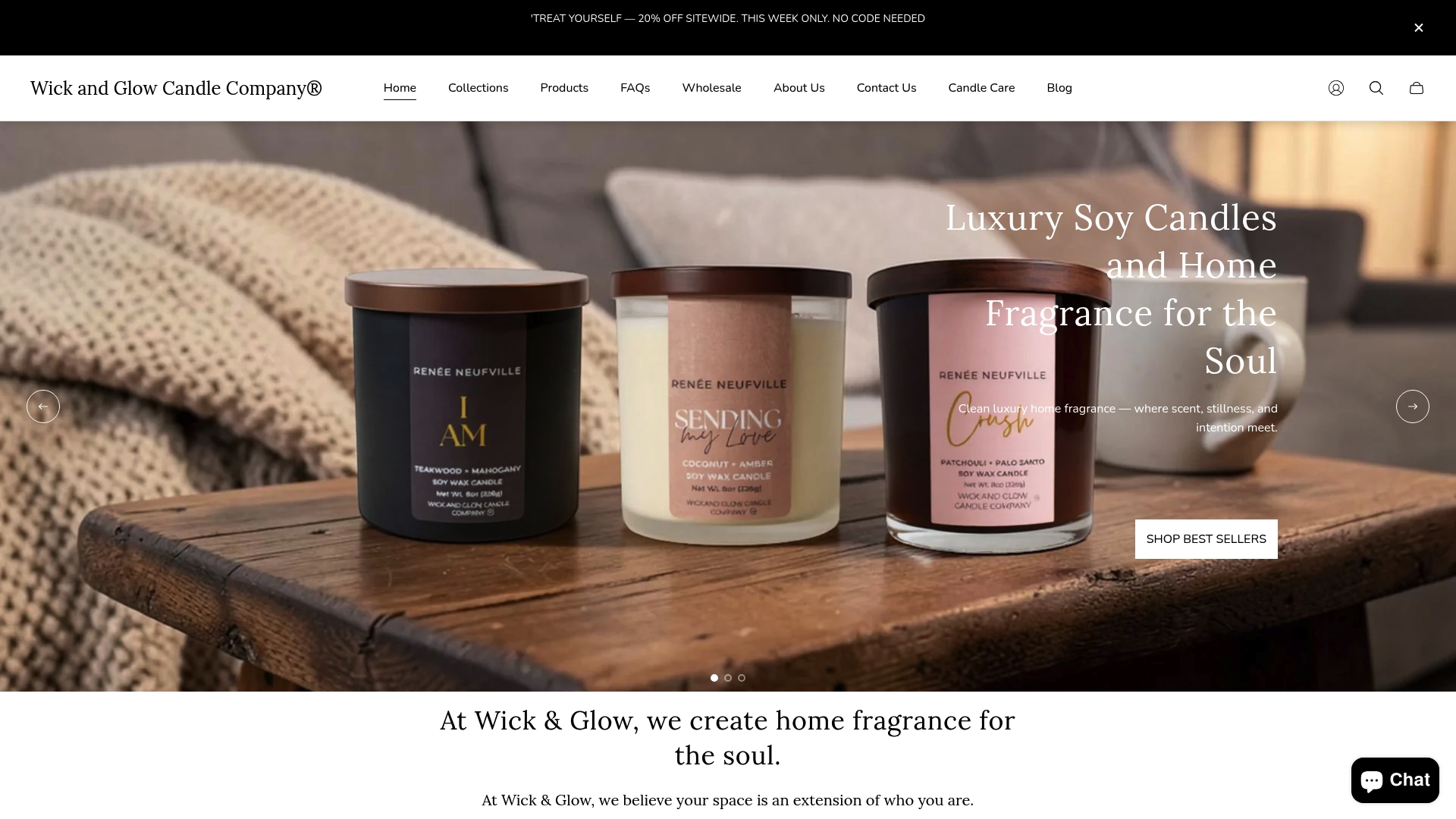
The home fragrance scent bundle pairs a soy candle with a reed diffuser and room spray, giving you multiple ways to scent your space without relying on a single candle burning for hours. Every product in the Wickandglow lineup is vegan and phthalate-free, which means the fragrance is doing its job without the chemical load that undermines a clean burn. For candle care, a quality wick trimmer keeps every burn performing at its best. Wickandglow also carries the Scenting My Love Collection in collaboration with Renée Neufville, where artistry and clean fragrance meet.
FAQ
Why do beeswax candles produce less soot than paraffin?
Beeswax has a denser molecular structure that burns more completely than petroleum-derived paraffin, leaving fewer unburned carbon particles. Paraffin also releases aromatic VOCs like benzene and toluene that beeswax does not.
How often should I trim a beeswax candle wick?
Trim the wick to ¼ inch (6mm) before every single burn. This is the most effective way to prevent soot and keep the flame stable and clean.
Do beeswax candles actually clean the air?
Beeswax candles release negative ions that attract airborne particles to nearby surfaces, but this does not remove contaminants from your environment. Beeswax is a lower-emission choice, not a replacement for mechanical air filtration.
Are scented beeswax candles still cleaner than paraffin?
Not always. Synthetic fragrance additives significantly increase VOC emissions in any candle. An unscented beeswax candle burns cleanest, while a heavily fragranced beeswax candle may emit more VOCs than a lightly scented soy alternative.
What makes beeswax a healthier candle option for sensitive people?
Pure beeswax carries only a faint natural honey scent with no synthetic fragrance, which reduces VOC exposure and common allergy triggers. Its lower soot output also means fewer airborne particles in your home compared to paraffin candles.
Recommended


