A sustainable candle wick is a natural, non-toxic wick designed to deliver a clean, efficient burn while minimizing environmental and health impacts. This sustainable candle wick guide covers every decision you need to make: which materials to choose, how to size them correctly, how to test for performance, and how to fix common problems. The right wick determines whether your candle burns clean or fills a room with soot. Key players in this space include the ECO series cotton wicks, wooden wicks made from poplar and birch, and safety standards like ASTM F2417 that define what a safe flame actually looks like.
What are sustainable candle wick materials?
Sustainable wick materials fall into three main categories: cotton flat braid, organic coreless cotton, and wood. Each burns differently, suits different wax types, and carries a different environmental footprint.
Cotton flat braid wicks (ECO series)
ECO series wicks are cotton flat braid wicks reinforced with a paper filament thread. That paper core gives the wick rigidity without using metal. Coreless ECO wicks with paper filament stabilize the flame and prevent the excessive carbon buildup that causes soot and mushrooming. ECO-8 wicks, for example, are specifically suited for soy and lower-melt paraffin waxes. They self-trim as they burn, which reduces the need for constant maintenance.
Organic coreless cotton wicks
Coreless cotton wicks contain no paper or metal reinforcement. They are softer and more flexible, which makes them better suited for softer waxes like coconut or beeswax blends. They require more careful sizing because the lack of rigidity can cause the flame to lean or drown in high-fragrance-load formulas.
Wooden wicks
Wooden wicks made from poplar, maple, and birch offer a clean burn and are recommended for soy-based blends. They produce a soft crackling sound and a wide, low flame that many makers and buyers prefer. The tradeoff is that wood wicks need precise sizing and trimming. A wood wick that is too thick will produce a flame too large for the vessel. One that is too thin will extinguish before the wax pool fully forms.
Material safety standards
Lead-free, chemical-free wick materials and zinc-free sustainers are the foundation of any sustainable wick selection. Wicks that contain lead or zinc release heavy metals into the air during combustion. Third-party testing for heavy metals is now standard practice among reputable suppliers. If a wick supplier cannot confirm lead-free and zinc-free certification, that wick does not belong in a clean candle. You can learn more about which toxic candle ingredients to avoid when building your formula.
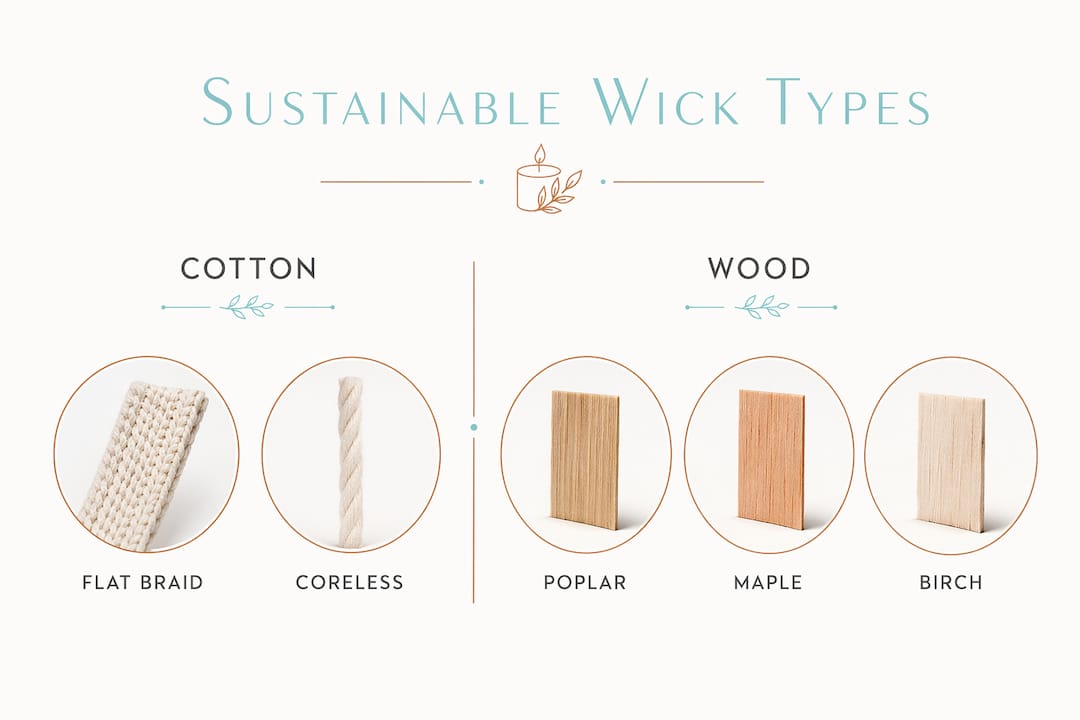
| Wick Type |
Material |
Best Wax Match |
Key Benefit |
| ECO Flat Braid |
Cotton + paper filament |
Soy, low-melt paraffin |
Self-trimming, stable flame |
| Coreless Cotton |
100% organic cotton |
Coconut, beeswax blends |
No metal, fully natural |
| Wood Wick |
Poplar, maple, birch |
Soy, coconut blends |
Aesthetic crackle, wide melt pool |
How do you choose the right wick size?
Wick sizing is the most technical part of eco-friendly candle making, and it is where most beginners make costly mistakes. The correct wick size depends on three variables: container diameter, wax type, and fragrance load.
Step 1: Measure your container diameter. Use a ruler to measure the inside diameter of your vessel at the widest point. This number is your primary sizing reference.
Step 2: Consult a wick chart for your wax. ECO wick size charts tied to Golden Wax 464 are a reliable starting point for soy candle makers. A 3-inch diameter container in Golden Wax 464 typically calls for an ECO-8 or ECO-10 wick. These charts give you a range, not a final answer.
Step 3: Account for fragrance load. Fragrance oil changes how wax melts and how the wick draws fuel. A 10% fragrance load in soy wax behaves very differently from a 6% load. Wick material and size must match wax type, fragrance load, and container size to avoid fire safety issues and maximize scent throw. Whenever you change your fragrance percentage, treat it as a new formula and retest.
Step 4: Run a test burn before committing. Manufacturer wick charts are useful starting points, but testing remains essential for any formulation change. A chart tells you where to start. A test burn tells you where to land.
Step 5: Check flame height against ASTM F2417. ASTM F2417 limits flame height to about 3 inches and after-smoke time to under 15 seconds. A flame taller than 3 inches signals that your wick is too large for the vessel and formula. This is not just a performance issue. It is a safety issue.
Pro Tip: Precisely measuring container diameter and matching wick size matters more than relying on wick size numbers alone, since wax and formulation variations affect optimal wick performance.
How do you test and optimize sustainable wicks?
Testing is not optional. DIY candle makers should treat wick selection as an iterative process of testing and refinement rather than a one-time choice. Here is the workflow that produces reliable results.
-
Pour three test candles using the same formula. Label each with the wick type and size.
-
Burn the first candle for 2 hours. Observe flame height, soot on the glass, and whether a full melt pool forms edge to edge.
-
Check for mushrooming. A carbon mushroom at the wick tip means the wick is too large or the fragrance load is too high for that wick type.
-
Extinguish and measure after-smoke time. Per ASTM F2417, after-smoke should clear in under 15 seconds. Longer smoke means the wick is not burning cleanly.
-
Trim and relight. Trimming the wick to about 1/8 inch before lighting leads to a cleaner, more stable flame and reduces mushrooming and sooting. This applies to both cotton and wood wicks.
-
Adjust and repeat. If the flame is too tall or soot appears on the glass, move down one wick size. If the melt pool does not reach the edges after 2 hours, move up one size.
Pro Tip: Run small batch test burns of three candles per wick size. This gives you enough data to spot patterns without wasting large quantities of wax or fragrance.
What to watch for during each burn:
-
Flame height: Should stay below 3 inches throughout the burn
-
Melt pool: Should reach the edge of the vessel within 2–3 hours on the first burn
-
Soot: Any black residue on the glass signals incomplete combustion
-
Mushrooming: A carbon ball at the wick tip means the wick is oversized or the formula is too rich
-
Drowning: A wick that keeps extinguishing is too small or too soft for the wax
The fragrance notes and their interaction with wax also affect how the wick performs across the burn. Heavy base notes like musk and wood resins tend to thicken the wax pool and can cause wicks to drown if undersized.
What mistakes should you avoid with natural wicks?
Most candle failures trace back to a short list of avoidable errors. Knowing them before you start saves wax, time, and frustration.
-
Skipping the test burn after any formula change. Adding a new fragrance, switching dye, or changing wax suppliers all affect wick behavior. Burn problems often trace to wick sizing issues or off-center placement, and those problems are invisible until you burn the candle.
-
Ignoring wick trimming. Untrimmed wicks produce larger flames, more soot, and faster fragrance burnoff. A wick trimmer makes this step faster and more precise than scissors.
-
Using a single wick in a wide vessel. Containers wider than 4 inches often need two wicks to achieve a full melt pool. Multi-wicking is a standard solution, not a workaround.
-
Choosing wicks based on size numbers alone. An ECO-8 in one wax formula may perform like an ECO-10 in another. The number is a category, not a guarantee.
-
Overlooking zinc-free sustainers. The metal tab at the base of the wick matters too. Non-metal cored wicks simplify certification and reduce toxic exposure risks. Choose sustainers that are certified lead-free and zinc-free.
“Fire safety standards provide an essential framework for sustainable wick choices by preventing oversized flames that waste fuel and produce pollutants.” — Candle Safety Standards Explained
Understanding plant-based candle ingredients alongside your wick choices gives you a complete picture of what goes into a truly clean candle.
Key takeaways
Choosing the right sustainable wick requires matching natural, certified materials to your specific wax, fragrance load, and vessel size, then confirming performance through test burns.
| Point |
Details |
| Material certification matters |
Choose lead-free, zinc-free wicks with no chemical treatments to avoid toxins in your burn. |
| Wick charts are starting points |
Use ECO wick size charts as a baseline, then run test burns to confirm performance for your formula. |
| Test burns are non-negotiable |
Every formula change, including fragrance or dye swaps, requires a new round of test burns. |
| Trim to 1/8 inch before every burn |
Consistent trimming reduces mushrooming, soot, and flame instability across all wick types. |
| ASTM F2417 is your safety benchmark |
Keep flame height below 3 inches and after-smoke under 15 seconds to meet fire safety standards. |
Why i always start with the wick, not the wax
Most makers fall in love with their wax blend or fragrance first and treat the wick as an afterthought. That is the wrong order. After years of working with soy blends, coconut wax, and high-fragrance formulas, I can tell you that the wick is the variable that makes or breaks everything else.
My preference for ECO coreless cotton-paper wicks comes from one simple observation: they are forgiving without being sloppy. The paper filament gives them enough rigidity to stay centered in a soft soy wax, but they still self-trim as they burn. That combination reduces the number of variables I have to manage during testing. When I switched a formula from 6% to 10% fragrance load, the ECO-8 that worked perfectly at 6% started mushrooming at 10%. That single test burn saved me from producing a batch of candles that would have smoked up every room they burned in.
Wooden wicks are worth experimenting with, especially in natural wax blends. The crackle is genuinely pleasant, and the wide, low flame they produce suits wide-mouth vessels well. The catch is that wood wicks are less forgiving of fragrance load changes than cotton wicks. I recommend starting with wood wicks only after you have locked in your wax and fragrance formula. Change one variable at a time.
The ASTM F2417 flame height limit of 3 inches is not bureaucratic red tape. It is a practical ceiling that tells you when your wick is working too hard. A flame above 3 inches is burning more fuel than the formula can cleanly support. That excess combustion produces the soot and smoke that make natural candles smell and look worse than they should. Staying under that limit is the clearest sign that your wick selection is correct.
— B
Explore clean-burning candles from Wickandglow
If you want to skip the trial-and-error phase and burn a candle that has already been tested and optimized, Wick and Glow builds every product around clean, natural wick technology and premium soy wax.
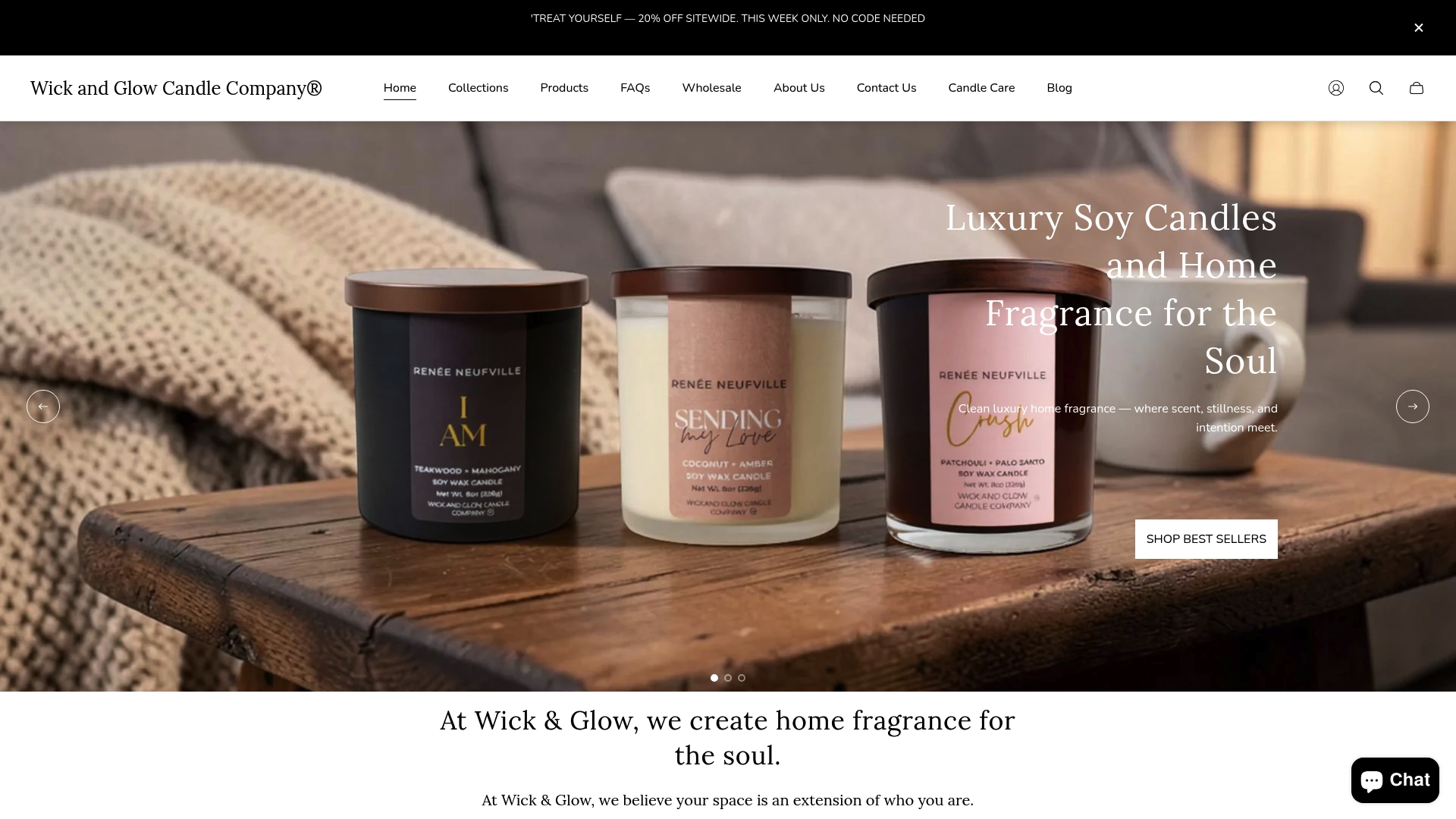
Each Wick and Glow candle uses certified natural wicks matched to the specific fragrance and vessel in the formula. The Comforter Luxury Soy Wax Candle is a strong example of what a properly wicked soy candle performs like from the first burn. For those who want a complete home fragrance setup, the soy candle and diffuser bundle pairs a clean-burning candle with a reed diffuser and room spray, all formulated without phthalates or synthetic toxins. Wick and Glow also publishes detailed candle care guidance to help you get the most out of every burn.
FAQ
What makes a candle wick sustainable?
A sustainable candle wick is made from natural, non-toxic materials like organic cotton, paper filament composites, or FSC-certified wood, with no lead, zinc, or chemical treatments. Third-party testing for heavy metals confirms that the wick meets clean-burning standards.
What are the best wicks for soy candles?
ECO series cotton-paper flat braid wicks, particularly ECO-8 and ECO-10, are widely recommended for soy wax candles. They provide a stable, self-trimming flame and minimize soot and mushrooming in soy formulas.
How do i know if my wick is the wrong size?
A wick that is too large produces a flame taller than 3 inches, mushrooming carbon tips, and soot on the glass. A wick that is too small fails to create a full melt pool within 2–3 hours and may extinguish on its own.
Do i need to retest my wick if i change my fragrance?
Yes. Any change to fragrance type, fragrance load, dye, or additives affects how the wick burns and requires a new round of test burns to confirm performance and safety.
How often should i trim my candle wick?
Trim your wick to 1/8 inch before every single burn. This applies to both cotton and wood wicks and is the single most effective maintenance step for a clean, stable flame.
Recommended


