Phthalates in candles are synthetic chemical compounds added to fragrance formulations to stabilize scent and extend how long it lasts when a candle burns. They act as fixatives, binding fragrance molecules so the scent diffuses more evenly and lingers longer in a room. The catch: they rarely appear by name on any label. Most manufacturers list them simply as “fragrance” or “parfum,” a catch-all term that can hide dozens of undisclosed chemicals, phthalates included. You’ll find them most often in conventional paraffin wax candles with synthetic fragrance blends.
Here’s what that means practically:
- Phthalates are not the fragrance itself. They are the chemical scaffold that holds the scent together.
- They are released into the air when a candle burns, making inhalation the primary exposure route.
- Skin absorption is a secondary pathway, particularly relevant when handling candles or sitting near one for extended periods.
- Conventional scented candles, especially mass-market ones with complex fragrance blends, carry the highest likelihood of containing them.
- “Fragrance-free” does not mean phthalate-free. It means no perceptible scent, but the product may still contain phthalate-based stabilizers.
What health risks come with phthalate exposure from candles?
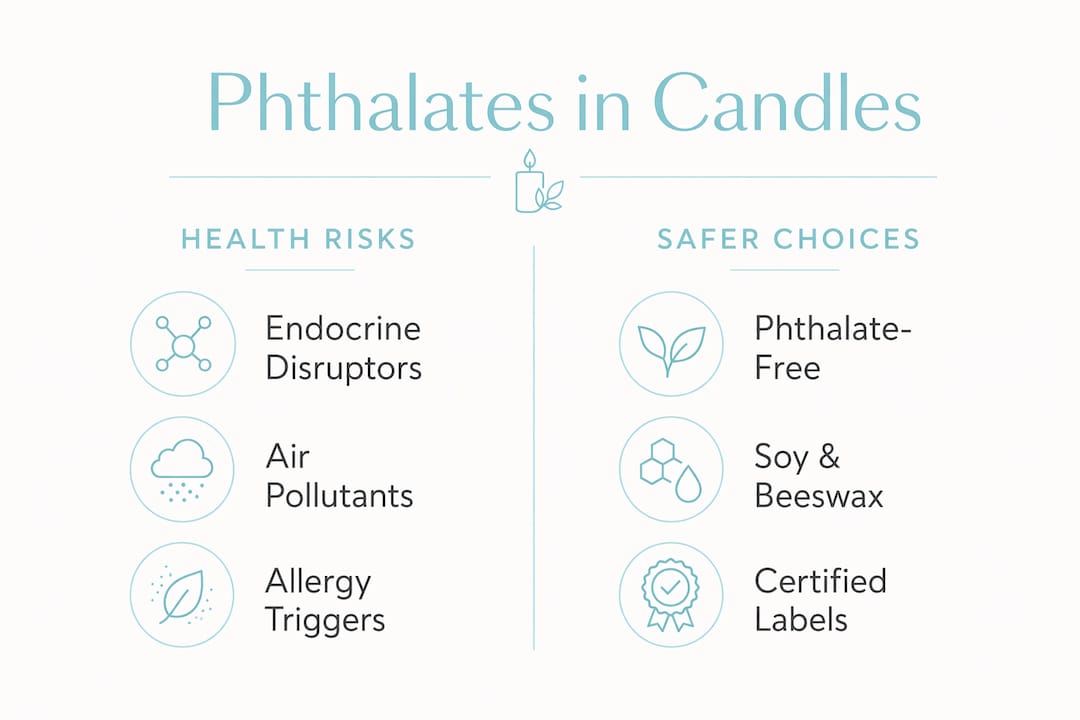
Phthalates are endocrine disruptors, meaning they interfere with the body’s hormone signaling. Research published in peer-reviewed literature links phthalate exposure to decreased sperm quality, hormonal imbalance, preterm birth, and some cancer risks, as well as precocious puberty and obesity. These aren’t fringe findings. The associations appear across multiple independent studies, and regulatory agencies in both the U.S. and Europe have taken notice, even if enforcement in the candle category specifically remains limited.
The respiratory picture is equally concerning. Burning scented candles indoors releases airborne phthalates that can trigger asthma attacks, allergic rhinitis, and coughing, and worsen existing respiratory conditions. People with sensitivities often notice symptoms like headaches, shortness of breath, or eye and throat irritation without connecting them to the candle on the coffee table.
Key health concerns associated with phthalate exposure from candles:
-
Endocrine disruption: Phthalate metabolites have been linked to increased estradiol and decreased testosterone levels.
-
Reproductive effects: High urinary phthalate levels correlate with reduced semen quality in adult males; DEHP has been associated with endometriosis in females.
-
Respiratory symptoms: Regular indoor burning raises exposure to volatile organic compounds (VOCs) that irritate the eyes, nose, and throat, and can damage the central nervous system over time.
-
Developmental risks: Associations with preterm birth and precocious puberty point to particular concern for pregnant people and children.
-
Cumulative load: Candles are one source among many. Phthalates also appear in personal care products, plastics, and cleaning products, so candle exposure adds to an already present body burden.
How do paraffin wax and phthalates degrade your indoor air?
Paraffin wax is a petroleum byproduct, and that origin matters when it burns. It releases VOCs including benzene, toluene, and phthalates, all of which accumulate indoors faster than most people expect, especially in smaller rooms with limited ventilation. The irritation to eyes, nose, and throat that many people attribute to “strong scent” is often a direct response to these combustion byproducts.
The combination of paraffin and synthetic fragrance creates a compounding problem. Paraffin combustion generates particulate matter and soot alongside VOCs. Phthalates from the fragrance layer add their own chemical load on top. Together, they raise the overall toxicity of the air in an enclosed space more than either would alone.
- Paraffin candles with synthetic fragrance produce the highest VOC output of any common candle type.
- Enclosed spaces like bedrooms and bathrooms concentrate these emissions quickly.
- Chronic low-level exposure, not just a single burn session, is where the real risk accumulates.
- Nervous system effects from prolonged VOC inhalation include headaches, nausea, and cognitive fatigue.
Pro Tip: Open a window or run a ventilation fan when burning any scented candle indoors, regardless of wax type. Even cleaner-burning candles benefit from airflow.
Which phthalate compounds actually show up in candle fragrances?
Not all phthalates carry the same risk profile, and the type present in a given candle matters. Diethyl phthalate (DEP) is the most common in fragrance applications and is generally considered lower risk within regulated use limits. Diethylhexyl phthalate (DEHP) and dibutyl phthalate (DBP) sit at the other end of the spectrum: both face tighter regulatory scrutiny due to stronger associations with reproductive toxicity and endocrine disruption.
The practical problem is that you almost never know which specific compound is in a candle you’re considering. Fragrance formulations are protected as trade secrets under U.S. law, so manufacturers aren’t required to disclose individual components. A label that says “fragrance” could contain DEP, DEHP, DBP, or a mixture, with no way to distinguish from the outside of the jar.
-
DEP (diethyl phthalate): Widely used in fragrance; lower toxicity profile but still an endocrine disruptor at higher exposures.
-
DEHP (diethylhexyl phthalate): Higher toxicity; linked to reproductive harm and under regulatory restriction in several product categories.
-
DBP (dibutyl phthalate): Associated with developmental toxicity; restricted in cosmetics in the EU but less tightly controlled in U.S. household products.
-
Unlisted compounds: Many fragrance blends contain phthalate variants that don’t appear on any consumer-facing document.
What do U.S. regulations actually say about phthalates in candles?
The regulatory picture in the U.S. is fragmented. The Environmental Protection Agency (EPA) and the Consumer Product Safety Commission (CPSC) have broad authority over chemical safety but impose no specific phthalate limits for candles as a product category. The Food and Drug Administration (FDA) applies stricter phthalate rules to cosmetics, but candles fall outside that jurisdiction entirely.
Voluntary industry standards exist, promoted by organizations like the National Candle Association, but participation is optional and labeling requirements remain minimal. The result is a gap that puts the burden squarely on consumers. Third-party certifications, such as those from MADE SAFE or EWG Verified, have grown in response to that gap, giving health-conscious shoppers a more reliable signal than the ingredient label alone.
- The EPA classifies several phthalates as chemicals of concern but has not set candle-specific exposure limits.
- The CPSC can act on products that present a substantial hazard, but enforcement in the candle category has been limited.
- EU regulations are considerably stricter, restricting DEHP, DBP, and BBP in many consumer products under REACH.
- Third-party certifications and brand-level transparency currently offer more practical protection than federal regulation.
What are the best phthalate-free candle alternatives?
The clearest path away from phthalate exposure is switching the wax base and the fragrance source at the same time. Beeswax and soy wax burn cleaner than paraffin and don’t carry the petrochemical baggage. Pair either with essential oils or botanical extracts instead of synthetic fragrance blends, and you’ve removed the two main phthalate delivery mechanisms in one move.
Soy wax, in particular, has become the standard for plant-based ingredient candles because it burns cooler and slower than paraffin, producing less soot and fewer VOCs. Beeswax burns even cleaner and emits negative ions that may help neutralize airborne pollutants, though it comes at a higher price point. Coconut wax is another option gaining traction for its clean burn and good scent throw with natural fragrances.
-
Beeswax: Naturally clean-burning, no petrochemical additives, pairs well with essential oils.
-
Soy wax: Widely available, lower VOC output than paraffin, biodegradable.
-
Coconut wax: Clean burn, excellent fragrance retention with natural oils, typically blended with other natural waxes.
-
Essential oil fragrances: Derived from plants, no synthetic phthalate fixatives, and carry genuine aromatherapy benefits.
-
Botanical extracts: Provide complex scent profiles without synthetic chemical scaffolding.
Candles like the Lab Co Amber & Clove or Lab Co Lemon & Salt illustrate what verified phthalate-free fragrance formulations look like in practice: clear ingredient sourcing, natural wax bases, and no hidden “fragrance” catch-all.
How experts recommend choosing healthier candles
Health and environmental experts consistently point to fragrance ingredient disclosure as the single most useful filter when evaluating candles. A brand willing to list every fragrance component, or that carries a third-party certification like MADE SAFE or EWG Verified, has already cleared the bar that most mass-market products fail. Botanical essential oils add a layer of benefit beyond safety: lavender, eucalyptus, and cedarwood, for example, have documented aromatherapy effects that synthetic fragrance analogs don’t replicate.
Wickandglow’s approach reflects exactly what experts recommend. Each candle is made with care and intentional ingredient selection, using fragrance formulations that prioritize transparency over complexity. The brand’s guide to non-toxic candles walks through what to look for and what to avoid, grounded in the same principles that health-focused organizations advocate.
Pro Tip: When evaluating a candle brand, look for a full ingredient list, not just a scent description. If the label says only “fragrance,” ask the brand directly whether their formulation is phthalate-free and whether they have third-party testing to back it up.
How to read labels and spot phthalate-free candles
The most reliable way to avoid phthalates is to treat “fragrance” on a label as a red flag, not a neutral descriptor. That single word can legally cover hundreds of undisclosed chemicals. Here’s a practical approach to evaluating any candle before you buy:
Check the wax type first. Paraffin is the highest-risk base. Soy, beeswax, or coconut wax signals a cleaner starting point.
Look for specific fragrance sourcing. Phrases like “scented with essential oils” or “botanical fragrance” are more meaningful than “natural scent,” which has no regulated definition.
Seek third-party certifications. MADE SAFE, EWG Verified, and Leaping Bunny (for cruelty-free) all require ingredient review. A candle carrying one of these has been evaluated beyond what any label law requires.
Ask about phthalate-free claims directly. Reputable brands will confirm in writing whether their fragrance oils are phthalate-free and whether they test for it. Vague answers are informative in their own way.
Use Wickandglow’s resources. The brand’s detailed breakdown of toxic ingredients to avoid and its coverage of endocrine disruptors in candles give you a concrete checklist grounded in the same science behind the research on phthalate exposure.
Wickandglow: candles worth burning
If you’ve read this far, you’re not looking for just any candle. You want one that smells genuinely good, burns clean, and doesn’t trade your indoor air quality for a pleasant scent. Wickandglow’s collections are built around exactly that standard: artisanal fragrances inspired by R&B music, paired with intentional, non-toxic ingredients.
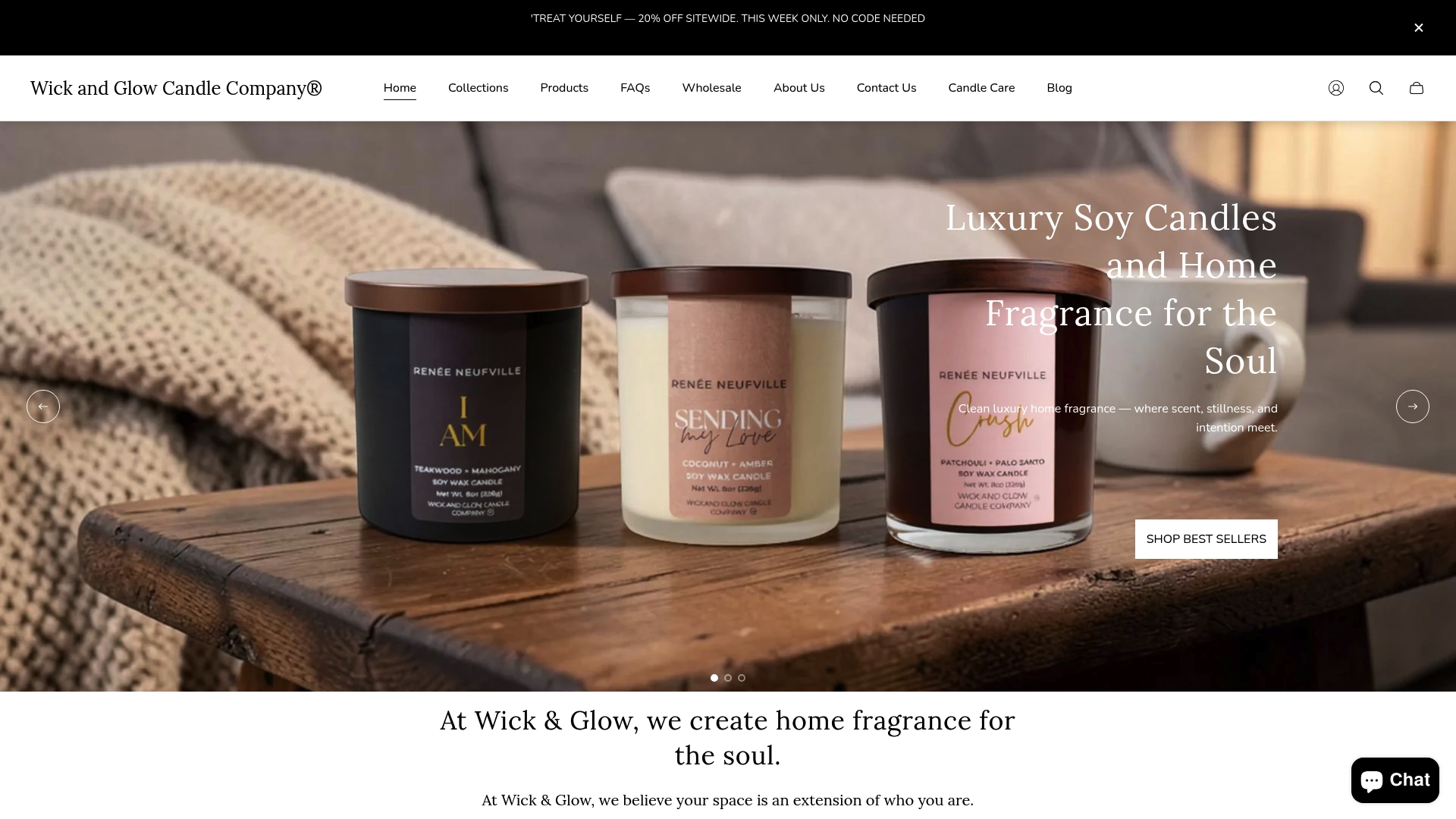
The Men Love Candles Too collection is a strong starting point if you want phthalate-conscious candles with real character. Every scent comes with a curated playlist, because the right fragrance and the right music hit differently together.
Key Takeaways
Phthalates in candles are synthetic fragrance stabilizers that release into the air when burned, posing endocrine disruption and respiratory risks that cleaner wax and fragrance alternatives can largely eliminate.
| Point |
Details |
| Phthalates hide in “fragrance” labels |
Manufacturers aren’t required to disclose individual fragrance chemicals, so “fragrance” may contain phthalates. |
| Endocrine and reproductive risks |
Research links phthalate exposure to hormonal imbalance, decreased sperm quality, and developmental effects. |
| Paraffin wax compounds the problem |
Paraffin releases VOCs and soot alongside phthalates, raising the overall toxicity of indoor air. |
| Safer waxes and fragrances exist |
Beeswax, soy wax, and coconut wax paired with essential oils eliminate the main phthalate exposure routes. |
| Certifications fill the regulatory gap |
Third-party certifications like MADE SAFE and EWG Verified offer more reliable safety assurance than U.S. candle labeling laws currently require. |
Recommended


