Paraffin wax, synthetic fragrances containing phthalates, and lead-core wicks are the three primary toxic ingredients in candles to avoid if you care about your indoor air quality. When burned, these ingredients release compounds including benzene, toluene, and hormone-disrupting chemicals that accumulate in enclosed spaces. The health risks are real and well-documented, yet most candle labels give you almost no information to work with. This guide breaks down every harmful ingredient by name, explains exactly what it does to your body, and tells you what to look for on labels so you can shop with confidence.
1. Paraffin wax: why it’s the most harmful candle ingredient
Paraffin wax is a petroleum byproduct, refined from crude oil, and it is the most widely used candle wax on the market. That origin matters because paraffin combustion releases carcinogenic compounds including benzene, toluene, naphthalene, anthracene, and pyrene. These are the same volatile organic compounds (VOCs) found in vehicle exhaust and industrial solvents. Burning a paraffin candle in a closed room is not the same as sitting next to a highway, but repeated daily exposure in a small space adds up.
Benzene and toluene are classified as known human carcinogens by the EPA. A single candle session may not trigger immediate symptoms, but consistent exposure over months and years is where the risk compounds. People with asthma, allergies, or chemical sensitivities tend to notice the effects first, often as headaches, throat irritation, or worsened respiratory symptoms.

Identifying paraffin on a label is harder than it should be. Brands are not required to list wax type in detail, so you will see terms like “paraffin,” “petroleum wax,” or simply no wax disclosure at all. Unlabeled wax blends almost always contain paraffin.
Safe alternatives include:
-
100% soy wax (derived from soybeans, burns cooler and cleaner)
-
Beeswax (naturally filtered, emits negative ions that can neutralize airborne pollutants)
-
Coconut wax (slow-burning, low-soot, and sustainably sourced)
Pro Tip: If a candle label says “soy blend” without specifying percentages, assume it contains paraffin. Only “100% soy wax” or “100% beeswax” guarantees you are getting a clean-burning base.
2. Synthetic fragrances and the phthalate problem
The word “fragrance” on a candle label is a legal catch-all that can hide thousands of undisclosed chemicals, many of them phthalates. Dr. Yvonne Burkart, a toxicologist, has explained that a single fragrance formulation can contain up to 4,000 individual chemicals, none of which manufacturers are required to disclose. This is the fragrance transparency loophole, and it is the reason that “smells natural” means nothing from a safety standpoint.
Phthalates are the specific class of chemicals that should concern you most. They are endocrine disruptors, meaning they interfere with hormone signaling in the body. Documented health effects include reproductive harm, developmental issues in children, and respiratory inflammation. They enter your body through inhalation when a scented candle burns, and through skin absorption if you handle the wax directly.
The candles most likely to contain phthalates are:
- Mass-produced paraffin candles with heavy synthetic scents
- Candles labeled “fragrance oil” without further ingredient disclosure
- Imported candles without third-party safety testing
“Fragrance is one of the most significant transparency loopholes in consumer products. Until brands are required to disclose every ingredient in a fragrance blend, consumers have to treat ‘fragrance’ as a red flag and demand more.” — Dr. Yvonne Burkart, toxicologist
To find genuinely safer options, look for candles scented with pure essential oils and labeled “phthalate-free” with a full ingredient list to back that claim. A phthalate-free label alone is not enough if the brand does not also publish its fragrance ingredients. Transparency is the standard, not the exception. You can also explore how fragrance notes work in candles to better understand what you are actually burning.
Lead-core wicks were banned in the United States in 2003 by the Consumer Product Safety Commission after studies confirmed they release toxic lead particles during burning, posing poisoning risks particularly to children and pets. Despite the ban, some imported candles still arrive with lead-core wicks, making country of origin and third-party testing relevant factors when you shop.
Even without lead, metal-core wicks made from zinc or tin release small amounts of metal during combustion. The risk is lower than lead, but inhaling any heavy metal particulate over time is not a neutral act. Zinc and tin cores are often used to keep wicks upright in container candles, so they are common in mass-market products.
How to identify wick type before you buy:
-
Cotton wicks look soft and braided with no visible metallic thread
-
Wood wicks are flat, pale, and crackle when burning
-
Metal-core wicks have a thin, stiff wire running through the center that you can feel or see when you bend the unlit wick
The safest wick materials are 100% cotton (unbleached is best) and untreated wood. Both burn cleanly without releasing metal compounds, and both are widely available in quality candles from transparent brands.
4. Comparing candle waxes and wick types for safety
Not all natural waxes perform equally, and the “natural” label on a candle does not automatically mean safe. Here is a direct comparison of the most common wax and wick types:
| Material |
Toxicity level |
Soot production |
Key concern |
| Paraffin wax |
High |
High |
Releases benzene, toluene, and VOCs |
| Soy wax (100%) |
Low |
Low |
Safe; watch for paraffin blends |
| Beeswax (100%) |
Very low |
Very low |
Premium price; verify purity |
| Coconut wax |
Low |
Low |
Sustainable; check for additives |
| Cotton wick |
Very low |
Minimal |
Safest standard wick option |
| Wood wick |
Very low |
Minimal |
Crackle effect; burns clean |
| Metal-core wick |
Moderate |
Moderate |
Zinc/tin release; avoid when possible |
| Lead-core wick |
Very high |
High |
Banned in U.S.; still found in imports |
The most important thing this table reveals is that soy and beeswax candles burn significantly cleaner than paraffin, but wax blends dilute those benefits entirely. A candle labeled “made with soy” could legally be 10% soy and 90% paraffin. Only “100% soy wax” or “100% beeswax” on the label gives you the clean burn you are paying for.
Myths about natural candles also deserve a direct answer. “Natural” does not mean non-toxic. Palm wax, for example, is plant-derived but raises serious sustainability concerns and can still produce soot. Beeswax candles from unverified sources may contain additives. The standard to hold brands to is full ingredient disclosure, not just a marketing claim. Wickandglow’s guide on plant-based candle ingredients explains what genuine clean labeling looks like in practice.
Pro Tip: Run a quick test on any cotton wick candle before buying. Bend the unlit wick between your fingers. If it stays rigid or you feel a wire core, it contains metal. A soft, flexible wick is cotton or wood.
5. Candle additives and colorants to watch out for
Beyond wax and fragrance, candle additives are a category of candle additives to avoid that most consumers never think to check. Synthetic dyes, UV stabilizers, and hardening agents are commonly added to mass-market candles to improve appearance and shelf life. These additives burn along with the wax and release their own set of compounds into your air.
Synthetic dyes, particularly azo dyes, have been linked to allergic reactions and respiratory irritation when combusted. UV stabilizers, added to prevent color fading, are rarely disclosed on labels and have limited safety data for inhalation exposure. Hardening agents like stearic acid are generally considered safe, but petroleum-derived hardeners are not.
The safest candles use no added colorants at all, or natural colorants like mica or plant-based pigments in minimal quantities. An uncolored or lightly tinted candle from a transparent brand is almost always a better choice than a vividly colored candle with no ingredient disclosure. If a brand cannot tell you what gives their candle its color, that is a signal worth taking seriously.
6. Practical tips for safer candle use at home
Even the best non-toxic candles produce some particulate matter when burned. Ventilation and moderation reduce your exposure to indoor air pollutants regardless of which wax or wick you choose. These habits make a measurable difference:
-
Trim your wick to 1/4 inch before every burn. A long wick produces a larger flame, more soot, and faster release of combustion byproducts. The Wickandglow candle care guide covers this in detail.
-
Open a window or run a ventilation fan. Even a small amount of airflow prevents VOCs and particulate matter from concentrating in the room.
-
Limit burn sessions to two to three hours. Extended burns increase total emissions and heat the wax pool to temperatures that accelerate VOC release.
-
Keep candles away from air vents. Forced air circulation spreads combustion byproducts throughout your home faster than still air.
-
Choose flameless alternatives when possible. Reed diffusers, phthalate-free room sprays, and essential oil diffusers provide fragrance without any combustion. These are the safest options for non-toxic home fragrance in homes with children, pets, or people with respiratory conditions.
-
Pet owners: check essential oil safety before diffusing. Essential oils like tea tree, eucalyptus, peppermint, and citrus are toxic to cats and dogs through respiratory and metabolic pathways. Lavender and chamomile are generally considered safer, but always verify with a veterinarian.
Key takeaways
The most harmful candle ingredients are paraffin wax, synthetic fragrances containing phthalates, and metal-core wicks, and avoiding all three is the single most effective way to protect your indoor air quality.
| Point |
Details |
| Paraffin wax is the top risk |
It releases benzene and toluene when burned; choose 100% soy, beeswax, or coconut wax instead. |
| “Fragrance” hides phthalates |
The word “fragrance” can legally conceal thousands of chemicals; demand full ingredient disclosure. |
| Metal-core wicks add combustion risk |
Lead wicks are banned but still found in imports; cotton and wood wicks are the safe standard. |
| “Natural” claims need verification |
Soy blends can contain paraffin; only 100% pure wax labels guarantee a cleaner burn. |
| Habits reduce exposure too |
Wick trimming, ventilation, and limiting burn time lower particulate matter regardless of wax type. |
What I’ve learned from years of reading candle labels
Most consumers assume that if a candle is sold in a reputable store, someone has already checked the ingredients. That assumption is wrong. The candle industry in the United States has no mandatory ingredient disclosure requirement, which means a brand can put almost anything in a candle and label it “natural” or “clean” without consequence. I have picked up candles in high-end home stores, read the label carefully, and found nothing more than a scent name and a country of origin.
The brands that earn trust are the ones that list every ingredient, name their wax source, specify their fragrance components, and publish third-party testing results. That level of transparency is not the norm. It is the exception, and it is exactly what you should hold every candle purchase to.
My honest recommendation is to treat unlabeled fragrance as a hard no, and to treat “soy blend” as a paraffin candle until proven otherwise. The clean beauty standards that have reshaped skincare are slowly arriving in home fragrance, but the consumer has to drive that demand. If you want to enjoy candles without compromising your air quality, the work is in the label reading, not the price point. Expensive candles can be just as toxic as cheap ones. Transparent candles, regardless of price, are the ones worth buying.
— B
Upgrade your home fragrance with Wick and Glow
Wickandglow builds every product around the principle that your home should smell extraordinary without putting anything harmful into the air you breathe.
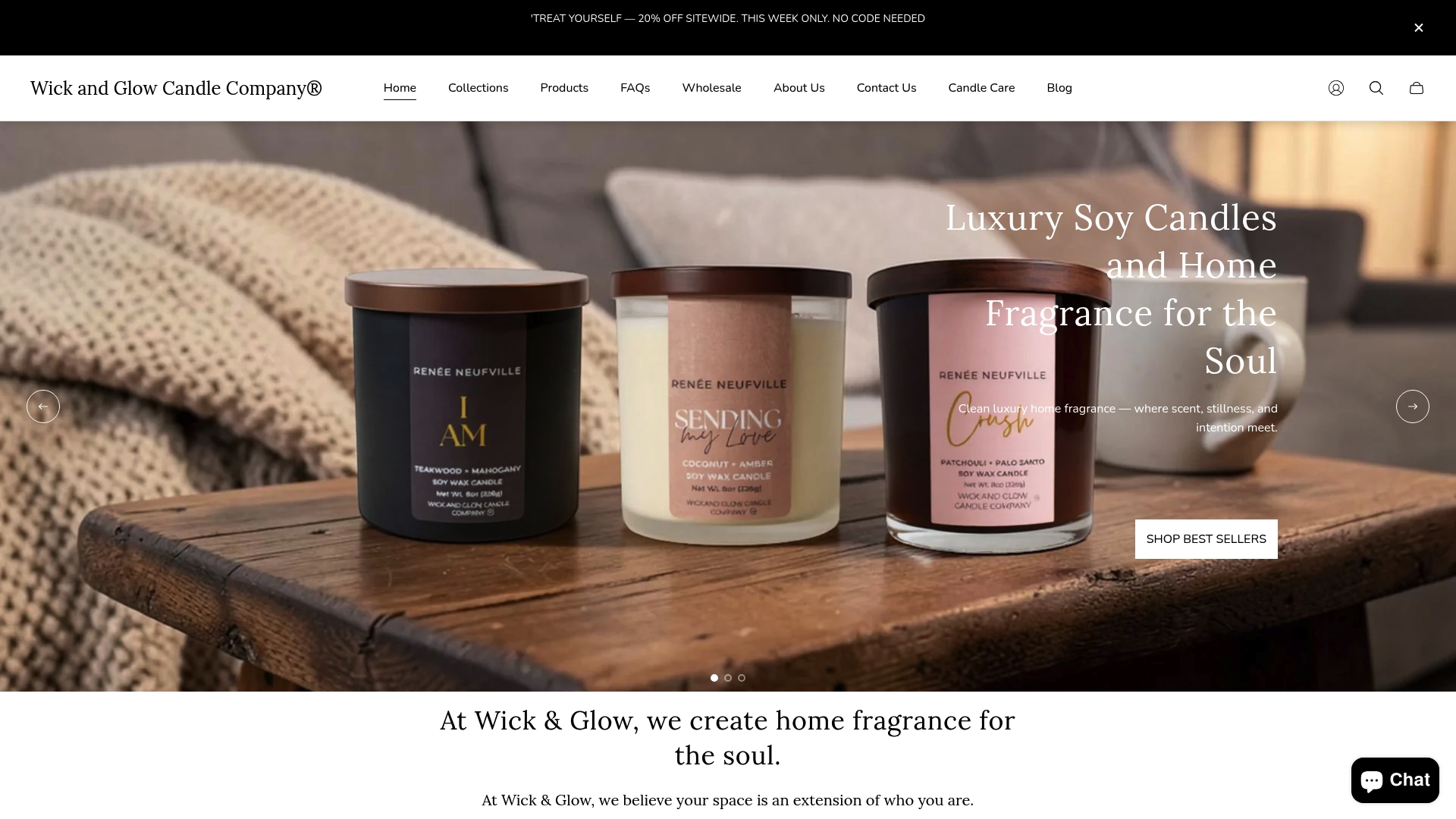
The Home Fragrance Scent Bundle pairs a 100% soy wax candle, a phthalate-free reed diffuser, and a vegan room spray in one curated set. Every product is made without synthetic phthalates, lead wicks, or undisclosed fragrance chemicals. Wickandglow also collaborates with artists like Renée Neufville to create scent profiles tied to specific R&B songs and playlists, so the fragrance you choose carries genuine emotional intention. If you want a flameless option, the luxury reed diffuser delivers long-lasting scent with zero combustion. Clean ingredients, full transparency, and a soundtrack to match.
FAQ
What is the most toxic ingredient in candles?
Paraffin wax is the most widely documented toxic ingredient in candles, releasing carcinogens including benzene and toluene when burned. Synthetic fragrances containing phthalates are a close second due to their hormone-disrupting effects.
Are soy candles always non-toxic?
Not automatically. Labels can legally claim “soy” even when the wax is a blend containing paraffin. Only candles labeled “100% soy wax” with full ingredient disclosure qualify as genuinely safer options.
How do I know if a candle has a lead wick?
Bend the unlit wick between your fingers. A soft, flexible wick is cotton or wood. A stiff wick with a wire running through the center contains metal, which may include zinc, tin, or in imported candles, lead.
Are scented candles bad for pets?
Certain essential oils used in candle scents, including tea tree, eucalyptus, peppermint, and citrus, are toxic to cats and dogs. Pet owners should choose unscented candles or verify that any fragrance used is pet-safe, and always burn candles in ventilated spaces.
What should I look for when buying non-toxic candles?
Look for 100% soy, beeswax, or coconut wax; cotton or wood wicks; phthalate-free fragrance with a full ingredient list; and no synthetic dyes. Brands that publish third-party testing results offer the highest level of verified safety.
Recommended


