Mass-produced candles smell different from artisanal options because they use synthetic fragrance oils at lower concentrations, paraffin wax, and accelerated manufacturing processes that sacrifice scent complexity for cost efficiency. This isn’t a matter of personal preference or batch variation. The gap comes down to chemistry, materials, and how much time a candle maker is willing to spend on a single pour. Understanding these factors, collectively known in the industry as fragrance performance variables, gives you a real framework for choosing candles that actually deliver on their scent promise. Whether you’ve noticed a candle that smells incredible in the store but fades within an hour of burning, or one that smells sharp and synthetic rather than warm and layered, the explanation lives in what’s inside the wax.
Why mass produced candles smell different from artisanal ones
The most direct explanation is fragrance concentration. Mass-produced candles use 5 to 6% fragrance oil concentration, while hand-poured candles typically use 8 to 10%. That difference sounds small, but it translates directly into how far a scent travels across a room and how long it lasts through a burn. A factory producing 5,000 to 10,000 candles daily cannot afford the material cost of higher fragrance loads across every unit.
Beyond concentration, the type of fragrance matters as much as the amount. Mass-production facilities rely on lab-made fragrance oils engineered for stability, consistency, and strong cold throw, which is the scent you smell from an unlit candle. These synthetic oils are designed to survive industrial mixing, high-temperature pouring, and long shelf storage without degrading. The result is a scent that smells bold in the jar but often reads as one-dimensional when burning.
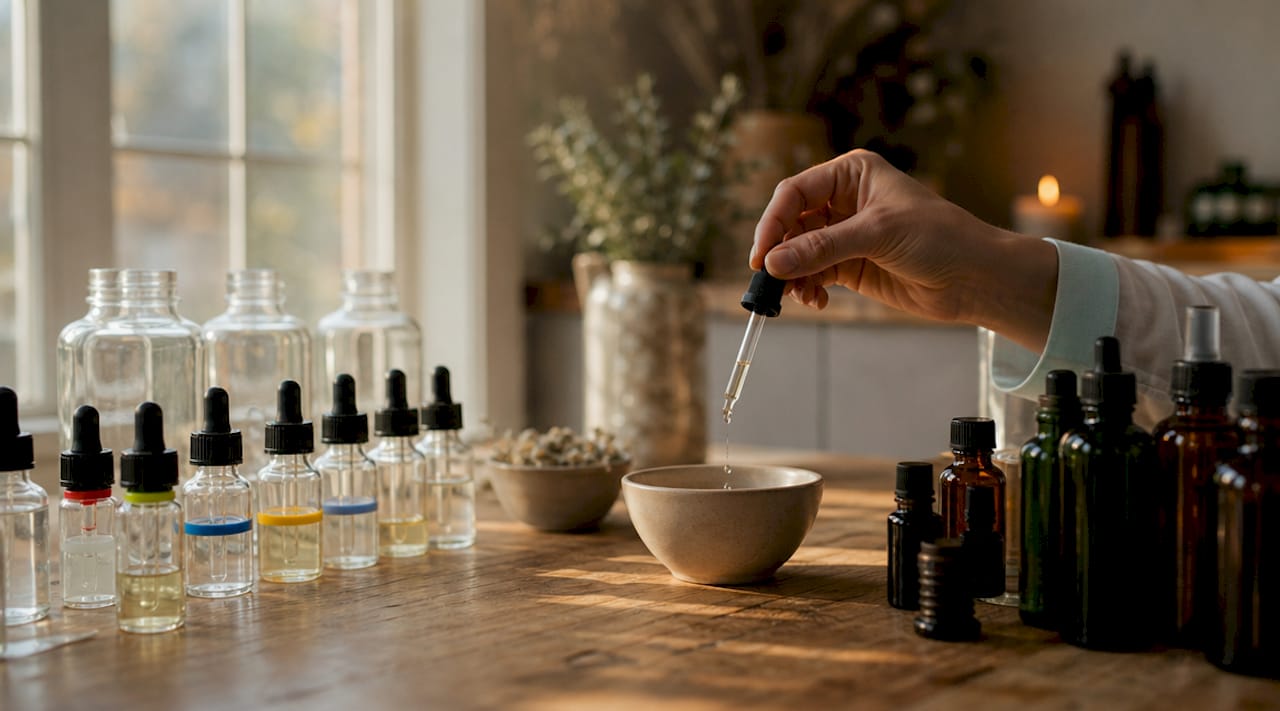
Artisanal makers, by contrast, frequently work with essential oils or premium fragrance blends that include natural isolates. These smell more complex and evolve as the candle burns, but they require careful handling and shorter shelf windows. The trade-off is real: natural scents reward attention, while synthetic ones reward convenience.
How fragrance oils compare to essential oils in candles
| Feature |
Fragrance oils (mass-produced) |
Essential oils (artisanal) |
| Origin |
Synthetic or semi-synthetic, lab-created |
Extracted from plants, flowers, or resins |
| Scent throw |
Strong cold and hot throw |
Subtler, more nuanced hot throw |
| Stability under heat |
High, designed for industrial use |
Lower, volatile molecules evaporate quickly |
| Scent complexity |
Consistent but often flat |
Layered, evolves during burn |
| Cost |
Low, scalable |
Higher, limited by plant sourcing |
Pro Tip: When shopping for candles, look for labels that list specific essential oils by name, like lavender, cedarwood, or bergamot. A label that only says “fragrance” almost always means a synthetic blend, and vague fragrance labeling is one of the most common ways mass-produced candles obscure what’s actually inside.
How wax type shapes what you smell
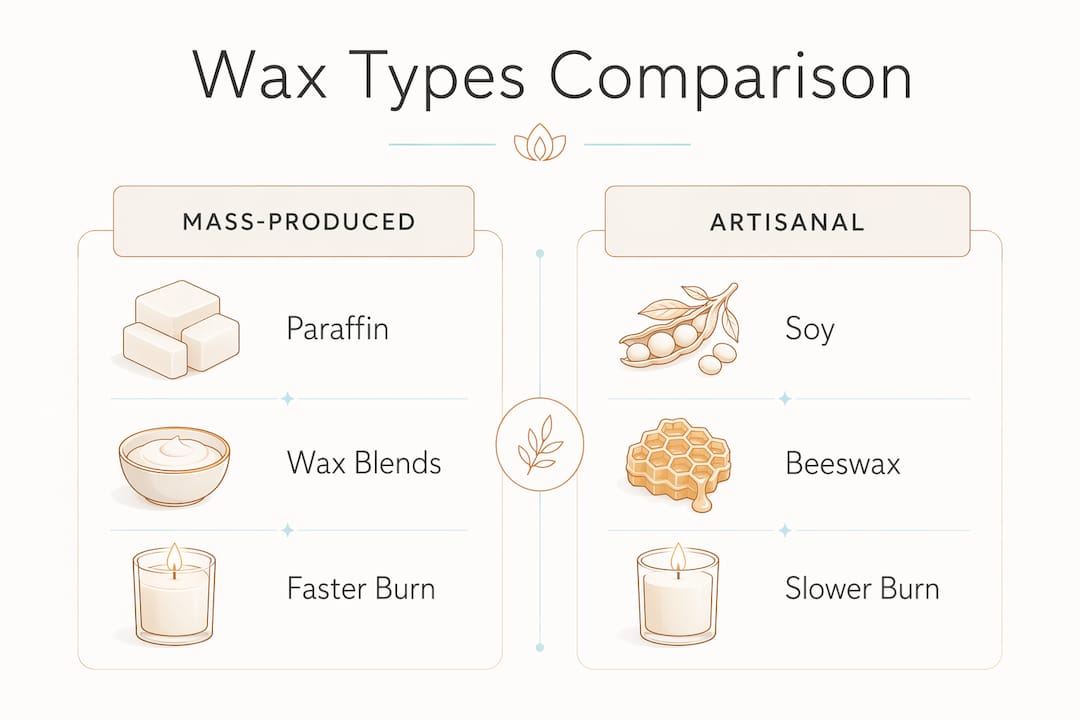
Wax is not just a delivery vehicle for fragrance. It actively controls how scent molecules are released, at what temperature, and for how long. Most mass-produced candles use paraffin wax, a petroleum-derived material that burns quickly and disperses fragrance strongly. A standard 9-ounce paraffin candle burns for approximately 20 hours, compared to 50 to 70 hours for a comparable soy wax candle. That shorter burn time means you get an intense but brief scent experience.
Soy and beeswax, the preferred choices for artisanal makers, burn cooler and slower. This slower burn releases fragrance at a more measured rate, which is why a soy candle can fill a room gradually over several hours rather than hitting hard and fading fast. The downside is that soy wax can mute bright citrus and delicate floral notes, making it less ideal for certain fragrance profiles unless the maker compensates with higher fragrance loads or specific wick sizing.
| Wax type |
Burn time |
Scent throw |
Common use |
| Paraffin |
~20 hours (9 oz) |
Strong, immediate |
Mass production |
| Soy wax |
50 to 70 hours |
Moderate, sustained |
Artisanal, eco-conscious |
| Beeswax |
60+ hours |
Subtle, honey-toned |
Premium artisanal |
| Wax blends |
Varies |
Balanced |
Mid-range and specialty |
Mass producers often use wax blends to cut costs while maintaining some scent performance. These blends combine paraffin with small amounts of soy or coconut wax, which lets them market the candle as “natural” without the full cost of a pure plant-based formula. For consumers, this means the plant-based candle benefits you’re paying for may be diluted by the paraffin majority in the blend.
How manufacturing speed affects scent quality
Speed is the enemy of scent depth. Mass production uses automated industrial tanks, accelerated cooling systems, and automated fragrance dosing that prioritize throughput over precision. When fragrance oils are added above their flash point during high-speed pouring, the volatile top notes evaporate before the wax even sets. You lose the most delicate scent layers before the candle reaches a shelf.
Artisanal hand-pouring works differently. A maker controls the exact temperature at which fragrance is added, typically between 140°F and 160°F for soy wax, to maximize binding between the oil and wax molecules. Then the candle cures. Mass-produced candles often skip or shorten this step, but hand-poured candles cured for days or weeks develop a stronger, more stable scent throw because the fragrance fully integrates with the wax matrix.
Here is what that process difference means in practice:
-
Temperature control: Artisanal makers pour at precise temperatures to prevent fragrance evaporation. Industrial lines prioritize speed over thermal precision.
-
Curing time: A properly cured candle allows fragrance molecules to fully bind with wax, producing a stronger hot throw. Mass-produced candles often ship within 24 to 48 hours of pouring.
-
Batch testing: Small-batch makers burn-test every new formula. Factories rely on statistical sampling, meaning scent inconsistencies pass quality control regularly.
-
Wick sizing: Wick size directly affects scent throw. A wick that’s too small creates tunneling and weak fragrance release. Mass production uses standardized wick sizes across large product lines, regardless of fragrance load variations.
Pro Tip: If you buy a new candle and the scent seems weak on the first burn, let it cure for an additional 48 hours in a cool, dark place before lighting it again. This works especially well with soy candles that were poured recently.
Why candles smell different when burning versus cold
The difference between a candle’s cold throw and hot throw is one of the most misunderstood aspects of candle fragrance. Cold throw is what you smell from an unlit candle. Hot throw is the scent released while burning. These can smell dramatically different, and heat releases fragrance notes sequentially, starting with light top notes and moving through middle and base notes as the burn progresses.
Here is the sequence in practical terms:
-
Top notes evaporate first because their molecules are the most volatile. These are the bright, fresh scents you notice immediately, like citrus, mint, or light florals.
-
Middle notes emerge after 15 to 30 minutes of burning. These form the core character of the fragrance, including warm spices, soft woods, and richer florals.
-
Base notes develop last and linger longest. Think sandalwood, vanilla, musk, and amber. These are the scents that stay in a room after the candle is extinguished.
Mass-produced candles often smell flat during burning because synthetic fragrance oils are engineered for consistent cold throw rather than a dynamic burn experience. The scent complexity during burning depends on how well the fragrance was formulated and how it interacts with the specific wax. When fragrance is added at too high a temperature during production, the top notes burn off before the candle is even poured, leaving a scent that smells heavy and one-note from the first light. You can learn more about how this layering works in Wickandglow’s guide to fragrance notes in candles.
How to choose a candle with better scent quality
Reading a candle label takes about 30 seconds and tells you most of what you need to know about scent quality. These are the signals worth checking:
-
Fragrance type: “Essential oil” or named botanicals signal natural scent. “Fragrance oil” means synthetic. A label that just says “fragrance” with no further detail is the least transparent option and most common in mass-produced lines.
-
Wax type: Soy, coconut, or beeswax indicates a slower burn and more considered formulation. “Paraffin” or no wax disclosure at all is a red flag for scent longevity.
-
Burn time: A 9-ounce candle with a burn time under 30 hours is almost certainly paraffin-based. Soy candles in the same size should burn 50 hours or more.
-
Price: Fragrance concentration and wax quality cost money. A $10 candle cannot contain 10% essential oil in soy wax and still turn a profit. Price is an imperfect but reliable proxy for material quality.
-
Curing information: Artisanal brands often note that candles are hand-poured and cured. This detail signals that the maker understands fragrance binding.
-
Seller transparency: Ask a small-batch maker what fragrance load they use and how long they cure. A maker who knows their craft will answer immediately. A retailer who cannot answer likely doesn’t know what’s in their product.
The real difference between unique and generic candles often comes down to exactly these details, not just branding or packaging.
Key takeaways
Mass-produced candles smell different because lower fragrance concentrations, synthetic oils, paraffin wax, and accelerated curing all reduce scent complexity and longevity compared to hand-poured artisanal candles.
| Point |
Details |
| Fragrance concentration matters |
Mass-produced candles use 5 to 6% fragrance oil versus 8 to 10% in hand-poured candles. |
| Wax type controls scent release |
Paraffin burns fast and strong; soy burns slower with more sustained, nuanced scent. |
| Curing time builds scent depth |
Candles cured for days or weeks bind fragrance more fully, producing stronger hot throw. |
| Heat changes what you smell |
Top, middle, and base notes release sequentially during burning, creating a dynamic scent arc. |
| Label reading reveals quality |
Look for named wax types, specific fragrance sources, and burn times above 50 hours. |
What years of candle testing actually taught me
Most people assume the strongest-smelling candle in the store is the best one. That’s almost always wrong. The candles that hit you hardest on the shelf are typically loaded with synthetic fragrance oils designed to perform in cold throw, which is the scent you experience before you ever light the wick. Once you burn them, that intensity collapses within the first hour.
What I’ve found more reliable is the mid-burn test. Light a candle, let it burn for 45 minutes, then assess the scent. A well-made candle gets richer and more complex as the middle notes emerge. A mass-produced candle tends to flatten or shift to something slightly chemical as the synthetic base notes take over.
The other thing most articles won’t tell you: not every consumer wants a complex, evolving scent. Some people genuinely prefer the consistent, predictable hit of a synthetic fragrance oil candle. There’s nothing wrong with that. The problem is when consumers pay premium prices for what they believe is a natural, artisanal product and receive a paraffin-and-synthetic-oil candle in attractive packaging. That’s where transparency matters most.
Wickandglow’s approach, pairing specific scent profiles with R&B playlists and collaborating with artists like Renée Neufville, reflects something I think the industry needs more of: candles designed around an experience rather than just a fragrance category. When a scent is tied to a specific feeling or memory, the complexity of the burn matters more. You’re not just filling a room with smell. You’re setting a mood that has to hold for hours.
— B
Experience the difference with Wickandglow
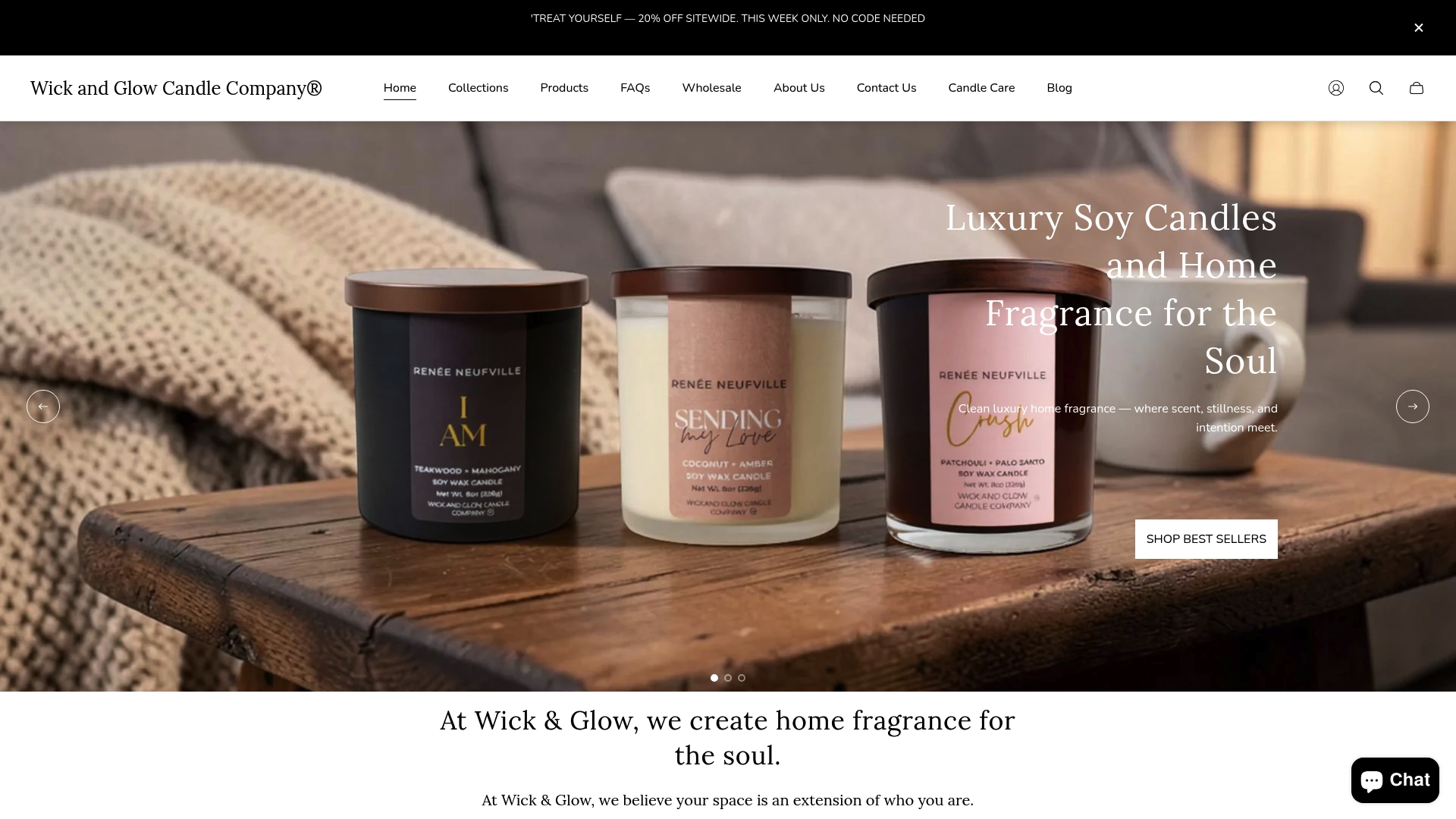
Wickandglow hand-pours every candle in small batches using premium soy wax and fragrance blends developed to perform across the full burn, from the first light through the final hour. Each scent is paired with a curated R&B playlist, so the fragrance and the music work together to create an atmosphere that a mass-produced candle simply cannot replicate. If you’re ready to experience what a properly cured, high-fragrance-load soy candle actually smells like, the home fragrance scent bundle includes a soy candle, reed diffuser, and room spray so you can layer the scent across your entire space. Choose your scent, press play, and notice the difference.
FAQ
Why do mass produced candles lose scent so quickly?
Mass-produced candles use lower fragrance oil concentrations of 5 to 6% and paraffin wax, which burns fast and disperses scent in a short burst rather than sustaining it. Shortened curing times also mean fragrance is not fully bound to the wax before the candle ships.
What does “fragrance” mean on a candle label?
A label listing only “fragrance” without further detail typically indicates a synthetic or semi-synthetic fragrance oil blend. This vague labeling is most common in mass-produced candles and makes it difficult to assess scent origin or quality.
Are soy candles always better than paraffin candles?
Soy candles burn longer and release scent more gradually, but soy wax can mute bright citrus and floral notes. The best candle depends on the fragrance type and how well the maker has matched the wax to the specific scent formula.
What is the difference between cold throw and hot throw?
Cold throw is the scent from an unlit candle; hot throw is the scent released during burning. Heat activates fragrance notes sequentially, so a candle’s burning scent can differ significantly from what you smell in the jar.
How can I tell if a candle is truly hand-poured?
Look for small-batch labeling, named wax types, specific fragrance oil percentages, and burn times above 50 hours for a standard 9-ounce candle. Artisanal makers can typically answer detailed questions about their pouring temperature and curing process.
Recommended


