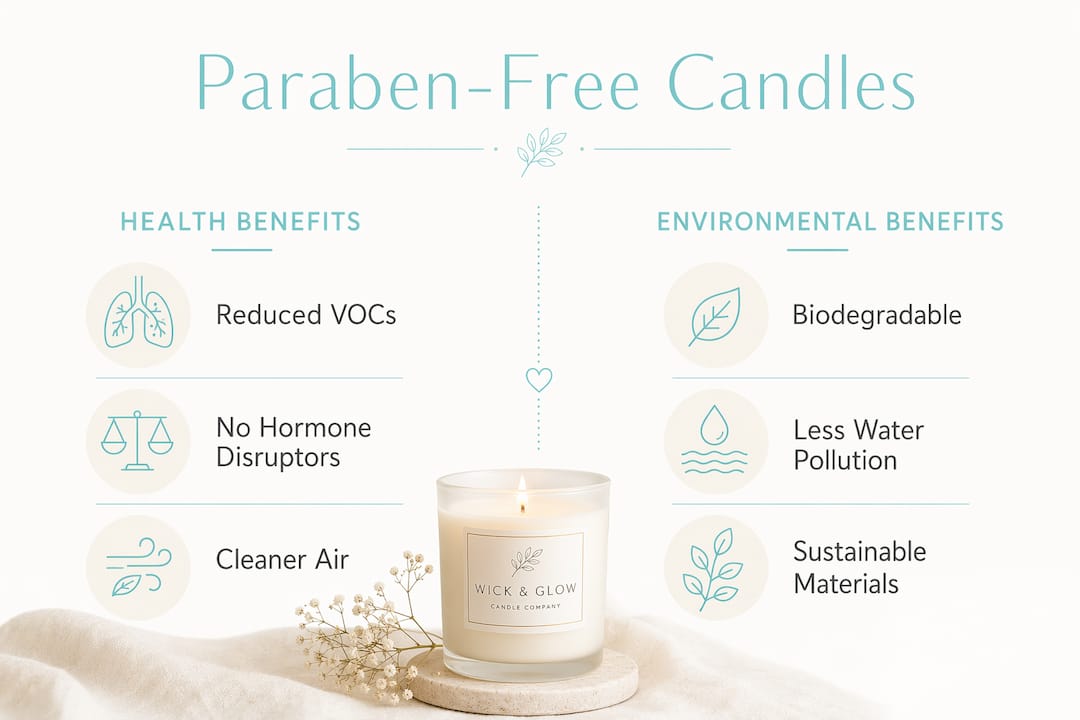
Paraben-free candles reduce your exposure to synthetic preservatives that can disrupt hormones, irritate airways, and quietly degrade the air you breathe at home. If you light candles regularly, what’s in the wax and fragrance oil matters as much as how the candle smells. Here’s what you need to know before your next purchase:
-
Cleaner indoor air. Paraben-free formulas skip synthetic preservatives that release toxins when burned indoors.
-
Lower allergen exposure. Parabens and phthalates are known triggers for allergic reactions and respiratory sensitivity.
-
Hormone protection. Parabens mimic estrogen in the body, raising concerns about long-term hormonal health.
-
Safer for sensitive households. Children, pets, and people with asthma or allergies face higher risk from synthetic fragrance chemicals.
-
Better scent integrity. Artisan brands using clean fragrance oils often produce more consistent, longer-lasting aromas without chemical shortcuts.
What are parabens and phthalates, and why do they end up in candles?
Parabens are synthetic preservatives added to fragrance oils to prevent microbial growth and extend shelf life. The problem is that they mimic estrogen in the body, which raises concerns about hormonal disruption and increased cancer risk. They’re banned in certain cosmetic applications in the European Union, yet they persist in many fragrance oils sold in the United States.
Phthalates, particularly diethyl phthalate (DEP), serve a different purpose. Manufacturers use them to improve scent longevity and enhance how far a fragrance travels when a candle burns. DEP is classified as an endocrine disruptor, with research linking phthalate exposure to reproductive issues, hormone imbalance, and respiratory problems. When a candle burns, phthalates release into the air and can be inhaled or absorbed through the skin.
| Chemical |
Role in candles |
Primary health concern |
| Parabens |
Preservative in fragrance oils |
Estrogen mimicry, hormonal disruption |
| Phthalates (DEP) |
Scent longevity enhancer |
Endocrine disruption, reproductive risk |
| Paraffin wax |
Base wax |
VOC release (benzene, toluene) |
“Every candle you burn releases its ingredients into the air. If your fragrance oil isn’t clean, you could be releasing toxins into your home — even if it smells amazing.” — Rama Candles
Reformulating fragrance oils without DEP takes years of testing. It’s not a simple swap, which is why many mass-market brands still rely on it. Choosing a brand that has done that work upfront is the cleaner path.
Common harmful candle ingredients and red flags to avoid
Parabens and phthalates aren’t the only chemicals worth watching. Several other ingredients in conventional candles can affect your air quality and health.
-
Paraffin wax. Derived from petroleum, burning paraffin releases VOCs including benzene and toluene, both of which irritate the respiratory system.
-
Synthetic fragrances. Broad “fragrance” listings on labels can hide dozens of undisclosed chemicals, including phthalates and aldehydes.
-
Formaldehyde and carbon monoxide. Scented candles can release these gases during combustion, particularly in poorly ventilated spaces.
-
Naphthalene and pyrene. Cancer-associated hydrocarbons that some scented candles release when burned.
-
Unlisted preservatives. Parabens and similar compounds often appear under generic “fragrance” or “parfum” labels, making them invisible to buyers.
“Paraben-free” is a voluntary label in the United States. There is no federal regulation requiring candle makers to disclose ingredients, so that claim carries no legal weight on its own.
Red flags to watch for when shopping:
- Labels that list only “fragrance” with no further breakdown
- No mention of wax type or fragrance oil source
- “Non-toxic” claims with zero ingredient detail to back them up
- Candles with unusually strong cold throw that don’t name their fragrance components
The phrase “natural fragrance” can also be misleading. Without full ingredient disclosure, you can’t confirm what’s actually in the oil. Brands that publish their fragrance oil specifications are the ones worth trusting.
How to choose safer, paraben-free candles and burn them safely
Picking a genuinely clean candle takes more than reading the front label. Here’s a practical checklist for making a safer choice.
-
Look for full ingredient transparency. The brand should list wax type, fragrance oil source, and confirm paraben-free and phthalate-free status, not just imply it.
-
Choose natural wax bases. Soy wax and beeswax produce less soot and fewer toxic gases than paraffin. Soy also burns cooler and longer.
-
Verify fragrance oil specs. Ask or check whether the brand’s fragrance oils are tested and certified free of DEP and parabens, not just labeled that way.
-
Prioritize essential oil or clean synthetic blends. Some high-quality synthetic fragrance oils are formulated without phthalates and perform better than essential oils alone in candles.
-
Burn in ventilated spaces. Even paraben-free candles produce combustion byproducts. Open a window or run a fan to keep air circulating.
-
Trim the wick to a short length before each burn. A long wick produces more soot and smoke, which adds particulate matter to your indoor air.
-
Avoid burning candles for extended periods at a stretch. Longer burns increase the concentration of combustion byproducts in a room.
-
Avoid drafts near the flame. Drafts cause uneven burning and push more soot into the air.
Pro Tip: When evaluating a new candle brand, check whether they publish their fragrance oil supplier’s safety data sheet. Brands that share this information are the ones that have actually verified their clean-burn claims, not just printed them on a box.
For buyers who want soy wax benefits alongside clean fragrance, soy-based candles with phthalate-free oils hit both marks. Research on soy candle hot throw confirms that soy blends can fill large spaces without relying on synthetic fixatives like DEP.
How Wickandglow approaches paraben-free home fragrance
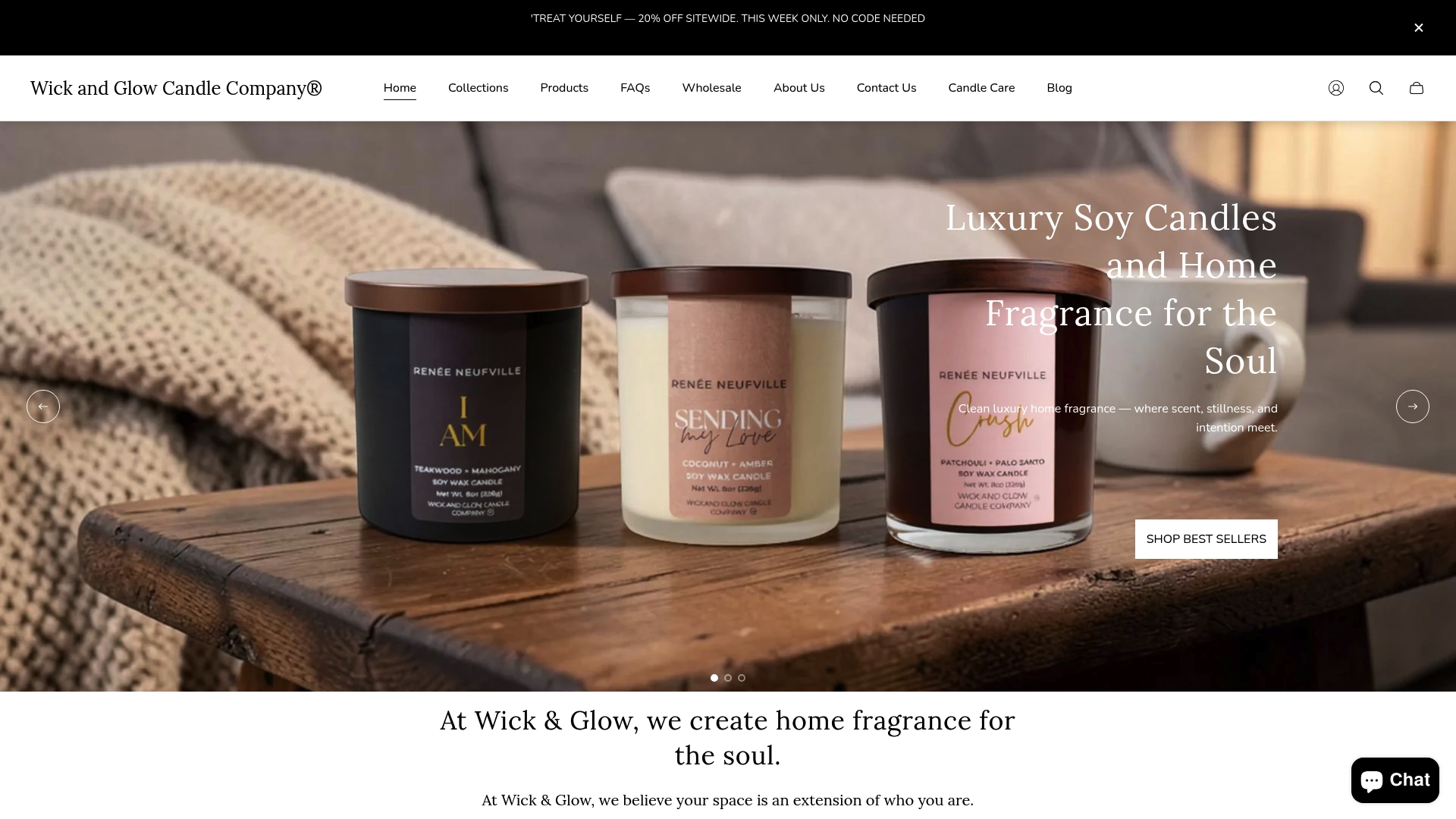
Wickandglow builds every candle around fragrance oils that are paraben-free and phthalate-free, treating that as a baseline quality standard rather than a marketing angle. The brand’s philosophy is that a candle should transform a space without compromising the air inside it. That means no synthetic preservatives, no undisclosed fragrance chemicals, and no shortcuts on ingredient sourcing.
What sets Wickandglow apart is the layer of intention behind each scent. Fragrances are inspired by R&B songs and paired with curated playlists, so the sensory experience goes beyond smell. Collaborations with artists like Renée Neufville bring a creative dimension that mass-market candles simply don’t offer. Clean ingredients and artistic depth aren’t in tension here; they reinforce each other.
At Wickandglow, the commitment to paraben-free fragrance oils reflects a belief that luxury and safety belong together. A candle that smells extraordinary should also burn clean.
The broader candle industry is moving in this direction. Luxury and artisan brands increasingly use paraben- and phthalate-free oils to deliver cleaner burns and more consistent scent profiles. Wickandglow has been ahead of that curve, and the non-toxic candle guide on the brand’s site reflects years of thinking on ingredient safety.

How parabens affect the air inside your home
When a candle containing parabens burns, those compounds don’t stay in the wax. They volatilize into the air, where you inhale them or absorb them through skin contact. In a small, enclosed room, repeated exposure adds up over time. The EPA’s guidance on indoor air quality specifically flags synthetic chemical releases from household products as a concern, particularly for people who spend most of their time indoors.
Parabens compound the problem that paraffin wax and synthetic fragrances already create. VOCs from paraffin, phthalates from fragrance oils, and parabens from preservatives can all be present in the same candle, creating a layered chemical exposure with every burn. Switching to a plant-based candle with verified clean fragrance oil removes all three of those variables at once.
The environmental case against parabens in candles
Parabens don’t just affect the air in your home. They enter waterways through wastewater and have been detected in marine environments, where they disrupt aquatic organisms’ hormonal systems. The same estrogen-mimicking properties that raise human health concerns cause measurable harm to fish and other wildlife at low concentrations.
Paraffin wax, the most common base for conventional candles, is a petroleum byproduct. Its production and combustion contribute to carbon emissions in ways that soy, beeswax, and other plant-based waxes do not. Choosing paraben-free candles made with natural waxes addresses both the chemical exposure concern and the environmental footprint in a single decision. The indoor air quality impact of cleaner candles is the most immediate benefit, but the downstream environmental effect is real and worth factoring in.
Key Takeaways
Paraben-free candles reduce your exposure to synthetic endocrine disruptors while delivering cleaner indoor air and a safer fragrance experience at home.
| Point |
Details |
| Parabens disrupt hormones |
They mimic estrogen in the body, raising concerns about hormonal and reproductive health. |
| Phthalates carry respiratory risk |
DEP, a common fragrance additive, is an endocrine disruptor linked to asthma and hormone imbalance. |
| No federal disclosure rule exists |
“Paraben-free” is a voluntary label; always seek brands that publish full ingredient details. |
| Natural waxes burn cleaner |
Soy and beeswax produce fewer VOCs and less soot than paraffin-based candles. |
| Ventilation reduces all candle risk |
Even clean-burning candles should be used in well-ventilated spaces to minimize combustion byproducts. |
Ready to make the switch to clean home fragrance? Wickandglow’s Men Love Candles Too collection brings paraben-free, phthalate-free scents to every corner of your home, with the artistry and lasting power that sets the brand apart.
Recommended


