Clean beauty candles are defined by the intentional exclusion of ingredients linked to health risks, including parabens, phthalates, synthetic fragrances, and formaldehyde releasers. The term “clean beauty” itself has no legal definition, which means every brand sets its own standards. That gap matters more than most candle shoppers realize. When you understand what “clean” actually signals and where it falls short, you make smarter choices about what you burn in your home. This article breaks down the ingredients, fragrance transparency issues, sustainability practices, and the practical steps you need to evaluate any clean candle claim with confidence.
What does clean beauty mean for candles?
Clean beauty, applied to candles, means formulating products without chemicals suspected or confirmed to harm human health or the environment. The core principles center on ingredient transparency, intentional sourcing, and safety. No government agency currently certifies a candle as “clean,” so the word functions as a brand promise rather than a regulated category.
That distinction changes how you should read a label. A candle marketed as clean may exclude 10 ingredients or 100, depending on the brand’s internal standards. Third-party certifications from organizations like EWG (Environmental Working Group) or MADE SAFE impose stricter, independently verified exclusion lists. Without one of those marks, “clean” is a starting point for your research, not a finish line.
The clean beauty movement grew out of consumer demand for transparency in personal care products, and it carried directly into home fragrance. Candles are burned indoors, releasing compounds into the air you breathe. That context makes ingredient scrutiny just as relevant here as it is for skincare.
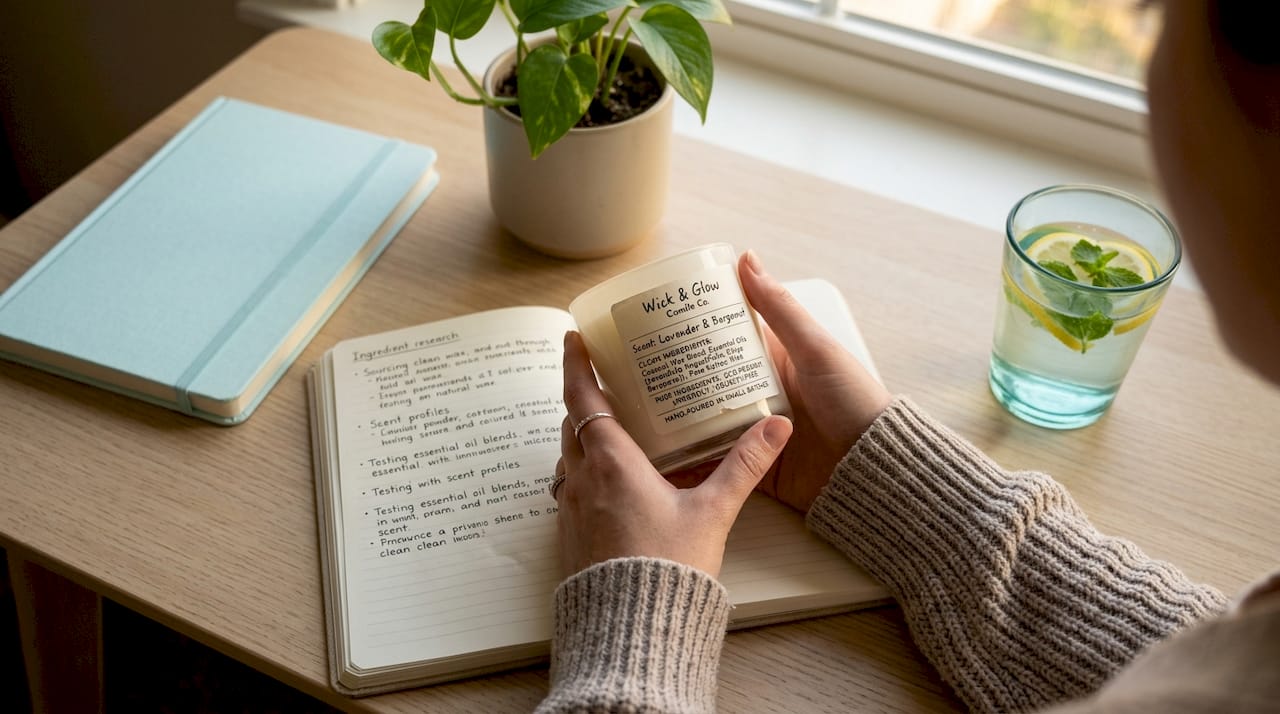
What ingredients are typically excluded from clean candles?
Clean beauty definitions consistently exclude parabens, phthalates, sulfates, synthetic dyes, and certain preservatives, though the exact list varies by brand and certification body. These exclusions exist because each ingredient carries documented concerns about hormonal disruption, skin sensitization, or environmental persistence.
Here is what you will most commonly see on a clean candle exclusion list:
-
Phthalates: Used as fragrance fixatives and plasticizers, phthalates are linked to endocrine disruption. Many clean candle brands advertise phthalate-free formulations as a baseline standard.
-
Parabens: Preservatives with estrogen-mimicking properties, parabens appear in some fragrance blends and are excluded by most brands claiming clean status.
-
Synthetic dyes: Petroleum-derived colorants that serve no functional purpose in a candle and introduce unnecessary chemical exposure during burning.
-
Formaldehyde releasers: Some preservatives break down into formaldehyde over time. Clean formulations avoid these entirely.
-
Paraffin wax (in some definitions): Derived from petroleum, paraffin is excluded by many clean brands in favor of soy, coconut, or beeswax alternatives. The science on paraffin’s actual burn risk is mixed, but the petroleum origin conflicts with clean sourcing principles.
Pro Tip: Natural origin does not automatically mean safe. Essential oils, for example, can trigger allergic reactions or contain naturally occurring compounds that are sensitizers. Evaluate ingredients on their properties, not just their source.
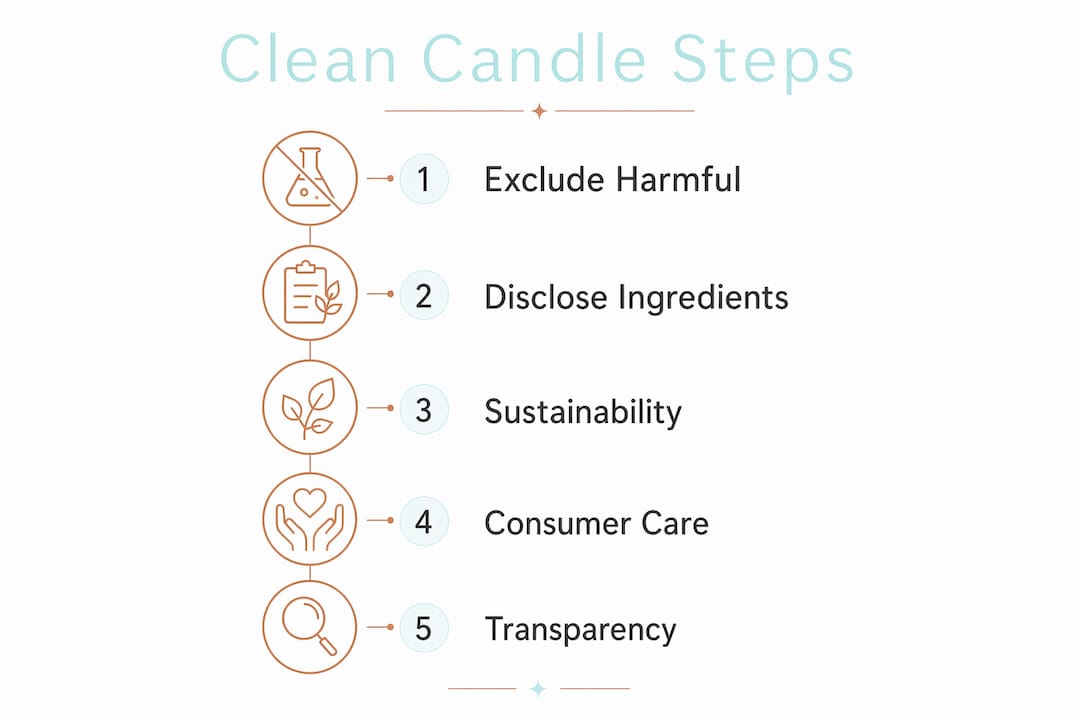
The most credible clean candle brands publish a full “never list” on their website. If a brand cannot tell you exactly what it excludes and why, that absence is itself informative. Wickandglow, for instance, formulates without parabens, phthalates, and synthetic dyes, and makes that commitment visible rather than burying it in fine print.
How does fragrance transparency affect clean candle claims?
Fragrance is the single biggest gap in clean candle labeling. Under current U.S. law, fragrance ingredients can be listed as a single word on a label, masking blends that may contain dozens of individual chemicals. A candle can carry a clean label and still contain undisclosed allergens, endocrine disruptors, or neurotoxins inside that one word.
The specific concerns include:
-
Allergens: The European Union requires disclosure of 26 known fragrance allergens above certain concentrations. The U.S. has no equivalent rule.
-
Endocrine disruptors: Certain synthetic musks and fixatives used in fragrance blends interfere with hormone signaling.
-
Neurotoxins: Some fragrance components affect the nervous system at repeated low-level exposures, a risk that compounds in enclosed spaces.
“Clean label doesn’t guarantee fragrance safety or transparency.” — The Rooted People
The practical implication is direct: a brand can exclude every ingredient on its never list and still use a complex synthetic fragrance blend that undermines the entire clean premise. The brands that take clean seriously either disclose their full fragrance ingredient list, use only certified fragrance-free or naturally derived scent components, or carry third-party certifications that mandate fragrance transparency as part of the standard.
When you evaluate a candle, look past “phthalate-free fragrance” as a claim. Ask whether the brand discloses what the fragrance actually contains. That single question separates genuine clean formulations from marketing positioning.
What sustainability practices define clean beauty candles?
Sustainability in clean candles goes beyond the wax type. The most meaningful innovation right now is the refillable candle model, which keeps decorative vessels in use rather than sending them to landfill after a single burn cycle. Brands like Diptyque and Wildsmith have built refill programs that let you reorder wax inserts for the same container, reducing packaging waste with each subsequent purchase.
The distinction between refillable and recyclable matters more than most shoppers recognize. Recyclable packaging still requires energy-intensive processing and often ends up in landfill when contaminated with wax residue. Refillable systems keep the decorative container in active use, which is a more direct reduction in single-use waste.
| Sustainability approach |
How it works |
Environmental benefit |
| Refillable vessels |
Replace wax insert, keep the container |
Reduces packaging waste per burn cycle |
| Recyclable packaging |
Dispose of container through recycling stream |
Diverts from landfill if properly processed |
| Sustainably sourced wax |
Soy, coconut, or beeswax from certified farms |
Reduces petroleum dependence and supports agricultural standards |
| Natural cotton wicks |
Lead-free, untreated cotton or wood wicks |
Eliminates metal particulate release during burning |
Wax sourcing is equally relevant. Soy wax from non-GMO, domestic crops and coconut wax from certified sustainable plantations both represent cleaner sourcing choices than paraffin. Wick composition matters too. Lead-free cotton or wood wicks avoid the metal particulate release associated with older wick technologies.
Pro Tip: Check whether a brand’s sustainability claims focus on the product itself or just the outer packaging. A candle in a recycled cardboard box but poured in paraffin with a synthetic fragrance blend is not a clean or sustainable product.
How can you critically evaluate clean candle claims?
Evaluating a clean candle claim requires moving past the front label and into the actual formulation details. The FTC requires competent and reliable scientific evidence to support “non-toxic” claims, but enforcement is limited and many brands use the term without substantiation. That means the burden of verification falls on you.
Follow these steps when assessing any clean candle:
-
Read the full ingredient list. If a brand does not publish one, that is a red flag. Clean formulations have nothing to hide.
-
Look for third-party certification. EWG Verified, MADE SAFE, and Leaping Bunny each impose specific ingredient standards that go beyond self-declaration. These marks mean an independent body reviewed the formulation.
-
Scrutinize the fragrance disclosure. “Fragrance” as a single listed ingredient is insufficient for a genuinely clean product. Look for brands that name their fragrance components or use certified natural fragrance.
-
Check the wax type and wick material. Soy, coconut, or beeswax with a natural cotton or wood wick is the baseline for clean candle construction.
-
Evaluate sustainability claims specifically. Distinguish between “recyclable” and “refillable.” Ask whether the brand sources wax and fragrance from certified suppliers.
Pro Tip: Proper candle care extends burn time and reduces soot, which matters even with clean formulations. Trim your wick to a quarter inch before each burn to minimize particulate release.
No universal legal framework exists for clean beauty, so treat “clean” as an initial indicator that prompts further investigation rather than a guarantee. The brands worth trusting are the ones that make that investigation easy by publishing full ingredient lists, certifications, and sourcing details without requiring you to dig.
Key takeaways
Clean beauty candles require ingredient transparency, fragrance disclosure, and verified sustainability practices to back up the “clean” label.
| Point |
Details |
| No legal definition exists |
“Clean” is self-defined by brands; third-party certifications like EWG Verified provide independent verification. |
| Fragrance is the biggest gap |
A single “fragrance” listing can mask allergens and endocrine disruptors even in clean-labeled candles. |
| Refillable beats recyclable |
Refillable candle systems reduce packaging waste more directly than recyclable packaging alone. |
| Read the full ingredient list |
Brands that publish complete formulations demonstrate the transparency that defines genuine clean beauty. |
| Non-toxic claims need evidence |
The FTC requires substantiation for non-toxic claims; many brands use the term without testing or approval. |
Why I’ve stopped trusting “clean” at face value
The clean candle market has a credibility problem, and it is one the industry created for itself. After years of watching brands slap “clean” on products that list “fragrance” as their third ingredient with zero further disclosure, I’ve become genuinely skeptical of the label as a standalone signal.
What I’ve found actually works is treating clean as a starting question, not an answer. The brands that hold up under scrutiny are the ones that publish their full ingredient lists without being asked, name their fragrance components, and can explain why they chose each wax and wick material. That level of transparency is rare, but it exists.
The sustainability angle is where I see the most interesting movement right now. The shift from recyclable to refillable is not just a packaging decision. It reflects a fundamentally different relationship between a brand and its customer, one built on longevity rather than repeat disposal. Brands like Diptyque proved that refillable luxury candles are commercially viable. The question is whether independent and mid-market brands follow that model seriously or treat it as a marketing footnote.
My honest recommendation: spend five minutes on a brand’s website before you buy. If you cannot find a full ingredient list, a fragrance disclosure, and a clear sustainability statement in that time, the brand has not earned the clean label it is claiming.
— B
How Wickandglow approaches clean home fragrance
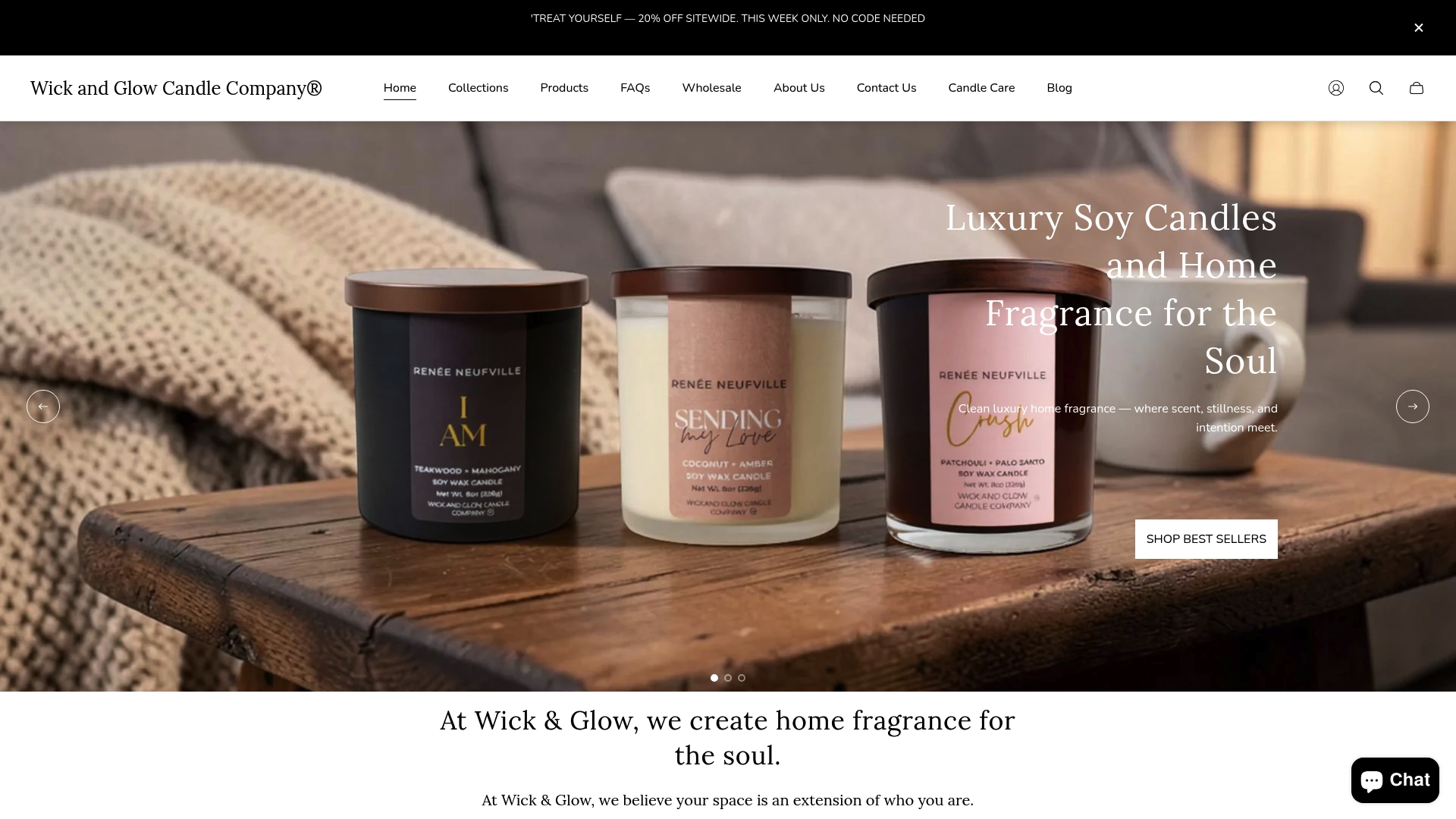
Wickandglow formulates every candle without parabens, phthalates, or synthetic dyes, using soy wax and phthalate-free, vegan fragrance blends that meet clean beauty principles. Each product connects a specific scent to an R&B-inspired playlist, so the experience goes beyond fragrance into something genuinely personal. The Exhale Luxury Candle is a strong starting point if you want to experience what transparent, intentional formulation actually smells like. For a fuller introduction to the range, the home fragrance scent bundle pairs a soy candle, reed diffuser, and room spray in one clean, cohesive set. Wickandglow also collaborated with artist Renée Neufville on the I Am soy wax candle, a teakwood and mahogany blend that demonstrates how artistry and clean formulation work together.
FAQ
What does clean beauty mean for candles?
Clean beauty candles are formulated without ingredients linked to health or environmental harm, including parabens, phthalates, and synthetic fragrances. The term has no legal definition, so standards vary by brand and are most reliable when backed by third-party certification.
Are clean candles actually non-toxic?
Not automatically. The FTC requires scientific substantiation for non-toxic claims, but many brands use the term without testing. A candle labeled non-toxic should carry third-party verification, such as EWG Verified or MADE SAFE, to be credible.
What wax is used in clean candles?
Soy wax, coconut wax, and beeswax are the most common choices in clean candle formulations. These alternatives to paraffin avoid petroleum-derived sourcing and are preferred by brands prioritizing both ingredient safety and sustainable sourcing.
How do I know if a candle’s fragrance is truly clean?
Look for brands that disclose individual fragrance components rather than listing “fragrance” as a single ingredient. Phthalate-free fragrance is a baseline standard; full transparency means naming the actual scent compounds or using certified natural fragrance.
What is the most sustainable candle option?
Refillable candle systems are the most sustainable option because they keep decorative vessels in use across multiple burn cycles, reducing packaging waste more directly than recyclable containers. Sustainable wax sourcing and natural cotton or wood wicks further reduce environmental impact.
Recommended


