Bath ambiance requires special fragrance because scent is the only sense that bypasses the brain’s thalamic relay and connects directly to the limbic system, the region governing emotion, memory, and stress response. That neurological shortcut is why a well-chosen bath scent can shift your nervous system from alert to calm within minutes, while a generic air freshener just sits in the background. The right fragrance does not mask the environment. It becomes the environment.
The core benefits of using bath-specific fragrances include:
-
Stress reduction: Calming scents like lavender signal the nervous system to lower cortisol production
-
Mood enhancement: Citrus and floral notes stimulate serotonin pathways, lifting mood during and after the soak
-
Sensory immersion: Warm water and steam amplify scent diffusion, creating a full-body aromatic experience
-
Ritual reinforcement: Consistent scent use conditions the brain to enter a relaxed state on cue
Choosing fragrances tailored for bathing matters beyond preference. Skin compatibility, safe dilution, and the psychological effect of specific scent compounds all determine whether your bath actually restores you or just smells nice.
Why bath ambiance shapes the quality of your soak
A bath without intentional ambiance is just warm water. The environment you create around it determines whether your nervous system actually downshifts or stays on edge.
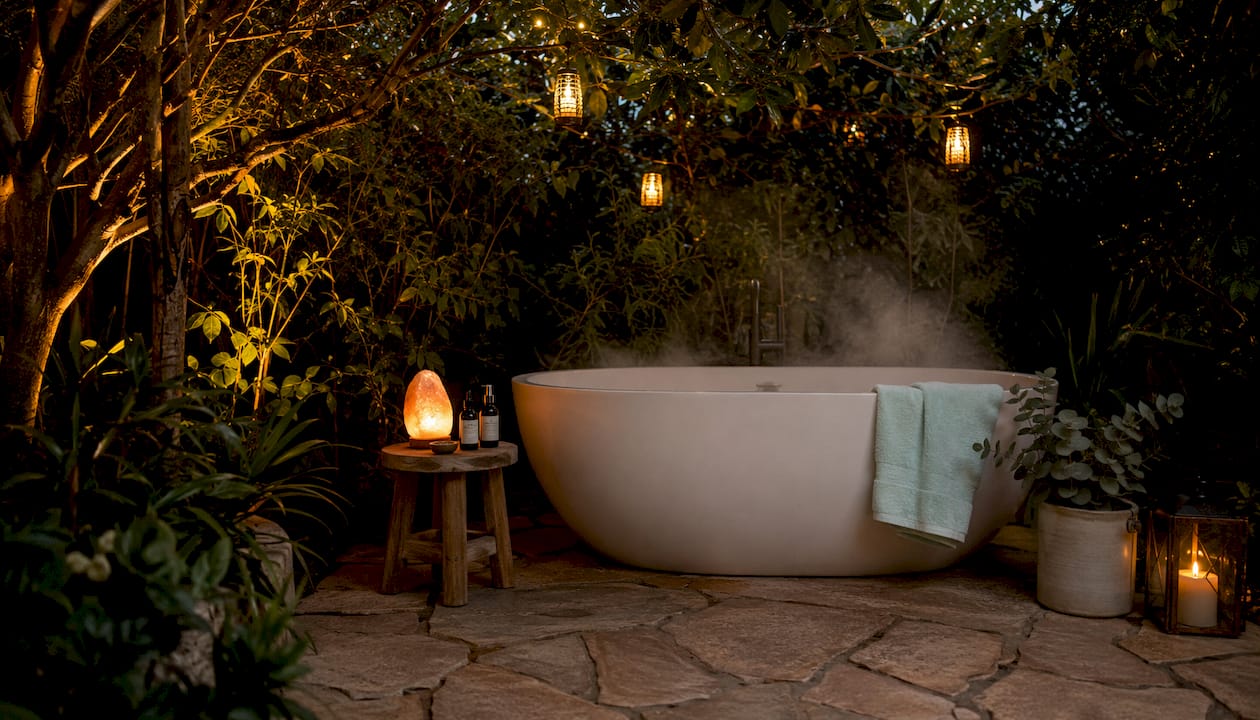
Lighting, sound, and scent each play a distinct role. Dim lighting reduces cortisol-triggering visual stimulation. Soft music or silence removes cognitive load. Scent, though, works faster than either because of its direct limbic pathway. The moment aromatic molecules reach your olfactory receptors, your brain begins processing emotional and memory signals before you consciously register the smell.
The ritual aspect matters too. Preparing a bath with intention, choosing a scent, lighting a candle, dimming the lights, signals to your body that rest is coming. That pre-bath routine is not incidental. Research published in Psychology Today shows the ritual of preparing and inhaling bath scents engages emotional and memory centers more deeply than scent alone, amplifying the relaxing effect.
Here is how the main ambiance factors compare in their effect on the bath experience:
-
Scent: Fastest neurological impact; directly modulates emotion and stress response
-
Lighting: Supports melatonin production; reduces visual stimulation that keeps the brain alert
-
Sound: Lowers cognitive arousal; silence or ambient sound removes external demands
-
Temperature: Warm water relaxes muscles and opens pores, enhancing scent absorption through the skin
How fragrance influences mood and relaxation during baths
Scent reaches the brain faster than any other sensory input. Aromatic molecules bypass the thalamus and travel directly to the limbic system, triggering immediate emotional and memory responses. That is why inhaling lavender in a warm bath feels categorically different from reading about lavender’s calming properties.
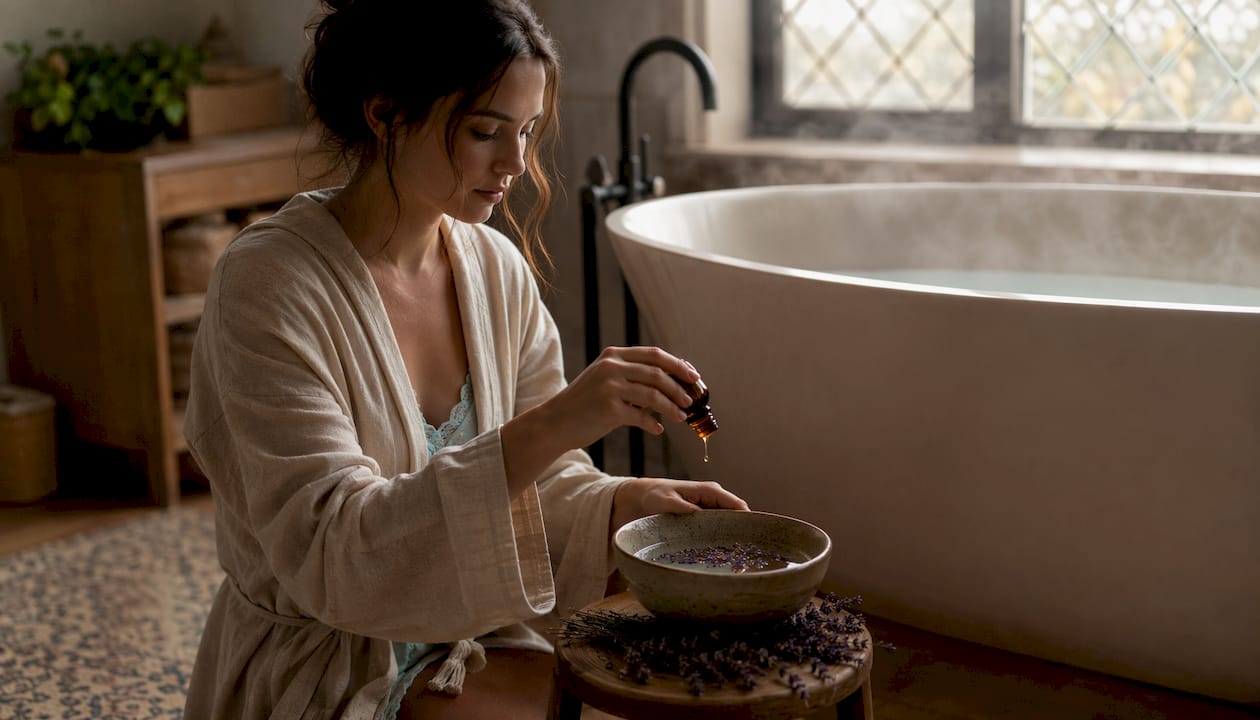
The heat and steam in a bath amplify this effect considerably. Warm water opens the pores and accelerates how aromatic compounds diffuse into the air and absorb through the skin. A warm bath activates both inhalation and skin absorption simultaneously, making it one of the most effective aromatherapy delivery methods available.
The physiological evidence is specific. A clinical study on lavender and bergamot blends found that topical application during baths lowered participants’ heart rate and blood pressure, with significant self-reported increases in calmness. That is not a placebo-level effect. It is a measurable cardiovascular response to scent compounds.
Not all fragrance products deliver the same results. Pure essential oils are distilled directly from plant material and carry the active aromatic compounds responsible for physiological effects. Fragrance oils are often synthetic or blended, offering more scent variety and stability but without the same therapeutic profile. For bath use, knowing which you are working with matters for both safety and outcome.
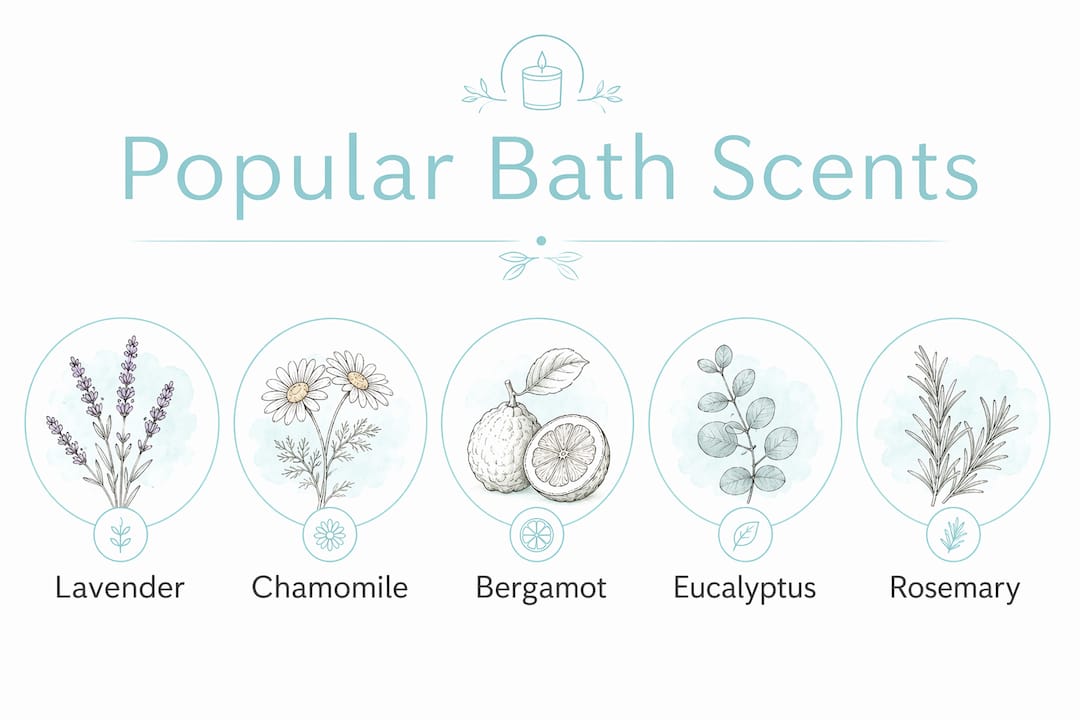
Popular relaxing bath scents and their effects
Different scents target different psychological and physiological states. Choosing the right one starts with knowing what each actually does.
| Scent |
Primary Effect |
Best For |
| Lavender |
Lowers heart rate, promotes calm |
Evening soaks, sleep preparation |
| Bergamot |
Reduces anxiety, uplifts mood |
Stress relief, emotional reset |
| Jasmine |
Warms mood, reduces nervous tension |
Romantic or restorative baths |
| Vanilla |
Comforting, reduces agitation |
Anxiety, emotional grounding |
| Cedarwood |
Grounding, quiets mental chatter |
Overactive mind, end-of-day wind-down |
| Sweet orange |
Refreshes, lifts mood |
Morning baths, fatigue recovery |
| Peppermint |
Invigorates, sharpens focus |
Morning routines, post-workout soaks |
Lavender is the most studied. Cleveland Clinic research confirms its calming and sleep-promoting properties, making it the default choice for evening baths. Bergamot brings a citrus-floral complexity and clinically proven anxiolytic effects, pairing naturally with lavender for a deeper relaxation blend.
Scent combinations that work well for specific moods:
-
Deep relaxation: Lavender + vanilla (soothing and emotionally grounding)
-
Mental clarity: Peppermint + rosemary (stimulating without being harsh)
-
Emotional balance: Bergamot + cedarwood (uplifting top note, grounding base)
-
Restorative calm: Jasmine + frankincense (warm, meditative, encourages slower breathing)
One safety point worth knowing: essential oils should always be diluted in a carrier oil before bath use. Undiluted oil floats on water and can cause skin irritation, particularly in areas softened by heat. Jojoba, sweet almond, and coconut oil all work as carriers. For a standard tub, a small amount of essential oil mixed into a tablespoon of carrier oil is a safe and effective starting point.
A lavender foot bath salt is a lower-commitment way to experience scent-enhanced bathing if you are new to aromatherapy soaks.
How to choose and pair fragrances for the ultimate bath experience
Start with your intended outcome, not the scent itself. Research confirms that people select bath scents based on the result they want: low-arousal scents like rose or lavender for relaxation, high-arousal scents like mint or citrus for refreshment and energy. That framework is a practical starting point.
Scent layering adds depth to a single-note bath. The concept mirrors perfumery: top notes (citrus, mint) hit first and fade quickly; middle notes (lavender, jasmine, chamomile) carry the body of the experience; base notes (cedarwood, sandalwood, vanilla) linger longest and anchor the blend. Building a bath scent from all three creates something more complex and personal than any single oil alone.
Steps for choosing a bath fragrance by desired outcome:
-
Relaxation: Start with a lavender or chamomile middle note, add a vanilla or cedarwood base
-
Energy: Lead with a citrus top note (bergamot, sweet orange, litsea cubeba), skip the heavy base
-
Grounding: Anchor with cedarwood or frankincense, layer a floral middle note like jasmine
-
Sleep preparation: Lavender middle, sandalwood base, no stimulating top notes
Safe usage tips:
- Always mix fragrance oils with a carrier before adding to bathwater
- Keep oil concentration within a safe and recommended range of the total carrier volume
- Do a patch test with any new oil before full bath use
- Avoid cinnamon, clove, and other high-irritant oils in bath applications entirely
Pro Tip: Use the same scent blend every time you want to relax. Consistent pairing conditions your brain to associate that specific aroma with calm, so over time, just inhaling it begins to trigger a relaxation response, even outside the bath.
Complementary factors matter too. Soft lighting, a phone left in another room, and a few minutes of slow breathing while the scent fills the steam all compound the effect. The best self-care candles add both scent and ambient light, covering two ambiance factors at once.
What aromatherapy experts and research say about bath fragrances
Aromatherapy practitioners describe scent as a functional tool for shifting nervous system states, not a luxury add-on. The mechanism is direct: scent acts as a communication line to the brain’s limbic system, enabling fragrances to bypass conscious stress processing and trigger relaxation at a physiological level. That is a meaningful distinction from how most people think about bath products.
The conditioning effect is one of the more underappreciated findings in aromatherapy research. Consistent use of a specific scent during bath rituals trains the brain to associate that aroma with relaxation. Over time, the scent alone, even outside the bath, can trigger the same calming response. It becomes a portable stress-management tool you carry in your olfactory memory.
Ritual and scent together produce stronger effects than either alone. The combination of warmth, steam, and fragrance creates a multi-sensory experience that engages the brain more deeply than scent in isolation. Preparing the bath, choosing the oil, and inhaling the rising steam all prime the nervous system before you even step in.
Safety guidance from aromatherapy professionals is consistent on one point: fragrance oils should never go directly into bathwater without a carrier or dispersant. The chemistry is simple. Oil does not dissolve in water. Undiluted droplets pool on the surface and contact skin at full concentration, which can cause irritation or sensitization, especially in a warm bath where the skin is more permeable. A carrier oil solves this completely by distributing the fragrance evenly through the water.
Building a home fragrance ritual around consistent scent choices is how you move from occasional relaxation to a reliable, repeatable stress-relief practice.
Wickandglow brings intentional fragrance to your bath ritual
Most bath fragrances are designed to smell pleasant. Wickandglow is designed to make you feel something specific.
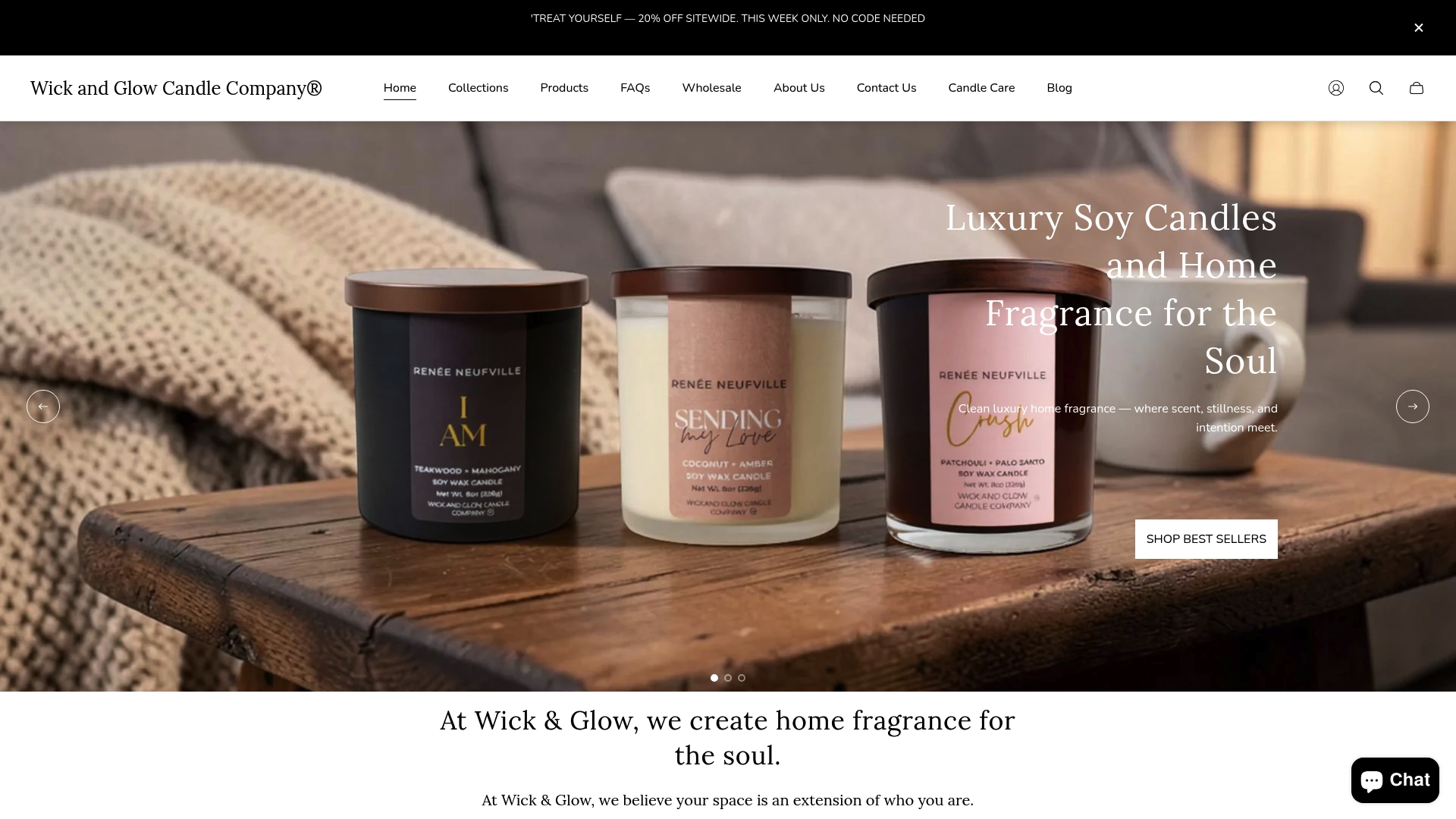
Every Wickandglow candle, diffuser, and room spray is built around a scent that connects to an emotion, a memory, or a mood, often inspired by R&B music and paired with a playlist. That pairing is not a gimmick. It layers two sensory inputs, scent and sound, that both access the limbic system, deepening the relaxation response your bath is already building. The glass reed diffuser delivers continuous fragrance throughout your soak without any prep work. The luxury room spray lets you set the scent before the water even runs. If you want a candle that pulls double duty as ambient light and fragrance, the Men Love Candles Too collection offers sophisticated, long-lasting scents built for exactly this kind of intentional use. Browse the full range at Wickandglow and find the scent that fits the bath you actually want to take.
Key Takeaways
Bath ambiance requires special fragrance because scent directly engages the brain’s limbic system, producing measurable physiological and emotional effects that warm water alone cannot replicate.
| Point |
Details |
| Scent bypasses conscious processing |
Aromatic molecules reach the limbic system directly, triggering relaxation faster than any other sensory input. |
| Heat amplifies fragrance effects |
Warm bath water opens pores and accelerates scent diffusion, making baths one of the most effective aromatherapy delivery methods. |
| Lavender and bergamot have clinical support |
A clinical study found these blends lower heart rate and blood pressure with significant self-reported calmness. |
| Dilution is non-negotiable for safety |
Essential and fragrance oils must be mixed with a carrier oil before bath use to prevent skin irritation from undiluted surface pooling. |
| Wickandglow pairs scent with sound |
Each product is designed around a specific emotional outcome, combining fragrance with music playlists for a deeper limbic response. |
Recommended


