
- Article published at:
- Article author: Wick and Glow
- Article tag: en
- Article comments count: 0
Discover why handcrafted gifts hold more emotional value than store-bought ones, reflecting love and effort that touch hearts deeply.
Learn More
Drawer menu

A non-toxic candle is one formulated to minimize harmful chemical emissions during burning, using natural waxes, clean-burning wicks, and fragrances free from synthetic additives like phthalates. Most conventional candles are made from paraffin wax, a petroleum byproduct that releases benzene and toluene when burned. These are toxic chemicals at high concentrations. Brands like Wickandglow build their entire product line around avoiding these ingredients, using soy wax, cotton wicks, and phthalate-free fragrance oils instead. Understanding what does non toxic candle mean gives you the power to make smarter choices for your home and the people in it.
The wax is the first thing to evaluate. Paraffin wax is the most common candle base worldwide, and it comes from crude oil refining. Studies detected toluene and benzene emissions from burning paraffin candles but found no detectable amounts from soy candles. That difference matters if you burn candles regularly in enclosed spaces.
Natural wax alternatives include soy, beeswax, and coconut wax. Soy, beeswax, and coconut burn cleaner, produce less soot, and are biodegradable. Beeswax is the most expensive of the three. Coconut wax has a slow, even burn and holds fragrance well. Soy wax is the most widely available and affordable natural option.
Fragrance is the second major ingredient to scrutinize. Synthetic fragrance oils often contain phthalates, which are endocrine disruptors linked to hormonal disruption and increased asthma risk in children. Phthalates are added to synthetic fragrances to make the scent last longer. A non-toxic candle uses pure essential oils or phthalate-free fragrance oils instead.
The wick is often overlooked. Metal-core wicks, once common in cheaper candles, can release trace heavy metals into the air. Cotton wicks and FSC-certified wood wicks are the cleaner standards. Synthetic dyes and chemical additives in colored candles add another layer of concern, though they are generally considered lower risk than wax and fragrance choices.
Pro Tip: When reading a candle label, look for three things: the wax type, the fragrance source (essential oil or phthalate-free), and the wick material. If a brand does not list these, that silence is itself informative. Check out this candle ingredient label guide to know exactly what to look for.
Burning any candle affects the air in your home. Candle burning produces ultrafine particles, nitrogen dioxide, and polycyclic aromatic hydrocarbons (PAHs) linked to respiratory health risks. These particles are smaller than those produced by cooking, which means they penetrate deeper into the lungs.
The type of wax and fragrance significantly changes the emission profile. The table below compares the three most common wax types across key air quality factors.
| Wax type | Soot output | VOC emissions | Biodegradable |
|---|---|---|---|
| Paraffin | High | High (benzene, toluene) | No |
| Soy | Low | Low to moderate | Yes |
| Beeswax | Very low | Very low | Yes |
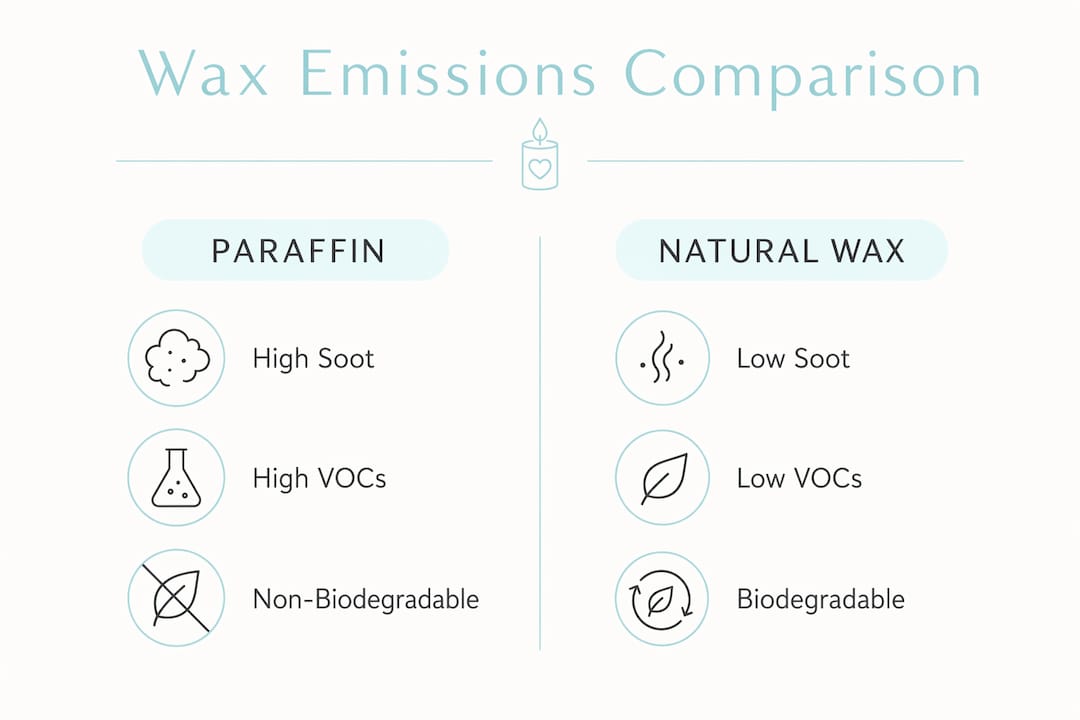
Synthetic fragrances push VOC emissions higher regardless of the wax used. A soy candle with a synthetic fragrance load can emit more VOCs than a plain paraffin candle. This is why fragrance choice matters as much as wax choice.
The EPA’s indoor air quality guidance recommends minimizing combustion particulate sources inside the home. Candles fall directly into that category. Non-toxic candles reduce the problem but do not eliminate it. Every flame produces some combustion byproducts.
Fragrance-free candles emit fewer VOCs and particulates than scented versions and are the lowest-risk option for indoor air quality. That finding applies to all wax types. If you want the cleanest burn possible, a fragrance-free soy or beeswax candle in a well-ventilated room is the right choice.
Non-toxic candles are meaningfully safer for sensitive groups, but they are not risk-free. Children, people with asthma, and pets are more vulnerable to airborne particulates and VOCs than healthy adults. Synthetic fragrances containing phthalates pose a particular concern for children because of their developing endocrine systems.
For households with asthma sufferers, the fragrance load is the primary variable to control. Even natural essential oils can trigger reactions in some people. The safest approach for sensitive households follows a clear progression:
Pets, especially birds, have highly sensitive respiratory systems. Even low-emission candles should be kept out of rooms where birds are housed. Dogs and cats are less sensitive but still benefit from good ventilation during candle use.
Pro Tip: If you are introducing candles to a home with a child who has asthma, begin with a plant-based, unscented candle and burn it for no more than 30 minutes with a window cracked. Monitor for any reaction before extending burn time or adding fragrance.
Choosing a genuinely cleaner candle requires reading past the marketing. The term “non-toxic” is unregulated and ambiguous. It does not specify which chemicals are excluded or at what exposure level. Brands that list their full ingredient stack, including wax source, fragrance composition, and wick material, are the ones worth trusting.
Look for these markers when shopping:
Proper use matters as much as ingredients. Wick trimming and avoiding drafts directly reduce soot formation and particulate emissions. A wick left too long creates a larger flame, more soot, and faster wax consumption. Drafts cause uneven burning and increase smoke output.
The environmental case for natural wax candles is also strong. Soy, beeswax, and coconut wax are biodegradable and sustainably sourced compared to paraffin. Paraffin is a petroleum refining byproduct with a larger carbon footprint from extraction through disposal. For consumers who care about eco-friendly home choices, natural wax candles are the clear better option.
Natural wax candles typically cost more than paraffin alternatives. Soy candles burn slower and last longer, which partially offsets the price difference. A well-made soy candle with a trimmed wick will outlast a paraffin candle of the same size. The value calculation favors natural wax when you factor in burn hours per dollar.
Pro Tip: Rotate between candles and non-toxic fragrance alternatives like reed diffusers or room sprays. This reduces total combustion time in your home while keeping your space consistently scented.
A non-toxic candle reduces harmful emissions through natural wax, phthalate-free fragrance, and clean-burning wicks, but proper burn habits are equally critical to protecting indoor air quality.
| Point | Details |
|---|---|
| “Non-toxic” is unregulated | The term has no legal definition; always check for specific ingredient disclosures. |
| Wax type changes emissions | Soy and beeswax produce significantly less soot and fewer VOCs than paraffin. |
| Fragrance is the hidden risk | Synthetic fragrance oils contain phthalates; choose phthalate-free or essential oil options. |
| Burn habits matter | Trim wicks to a quarter inch and ventilate rooms to minimize particulate exposure. |
| Sensitive groups need extra care | Children, asthma sufferers, and pets benefit most from fragrance-free, natural wax candles. |
After years of paying close attention to how candle brands communicate with their customers, I have come to one firm conclusion: “non-toxic” is a marketing phrase first and a scientific claim second. That does not mean it is meaningless. It means you have to do a little more work to verify it.
The brands I trust most are the ones that publish their full ingredient lists without being asked. They name the wax source, describe the fragrance composition, and confirm wick materials. That level of transparency is rare, and it is the real signal of a brand that takes ingredient safety seriously.
What I have also learned is that how you burn a candle matters as much as what is in it. A beautifully formulated soy candle burned in a closed bathroom with a long wick will produce more indoor air pollution than a mediocre paraffin candle burned correctly in a ventilated living room. The ingredient story is important, but it is not the whole story.
My honest recommendation: prioritize fragrance transparency over wax type if you have to choose one. Phthalates in synthetic fragrances are the most documented health concern in candle research. A paraffin candle with a phthalate-free fragrance is a better choice than a soy candle loaded with synthetic scent compounds. And for anyone with respiratory sensitivity, start with unscented and work your way up slowly.
— B
Wickandglow builds every product around the same ingredient standards this article describes: soy wax, cotton wicks, and phthalate-free fragrances. Each candle is paired with a curated playlist, so the scent and the sound work together to set the mood you are after.
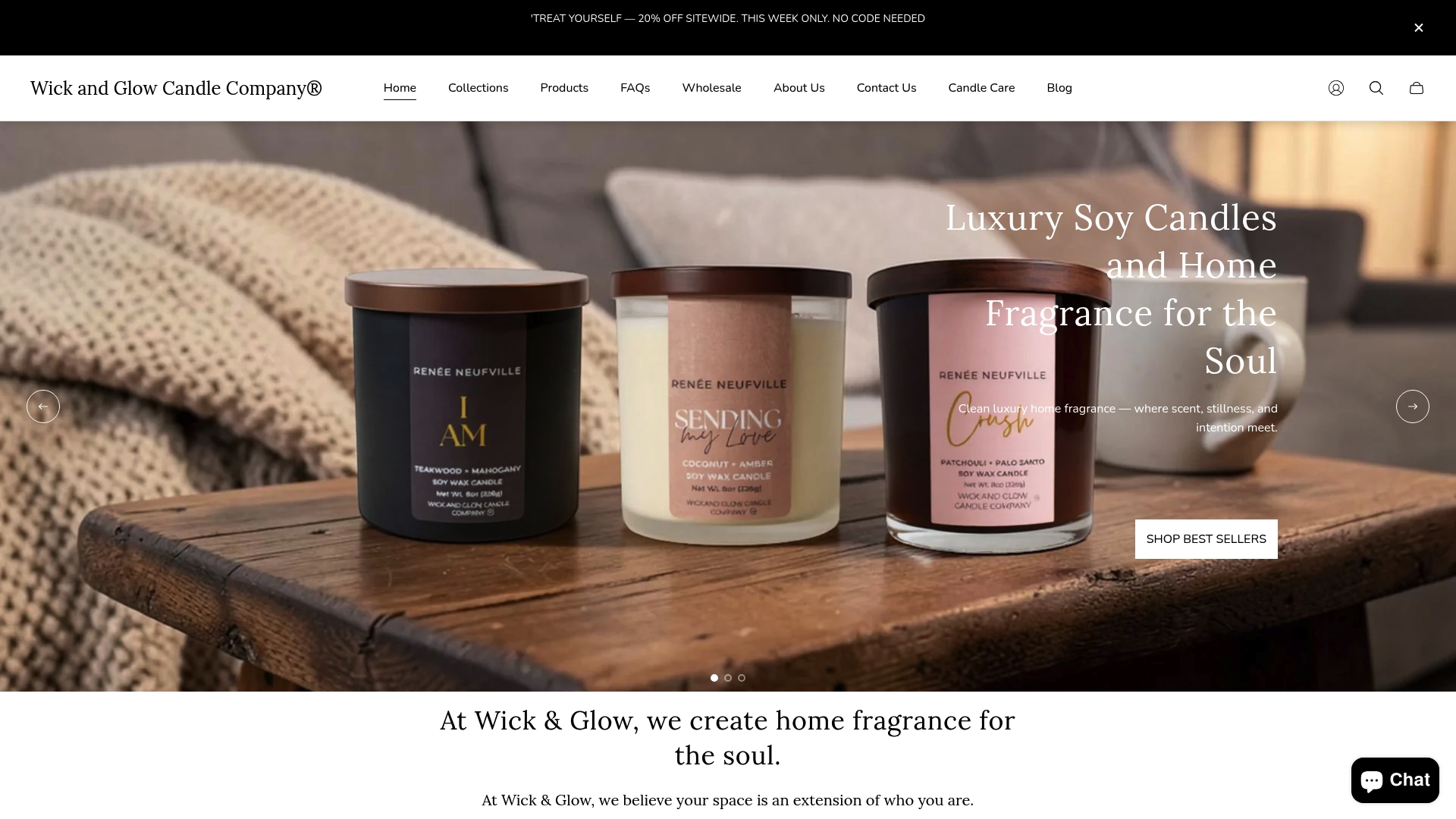
The Home Fragrance Scent Bundle includes a soy candle, reed diffuser, and room spray in your chosen scent. It is the most practical way to reduce combustion time while keeping your home consistently fragranced. The bundle also lets you rotate between formats, which is exactly the kind of habit that keeps indoor air quality in check. Wickandglow’s collaboration with Renée Neufville brings that same clean-ingredient standard to a collection built around artistry and intention.
“Non-toxic” on a candle label is an unregulated marketing term with no legal definition. It generally signals that the brand avoids paraffin wax, synthetic phthalate-containing fragrances, and metal-core wicks, but you should verify by checking the full ingredient list.
Soy candles produce significantly less soot and do not emit detectable benzene or toluene, unlike paraffin candles. They are a cleaner-burning option, though fragrance additives can still affect overall emissions.
Yes. Even natural essential oils can irritate sensitive airways in some people. Fragrance-free, natural wax candles burned in well-ventilated rooms are the lowest-risk option for asthma sufferers.
Look for “phthalate-free” stated explicitly on the label or product page. If a brand lists only “fragrance” without further detail, assume synthetic fragrance oils with phthalates may be present.
Burn habits directly affect emissions. Trimming the wick to a quarter inch before each use, avoiding drafts, and burning candles in ventilated rooms all reduce soot and particulate output regardless of candle type.

