Candle ingredient labels are the only reliable tool you have for evaluating what you’re actually burning in your home. 75% to 80% of all candles sold in the United States are scented, which makes fragrance disclosure far more than a nice-to-have. This reading candle ingredient labels guide breaks down every component you’ll find on a label, from wax type and fragrance source to wick material and safety warnings, so you can separate real ingredient transparency from clever marketing language. Wickandglow built its entire product line around this kind of honesty, and you deserve the same standard from every candle you buy.
What does a candle ingredient label actually tell you?
A candle label is a compressed summary of everything inside the jar. Most labels include four core components: the wax base, the fragrance source, the wick material, and safety instructions. Some brands go further and list additives, colorants, and certifications. Others print only the bare minimum.
The gap between those two approaches tells you a lot. A brand willing to list every ingredient has nothing to hide. A label that says only “premium wax blend” and “fragrance” is asking you to trust a claim without giving you the facts to verify it.
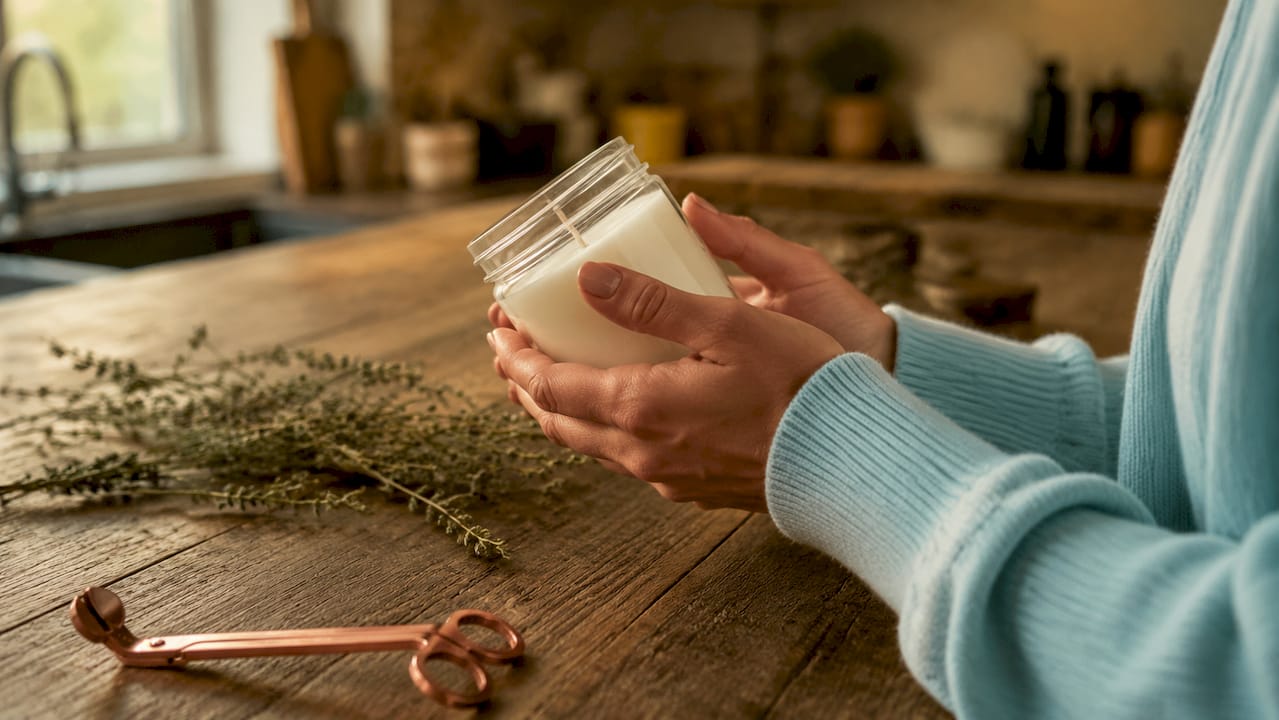
Understanding candle labels starts with knowing what each component means and what questions to ask when something is missing.
What are the main candle wax types on labels?
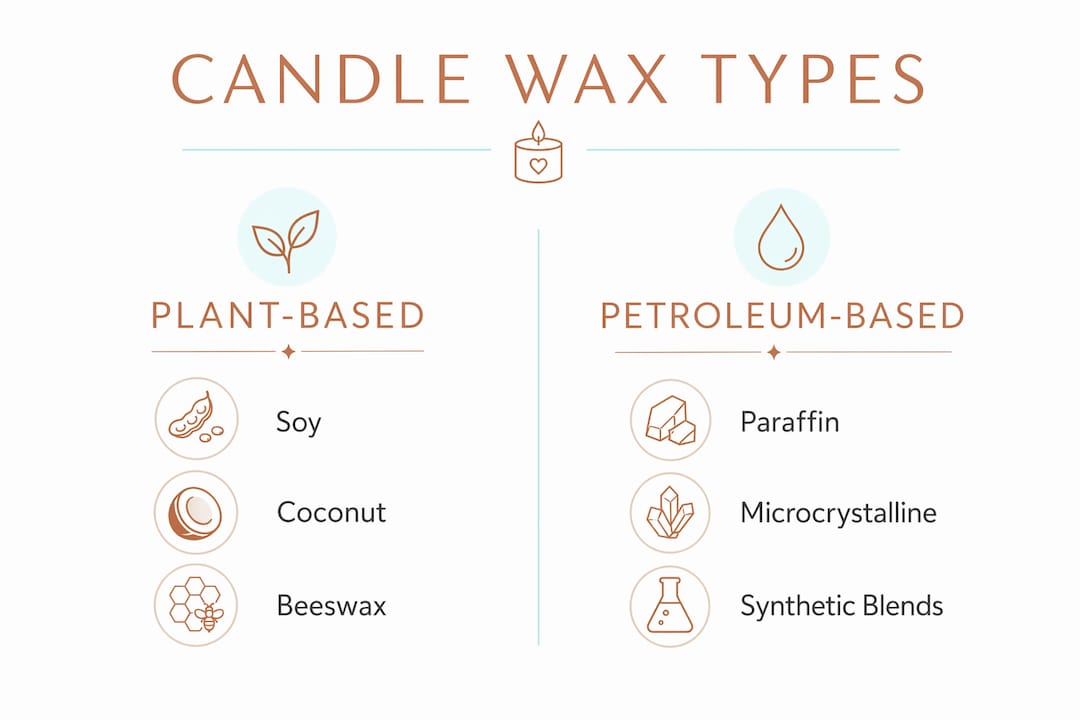
Waxes are derived from animals, plants, or petroleum, and that origin matters for your health, your values, and how the candle performs. The label should tell you exactly which wax you’re getting.
Here are the most common wax types you’ll see listed:
-
Soy wax: Plant-derived, slower burning, and biodegradable. Labels may say “100% soy wax” or “soy wax blend.” The word “blend” means other waxes are present.
-
Paraffin wax: Petroleum-derived and the most widely used wax globally. It holds fragrance well but produces more soot than plant-based alternatives.
-
Beeswax: Animal-derived, naturally fragrant, and long-burning. Not vegan. Labels should specify “pure beeswax” for full transparency.
-
Coconut wax: Plant-derived, creamy texture, and excellent scent throw. Often blended with soy for cost efficiency.
-
Wax blends: A mix of two or more wax types. The label should name every component in the blend, not just call it a “proprietary blend.”
Here is a quick comparison of the most common wax types:
| Wax Type |
Source |
Burn Quality |
Sustainability |
| Soy |
Plant (soybean) |
Clean, slow |
High |
| Paraffin |
Petroleum |
Strong scent throw |
Low |
| Beeswax |
Animal |
Long, bright flame |
Moderate |
| Coconut |
Plant (coconut) |
Creamy, clean |
High |
| Wax Blend |
Mixed |
Varies |
Depends on mix |
Additives improve wax hardness and scent throw but are often underdisclosed on labels. If a label lists “wax blend” without naming the additives, that is a transparency gap worth noting.
Pro Tip: Always prefer candles that list the exact wax components by name. “100% coconut soy wax” is a trustworthy label. “Premium wax blend” is not.
How do fragrance disclosures work on candle labels?
Fragrance is where candle labels get the most complicated. The word “fragrance” on a label can legally cover hundreds of undisclosed synthetic chemicals. That single word tells you almost nothing about what you’re inhaling.
Here is what the most common fragrance terms actually mean:
-
Fragrance oil: A synthetic or blended scent compound. Performs consistently but may contain phthalates or other chemicals not listed individually.
-
Essential oil: Derived directly from plants. Labels that name specific oils, such as lavender essential oil or eucalyptus essential oil, signal real transparency.
-
Natural fragrance: A loosely regulated term. It suggests plant-derived ingredients but does not guarantee a fully clean formula.
-
Parfum: The European term for fragrance. Subject to the same disclosure limitations as “fragrance” in the US.
-
Unscented: No fragrance added, but masking agents may still be present. “Fragrance-free” is the stronger claim.
The regulatory picture differs by region. Since January 2025, scented candles in the EU and Northern Ireland must carry CLP labels with nine mandatory components, including hazard pictograms and allergen information. The US follows voluntary ASTM F2058 standards, which means American brands are not legally required to disclose every fragrance chemical.
That gap matters. A candle sold in the EU must name specific allergens. The same candle sold in the US may not. Knowing how fragrance notes work helps you read those disclosures with more confidence.
Pro Tip: If a label lists named essential oils alongside fragrance oil, that brand is giving you more information than most. Prioritize those products when fragrance transparency matters to you.
What do wick materials on labels tell you?
The wick is the engine of the candle, and its material directly affects how cleanly and safely your candle burns. Proper wick construction using cotton, wood, or hemp ensures a steady, clean burn and affects both fragrance release and safety.
Most quality candles use one of these wick types:
-
Cotton wicks: The most common choice in cleaner candles. They burn steadily and produce minimal soot when properly sized.
-
Wood wicks: Create a soft crackling sound and a wide flame. They work well in coconut and soy wax blends.
-
Hemp wicks: Less common but increasingly popular in natural candle lines. They burn slowly and cleanly.
-
Paper-braided wicks: Often used in combination with cotton. Generally considered safe and clean-burning.
The wick to avoid is the metal-core wick. These were historically made with lead, which has since been banned in the US, but zinc and tin cores are still used. Metal-core wicks indicate conventional candle production and are associated with higher soot output. If a label does not specify wick material, contact the brand directly before buying.
Wick size also matters more than most people realize. An undersized wick creates tunneling. An oversized wick produces excessive soot and a dangerously large flame. A quality brand sizes the wick to the jar diameter and discloses the wick type on the label or product page.
What do safety warnings on candle labels mean?
Safety warnings on candle labels are not just legal boilerplate. They are practical instructions that protect your home and your health. Candle labels often include burn time and safety instructions like trimming the wick, avoiding drafts, and burning within sight to prevent hazards.
The most important safety instructions you will find on a well-labeled candle:
-
Burn within sight. Never leave a lit candle unattended. This is the single most important fire safety rule.
-
Keep away from flammables. Curtains, paper, and fabric are all fire risks within a candle’s heat radius.
-
Trim the wick to 1/4 inch before each burn. A longer wick produces a larger, sootier flame.
-
Keep out of reach of children and pets. Heat and open flame are obvious hazards.
-
Do not burn for more than four hours at a time. Extended burns overheat the jar and degrade the wax pool.
“Safety labels ensure customer protection. In the US, labels are voluntary but recommended and are often placed on the bottom of the jar or in packaging inserts.” — AFI USA
Optional certification logos add another layer of information. Look for USDA Organic, Non-GMO Project Verified, B Corp, or vegan certifications. These are third-party verified claims, which makes them more reliable than self-applied marketing language. For a deeper look at what to avoid, Wickandglow’s guide on toxic candle ingredients is worth bookmarking.
How do you spot marketing claims vs. real ingredient disclosures?
The most misleading section of any candle label is usually the front. Words like “non-toxic,” “clean,” “eco,” and “natural” appear on thousands of candles with no standardized definition behind them.
Terms like “non-toxic” are not standardized. A candle can legally carry that claim while containing synthetic fragrance chemicals, paraffin wax, and metal-core wicks. The claim reflects the brand’s marketing choice, not a regulatory standard.
Here is how to cut through the noise:
-
Ignore the front label. Marketing claims live there. Ingredient facts live on the back or bottom.
-
Look for a full ingredient list. A transparent brand lists wax type, fragrance source, wick material, and any additives by name.
-
Check for third-party certifications. A Non-GMO or B Corp logo requires external verification. “Natural” does not.
-
Research the brand. Brands that publish their sourcing standards, safety data sheets, or ingredient philosophy on their website are more credible than those that do not.
Consumers often misunderstand ingredient claims. Education on label terms is the most direct path to better purchasing decisions. If a brand cannot tell you what is in their candle, that is your answer.
Pro Tip: Search the brand name alongside “ingredients” or “safety data sheet” before buying. Transparent brands make this information easy to find. Brands with something to hide make it nearly impossible.
For more on choosing plant-based candle ingredients, Wickandglow’s blog covers the full breakdown.
Key takeaways
Reading candle ingredient labels requires checking the wax type, fragrance source, wick material, and safety warnings before trusting any marketing claim on the front of the jar.
| Point |
Details |
| Wax transparency matters |
Choose candles that name every wax component rather than listing a generic blend. |
| Fragrance terms are vague |
“Fragrance” covers hundreds of undisclosed chemicals; named essential oils signal real transparency. |
| Wick material affects safety |
Cotton, wood, and hemp wicks burn cleanest; avoid metal-core wicks for lower soot output. |
| Safety warnings are practical |
Follow burn time limits, wick trimming instructions, and never leave a lit candle unattended. |
| Marketing claims need verification |
Terms like “non-toxic” and “clean” have no legal definition; always check the full ingredient list. |
What i’ve learned from years of reading candle labels
Most people flip a candle over, see a wall of text, and put it back on the shelf without reading a word. That is exactly what brands with weak formulas are counting on.
The biggest mistake I see is consumers trusting the front label completely. A candle that says “made with natural ingredients” can still contain paraffin wax, synthetic fragrance, and a zinc-core wick. None of those are illegal. None of them are disclosed on the front. The back label is where the truth lives, and most people never look there.
The second mistake is treating all soy candles as automatically safe or clean. Soy wax is a better choice than paraffin in most cases, but a soy candle with synthetic fragrance and a metal-core wick is not a clean candle. The wax is only one variable.
My honest recommendation is to start with one or two criteria and build from there. If fragrance sensitivity is your concern, prioritize candles that name specific essential oils. If sustainability drives your choices, look for soy or coconut wax with a sourcing statement. You do not need to find a perfect candle on the first try. You need to get better at asking the right questions each time you buy.
The candle industry is moving toward more transparency, slowly. Brands that lead on ingredient disclosure today are setting the standard that the rest of the market will eventually follow.
— B
Wickandglow makes label reading easy
Wickandglow takes the guesswork out of ingredient transparency. Every product in the line uses natural soy wax, cotton wicks, and clearly disclosed fragrance sources, so you never have to wonder what you’re burning.
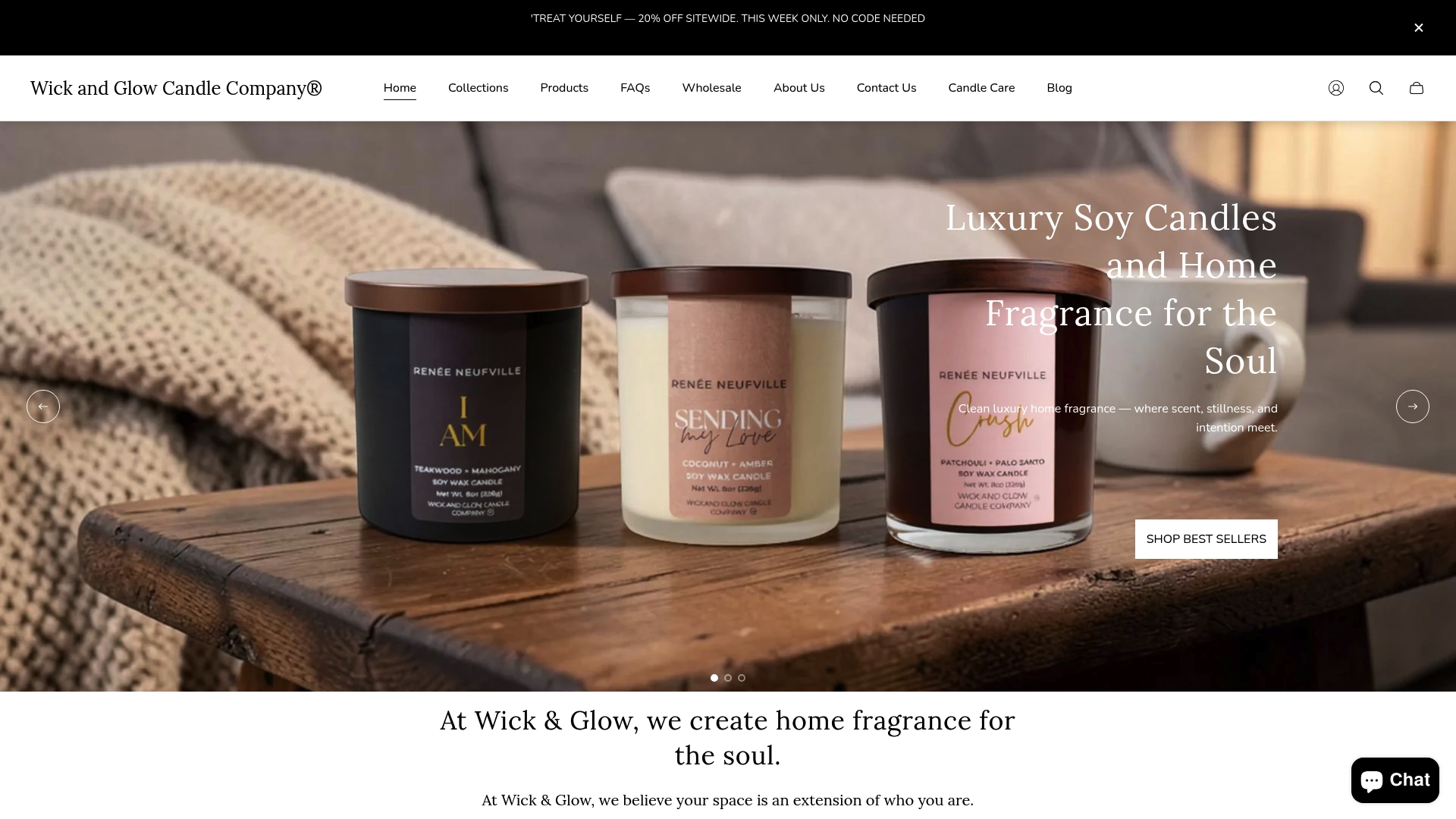
If you want to experience what a fully transparent candle label looks like in practice, the Home Fragrance Scent Bundle is the place to start. It includes a soy candle, reed diffuser, and room spray, each made with the same commitment to clean ingredients and honest labeling. Wickandglow also pairs every scent with an R&B playlist, because the right fragrance and the right music create something a label can never fully capture.
FAQ
What does “wax blend” mean on a candle label?
“Wax blend” means the candle contains two or more wax types mixed together. A transparent label names every component in the blend; a vague label does not.
Is “fragrance” on a candle label safe?
The word “fragrance” legally covers hundreds of undisclosed chemicals. It is not inherently unsafe, but it provides no information about specific ingredients, allergens, or synthetic compounds.
Are candle safety warnings legally required in the US?
US candle safety labels are voluntary but strongly recommended by industry groups. The EU requires mandatory CLP labels with hazard pictograms and allergen disclosures as of January 2025.
What wick materials are safest to burn?
Cotton, wood, and hemp wicks are the cleanest-burning options. Metal-core wicks produce more soot and are associated with conventional mass-produced candles.
Does “non-toxic” on a candle label mean it’s chemical-free?
No. “Non-toxic” is not a standardized term and carries no regulatory definition. Always check the full ingredient list rather than relying on front-label claims.
Recommended


