Non-toxic home fragrance alternatives are scenting methods that deliver pleasant aromas without releasing phthalates, synthetic volatile organic compounds (VOCs), or other endocrine-disrupting chemicals into your indoor air. Conventional air fresheners mask odors instead of removing them and commonly contain phthalates linked to hormone disruption. The good news: soy candles, essential oil diffusers, simmer pots, and phthalate-free sprays from brands like Wickandglow give you real fragrance without the chemical trade-off. This guide covers the safest options, how they compare on emissions, and exactly how to use them without compromising your air quality.
1. Non-toxic home fragrance alternatives: the full list
The safest chemical-free home fragrance options fall into six practical categories. Each has a different emissions profile, scent intensity, and ease of use. Here is what you need to know about each one.
Essential oil diffusers and sprays
Essential oil diffusers disperse plant-derived aromatic compounds into the air without combustion. They are one of the most popular safe home scents because they avoid soot and particulate matter entirely. That said, essential oils are not VOC-free. Compounds like limonene (found in citrus oils) can react with indoor ozone to form secondary organic aerosols, which are their own class of indoor pollutant. Use diffusers in ventilated rooms and limit sessions to 30 to 60 minutes.
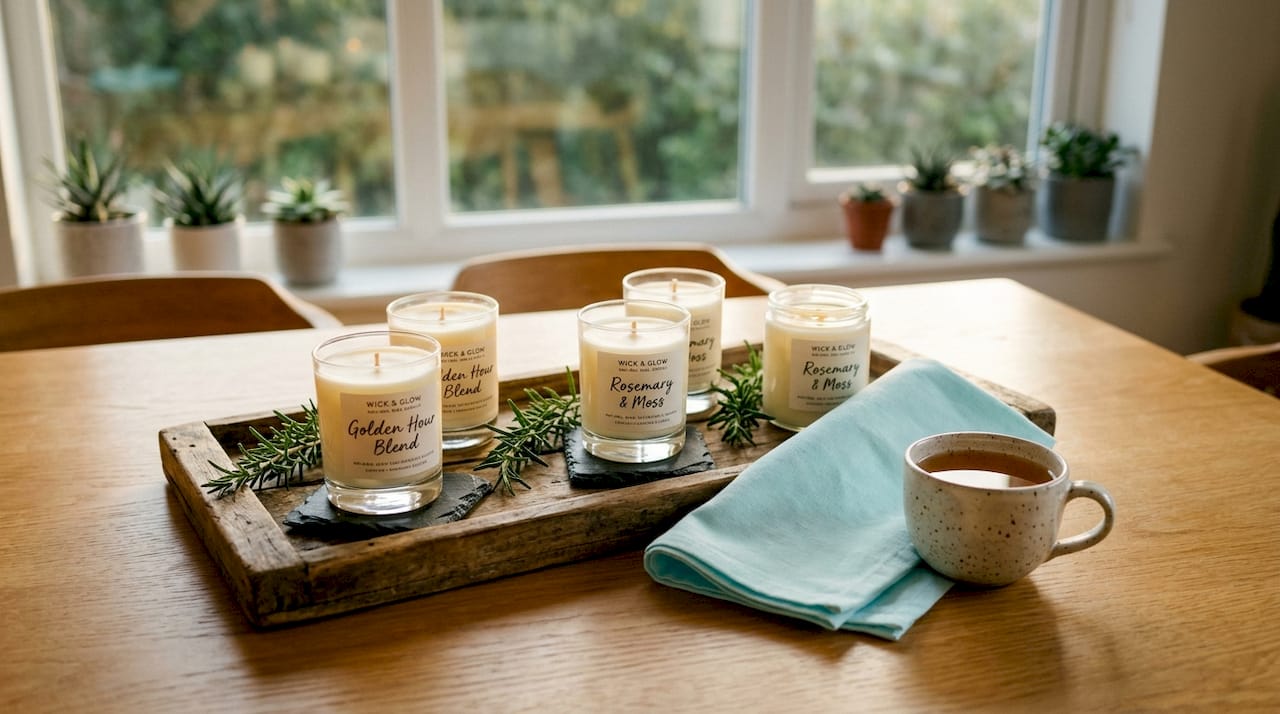
For a DIY room spray, the Mornings with Mags recipe is a reliable starting point: combine distilled water, one tablespoon of vodka, and 15 to 20 drops of your chosen essential oil in a 4 oz spray bottle. The alcohol acts as an emulsifier and preservative. Add a pinch of baking soda if you want odor neutralization alongside the scent.
Pro Tip: Reed diffusers from transparent brands like Wickandglow use carrier oils instead of aerosol propellants, which cuts hydrocarbon emissions significantly compared to spray cans.
Natural wax candles (soy and beeswax)
Soy and beeswax candles are the most widely recommended best non-toxic candles because they burn cleaner than paraffin. Paraffin is a petroleum byproduct that releases benzene and toluene when burned. Soy and beeswax produce less soot and fewer particulates. However, burning candles still releases VOCs, so “natural wax” does not mean zero emissions. Choose candles with cotton or wood wicks, no synthetic dyes, and full fragrance ingredient disclosure.
Scented wax melts deserve a specific caution. Because they use higher fragrance concentrations than poured candles and rely on heat rather than flame, they can emit more VOCs per hour of use. If you love wax melts, limit the amount of wax you melt at one time and keep windows cracked.
Simmer pots
A simmer pot is a stovetop or slow cooker filled with water, spices, citrus peels, and herbs that release fragrance through gentle steam. Cinnamon sticks, orange slices, cloves, and fresh rosemary are classic combinations. This method produces no synthetic chemicals whatsoever, making it one of the lowest-risk natural air fresheners available. The scent dissipates quickly once you stop simmering, which is actually a benefit if you want controlled, temporary fragrance rather than a persistent chemical load in your air.
Fresh and dried botanicals
Fresh flowers, eucalyptus branches, and dried lavender sachets release fragrance passively at very low concentrations. This is the gentlest end of the eco-friendly aroma solutions spectrum. The scent radius is small, making botanicals ideal for bathrooms, closets, and bedside tables rather than open living areas. Dried citrus peels placed in a bowl also absorb mild odors while releasing a faint natural scent.
Baking soda and odor absorbers
Baking soda, activated charcoal, and zeolite are odor absorbers, not fragrance sources. They neutralize odor molecules rather than covering them with a competing scent. Placing an open box of baking soda near a trash can or litter box addresses the source of the smell rather than masking it. This distinction matters: long-term health protection requires eliminating odor sources, not layering fragrance on top of them.
Not all non-toxic home fragrance alternatives perform equally when you measure them against VOC output, phthalate risk, scent longevity, and ease of use. The table below gives you a direct comparison.
| Format |
VOC emissions |
Phthalate risk |
Scent longevity |
Ease of use |
| Aerosol spray |
High (propellants) |
High if unlabeled |
Short (minutes) |
Very easy |
| Essential oil diffuser |
Moderate (terpenes) |
Low if pure oils |
Medium (hours) |
Easy |
| Soy or beeswax candle |
Low to moderate |
Low if phthalate-free |
Medium (hours) |
Easy |
| Simmer pot |
Very low |
None |
Short (active only) |
Moderate effort |
| Reed diffuser |
Low |
Low if disclosed |
Long (weeks) |
Very easy |
| Dried botanicals |
Negligible |
None |
Long (weeks) |
Very easy |
Aerosol propellants such as propane and isobutane are emitted directly into your indoor air during use, making conventional spray air fresheners the highest-emission format by a significant margin. Switching to a reed diffuser or simmer pot cuts that exposure substantially.
Phthalates are the other major variable. Diethyl phthalate and di(2-ethylhexyl) phthalate are common fragrance additives that disrupt endocrine function. Products without explicit “phthalate-free” labeling should be treated as containing them, because fragrance formulas are legally protected trade secrets in the U.S. and do not require full disclosure.
One counterintuitive finding: passive scent methods like plug-in warmers and non-electric diffusers can produce higher chemical concentrations than burning candles because the fragrance load is released continuously without combustion breaking down the compounds. Switching delivery method alone does not guarantee lower exposure.
Pro Tip: When evaluating any candle or diffuser, search the brand’s website for a full ingredient list or Safety Data Sheet. If the brand lists only “fragrance” with no further breakdown, that is a red flag.
3. Practical steps to make your home fragrance truly non-toxic
Choosing the right product is only half the equation. How you use it determines your actual chemical exposure.
-
Remove odor sources first. People spend over 90% of their time indoors, and microbial VOCs from moisture and mold are a primary source of bad indoor odors. Adding fragrance on top of a mold problem does not fix the air quality. Address moisture, clean trash receptacles regularly, and wash pet bedding before reaching for a spray.
-
Check every label for phthalate-free status. Products labeled only as “natural” or “clean” are not regulated terms. Look specifically for “phthalate-free” and, ideally, a published ingredient list. Brands that disclose their full formula are demonstrating a level of transparency that matters.
-
Ventilate during and after use. Open a window or run a bathroom fan when burning candles or running a diffuser. Ventilation reduces indoor pollutants by diluting VOC concentrations before they accumulate. This applies even to “safe” natural terpene-based scents, which can react with ozone to form secondary aerosols.
-
Limit fragrance intensity and duration. More scent does not mean better scent. Running a diffuser for 30 minutes in a ventilated room delivers a pleasant result with far lower cumulative VOC exposure than running it continuously for eight hours. Burn candles for two to three hours at a time rather than all day.
-
Build a DIY spray with known ingredients. The four-ingredient recipe from Mornings with Mags (distilled water, vodka, essential oil, optional baking soda) gives you complete control over what goes into your air. Use lavender for calm, peppermint for focus, or eucalyptus for a clean, fresh effect. Store in a glass bottle to prevent chemical leaching from plastic.
-
Combine retail and DIY approaches. A phthalate-free reed diffuser handles background scent passively while a DIY spray gives you a quick burst when you need it. This layered approach keeps overall fragrance load lower than relying on a single high-intensity source.
Pro Tip: Beeswax candles actually release negative ions when burned, which can bind to airborne dust and particulates. This makes them one of the few fragrance formats that may actively improve air quality rather than just adding scent.
4. Ready-made non-toxic products worth buying
For readers who want a vetted retail option rather than a DIY project, the market for transparent, phthalate-free home fragrance has grown considerably. Here is what to look for and where to find it.
-
Wickandglow soy candles are made with natural soy wax, cotton wicks, and phthalate-free fragrance oils. The brand publishes its ingredient philosophy openly and offers collaborations with artists like Renée Neufville, making each candle a sensory and cultural experience. The Scenting My Love Duo is a standout example of fragrance with intention behind it.
-
Wickandglow reed diffusers use a flameless format that eliminates combustion emissions entirely. The 7 oz long-lasting formula delivers weeks of consistent scent without aerosol propellants or synthetic VOC boosters.
-
Wickandglow room sprays are vegan and phthalate-free, designed for linen and air use. They function as a direct replacement for conventional aerosol air fresheners with a fraction of the chemical load.
-
Certifications and transparency signals to look for on any brand: phthalate-free labeling, vegan certification, natural wax disclosure, and cotton or wood wick specification. Brands that list “fragrance” as a single ingredient without further detail should be approached with caution.
-
Scent bundles are a practical way to test multiple formats at once. Wickandglow’s home fragrance bundle pairs a soy candle, reed diffuser, and room spray in a single purchase, letting you find which format suits your space and lifestyle best.
Key takeaways
Non-toxic home fragrance requires removing odor sources, choosing phthalate-free products, and ventilating your space. Fragrance alone, however natural, does not equal clean air.
| Point |
Details |
| Remove odor sources first |
Fragrance masks pollutants; mold and moisture must be addressed before scenting. |
| Phthalate-free labeling matters |
“Natural” is unregulated; only explicit phthalate-free claims and ingredient lists confirm safety. |
| Ventilate every format |
Even natural terpenes form secondary aerosols indoors; open windows during diffuser or candle use. |
| Passive formats cut aerosol risk |
Reed diffusers and simmer pots produce far fewer emissions than aerosol spray cans. |
| Layer retail and DIY |
Combining a vetted phthalate-free diffuser with a homemade spray keeps total fragrance load low. |
The honest truth about “natural” home fragrance
I have spent years paying close attention to what actually goes into home fragrance products, and the single biggest misconception I encounter is that “natural” means safe. It does not. Limonene is natural. It is also a terpene that reacts with indoor ozone to form fine particulate matter. Lavender essential oil is natural. It is also a VOC source. The word “natural” on a label tells you almost nothing about the actual chemical emissions profile of a product.
What I have found actually works is a combination of source control and intentional scenting. If your home smells stale, the answer is almost never more fragrance. It is usually better airflow, a dehumidifier, or a thorough clean. Once the underlying air quality is addressed, a small amount of a genuinely transparent, phthalate-free product does exactly what you want it to do without the chemical accumulation.
I also think the industry is moving in the right direction. Brands like Wickandglow that publish their ingredient philosophy, use soy wax and cotton wicks, and build their products around a specific emotional intention are raising the standard. The R&B playlist concept is not just a marketing angle. It reflects a brand that thinks carefully about the full sensory experience rather than just hitting a price point. That kind of intentionality tends to correlate with better ingredient choices too.
My practical advice: expect your home to smell pleasant, not overwhelming. A subtle, well-chosen scent from a clean-burning candle or a passive reed diffuser is the goal. If you can smell your air freshener from the front door, you are using too much of it.
— B
Scent your home safely with Wickandglow
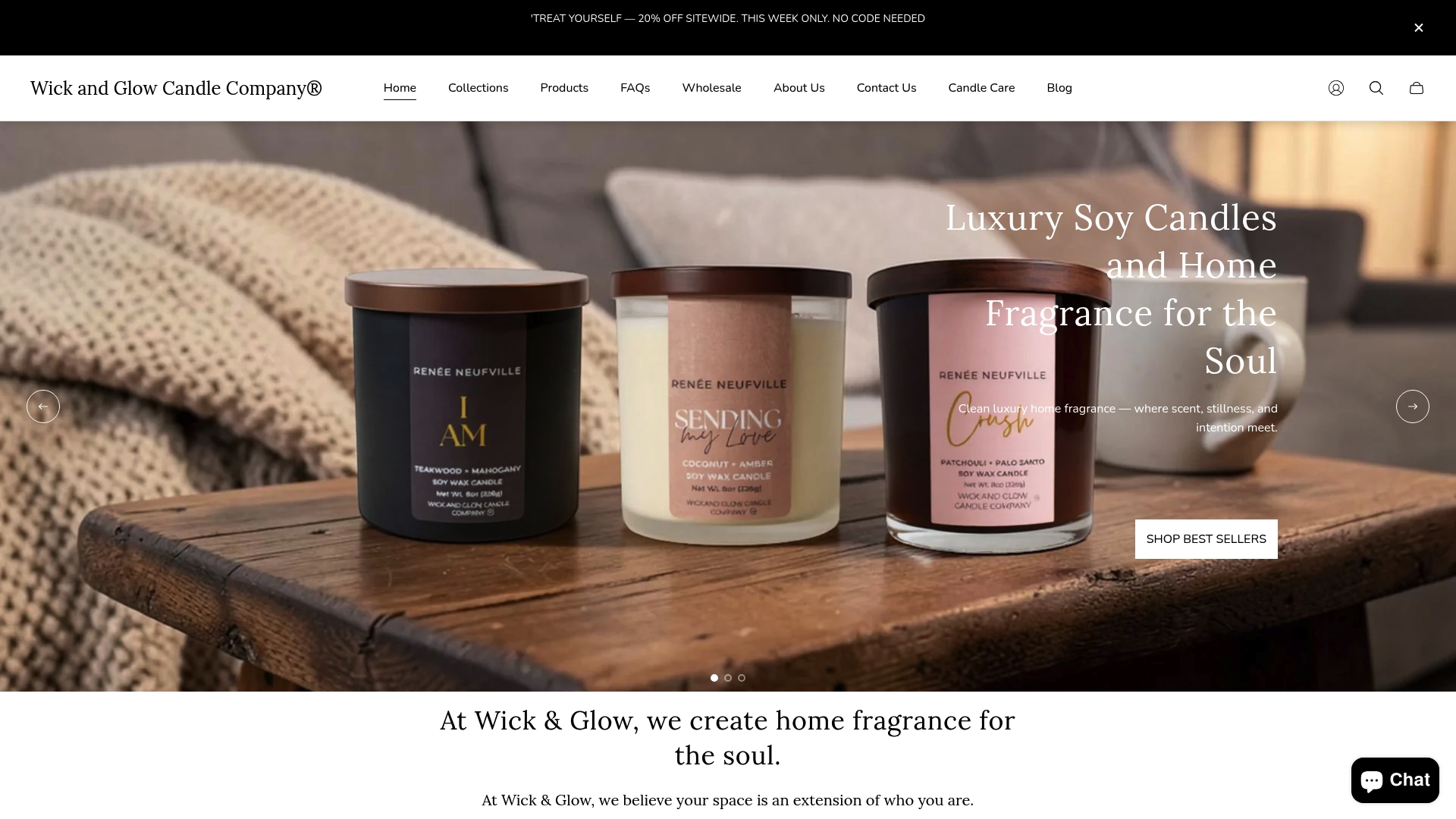
Wickandglow builds every product around one principle: fragrance should feel good and be good. The full line of soy candles, reed diffusers, and room sprays is vegan, phthalate-free, and made with transparent ingredient sourcing. Each scent comes paired with an R&B-inspired playlist, so you are not just freshening a room. You are setting a mood. The home fragrance scent bundle is the best starting point if you want to try all three formats at once and find what works for your space. Customers consistently highlight the lasting power and distinctiveness of the fragrances. When you are ready to replace conventional air fresheners with something that actually respects your health, Wickandglow is the place to start.
FAQ
What makes a home fragrance non-toxic?
A non-toxic home fragrance uses phthalate-free ingredients, natural or low-VOC waxes, and discloses its full formula. Products that list only “fragrance” without further detail may contain undisclosed synthetic chemicals.
Are essential oils safe to diffuse indoors?
Essential oils are not VOC-free. Compounds like limonene can react with indoor ozone to form secondary organic aerosols, so diffusing in a ventilated room for limited sessions (30 to 60 minutes) is the safest practice.
Do soy candles really burn cleaner than paraffin?
Soy candles produce less soot and fewer petroleum-derived VOCs than paraffin candles. However, all scented candles release some VOCs when burned, so ventilation and limiting burn time still apply.
How do I know if a candle contains phthalates?
Look for explicit “phthalate-free” labeling and a published ingredient list. If the product lists only “fragrance” as an ingredient with no further disclosure, assume phthalates may be present.
What is the single most effective step for better indoor air quality?
Removing odor sources, including mold, moisture, and microbial growth, is more effective than any fragrance product. Fragrance masks odors without addressing the underlying pollutant source.
Recommended
Article generated by BabyLoveGrowth


