Essential oils in candles are defined as concentrated plant extracts that deliver natural fragrance and therapeutic effects when heated by a burning wick. Unlike synthetic fragrance oils, essential oils interact with the body’s limbic system, making them a functional wellness tool rather than just a scent source. The role of essential oils in candles extends from setting the mood in a room to actively supporting stress relief, focus, and emotional balance. Wickandglow builds its entire fragrance philosophy around this idea, pairing intentional scent with music to create a full sensory experience.
Essential oils are volatile plant compounds, meaning they evaporate quickly when exposed to heat. That volatility is the core reason why essential oils produce a subtler scent throw than synthetic fragrance oils. Fragrance oils are engineered specifically for candles, so they hold their strength longer and fill a room more aggressively. Essential oils, by contrast, release in softer waves that shift as the candle burns.
This difference in performance comes down to chemistry. Essential oils have lower flash points than most fragrance oils, which means they begin to evaporate at lower temperatures. If you add them to wax that is too hot, a significant portion of the scent escapes before the candle even sets. The wax type you choose also shapes how well the oil binds and how strongly it throws scent when burned.
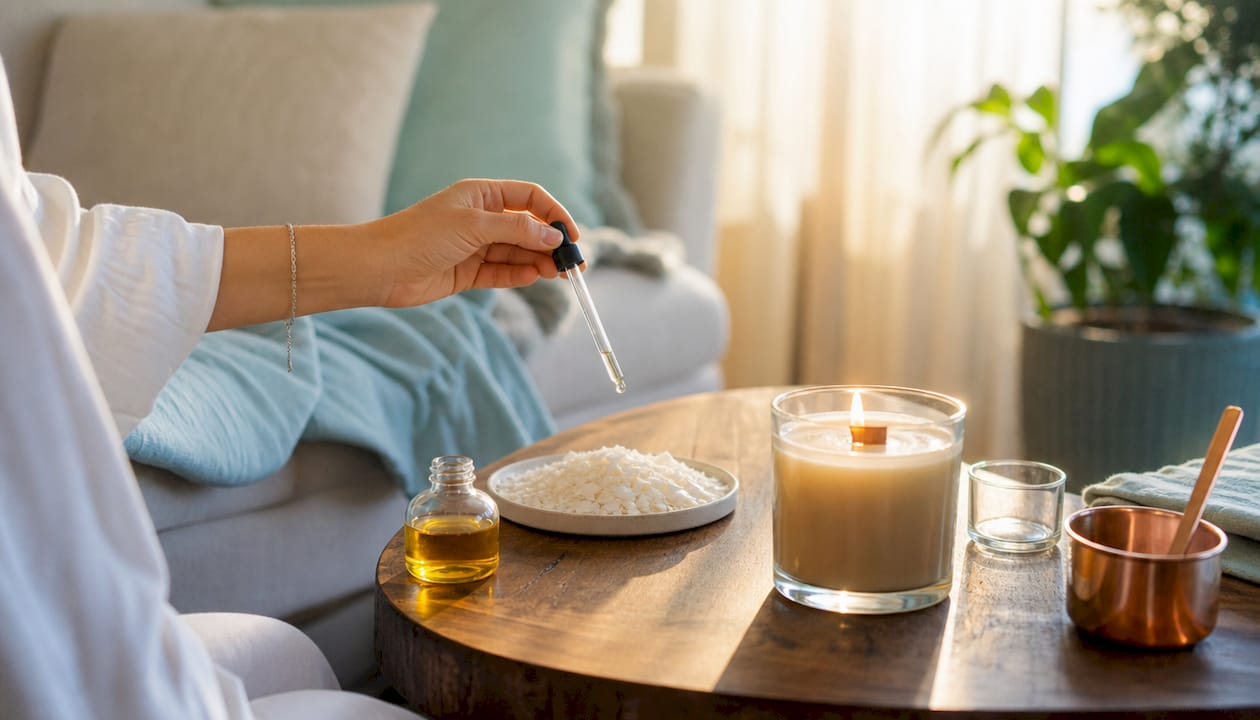
Fragrance oils vs essential oils: a quick comparison
| Feature |
Essential oils |
Fragrance oils |
| Source |
Plant extracts (flowers, bark, resin) |
Synthetic or blended compounds |
| Scent throw |
Subtle, evolving |
Strong, consistent |
| Therapeutic benefit |
Yes, aromatherapy active |
Minimal to none |
| Flash point sensitivity |
High (evaporates quickly) |
Lower sensitivity |
| Best for |
Wellness, ritual, mindful use |
Decorative, strong ambiance |
Pro Tip: If you want a stronger scent from essential oils, choose a smaller room or a container candle with a tighter opening. The enclosed space concentrates the scent throw naturally.
What are the wellness benefits of essential oil candles?
Essential oil candles do more than smell good. They affect the limbic system and help lower cortisol levels, which is the hormone most directly linked to stress. That physiological response is what separates essential oil candles from decorative ones. When you light a candle made with lavender or frankincense, you are triggering a measurable shift in your nervous system.
The specific oil you choose determines the effect you get:
-
Lavender reduces anxiety and supports deeper sleep by calming the nervous system.
-
Frankincense grounds the mind and is widely used in meditation and ritual settings.
-
Peppermint and rosemary boost cognitive function and sharpen concentration, making them ideal for workspaces or study areas.
-
Eucalyptus opens the airways and creates a clean, refreshing atmosphere.
-
Bergamot lifts mood and reduces emotional fatigue without overstimulating the senses.
These effects are not placebo. Aromatherapy research consistently links specific volatile compounds in essential oils to neurological responses. The candle format delivers those compounds slowly and continuously, which makes it one of the gentler and more sustained methods of aromatherapy. Synthetic fragrance oils do not carry these active compounds, so they cannot replicate the same results regardless of how closely they mimic the scent.
How to use essential oils in candle making for the best results
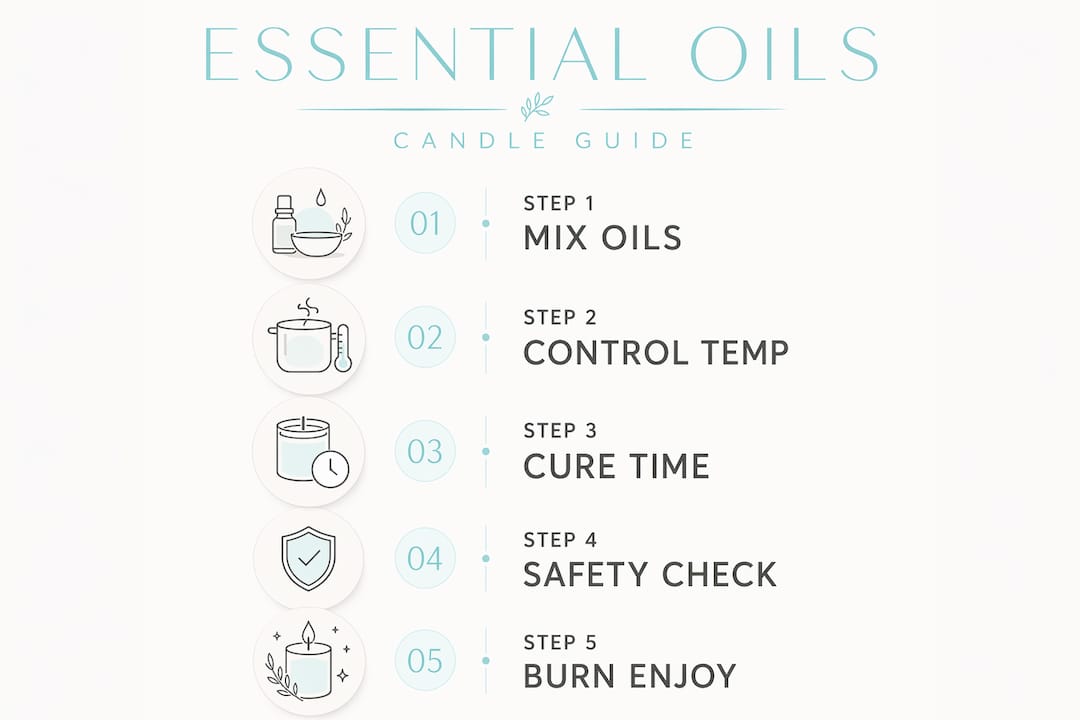
Getting the most from essential oils in candle making requires attention to temperature, ratio, and timing. Each of these factors directly affects how much scent survives into the finished candle and how safely it burns.
Temperature and mixing
Add essential oils to soy wax between 160°F and 185°F with continuous stirring for at least 2 minutes. Stirring at this stage is not optional. It bonds the oil molecules to the wax rather than letting them float on top, which prevents uneven scent distribution and reduces the risk of the oil separating during cooling.
Fragrance load and measurement
The standard fragrance load for essential oils in candles is 6–10% by wax weight. Professional candle makers measure by weight, not by drops, because drops vary in size depending on the oil’s viscosity. A kitchen scale gives you consistent results every time.
- Melt your wax completely and let it cool to the target temperature range.
- Weigh your essential oils at 6–10% of the total wax weight.
- Add oils slowly while stirring continuously for at least 2 minutes.
- Pour into containers at the correct temperature for your wax type.
- Allow candles to cure before burning.
Curing time
Curing is the step most people skip, and it is the one that matters most for scent throw. Essential oil candles require at least 7 days to cure, with 14 days being the ideal window. During that time, the oil molecules stabilize within the wax matrix. A candle burned too early will smell weak, not because the formula is wrong, but because the chemistry has not finished setting.
Pro Tip: Label your candles with the pour date and resist burning them for two full weeks. The patience pays off with a noticeably richer, longer-lasting scent.
Are essential oils safe in candles?
Essential oils are highly flammable, and that fact shapes every safety decision in candle making. Not all oils are suitable for candle use. Oils with very low flash points, such as citrus-based oils like lemon or orange, evaporate so quickly that they contribute little scent and can create safety issues if overused. Always check the flash point of any oil before adding it to a candle formula.
The most common safety risks include:
-
Leeching: When the fragrance load exceeds 10%, excess oil seeps out of the wax and pools on the surface. That pooled oil is a direct fire hazard.
-
Excess soot: Overloaded wax burns dirty, releasing more carbon particles into the air and staining walls and ceilings.
-
Wick mismatch: A wick that is too large for the container burns hotter, accelerating oil evaporation and increasing the risk of flashover.
-
Improper containers: Open, wide containers allow heat to spread unevenly, which can cause the oil to separate and burn inconsistently.
Choosing plant-based candle ingredients and pairing them with correctly sized wicks reduces most of these risks. The benefits of soy wax are particularly relevant here. Soy burns cooler than paraffin, which helps preserve the volatile compounds in essential oils and reduces the risk of overheating.
How do essential oil candles fit into home ambiance and rituals?
Essential oil candles work best as part of a layered sensory environment rather than as a standalone product. Scent synergy is the most effective approach: using candles alongside diffusers and topical applications deepens the therapeutic effect during rituals, meditation, or wind-down routines. Each delivery method reaches the body differently, and combining them creates a more complete experience.
Practical ways to build that layered ambiance at home:
- Light a lavender candle 20 minutes before bed to let the scent saturate the room before you settle in.
- Pair a frankincense candle with a diffuser running cedarwood during meditation for a grounded, earthy atmosphere.
- Use peppermint or rosemary candles in a home office during focused work sessions, then switch to a calming blend for the evening.
-
Layer candle and diffuser scents from the same fragrance family to avoid clashing notes and create a coherent room scent.
- Burn candles during intentional rituals like journaling, stretching, or reading to build a scent memory that signals your brain to shift into that mode.
The ritual element is not just atmospheric. Scent memory is one of the strongest forms of sensory conditioning. When you consistently pair a specific essential oil blend with a specific activity, your brain begins to associate the two. Over time, lighting that candle becomes a cue that shifts your mental state before the activity even begins.
Key Takeaways
Essential oils in candles deliver natural fragrance and real therapeutic benefits, but they require precise technique, correct ratios, and adequate curing time to perform safely and effectively.
| Point |
Details |
| Scent throw is subtler |
Essential oils evaporate faster than fragrance oils, producing a softer, evolving scent. |
| Wellness benefits are real |
Oils like lavender and frankincense lower cortisol and support emotional regulation. |
| Fragrance load matters |
Keep essential oils at 6–10% of wax weight to avoid leeching and fire hazards. |
| Curing time is non-negotiable |
Allow 7–14 days for essential oil candles to cure before burning for best scent throw. |
| Layering amplifies the effect |
Combining candles with diffusers during rituals deepens the therapeutic experience. |
What I’ve learned from years of working with essential oil candles
The most common mistake people make with essential oil candles is expecting them to perform like synthetic fragrance candles. They will not. That is not a flaw. It is the point.
Essential oils are not designed to blast a scent across a large open room. They are designed to work on you, not just around you. The subtlety is the mechanism. A lavender candle burning quietly on your nightstand for 30 minutes does more for your nervous system than a heavily scented room spray ever could, because the delivery is slow, continuous, and tied to a ritual.
What I have found genuinely surprising is how much curing time changes the experience. A candle burned at day three smells flat and almost disappointing. The same candle at day fourteen smells like an entirely different product. Most people who dismiss essential oil candles as “weak” have simply never waited long enough. That gap between expectation and reality is almost always a curing problem, not a formula problem.
The safety side deserves more attention than it gets. Leeching is not just a cosmetic issue. A pool of essential oil sitting on top of a lit candle is a real hazard, and it happens quickly when the fragrance load is too high. Measuring by weight rather than drops is the single most effective habit you can build. It removes the guesswork and keeps every batch consistent.
Essential oil candles are not a replacement for a diffuser or a topical application. They are a complement. Used together, the three methods create a sensory environment that is genuinely hard to replicate with any single product. That is the approach Wickandglow takes, and it is the one I keep coming back to.
— B
Wickandglow’s home fragrance collection for essential oil lovers
Wickandglow creates home fragrance products built around intentional scent, natural ingredients, and the kind of sensory depth that essential oil candles make possible.
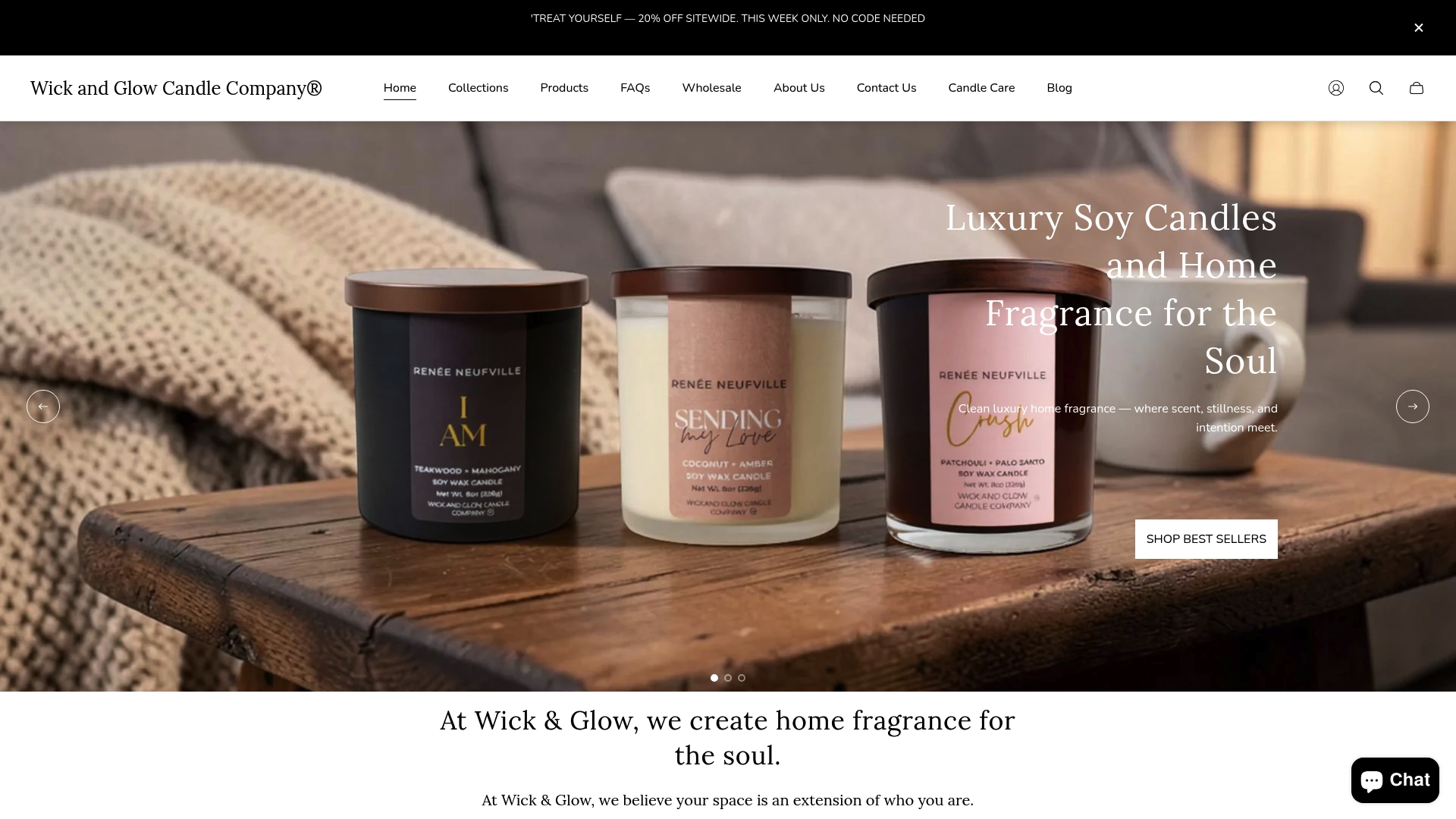
The home fragrance scent bundle pairs a soy candle, reed diffuser, and room spray in a single curated set, giving you everything you need to layer scents across a room the way this article describes. Each product uses non-toxic, phthalate-free ingredients and is designed to work together as a complete sensory system. Wickandglow also draws inspiration from R&B music and artist collaborations, including the Scenting My Love Collection with Renée Neufville, so every scent comes with a playlist to match the mood.
FAQ
What is the role of essential oils in candles?
Essential oils in candles provide natural fragrance and therapeutic benefits by releasing volatile plant compounds when heated. They interact with the limbic system to support mood regulation, stress relief, and focus.
Are essential oils safe to use in candles?
Essential oils are safe in candles when used at the correct fragrance load of 6–10% by wax weight. Exceeding that amount increases the risk of leeching and fire hazards.
How long should essential oil candles cure before burning?
Essential oil candles should cure for at least 7 days, with 14 days being ideal. Curing allows the oil molecules to stabilize within the wax for a stronger, more consistent scent throw.
What are the best essential oils for candles?
Lavender, frankincense, peppermint, eucalyptus, and bergamot are among the most effective essential oils for candles. Each serves a different purpose, from sleep support and stress relief to focus and mood lifting.
What is the difference between fragrance oils and essential oils in candles?
Fragrance oils are synthetic compounds engineered for strong, consistent scent throw in candles. Essential oils are natural plant extracts with a subtler scent and active therapeutic properties that fragrance oils cannot replicate.
Recommended


