Wax type is defined as the primary fragrance carrier in any candle or diffuser, and it directly controls how much scent a product holds, how strongly it projects, and how long that scent lasts in your space. The role of wax type in scent is not a minor detail. Paraffin, soy, coconut, and beeswax each behave differently at a chemical level, producing noticeably different scent experiences even when the same fragrance oil is used. If you have ever wondered why one candle fills a room in minutes while another barely registers, the answer almost always starts with the wax.
How do different wax types affect scent throw and fragrance load?
Fragrance load capacity refers to the maximum percentage of fragrance oil a wax can absorb without sweating, separating, or distorting the scent. This number sets the ceiling on how intense a candle can smell, and it varies significantly across wax types.
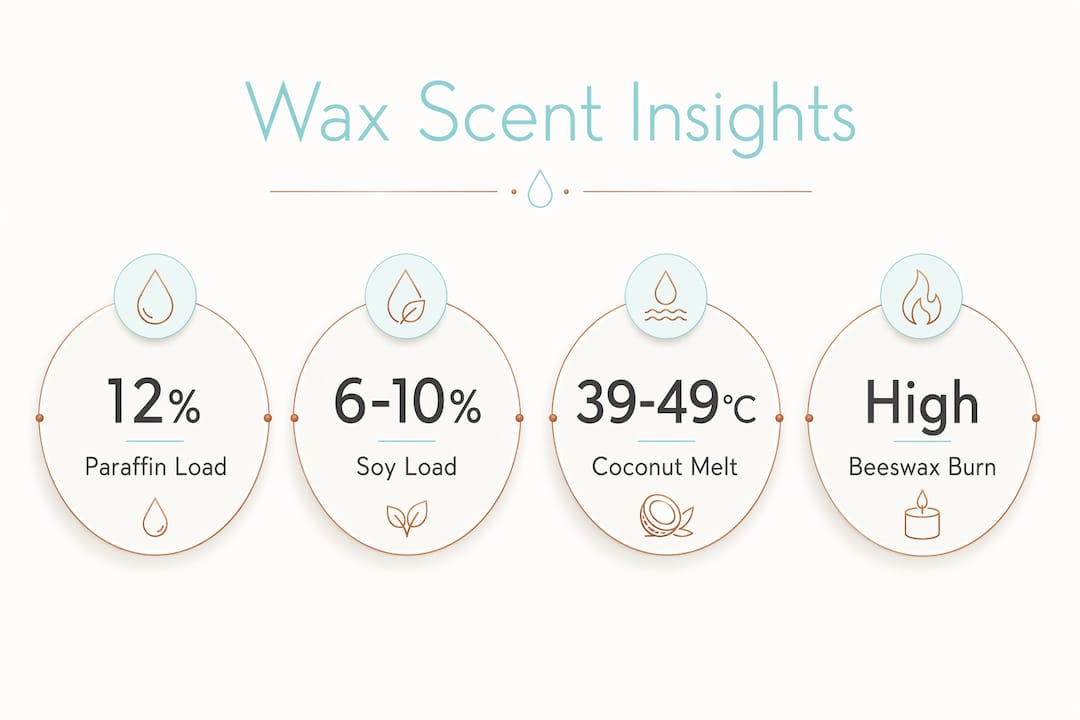
Paraffin wax holds fragrance loads up to 12%, making it the highest-capacity option among common waxes. That ceiling translates directly into the intense hot throw paraffin candles are known for. When you walk into a room with a burning paraffin candle, the scent hits you immediately. This is why mass-market fragrance brands have relied on paraffin for decades.
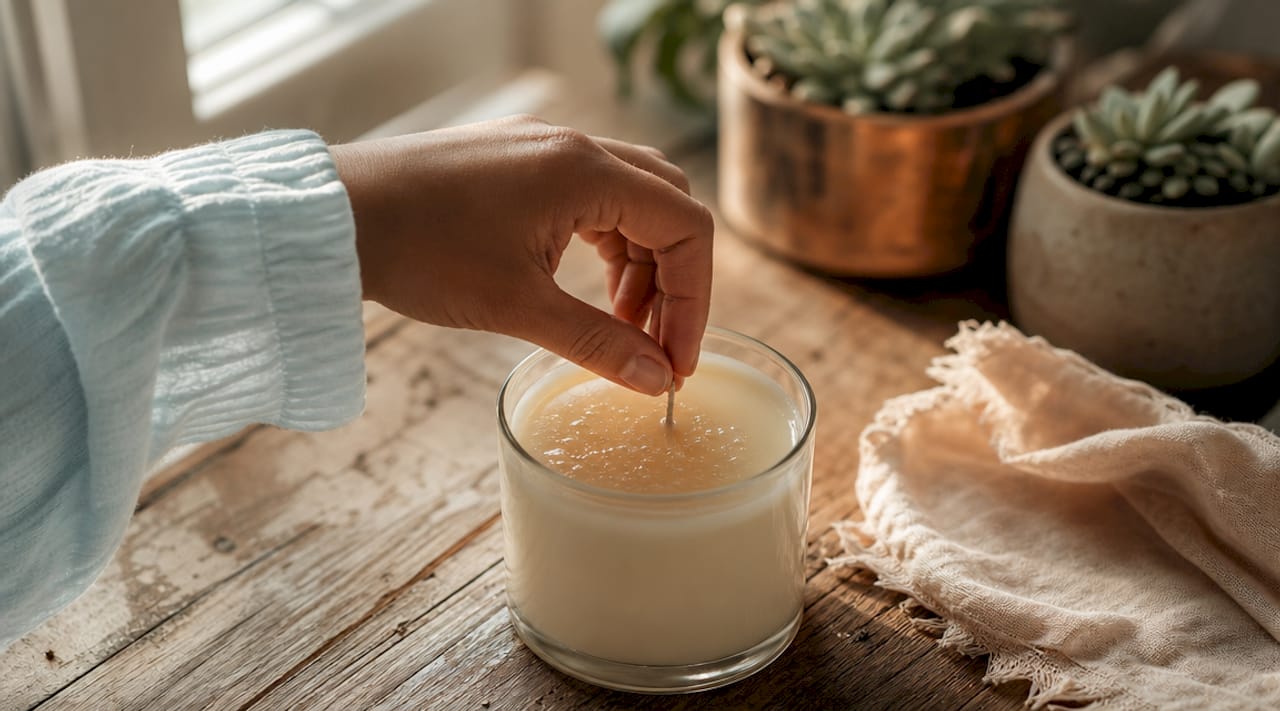
Soy wax typically handles fragrance loads in the 6 to 10 percent range. It requires more careful formulation control because pushing past its threshold causes fragrance pooling on the surface. The payoff is a slower, more even scent release that many enthusiasts describe as cleaner and less overwhelming.
Coconut wax costs approximately 2 to 3 times more than soy wax, but it earns that premium through superior scent retention and a creamy texture that binds fragrance oils exceptionally well. Coconut wax produces both a strong cold throw (the scent you smell from an unlit candle) and a full hot throw once burning. For home fragrance enthusiasts who want a candle that smells great on the shelf and in the room, coconut wax is hard to beat.
Beeswax sits in a different category entirely. Its natural honey scent is pleasant on its own, but that same character competes with added fragrance oils. Beeswax also has a lower fragrance load tolerance, typically under 6 percent, which limits how complex or intense a scented beeswax candle can be.
| Wax Type |
Fragrance Load Capacity |
Scent Throw Strength |
Relative Cost |
| Paraffin |
Up to 12% |
Very strong hot throw |
Low |
| Soy |
6 to 10% |
Moderate, even release |
Low to moderate |
| Coconut |
8 to 10% |
Strong cold and hot throw |
High |
| Beeswax |
Under 6% |
Subtle, natural-forward |
Moderate to high |
Key characteristics by wax type:
-
Paraffin: Maximum scent saturation, best for bold fragrance statements
-
Soy: Reliable and forgiving, ideal for complex fragrance blends
-
Coconut: Premium cold and hot throw, preferred by luxury brands
-
Beeswax: Natural scent character, limited capacity for added fragrance oils
What role does melting point play in scent release?
Wax melting point is not just a handling detail. It directly controls how fragrance molecules escape into the air when a candle burns. Lower melt point waxes create a larger liquid wax pool around the wick, which increases the surface area from which fragrance evaporates. Coconut wax melts between 39 and 49°C, releasing fragrance more efficiently than beeswax, which melts between 62 and 65°C. The practical result is that coconut wax candles often smell stronger at the same fragrance load percentage.
Beeswax’s high melting point produces a slower, more controlled burn. The fragrance diffuses gradually rather than projecting forcefully, which some people prefer for meditation spaces or bedrooms where subtlety matters. The trade-off is that beeswax candles rarely fill large rooms with scent the way paraffin or coconut wax candles do.
Temperature management during production also affects scent quality. Fragrance oils should be added to wax at specific temperatures, generally between 55 and 65°C depending on the wax type, to achieve proper binding without burning off volatile top notes. Delicate fragrance notes like citrus and florals perform best in cooler-burning waxes such as soy or coconut blends. High heat from paraffin can scorch these lighter molecules before they ever reach the air you breathe.
Here is how to think about melting point when choosing or making candles:
- Match wax melt point to your fragrance profile. Citrus, green, and floral scents need cooler wax bases to preserve their top notes.
- Consider room size. Lower melt point waxes project more aggressively, which suits open living spaces.
- Account for ambient temperature. In warm climates, low melt point waxes like coconut can sweat if not properly formulated.
- Test burn time against scent throw. A longer burn does not always mean more scent. Beeswax burns longer but projects less fragrance per hour.
Pro Tip: Add fragrance oil to soy or coconut wax at 55°C rather than the maximum recommended temperature. This preserves the top notes in your fragrance oil and produces a more nuanced scent experience once the candle burns.
Natural versus petroleum-based waxes: what actually changes for scent?
The paraffin versus natural wax debate is often framed as a safety issue, but the chemistry tells a more specific story. Phthalate-free fragrance oils and proper wick maintenance have a greater impact on indoor air quality than wax type alone. Paraffin is not chemically dirty. The bigger variables are what fragrance chemicals are used and whether the wick is trimmed correctly.
That said, wax composition and scent experience are genuinely different between petroleum and plant-based options:
-
Scent clarity: Soy and coconut waxes tend to produce a cleaner scent profile because they burn at lower temperatures, which means fewer combustion byproducts competing with the fragrance.
-
Scent complexity: Paraffin’s high fragrance load capacity allows for more layered, complex fragrance formulations. Perfumers working with paraffin can push base notes harder.
-
Burn consistency: Plant-based waxes, particularly coconut-soy hybrid blends, offer more consistent fragrance release from the first burn to the last.
-
Environmental positioning: Soy and coconut waxes are renewable and biodegradable, which matters to a growing segment of home fragrance buyers.
“No single wax is best. Selecting wax is about aligning technical properties with brand image and user experience expectations.” — AROMA + WAX
Luxury brands increasingly prefer coconut-soy blends for their clean luxury narrative, even at higher production costs. This is not purely marketing. The scent performance of a well-formulated coconut-soy blend genuinely rivals paraffin for throw while delivering a more refined, less synthetic-feeling experience. For brands like Wickandglow, which prioritize intentional fragrance experiences over mass-market volume, plant-based waxes align with both the product quality and the brand story.
How do wax types influence scent longevity in candles and diffusers?
Scent longevity depends on how tightly fragrance molecules bind to the wax matrix and how gradually they release during use. Wax composition and scent longevity are directly linked because different waxes hold fragrance at different molecular strengths.
| Product Format |
Best Wax for Longevity |
Key Reason |
| Pillar candles |
Beeswax or paraffin blend |
High melt point slows fragrance release |
| Container candles |
Soy or coconut-soy blend |
Even melt pool sustains consistent throw |
| Wax melts |
Paraffin or soy blend |
High surface area maximizes scent release |
| Reed diffusers |
Liquid carrier (not solid wax) |
Capillary action drives fragrance diffusion |
Reed diffusers do not use solid wax in the traditional sense. They rely on a liquid carrier base, often a blend of dipropylene glycol or fractionated coconut oil, to draw fragrance up through reeds. The wax quality and fragrance ratio in the carrier base still affects how long and how evenly the scent diffuses. Thicker carrier bases slow diffusion and extend longevity. Thinner bases project more aggressively but exhaust faster.
For candles, a balanced melt pool created by correct wick and wax pairing is the single most important factor for consistent scent release. A wick that is too small for the wax density creates a narrow melt pool, which limits fragrance evaporation. A wick that is too large burns through the wax too quickly, shortening both burn time and scent longevity.
Pro Tip: For maximum scent longevity in a container candle, choose a coconut-soy blend with a fragrance load between 8 and 10 percent, and pair it with a cotton-core wick sized for your vessel diameter. This combination produces a full melt pool without tunneling, which means consistent scent throw from the first hour to the last.
Wax blends like coconut-soy hybrids are specifically engineered to balance these variables. They combine coconut wax’s superior scent retention with soy wax’s structural stability and lower cost. The result is a candle that smells strong on the shelf, projects well when burning, and maintains that performance through the entire burn cycle. Understanding how fragrance notes work in candles alongside wax selection gives you a complete picture of why some candles simply outperform others.
Key takeaways
Wax type controls fragrance load capacity, scent throw intensity, and longevity, making it the single most consequential formulation decision in any candle or diffuser.
| Point |
Details |
| Paraffin leads on fragrance load |
Holds up to 12% fragrance oil, delivering the strongest hot throw of any common wax. |
| Coconut wax excels at cold and hot throw |
Superior scent retention justifies its premium price for luxury home fragrance products. |
| Melting point shapes scent release |
Lower melt point waxes like coconut release fragrance more efficiently than high-melt waxes like beeswax. |
| Wax blends optimize performance |
Coconut-soy hybrids balance scent throw, burn consistency, and cost better than single-wax formulations. |
| Fragrance chemistry matters as much as wax |
Phthalate-free oils and correct wick sizing affect scent quality and air safety more than wax origin alone. |
Why I stopped chasing the strongest scent throw
After years of working with home fragrance, the most common mistake I see is treating scent throw as the only metric that matters. Enthusiasts read that paraffin holds the highest fragrance load and immediately assume it is the best choice. That logic is incomplete.
The candles I find most satisfying are not the loudest ones. They are the ones where the fragrance profile stays true from the moment you light the wick to the final hour of burn. A coconut-soy blend loaded with a well-formulated fragrance oil at 9 percent hits that target consistently. Paraffin at 12 percent can overpower a room and, with certain fragrance oils, produce a slightly synthetic edge that undermines the whole experience.
I also think the safety conversation around paraffin is overblown in the wrong direction. People dismiss it entirely based on its petroleum origin, but fragrance choice and wick quality are the real indoor air quality variables. A paraffin candle with phthalate-free fragrance oil and a trimmed wick burns cleaner than a soy candle with synthetic fragrance and an oversized wick.
If you are experimenting with your own blends, start with a coconut-soy base and test fragrance loads at 8, 9, and 10 percent before committing to a formula. The difference between those percentages is audible in the room. And always read about plant-based candle ingredients before making final formulation decisions. The wax is the foundation, but the full system is what makes a candle worth burning.
FAQ
What is the best wax for strong scent throw?
Paraffin wax delivers the strongest hot throw due to its fragrance load capacity of up to 12 percent. Coconut wax is the top choice for combined cold and hot throw, making it the preferred option in luxury candle formulations.
Does soy wax hold fragrance as well as paraffin?
Soy wax holds fragrance loads between 6 and 10 percent, slightly below paraffin’s ceiling. It releases scent more gradually and evenly, which many enthusiasts prefer for sustained, room-filling fragrance rather than an immediate burst.
How does wax melting point affect scent strength?
Lower melting point waxes like coconut (39 to 49°C) create a larger liquid wax pool, which increases the surface area releasing fragrance. Higher melt point waxes like beeswax burn longer but project fragrance more subtly.
Yes. Coconut-soy blends provide synergistic benefits including stronger scent retention, better vessel adhesion, and more consistent burn performance than either wax used alone. The cost premium is justified for candles where scent longevity is a priority.
Is paraffin wax safe to burn indoors?
Paraffin wax is safe when used with phthalate-free fragrance oils and a properly sized, trimmed wick. Fragrance chemistry and wick quality affect indoor air quality more than whether the wax base is petroleum or plant-derived.
Recommended


