Candles create ritual atmosphere by combining warm, flickering light with evocative scent to shift your nervous system from alert to calm, signaling a deliberate transition from one mental state to another. This is not mysticism. Research confirms that low-light warm environments produce the highest pleasure scores in controlled studies, with participants reporting reduced visual oppression and greater psychological freedom. The effect works because your brain reads candlelight as a distinct sensory cue, separate from the overhead lighting of ordinary life. Pair that with a fragrance built on woods, amber, or musk, and you have a full sensory signal that something intentional is beginning.
How candlelight’s qualities influence mood and focus
Candlelight operates on a completely different frequency than the artificial lighting in most homes, and that difference is the mechanism behind its calming effect. Standard LED and fluorescent bulbs emit high-intensity, blue-spectrum light that keeps your cortisol levels elevated and your visual system on high alert. Candles emit amber-red, long-wavelength light that minimally suppresses melatonin, making them naturally aligned with your body’s wind-down process in the evening.
The flicker is equally significant. A candle flame moves at roughly 1 to 3 Hz, and visual attention to candle flicker at that frequency allows your nervous system to synchronize and reduce cortical arousal. This is fundamentally different from the imperceptible high-frequency flicker of fluorescent lighting, which creates low-grade visual stress. Watching a candle flame is not passive. It is a mild, natural form of attention training.
Lighting researchers also note that emotional atmosphere emerges from the combined variables of intensity and color temperature, not from a single factor. This means the ritual effect of a candle is not just about the flame itself. It is about the contrast it creates with the rest of the room. A clear contrast between candlelight and the surrounding environment is what registers as a perceptible transition in your brain. One candle in a fully lit room does almost nothing. The same candle in a dimmed room signals a shift.
Here is what that means practically for your space:
-
Dim or turn off overhead lighting before lighting your candle to maximize the contrast effect
-
Position candles at eye level or below to keep the light warm and low rather than casting harsh shadows upward
-
Use multiple candles in a cluster to increase light intensity without introducing blue-spectrum sources
-
Avoid mixing candles with bright screens during ritual time, since screens reintroduce the high-frequency stimulation you are trying to reduce
Pro Tip: Place a candle on a reflective surface like a mirrored tray or a polished wooden board. The reflection doubles the perceived warmth of the light without adding another flame, deepening the atmospheric contrast.
What role does scent play in ritual ambiance?
Scent is the second pillar of how candles create ritual atmosphere, and it works through a completely different neurological pathway than light. While light affects your arousal system and circadian rhythm, scent connects directly to the limbic system, the part of your brain that processes emotion and memory. This is why a single fragrance can transport you to a specific feeling within seconds.
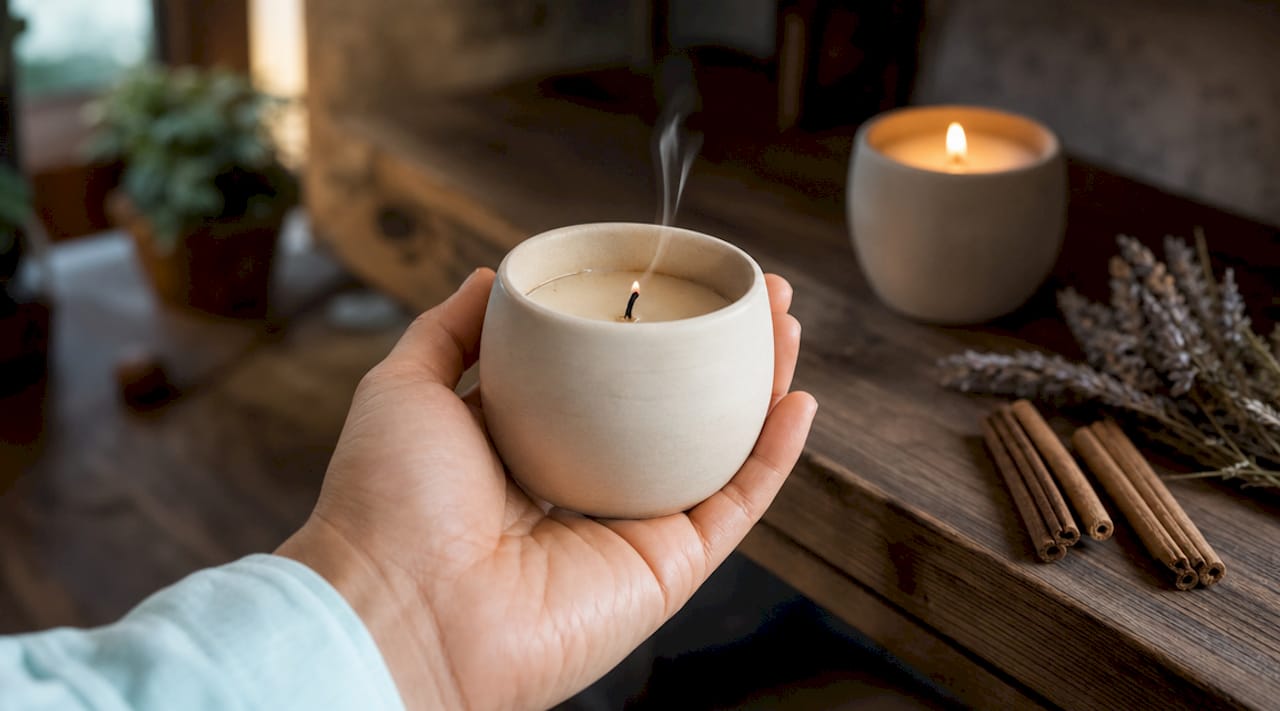
For ritual use, fragrance notes matter more than most people realize. Woods, spice, amber, and musk are the notes most associated with cocooning, emotional grounding, and a sense of intimate enclosure. These are the scents that make a room feel like a sanctuary rather than just a room. Lighter, citrus-forward scents tend to energize rather than ground, which makes them better suited for morning focus rituals than evening wind-down practices.
Scent layering takes this further. Combining a scented candle with a reed diffuser and room spray from complementary fragrance families creates a richer, more immersive aromatic environment than any single product can achieve alone. Think of it as the difference between a single instrument and a chord. The diffuser provides a constant low-level background note. The candle adds warmth and depth as it burns. The room spray can be used as an opening signal, a way to mark the beginning of your ritual before the candle even reaches its full scent throw.
Practical guidance for choosing ritual scents:
-
Amber and dark woods (sandalwood, cedarwood, oud) for grounding and emotional depth
-
Spice notes (clove, cardamom, black pepper) for warmth and sensory richness
-
Sage and eucalyptus for mental clarity and cleansing, particularly useful before meditation
-
Musk and vanilla for comfort and a sense of safety, ideal for self-care rituals
Wickandglow’s Body and Soul candle, built on dark amber and rosewood, is a direct example of this grounding fragrance philosophy applied to a ritual-ready product.
How to use candles in rituals to set intention
The physical act of lighting a candle is a behavioral anchor. Behavioral anchors are sensory cues that your brain learns to associate with a specific mental state over time. The more consistently you light a candle at the start of a particular activity, the stronger that association becomes. This is the mechanism behind why candles appear in meditation practices, prayer traditions, and self-care routines across cultures and centuries.
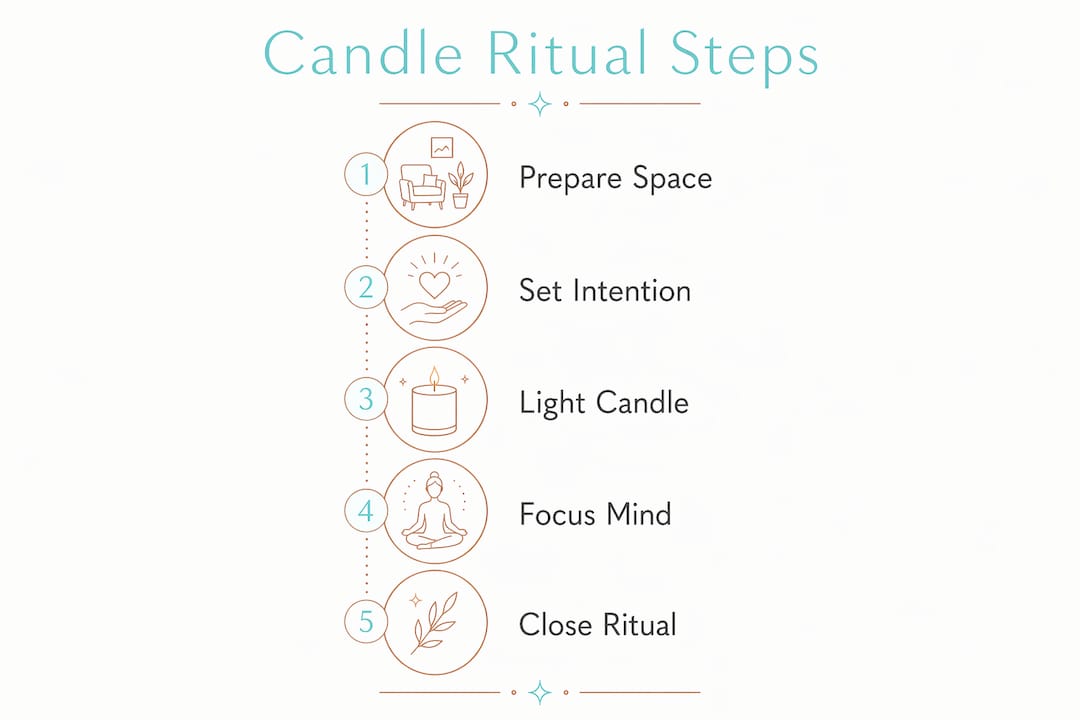
The ritual itself does not need to be elaborate. Here is a simple, research-informed sequence that works:
-
Dim the room before you begin, creating the lighting contrast that signals transition
-
Hold the unlit candle for a moment and state your intention aloud or silently. Candle magic guides recommend stating intention while observing the flame to open a focused state of consciousness
-
Light the candle slowly, taking three deliberate breaths as you do so
-
Watch the flame settle for 30 to 60 seconds before beginning your activity, allowing your nervous system to register the transition
-
Close the ritual intentionally by using a candle snuffer rather than blowing the flame out. Snuffing rather than blowing preserves the focused energy of the ritual rather than scattering it
The role of candles in spirituality across traditions, from Catholic vigil candles to Buddhist altar flames to Havdalah candles in Jewish practice, reflects a universal recognition of this principle. The flame marks a boundary between ordinary time and sacred time. You do not need a religious framework to use that boundary effectively. You just need consistency.
Pro Tip: Assign specific candles to specific rituals. Use your amber and rosewood candle only for evening wind-down, and a different scent for morning journaling. Over time, the scent alone will begin to trigger the associated mental state before the flame even settles.
How to arrange your space for maximum ritual effect
The environment around your candle matters as much as the candle itself. Lighting researchers confirm that emotional atmosphere depends on combined variables of intensity and color temperature across the whole space, not just the light source. A cluttered, visually busy room undermines the calming effect of even the best candle.
Here is a direct comparison of setup approaches and their ritual effectiveness:
| Setup element |
Low-impact approach |
High-impact approach |
| Overhead lighting |
Left on at full brightness |
Dimmed or turned off entirely |
| Candle placement |
Random surface, no focal point |
Centered on a tray, at eye level |
| Surrounding clutter |
Objects left out |
Surface cleared before ritual begins |
| Scent layering |
Single candle only |
Candle plus reed diffuser background note |
| Closing the ritual |
Blowing out the candle |
Using a snuffer to preserve intention |
Beyond the table, a few physical details make a consistent difference. Decorative trays, whether ceramic, marble, or wood, group candles into a visual focal point that the eye naturally returns to. This matters because arranging candles as focal points and reducing ambient lighting creates the boundary cue your brain needs to register a shift in routine.
For scent layering, Wickandglow’s home fragrance scent bundles pair a soy candle, reed diffuser, and room spray in the same fragrance family, which removes the guesswork of matching products and creates a genuinely layered aromatic environment.
Safety is also part of the ritual. Keep candles away from drafts that disrupt the flame’s natural flicker. Trim wicks to a quarter inch before each burn to maintain a clean, steady flame. Never leave a burning candle unattended, and always place candles on heat-resistant surfaces.
Key takeaways
Candles create ritual atmosphere through the combined effect of warm, low-intensity light, natural flame flicker, and emotionally resonant scent, all working together to signal a deliberate mental transition.
| Point |
Details |
| Light contrast is the trigger |
Dimming overhead lights before lighting a candle creates the perceptible boundary your brain needs to register a state shift. |
| Flicker frequency reduces stress |
A candle flame’s 1 to 3 Hz flicker synchronizes with your nervous system, lowering cortical arousal in ways artificial lighting cannot. |
| Scent deepens emotional grounding |
Notes like amber, dark woods, and musk activate the limbic system, creating comfort and emotional safety during rituals. |
| Intention amplifies the effect |
Stating a purpose while lighting the candle turns a sensory cue into a behavioral anchor that strengthens with repetition. |
| Layering multiplies immersion |
Combining a candle with a reed diffuser and room spray in the same fragrance family creates a richer ritual environment than any single product alone. |
Why I think most people underestimate the simplicity of candle rituals
Most articles about candle rituals make the practice sound either too mystical or too complicated. In my experience, the people who get the most out of candle rituals are the ones who keep it simple and stay consistent, not the ones who build elaborate altars or follow complex protocols.
The real power is in the contrast. Your brain is not looking for perfection. It is looking for a reliable signal that something different is happening. One candle, one dimmed room, one fragrance you use only for this purpose. That is enough. I have seen people transform their evenings with nothing more than a single three-wick soy candle and the discipline to put their phone face-down before they light it.
What I find genuinely underappreciated is the closing moment. Most people blow out the candle without thinking. Using a snuffer and taking one breath before you do it completes the ritual loop. Your nervous system registers both the opening and the closing, which makes the next ritual easier to enter. The consistency of the boundary matters more than the complexity of what happens inside it.
The other thing worth saying directly: scent is not decoration. When Wickandglow builds a candle around an R&B song and pairs it with a playlist, that is not a gimmick. Music and scent activate the same emotional memory systems. Using them together creates a sensory environment that is genuinely harder to ignore and easier to return to. That is the kind of ritual that actually sticks.
— B
Build your ritual space with Wickandglow

Wickandglow designs every candle, diffuser, and spray with ritual use in mind. Each fragrance is built around a specific emotional intention, inspired by R&B music and paired with a playlist so your scent and sound work together from the first burn. The For Your Soul collection offers seasonal scents curated specifically for grounding and atmospheric depth. For a complete layered experience, the home fragrance scent bundle pairs a soy candle, reed diffuser, and room spray in one fragrance family, giving you everything you need to build a ritual environment without any guesswork. If you are starting from scratch, this bundle is the most direct path to a genuinely immersive atmosphere.
FAQ
How do candles create a ritual atmosphere?
Candles create ritual atmosphere through warm, low-intensity flickering light that reduces physiological arousal, combined with scent that activates emotional memory. The contrast between candlelight and a dimmed room signals a mental transition that your brain learns to associate with intentional activity over time.
What scents work best for ritual candles?
Amber, dark woods like sandalwood and rosewood, musk, and spice notes such as clove and cardamom are most effective for grounding rituals. These deeper fragrance families activate the limbic system in ways that promote emotional comfort and a sense of enclosed, intimate safety.
Does the flicker of a candle actually affect your mood?
Yes. A candle flame flickers at 1 to 3 Hz, a frequency that allows the nervous system to synchronize and reduce cortical arousal. This is measurably different from the imperceptible high-frequency flicker of artificial lighting, which creates low-grade visual stress rather than relaxation.
How do you properly close a candle ritual?
Use a candle snuffer rather than blowing the flame out. Candle ritual guides note that blowing scatters the focused energy of the practice, while snuffing preserves the intentional quality of the ritual and completes the behavioral loop your nervous system has learned to recognize.
Can you layer candle scents with other fragrance products?
Combining a scented candle with a reed diffuser and a room spray from the same fragrance family creates a layered aromatic environment that is richer than any single product alone. The diffuser provides a constant background note, the candle adds warmth and depth, and the room spray can open the ritual as an immediate scent signal.
Recommended


