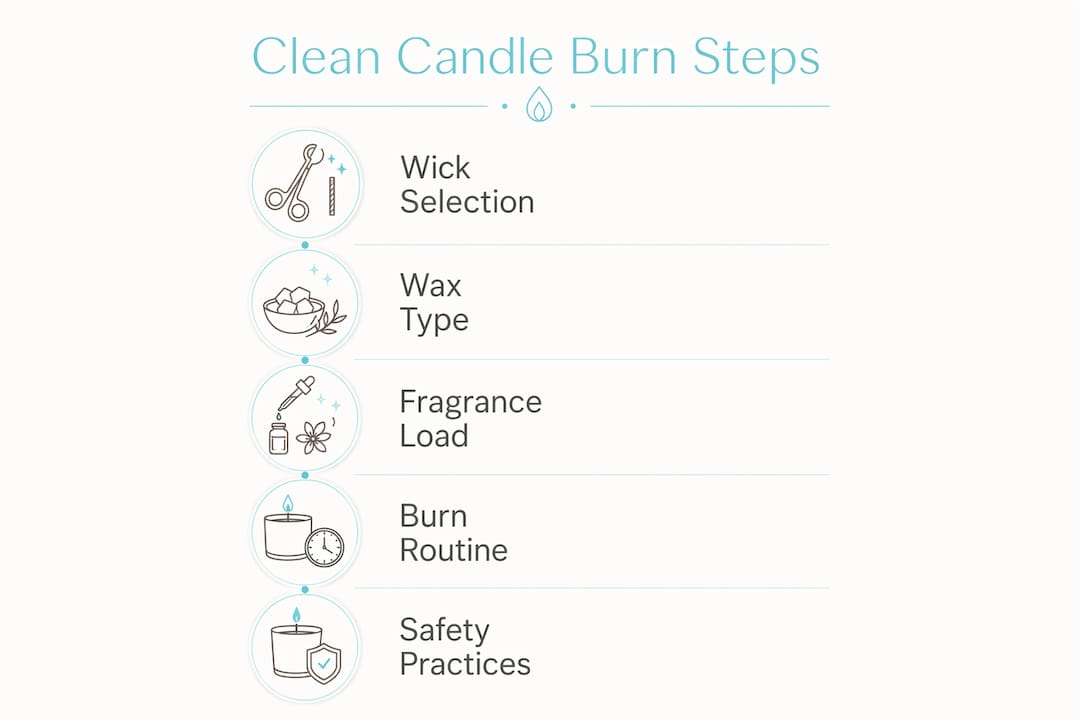
A clean burning candle setup is a matched system: the right wax, a properly sized wick, a compatible container, consistent trimming, and a draft-free environment working together to produce a stable flame and minimal visible soot. No single ingredient does this alone.
Here’s what you can do right now:
-
Pick the right wax. Soy, beeswax, or coconut blends are solid starting points for lower-soot burning.
-
Size the wick to your container. Measure the jar diameter and use a supplier sizing chart as your baseline.
-
Trim to 1/4 inch before every single burn, including the first one.
-
Burn long enough on the first light to let the melt pool reach the jar’s edge.
-
Keep drafts away. Ceiling fans, open windows, and AC vents are the most common culprits for flickering and soot.
-
Cap sessions at three hours. Longer burns overheat the container and accelerate wick degradation.
-
Never leave a burning candle unattended, and keep it away from children and pets.
The short version: A clean burn comes from matching your wax, wick, and container — then trimming consistently and burning in a stable environment. Get the system right, and the soot problem mostly solves itself.
Table of Contents
Why your candle setup affects air quality and your home
Most people blame the wax when a candle smokes. The real culprit is usually a mismatched system: an oversized wick, a fragrance load the wax can’t handle, or a draft that destabilizes the flame. Each of those conditions pushes unburned carbon into the air as visible soot.
Soot from a poorly set-up candle doesn’t just look bad. It deposits on walls, ceilings, and jar interiors, and it’s a signal that the combustion process is incomplete. Cleaner burning means less residue on surfaces and a jar that’s easier to clean and reuse. That matters if you care about reducing candle waste or getting multiple fills out of a single vessel.
On the sustainability side, refillable systems can reduce container waste by up to 10 times compared with single-use candles. That’s a meaningful difference if you burn candles regularly. Longer burn times from well-matched wax and wick combinations also mean fewer candles purchased over a year, which compounds the savings in both cost and packaging.
How different wax types behave in a clean burning setup
Wax is a starting point, not a guarantee. A soy candle with an oversized wick will smoke just as badly as a paraffin candle with a matched one. That said, wax choice does affect your baseline, and some waxes are easier to work with than others.
Soy wax is the most widely available natural option in the U.S. It burns cooler than paraffin, which tends to reduce soot under normal conditions, and it holds fragrance well at moderate loads. The trade-off: soy has a softer texture, which means it works best in containers rather than freestanding pillars. It’s also prone to frosting (a white surface bloom) that’s cosmetic, not a quality problem.
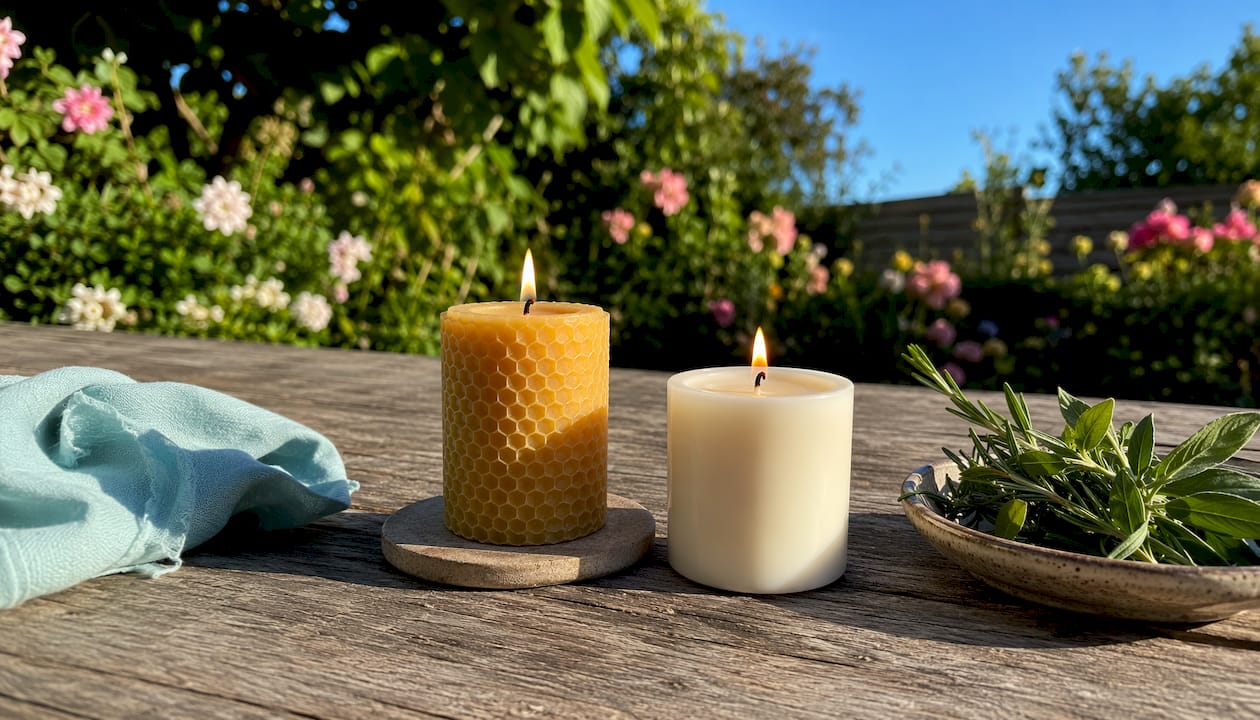
Beeswax burns the longest of the common natural waxes and produces a naturally warm, honey-like scent. It’s denser than soy, which means it needs a slightly larger wick to maintain a full melt pool. Beeswax candles tend to burn cleaner than many alternatives when properly wicked, but the price point is higher, and it’s not vegan.
Coconut wax blends offer excellent scent throw and a creamy, slow burn. They’re often blended with soy or beeswax to improve structure. Coconut wax is one of the more sustainable crop-based options, though it’s typically more expensive than soy.
Paraffin blends are still common in mass-market candles. A well-formulated paraffin candle with a matched wick can burn cleanly, but paraffin is petroleum-derived, which matters to buyers prioritizing sustainability. Unmatched paraffin candles tend to produce more visible soot than natural wax alternatives under the same conditions.
| Wax type |
Soot tendency |
Burn time |
Scent throw |
Environmental impact |
Relative price |
| Soy |
Low (when matched) |
Moderate |
Good |
Renewable crop-based |
$ |
| Beeswax |
Very low |
Long |
Mild/natural |
Renewable, not vegan |
$$$ |
| Coconut blend |
Low |
Moderate–long |
Excellent |
Renewable, sustainable |
$$ |
| Paraffin blend |
Moderate–high |
Long |
Strong |
Petroleum-derived |
$ |
When shopping retail, look for full wax disclosure on the label (not just “natural wax”), a phthalate-free fragrance statement, and a lead-free wick claim. Wickandglow’s hand-poured soy candles check all three boxes and pair each scent with a curated playlist, which is a genuinely different buying experience from a generic store shelf.
How wick material and size control soot and flame stability
Wick choice is where most home candle problems start. A wick that’s too large for the container delivers more fuel to the flame than it can combust cleanly, which produces carbon mushrooming at the tip and visible soot. A wick that’s too small starves the flame, causes tunneling, and leaves fragrance trapped in unmelted wax.
Wick materials at a glance:
-
Cotton wicks are the standard for container candles. They’re lead-free (the U.S. Consumer Product Safety Commission banned lead-core wicks in 2003), widely available, and compatible with most wax types. Flat-braided cotton wicks self-trim slightly as they burn, which helps with consistency.
-
Wood wicks produce a soft crackling sound and a wider, lower flame. They work well with soy and coconut waxes and tend to produce less carbon mushrooming than cotton, but they require a wider container to perform correctly.
-
Hemp wicks are a natural alternative to cotton, often used in beeswax candles. They burn slightly slower and are a good fit for eco-focused setups.
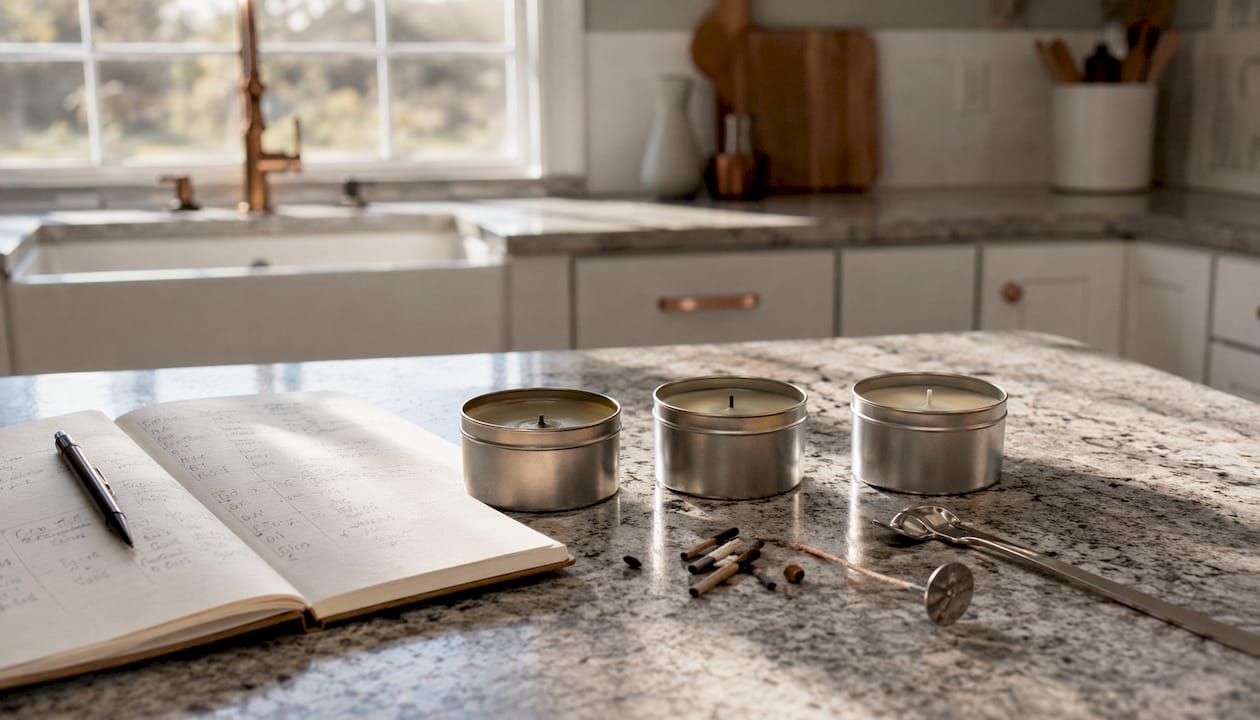
Sizing your wick: Start with your container’s inner diameter. Most wick suppliers publish sizing charts that map diameter ranges to wick series. Use that chart to identify a starting wick, then run a test burn. If the flame is taller than 1 inch or produces visible smoke, size down. If the melt pool doesn’t reach the jar edge within the first two hours, size up.
Pro Tip: Test two wick sizes simultaneously: one slightly smaller and one slightly larger than your chart recommendation. Burn both under identical conditions (same room, same burn duration, same trim height) and compare the melt pool, flame height, and jar residue. This bracket method cuts your testing time in half and gives you a clear winner faster.
For a deeper look at eco-friendly wick materials, including how different fibers interact with natural waxes, Wickandglow’s wick guide covers the specifics in detail.
How fragrance load and additives affect your burn
Fragrance oil is fuel. Add too much of it relative to what your wax can bind, and the excess oil pools at the surface or releases unevenly during the burn, feeding the flame inconsistently and increasing soot. Most container soy waxes have a fragrance load ceiling around 10–12% by weight. Pushing past that without adjusting the wick is a common DIY mistake.
Beyond load percentage, the type of fragrance matters. Phthalates are synthetic plasticizers used in some fragrance blends to extend scent longevity. They’ve drawn scrutiny from health researchers and are increasingly avoided by clean-focused brands. Look for an explicit “phthalate-free” statement on the label, not just “natural fragrance,” which is a vague term that tells you nothing about the actual formulation.
Dyes and colorants are another variable. Heavy dye loads can affect how cleanly a candle burns, particularly in waxes with lower fragrance-binding capacity. If you’re prioritizing clean burning over aesthetics, undyed or lightly tinted candles are a safer bet.
A short note on essential oils: they’re a popular alternative to synthetic fragrance, but some are allergenic to pets, particularly cats, who lack the liver enzymes to metabolize certain compounds. Eucalyptus, tea tree, and cinnamon essential oils are among the most commonly flagged. If you have cats in the home, check with your vet before burning essential-oil candles in enclosed spaces.
Watch the label language. “Clean” on a scented candle label is a marketing term, not a regulated standard. A candle can be labeled “clean” while containing synthetic fragrance at high load percentages, unspecified colorants, and no ingredient transparency whatsoever. The only reliable signals are full wax disclosure, a phthalate-free fragrance claim, a lead-free wick statement, and a fragrance percentage if available.
Step-by-step burn routine for a consistently clean candle
Getting a clean burn isn’t complicated, but it does require doing the same things every time. Here’s the routine:
-
First burn: go all the way to the edge. The first time you light a new candle, burn it until the melt pool reaches the jar’s edge. This typically takes 1–3 hours depending on diameter. Skipping this step creates a “memory ring” in the wax that causes tunneling on every subsequent burn.
-
Trim before every burn. Trim the wick to 1/4 inch before lighting, every time. Use a wick trimmer or small scissors. A long wick produces a tall, flickering flame and carbon buildup at the tip.
-
Cap sessions at three hours. Burning longer than three hours overheats the container, accelerates wick degradation, and can cause fragrance to off-gas unevenly. Let the candle cool completely before relighting.
-
Keep it draft-free. Position the candle away from ceiling fans, open windows, and air vents. Even a gentle airflow causes the flame to flicker, which produces uneven burning and soot. For specific placement advice in small spaces, Wickandglow’s placement guide covers common room layouts.
-
Center the wick after each burn. While the wax is still soft (not liquid), gently nudge the wick back to center if it has drifted. An off-center wick creates an uneven melt pool and can cause the jar to overheat on one side.
-
Log your observations. After each burn, note the flame height, melt pool depth, any soot on the jar, and whether the wick mushroomed. Two or three burns of consistent data tell you whether your setup is working or needs adjustment.
-
Container reuse. When the wax drops to about 1/2 inch from the bottom, stop burning. Clean the jar with warm water and mild soap, and it’s ready for a refill or repurposing.
The 30/50/20 rule is a useful self-check: after a full burn session, roughly 30% of the candle’s surface should be a clear melt pool, 50% should be the stable wax body, and 20% should be the remaining unmelted shoulder near the jar edge. If your melt pool is too wide or too shallow, your wick sizing needs adjustment.
Pro Tip: In homes with pets or small children, place candles on a heavy ceramic or stone tray at least 12 inches from the nearest edge of any surface. The tray catches drips, adds stability, and makes it harder for a curious hand or paw to knock the candle over.
Refillable pearled wax (sometimes called candle sand) is worth considering if you want to reduce container waste. These systems require a vessel diameter of at least 10 cm to keep the surrounding pearls from fusing during the burn. Smaller jars will melt the pearls into a solid mass, eliminating the refill advantage entirely.
How to diagnose and fix common candle problems
Most candle problems have one of three root causes: the wick is wrong for the container, the fragrance load is too high, or the burn environment is disrupted. Matching the symptom to the cause gets you to the fix faster.
Tall, smoky flame: Almost always an oversized wick. Trim immediately, let the candle cool, and size down on your next wick order. If trimming doesn’t reduce the flame height below 1 inch, the wick series is wrong for this container.
Tunneling: The wick is too small, or the first burn was cut short. For an existing candle, try a “foil tent” fix: wrap aluminum foil loosely around the top of the jar with a small opening in the center, and burn for 1–2 hours to encourage the wax to melt outward. For future candles, size up or commit to the full first-burn rule.
Mushrooming wick tip: Carbon buildup at the tip is normal in small amounts but excessive mushrooming means the wick is consuming more wax than it’s burning cleanly. Trim it off before relighting. If it recurs every burn, reduce fragrance load or size down the wick.
Weak scent throw: Usually a wick that’s too small (not enough heat to volatilize the fragrance) or a fragrance load that’s too low. Check how wick size affects scent throw before changing anything else. Room size and ventilation also matter: a small candle in a large, well-ventilated room will always smell faint.
Soot on the jar interior: Could be a wick issue or a surface cleaning issue. Wipe the interior with a dry cloth between burns. If soot returns within one burn session, the wick is the problem, not the jar.
One variable at a time. When troubleshooting, change only one thing per test burn: wick size, fragrance percentage, or burn duration. Changing two variables at once makes it impossible to know which fix worked.
Candle safety basics backed by U.S. guidance
The U.S. Consumer Product Safety Commission and the National Fire Protection Association both publish guidance on safe candle use. The core rules haven’t changed, but they’re worth stating plainly because candle fires remain a preventable household risk.
Safety checklist:
- Place candles on a stable, heat-resistant surface: ceramic, stone, or a dedicated candle tray.
- Keep at least 12 inches of clearance from fabrics, paper, curtains, and any flammable material.
- Never leave a burning candle unattended, even briefly.
- Keep candles out of reach of children and pets at all times.
- Use a candle snuffer or gently blow out the flame rather than blowing hard, which can scatter hot wax.
- Stop burning when 1/2 inch of wax remains at the bottom of the jar. Burning lower overheats the container and can crack glass.
- Let the candle cool completely before moving it or replacing the lid.
Burn sessions should not exceed three hours. After extinguishing, allow at least two hours of cool-down before relighting. This protects both the container and the fragrance integrity of the remaining wax.
The CPSC’s 2003 ban on lead-core wicks removed the most significant wick-related health concern from the U.S. market. Any candle sold legally in the U.S. today should have a lead-free wick, but it’s still worth confirming this on the label, particularly for imported candles where supply chain transparency may be limited.
How to shop for clean-burning candles without getting misled
The word “clean” on a candle label is unregulated. Any brand can use it. What you’re actually looking for is a short list of specific, verifiable claims.
Label checklist:
- Full wax disclosure (e.g., “100% soy wax” or “coconut-soy blend,” not just “natural wax”)
- Phthalate-free fragrance statement
- Lead-free wick confirmation
- Fragrance percentage if available (ideally under 12% for container candles)
- Refillable or reusable container information
Questions worth asking before you buy:
- What wick series is used, and is it sized for the container diameter?
- What’s the recommended burn time per session?
- Is the fragrance synthetic, essential oil, or a blend?
- Are dyes or colorants used, and if so, what type?
Red flags to watch for: Vague ingredient language (“natural blend,” “clean fragrance,” “non-toxic formula”) without specifics is a signal that the brand isn’t being transparent. A genuinely clean-burning candle brand can tell you exactly what’s in the wax, what’s in the fragrance, and what the wick is made of.
Wickandglow lists its key credentials plainly: hand-poured soy wax, phthalate-free fragrances, and vegan ingredients. That level of transparency is what “clean” should actually mean in practice, and it’s a useful benchmark when evaluating other brands.
Pro Tip: Before committing to a full-size candle from a new brand, ask whether they offer a sample or travel size. A single test burn tells you more about real-world performance than any label claim.
What the research actually says about “clean-burning” candles
“Clean burning” describes a performance outcome under matched, controlled conditions. It is not a guarantee of zero emissions or universal non-toxicity, and expert candle makers are consistent on this point. A clean-burning setup reduces visible smoke and soot by matching wax, wick, fragrance load, container diameter, trim height, and burn environment. Change any one of those variables without adjusting the others, and the “clean” label stops applying.
The EPA has studied indoor air quality and combustion byproducts for decades. The takeaway for candle users is practical: good ventilation, matched wick sizing, and avoiding high-fragrance-load candles in small enclosed spaces are the most effective steps for minimizing indoor air exposure during burning.
On sustainability, refillable pearled wax systems represent a meaningful step forward. The waste reduction potential is real, but the vessel size requirement (at least 10 cm inner diameter) is a genuine constraint that most standard candle jars don’t meet. If you’re interested in a refillable workflow, measure your jars before buying pearled wax refills.
Pro Tip: Run a simple burn-test log for any new candle: note the date, burn duration, flame height, melt pool width, and any soot or mushrooming after each session. Three consistent burns with no soot and a full melt pool confirm the setup is working. If you see soot on burn two, you have a wick or fragrance issue, not a bad batch.
Key Takeaways
A clean burning candle setup is a matched system of wax, wick, container, and routine, and every element has to work together for the burn to stay soot-free and stable.
| Point |
Details |
| Wax is a starting point |
Soy, beeswax, and coconut blends reduce soot risk, but only when wick and fragrance load are matched. |
| Trim to 1/4 inch every burn |
Trimming before each light is the single easiest way to prevent mushrooming and visible soot. |
| First burn sets the pattern |
Burn to the jar’s edge on the first light to prevent tunneling on every burn that follows. |
| Cap sessions at three hours |
Longer burns overheat containers and degrade wick performance; allow two hours of cool-down before relighting. |
| Wickandglow as a benchmark |
Wickandglow’s hand-poured soy candles use phthalate-free fragrances and lead-free wicks, making them a practical example of transparent clean-burning credentials. |
Why clean burning is a system, not a shortcut
The candle industry has a habit of selling “clean” as an ingredient story: use soy wax, add essential oils, call it natural. That framing misses the point entirely. A soy candle with a wick three sizes too large for its jar will produce more soot than a well-matched paraffin candle. The wax is almost irrelevant if the system isn’t calibrated.
What actually matters is the relationship between variables: how much fuel the wick draws, how completely the wax combusts at that fuel rate, whether the fragrance load stays within the wax’s binding capacity, and whether the burn environment is stable enough to let all of that work correctly. That’s why the trim-and-test routine isn’t optional. It’s how you confirm the system is functioning.
Wickandglow’s approach to this is worth noting: starting with phthalate-free, vegan soy wax and pairing each candle with a curated playlist isn’t just a brand aesthetic. It reflects a commitment to ingredient transparency that makes the clean-burning claim verifiable rather than decorative. If you want to explore what that looks like in practice, the product pages are a good place to start.
Wickandglow’s clean-burning candles, ready to burn right
If you’ve read this far, you know that a genuinely clean-burning candle starts with honest ingredients and a matched system. Wickandglow’s hand-poured soy candles are built on exactly that: 100% soy wax, phthalate-free fragrances, lead-free cotton wicks, and vegan formulations across the full range.
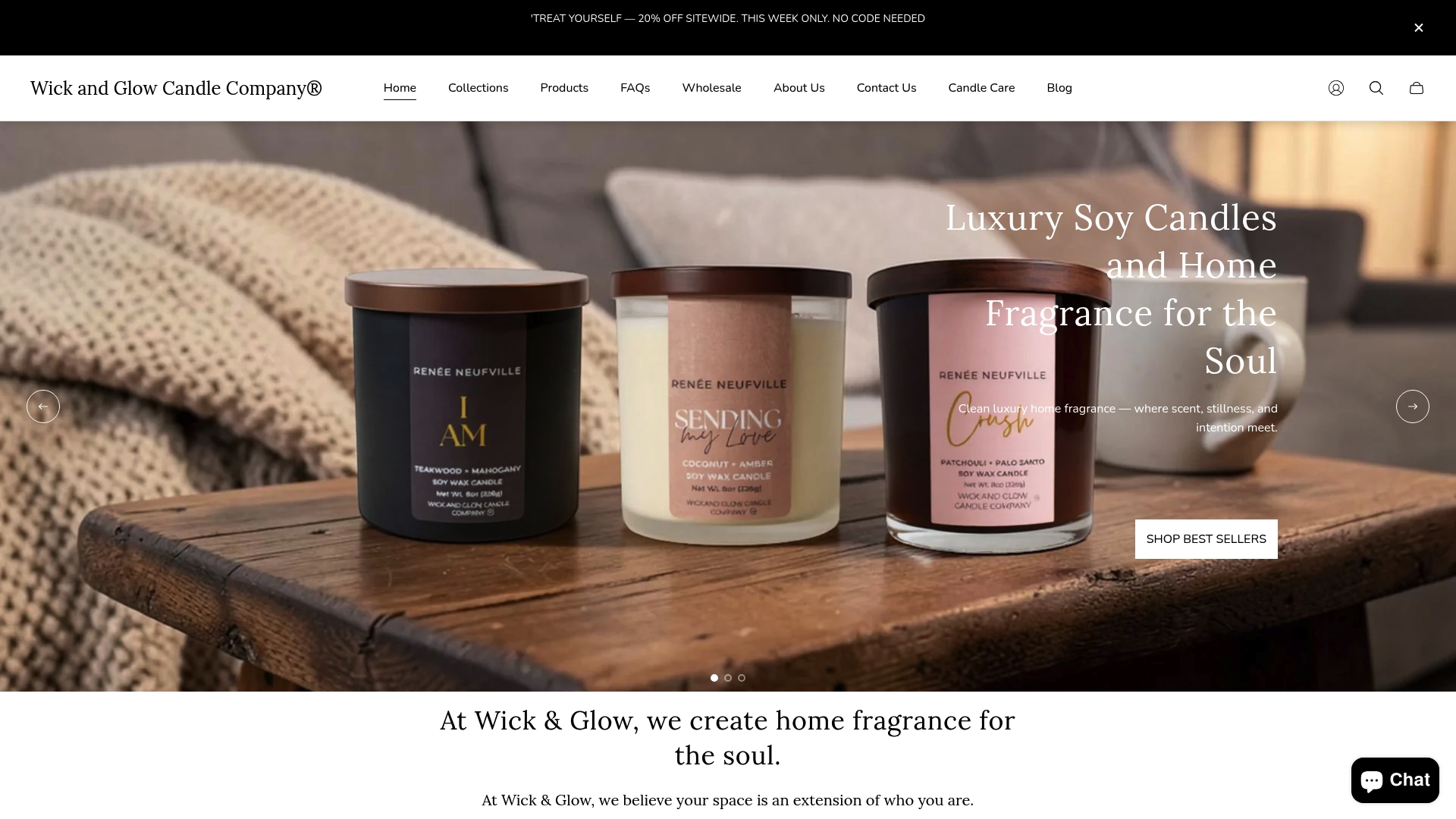
Every candle ships with clear burn-care instructions, and the containers are designed with reuse in mind. Whether you’re shopping for yourself or looking for a gift that actually means something, the Men Love Candles Too collection is a strong starting point: clean-burning credentials, R&B-inspired scents, and curated playlists included. Browse the full range at wickandglow.com and find the scent that fits your space.
Useful sources and further reading
A note on these sources: The links below represent the primary references used throughout this article. For technical wick sizing, the DIY Products 101 guides are the most detailed free resources available. For sustainability and refillable workflows, Candeliss and CANDLERACANDLE cover the practical constraints clearly. For U.S. regulatory context, the EPA and CPSC are the authoritative primary sources.
-
EPA Indoor Air Quality Research — Primary U.S. authority on combustion byproducts and indoor air; useful for understanding emissions context.
- Clean-Burning Wax & Wick Setups — DIY Products 101 — Best free technical resource for wick sizing, burn-test methodology, and soot root-cause analysis.
- Additive-Free Candle Making — DIY Products 101 — Covers maker-side process control and why additive-free candles need more wick testing.
- Eco-Friendly Candles Guide — Solar Tech Online — Practical buyer’s guide covering wax types, label reading, and trim guidance.
- Candle Sand Refill Station — CANDLERACANDLE — Covers refillable pearled wax workflows and the waste-reduction case for reusable vessels.
- Pearled Candles Technical Notes — Candeliss — Explains the vessel diameter requirement (≥10 cm) for pearled wax systems to function correctly.
-
Eco-Friendly Candle Containers — Jafe Decorating — Overview of container materials (recycled glass, ceramic, aluminum, bamboo) and their sustainability trade-offs.
-
Wickandglow Candle Care Blog — Brand-level guidance on wick selection, burn routines, and ingredient transparency for home users.
Recommended


