Wick size is the single most important variable controlling how much scent a candle releases. The wick regulates fuel flow to the flame, which determines melt pool size, and melt pool size determines how much fragrance evaporates into your room. Get the wick wrong and even the most expensive fragrance oil performs poorly. Understanding how candle wick size affects scent gives you the power to fix a weak candle or build a stronger one from scratch. This principle applies whether you make candles at home or shop for the best-performing retail options.
How wick size impacts the melt pool and scent throw
The melt pool is the ring of liquid wax that forms around a burning wick. Wick thickness determines fuel flow to the flame through capillary action, which directly controls how wide and deep that melt pool grows. A wider melt pool exposes more wax surface area to heat, which pushes more fragrance molecules into the air. That is the core mechanic behind candle scent strength and wick diameter.
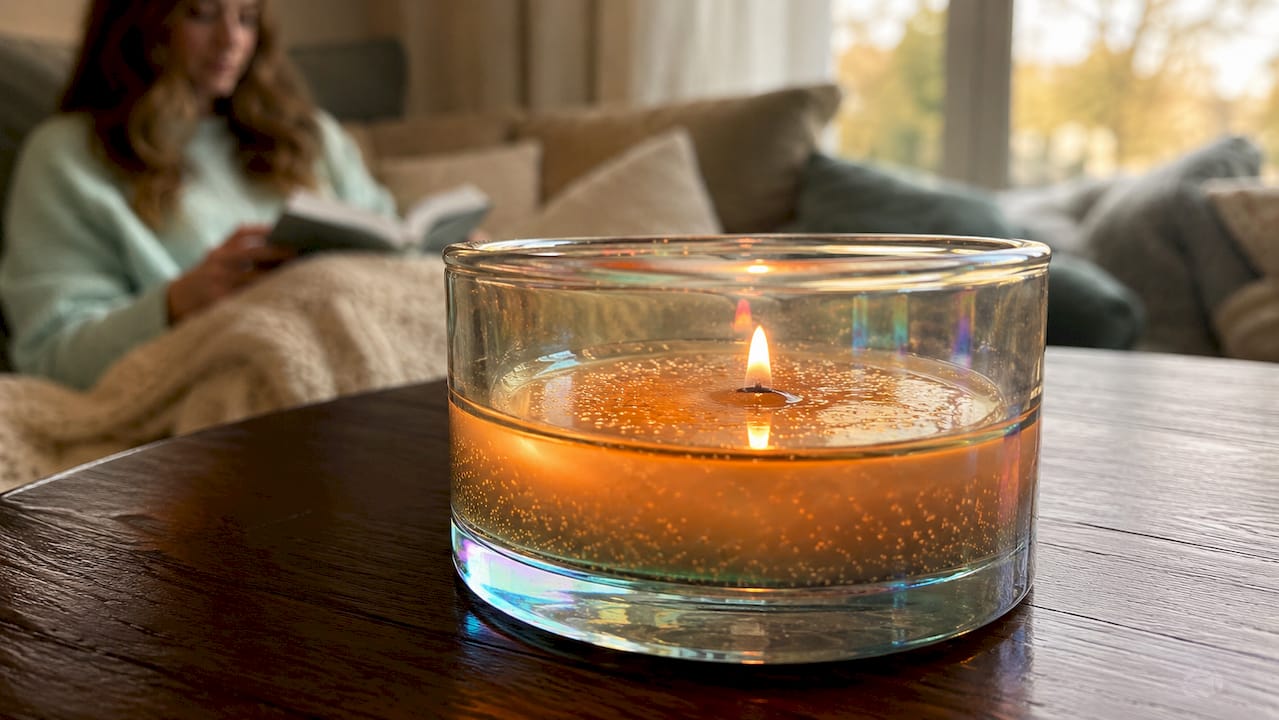
A full melt pool reaching container edges maximizes scent release. When the melt pool stops short of the container walls, fragrance stays trapped in the solid wax that never melts. You smell a fraction of what the candle is actually loaded with.
Two failure modes show up most often:
-
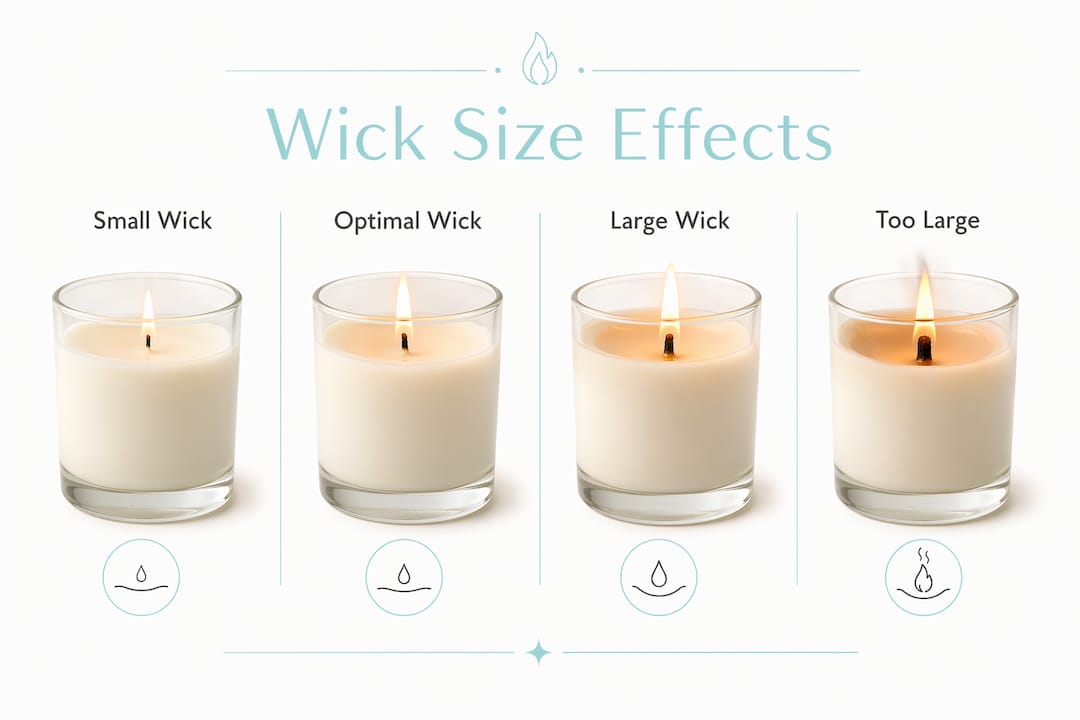
Under-wicked candle: A small melt pool from under-wicking produces barely perceptible scent. The flame is too cool and too small to melt wax past a narrow tunnel around the wick. This is called tunneling, and it wastes most of the fragrance in the candle.
-
Over-wicked candle: An oversized wick burns too hot, creates excessive soot, and consumes wax faster than intended. The melt pattern becomes uneven, fragrance vaporizes before it can diffuse properly, and the candle burns out quickly.
Pro Tip: Trim your wick to about a quarter inch before every burn. A long wick mushrooms at the tip, burns hotter than intended, and throws off the melt pool balance you worked to achieve.
The sweet spot is a melt pool that reaches the container walls within two to four hours of lighting. That timing signals the wick is feeding the flame at the right rate for your container diameter and wax type.
Does wax type and fragrance chemistry change wick size needs?
Wick sizing depends on far more than container diameter. Different wax blends and fragrance oils change the melt pool’s viscosity and burn characteristics, which shifts the wick size requirement entirely. A wick that performs perfectly in a soy wax candle may tunnel badly in a paraffin blend or burn too hot in a coconut wax formula. You can read more about how wax type shapes scent to understand those differences in depth.
Fragrance oils add another layer of complexity. They change the fluidity of melted wax and affect how easily the wick draws fuel upward. Key factors to track:
-
Fragrance load: Higher fragrance percentages increase combustible fuel, often requiring a smaller or adjusted wick to prevent overheating and soot. More fragrance oil softens the wax, which can cause the wick to draw too much fuel at once.
-
Fragrance oil density: Heavier, thicker fragrance oils can clog wick fibers and restrict fuel flow, meaning a wick that worked with one scent may underperform with another.
-
Wick family selection: Choosing the right wick family, such as CD, ECO, or LX series wicks, matters as much as choosing the right diameter. The wrong wick family produces poor melt pool and scent even when the diameter looks correct on a sizing chart.
The practical takeaway is that no sizing chart replaces a real burn test with your exact wax and scent combination. Charts give you a starting point. Your burn results give you the answer.
What are the signs of incorrect wick sizing?
Burn behavior tells you everything about whether your wick diameter and scent throw are aligned. Reading those signals correctly saves you from wasting fragrance oil and wax on a candle that will never perform.
Signs your wick is too small:
-
Tunneling: The wax melts only in a narrow column around the wick, leaving a thick ring of unmelted wax along the container walls.
-
Weak scent throw: The room barely registers the fragrance even after an hour of burning.
-
Flame drowning: The wick gets buried in its own melt pool and may extinguish itself.
Signs your wick is too large:
-
Mushrooming: Carbon builds up on the wick tip, forming a mushroom shape that signals incomplete combustion.
-
Excessive soot: Black smoke or dark residue on the container walls indicates the flame is burning too hot.
-
Fast wax loss: The candle burns down noticeably faster than expected, reducing fragrance longevity.
Pro Tip: Use the “inch in 4 hours” rule as your benchmark. The melt pool should expand roughly one inch for every four hours of burn time. If it falls short, size up. If it exceeds that rate with soot, size down.
Multiple burn tests reveal wick adequacy far better than a single first burn. The first burn can look acceptable while tunneling or sooting develops gradually over subsequent burns. Commit to at least three full burn sessions before drawing conclusions about a wick size.
Systematic testing is the only reliable path to the best wick size for fragrance in any given candle formula. Guessing based on charts alone leads to inconsistent results across batches.
-
Measure your container diameter. Use the widest interior measurement. This number is your starting reference for wick size charts from suppliers like Candlescience or Aztec Candle.
-
Pour identical test candles. Use the same wax, fragrance oil, and fragrance load percentage in each container. The only variable should be wick size.
-
Label each candle clearly. Note the wick type, wick series, and wick size on the bottom of each container before the wax sets.
-
Burn each candle for four hours. Observe the melt pool width, flame height, soot production, and scent intensity at the one-hour and four-hour marks.
-
Document every result. Record melt pool diameter, flame behavior, any mushrooming, and your scent impression on a scale you define consistently.
The table below shows what each burn result tells you about wick size adjustment:
| Burn result |
What it means |
Adjustment |
| Melt pool stops short of walls |
Wick is too small |
Size up one step |
| Melt pool reaches walls cleanly |
Wick size is correct |
Keep this wick |
| Excessive soot or mushrooming |
Wick is too large |
Size down one step |
| Flame drowns in melt pool |
Wick is too small or wrong family |
Try larger size or different wick series |
| Uneven melt pool surface |
Wick family mismatch |
Switch wick series, retest |
Melt pool development can be predicted from container diameter and wick size charts, but real conditions including fragrance load and wax type always require confirmation through burn testing. Treat every new wax or fragrance combination as a fresh testing problem, not a solved one.
Key Takeaways
Wick size controls melt pool width, and melt pool width controls how much fragrance a candle releases into a room.
| Point |
Details |
| Wick size drives scent throw |
A wider wick feeds a larger melt pool, releasing more fragrance into the air. |
| Tunneling signals under-wicking |
A melt pool that never reaches container walls traps fragrance in unmelted wax. |
| Soot signals over-wicking |
Excessive soot and fast wax loss mean the wick is burning too hot for the formula. |
| Wax and fragrance change wick needs |
Every new wax blend or fragrance oil requires a fresh wick size test, not a chart assumption. |
| Multiple burns reveal the truth |
Test at least three full burns before deciding a wick size is correct or incorrect. |
What I’ve learned from chasing the perfect scent throw
Most people treat wick sizing as a one-time decision. Pick a wick, pour the candle, done. That mindset is exactly why so many homemade candles smell weak or burn unevenly. Wick sizing is an iterative formula problem, and the formula changes every time you swap a wax, adjust a fragrance load, or move to a different container shape.
The most common mistake I see is trusting the first burn too much. A candle can look perfect on burn one and develop a tunneling problem by burn three. That is why documenting each test burn matters more than any chart or supplier recommendation. Your notes become your formula, and your formula is what separates a candle that performs from one that disappoints.
The other thing worth saying plainly: wick family matters as much as wick size. Two wicks with identical diameters from different series, say a CD-12 versus an ECO-12, behave differently in the same wax. If you have sized up and down across a full range without success, the answer is often switching wick families entirely rather than continuing to chase the right number within one series.
Patience through multiple test burns is not optional. It is the process. The candle makers who produce consistently strong scent throw are not smarter. They are more methodical.
— B

Wickandglow approaches every candle the way this article describes: with tested wick sizing, intentional fragrance loads, and wax formulas chosen to maximize scent throw from the first burn to the last. Each candle in the collection is paired with an R&B playlist, so the fragrance and the mood arrive together. The home fragrance scent bundle pairs a soy candle, reed diffuser, and room spray in one curated set, giving you layered scent without any of the guesswork that comes with untested wicks. For candle care guidance that extends the life and scent of every burn, the Wickandglow candle care page covers trimming, burn time, and storage in plain language.
FAQ
What happens if my candle wick is too small?
A wick that is too small creates a narrow melt pool that never reaches the container walls. Fragrance stays trapped in the unmelted wax, producing weak or barely perceptible scent throw.
Does wick thickness affect how strong a candle smells?
Yes. Wick thickness controls fuel flow to the flame, which determines melt pool size. A larger melt pool exposes more wax surface area to heat, releasing more fragrance into the room.
How do I know what wick size to use for my candle?
Start with your container’s interior diameter and match it to a wick size chart from a supplier like Candlescience. Then confirm the result through at least three burn tests with your exact wax and fragrance combination.
Can fragrance oil change which wick size I need?
Yes. Higher fragrance loads soften wax and increase fuel availability, often requiring a smaller wick. Dense or thick fragrance oils can also clog wick fibers and restrict fuel flow, shifting the ideal wick size away from chart recommendations.
What is the “inch in 4 hours” rule for candle wicks?
The melt pool should expand approximately one inch for every four hours of burn time. If the melt pool grows slower, size up the wick. If it grows faster with soot or mushrooming, size down.
Recommended


