Candle placement in small spaces is defined by one rule: proportion over abundance. The best candle placement tips for small spaces focus on three things: right sizing, strategic positioning, and scent control. Overpopulating a compact room with candles suffocates the space visually and olfactorily. One well-chosen candle in the right spot does more for ambiance than six candles scattered without intention. The techniques below give you a clear system for arranging candles that feel cozy, look polished, and stay safe in any small room.
1. Candle placement tips for small spaces: start with size and quantity
The single biggest mistake in small-space candle styling is using candles that are too large or too many for the room. Scale matters as much in candle decor as it does in furniture selection.
Candle size guide for small rooms:
-
Votive candles work best in clusters on a tray. They are small enough to group without crowding.
-
Pillar candles suit medium surfaces like a coffee table or dresser. Use one or two at most in a tight room.
-
Taper candles draw the eye upward, which creates the illusion of height in low-ceiling spaces.
-
8-ounce jar candles hit the sweet spot for small apartments. They throw enough scent without overpowering the room.
Interior design experts recommend odd-numbered groupings of three or five candles at varying heights to create visual interest without clutter. An odd number feels natural to the eye. An even row of four identical candles reads as rigid and adds visual weight to a small surface.
Pro Tip: In a studio apartment or single room, limit yourself to one lit candle at a time. Rotate scents by occasion rather than burning multiple candles simultaneously.
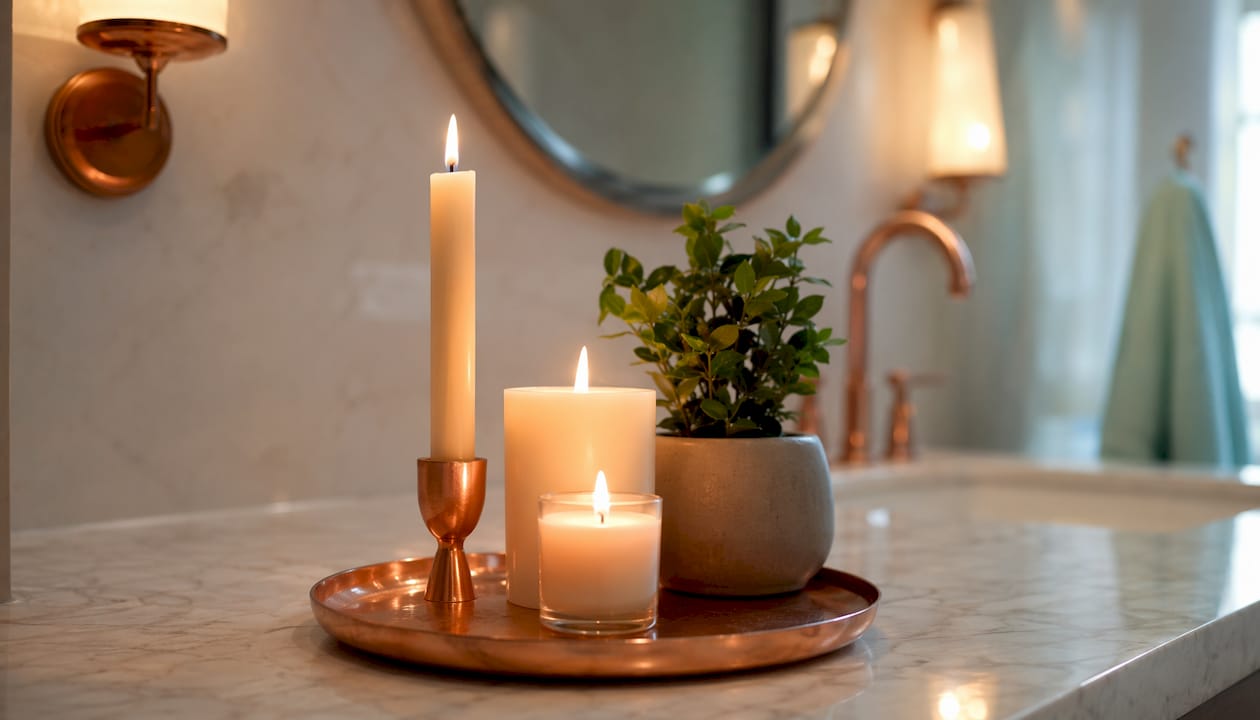
For very tight spaces like a bathroom shelf or a narrow entryway console, a single votive or small jar candle is the right call. Restraint is not a compromise. It is the design choice that makes the space feel intentional rather than cluttered.
2. Creative placement locations that free up surface space
Surface space is the most valuable real estate in a small home. The best candle holders for small rooms work vertically or off the main surface entirely.
-
Wall-mounted candle sconces hold pillar or taper candles at eye level, freeing up tabletops completely.
-
Hanging lanterns suspended from ceiling hooks add candlelight without touching any surface.
-
Floating shelves create dedicated candle zones that keep the floor and main furniture clear.
-
Bathroom ledges above the tub are underused. A single candle there transforms a functional space into a retreat.
-
Windowsills work well for flameless LED candles, where natural light during the day transitions to warm glow at night.
Wall-mounted and hanging holders free limited tabletop space while LED flameless candles are safer in hallways or high-traffic areas where open flames pose a real risk. This is a practical swap, not a style compromise. Modern LED candles with realistic flicker are nearly indistinguishable from real flame at a glance.
Pro Tip: Place a small mirror directly behind a wall sconce to double the visual impact of the candlelight without adding a second candle.
| Placement Location |
Best Candle Type |
Key Benefit |
| Wall sconce |
Pillar or taper |
Frees surface space |
| Floating shelf |
Jar or votive cluster |
Creates dedicated display zone |
| Windowsill |
LED flameless |
Safe near curtains, daytime to nighttime transition |
| Bathroom ledge |
Single votive or jar |
Transforms functional space |
| Hanging lantern |
Pillar |
Adds height and drama without surface use |
For broader small apartment decorating ideas that pair well with candle styling, vertical thinking applies across furniture, storage, and lighting choices.
3. Design techniques that make small rooms feel larger
Candle arrangement is a lighting technique as much as a decor choice. The right layout shifts how a room feels spatially.
Techniques that expand perceived space:
-
Vary candle heights. A cluster of three candles at low, medium, and tall heights guides the eye upward. This makes ceilings feel higher.
-
Group on a reflective tray. A mirrored or metallic tray under a candle cluster amplifies light and creates depth. It also contains wax drips and keeps surfaces clean.
-
Place near light-colored walls. A candle in front of a white or cream wall bounces light across the room more effectively than one placed against a dark surface.
-
Match holder and candle tones. A monochromatic palette of candle, holder, and tray reduces visual noise. Three mismatched items compete for attention. Three coordinated items read as one cohesive object.
-
Use mirrors strategically. A candle placed in front of a mirror doubles its visual presence. The reflection creates the impression of more light and more space.
Odd groupings and height variation enhance ambiance without crowding, and the layering effect helps the eye move upward, making rooms feel larger. This is the same principle interior designers use with artwork and shelving. Vertical movement tricks the brain into perceiving more square footage.
Keep color schemes simple. A small room with candles in three different colors, three different holder styles, and three different heights reads as chaotic. Choose one finish for holders, such as matte black, brass, or clear glass, and stick with it across all candles in the room.
4. How to manage scent in a small space
Scent is the most powerful and most mismanaged element of candle use in small rooms. Too much fragrance in a confined space becomes oppressive within minutes.
The 8:10 rule recommends one 8-ounce candle for every 10 feet of space. In a small apartment, that typically means one candle is enough. Scaling back to a single well-placed candle avoids sensory overload and lets the fragrance breathe.
Scent management tips for small rooms:
-
Choose one signature scent per room. One scent per space reduces olfactory chaos and maintains a calm, cohesive atmosphere.
-
Avoid closed corners. Trapping a candle in a stagnant corner causes scent buildup that overwhelms rather than refreshes. Place candles where slight airflow exists.
-
Layer scent thoughtfully. Pair a candle with a reed diffuser or room spray in the same scent family rather than mixing competing fragrances. Wickandglow’s home fragrance bundles are designed specifically for this kind of layered approach.
-
Burn candles for 1–2 hours at a time. Short burns in small rooms prevent fragrance saturation.
-
Ventilate between burns. Open a window briefly after extinguishing a candle to reset the air before the next burn.
Pro Tip: Scent distribution is about layout as much as candle strength. Place your candle near the center of the room rather than in a corner to allow fragrance to radiate evenly in all directions.
For a deeper look at choosing scents by room, the scent family you pick matters as much as where you place the candle.
5. Safety pitfalls to avoid in small-space candle use
Small spaces concentrate risk. A candle that is perfectly safe in a large living room can become a hazard in a studio apartment where furniture, fabrics, and electronics sit close together.
Critical safety rules for small rooms:
-
Keep candles away from fabric. Curtains, throw blankets, and upholstered furniture are the most common ignition points. Maintain at least 12 inches of clearance.
-
Never place candles on unstable surfaces. A narrow shelf edge or a stacked book is not a stable base. Use flat, heat-resistant surfaces only.
-
Do not leave candles unattended. In a small space, you are rarely far from a lit candle. Still, leaving the room without extinguishing it is the leading cause of candle-related fires.
-
Use heat-resistant barriers under candles. Reflective surfaces like mirrors intensify heat and light, so always place a heat-resistant barrier beneath candles near them to prevent fire risk.
-
Avoid breezy spots near open windows. Drafts cause uneven burning, excess soot, and can blow a flame toward nearby objects.
-
Swap to flameless candles in high-risk spots. Hallways, bookshelves packed with paper, and children’s rooms are all better served by LED alternatives.
“Restraint is the essential luxury in small-space candle placement. Overpopulating a space with candles suffocates the room, while minimal, proportionate use creates intentional warmth and style.”
Adequate airflow is critical for balanced scent diffusion in small rooms. Closed, stagnant corners trap both scent and heat. That combination is uncomfortable and unsafe.
Key Takeaways
The most effective candle placement strategy for small spaces combines proportional sizing, odd-number groupings, single-scent discipline, and vertical positioning to maximize ambiance without clutter or safety risk.
| Point |
Details |
| Size and quantity matter most |
Use one 8-ounce candle per 10 feet of space and limit groupings to three or five candles. |
| Go vertical to save surface space |
Wall sconces, hanging lanterns, and floating shelves free tabletops for other uses. |
| One scent per room |
Choosing a single fragrance per space prevents olfactory overload in confined areas. |
| Reflective surfaces need barriers |
Always place a heat-resistant mat under candles near mirrors or metallic trays. |
| Restraint is the design choice |
Fewer, well-placed candles create more ambiance than many candles placed without intention. |
What I’ve learned from styling candles in small homes
The advice most people skip is the advice that matters most: trim your wicks. Trimming wicks to a quarter inch before every burn prevents tunneling, reduces soot, and produces a cleaner scent throw. In a small room, a poorly maintained candle fills the air with black smoke before it fills it with fragrance. That detail separates a good candle experience from a great one.
The other thing I’ve noticed is that people treat candle placement as decoration and forget it is also lighting design. In a small space, a single candle placed at the right height and in front of the right surface does more for the mood than overhead lighting on a dimmer. The warmth is directional. It draws attention to a corner, a shelf, or a surface you want noticed.
My honest recommendation is to start with one candle, one scent, and one location. Live with it for a week. Notice how the light falls, how the scent moves through the room, and whether the placement feels right. Then adjust. Small spaces reward patience and specificity far more than they reward abundance.
Candles designed for small spaces, from Wickandglow
Wickandglow builds each candle around a specific feeling, not just a fragrance. That intention matters in a small space where one candle does all the work.

The Exhale Luxury Candle is a strong starting point for anyone applying these placement principles. It is sized and scented for rooms where one candle is the right call. For those who want a layered approach without competing fragrances, the Scenting My Love Trio pairs candles, diffusers, and sprays from the same scent family. Each Wickandglow product comes with a curated playlist, so the ambiance extends beyond what you smell to what you hear.
FAQ
How many candles should I use in a small room?
One candle is the right number for most small rooms. The 8:10 rule recommends one 8-ounce candle per 10 feet of space to avoid overpowering fragrance.
What are the best candle holders for small rooms?
Wall-mounted sconces and compact votive holders on reflective trays work best. They maximize light output while keeping surfaces clear.
Where should I not place a candle in a small space?
Avoid closed corners, surfaces near fabric, unstable shelves, and spots with direct drafts. These locations create scent buildup, fire risk, or uneven burning.
How do I make candles smell better in a small apartment?
Place the candle near the center of the room rather than a corner, and burn it for 1–2 hours at a time. Pair it with a reed diffuser in the same scent family for layered, balanced fragrance.
Are flameless candles worth using in small spaces?
Yes. LED flameless candles are the right choice for hallways, bookshelves, and any area where open flame poses a risk. Modern versions with realistic flicker deliver the visual warmth of real candles without the hazard.
Recommended


