Endocrine disruptors are chemicals that mimic or block your body’s natural hormones, and many common scented candles release them directly into your indoor air. Phthalates like DBP and BBP are the primary offenders. These compounds are used as plasticizers and fragrance carriers in synthetic candle formulas, and they aerosolize into indoor air the moment you light a wick. Regulatory bodies including the Belgian Federal Public Health Service recognize phthalates as hormone-interfering substances at very low doses. For anyone burning candles regularly at home, understanding what are endocrine disruptors in candles is the first step toward making smarter choices for your health and your space.
What chemicals in candles act as endocrine disruptors?
Scented candles with synthetic fragrances are the main source of phthalate exposure in home environments. A chamber study published in 2026 confirmed that phthalate compounds including DEP, DBP, and BBP are emitted at the highest levels from candles containing synthetic fragrance oils. These are not trace amounts. They are measurable concentrations released into the air you breathe every time the candle burns.
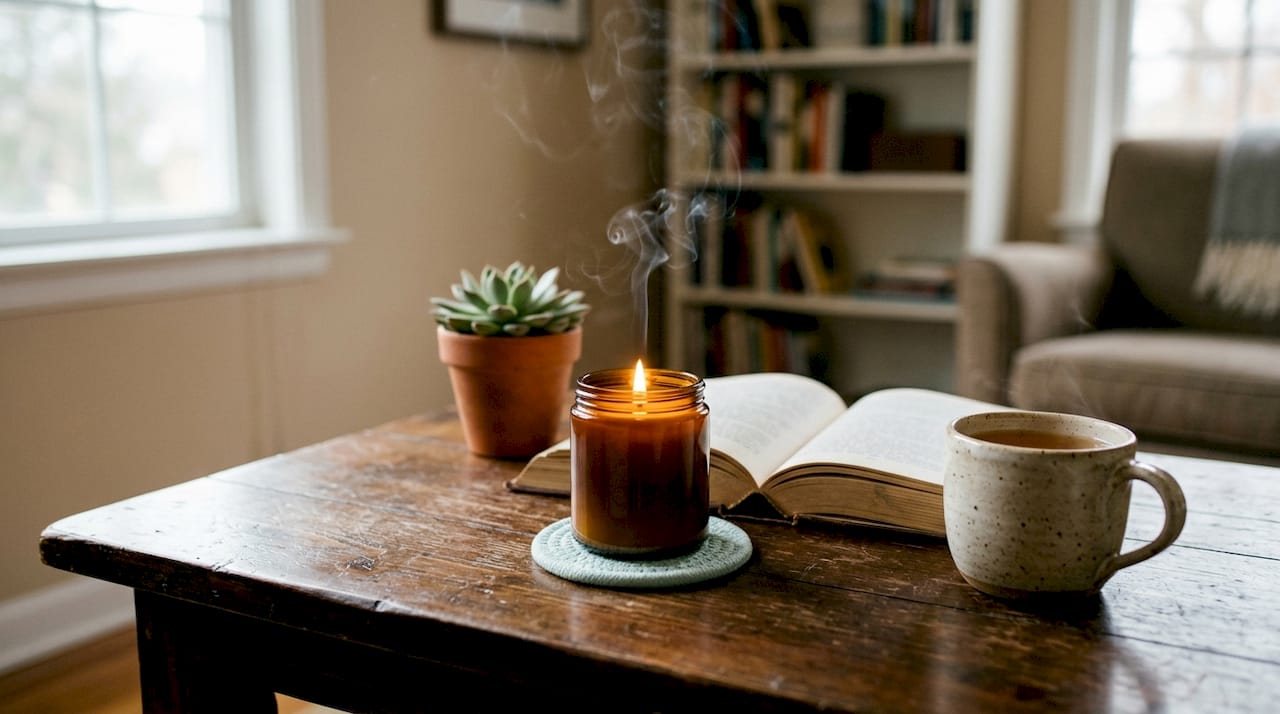
Phthalates serve two functions in candle manufacturing. First, they act as plasticizers that keep wax pliable and consistent. Second, they bind fragrance molecules to the wax so the scent releases slowly and evenly. Both functions require the phthalates to volatilize during burning, which is exactly when they become an inhalation risk.
Beyond phthalates, burning candles also release:
-
Volatile organic compounds (VOCs): Benzene, toluene, and formaldehyde are common in paraffin wax candles.
-
Ultrafine particles: Particles smaller than 10 nanometers penetrate deep into lung tissue.
-
Nitrogen dioxide and PAHs: Polycyclic aromatic hydrocarbons linked to airway inflammation.
-
Soot: Carbon particles that carry chemical residue and coat indoor surfaces.
The combination of VOCs and ultrafine particles makes synthetic scented candles one of the more significant sources of indoor air pollution in a typical home. That matters because most people burn candles in small, enclosed rooms with limited airflow.
How do endocrine disruptors from candles affect your health?
The health effects of candle-borne endocrine disruptors depend heavily on who is being exposed and how often. For healthy adults burning candles occasionally in ventilated rooms, the risk is relatively low. The picture changes for vulnerable groups.
“Scientific consensus indicates that candle-induced risks are generally mild for healthy adults but more significant for vulnerable populations like pregnant people, children, the elderly, and those with asthma.” Fact-checked health reporting confirms this distinction is critical for interpreting candle safety claims.
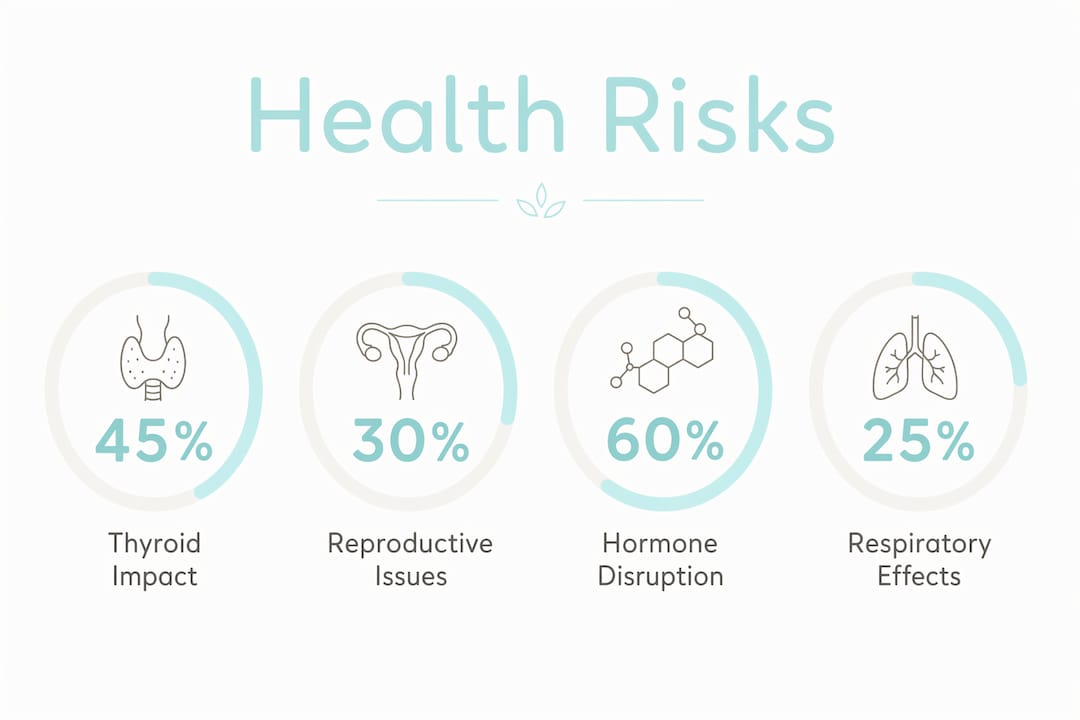
Phthalate exposure from scented candles is linked to reproductive issues and thyroid function disruption. Animal models show inflammatory and lung injury markers after VOC exposure from candles. Human implications are plausible enough that health professionals recommend avoidance during pregnancy.
Burning candles also emits ultrafine particles that produce measurable biological changes after just five hours of inhalation. That is the equivalent of a long evening at home with candles burning in the background. For people with mild asthma or respiratory sensitivities, this level of exposure can trigger airway inflammation.
The groups most at risk include:
-
Pregnant people: Prenatal phthalate exposure shows hormonal interference effects in animal studies.
-
Children: Developing endocrine systems are more sensitive to hormone-mimicking chemicals.
-
People with asthma: Ultrafine particles and nitrogen dioxide worsen airway inflammation.
-
Elderly individuals: Reduced respiratory resilience increases sensitivity to particulate exposure.
Pro Tip: If you or anyone in your household falls into a high-risk group, switch to unscented natural wax candles or use a reed diffuser with phthalate-free fragrance oils as a safer alternative.
What factors influence how much exposure you actually get?
Exposure to endocrine-disrupting chemicals from candles is not fixed. Several variables determine whether a single candle session is a minor event or a meaningful health concern.
-
Ventilation. A candle burning in a sealed bedroom concentrates pollutants far faster than one burning near an open window. Adequate ventilation markedly reduces pollutant levels and is the single most effective mitigation strategy.
-
Room size. Smaller rooms accumulate ultrafine particles and VOCs more quickly. A bathroom candle poses a higher exposure risk than the same candle in a living room.
-
Wick length. A long wick produces a larger flame, more soot, and higher particle emissions. Trimming the wick before each burn directly reduces how much you inhale.
-
Burn duration and frequency. Occasional candle use is low risk. Daily multi-hour sessions in closed rooms compound exposure over time.
-
Candle type and ingredients. Paraffin wax candles with synthetic fragrance oils emit the highest levels of phthalates and VOCs. Natural wax candles with essential oils emit significantly less.
-
Drafts. Flickering flames caused by drafts produce irregular combustion, which spikes soot and particle output. Keep candles away from vents, fans, and open windows that create airflow across the flame.
Environmental factors like ventilation and wick management have a greater impact on exposure than candle brand or wax type alone. That finding shifts the responsibility partly to how you use candles, not just what you buy.
Pro Tip: Burn candles for no more than two to three hours at a time. Letting a candle burn for six or more hours in a closed room is where exposure risk climbs meaningfully.
How to choose safer candles and reduce chemical exposure
Choosing candles with lower endocrine disruptor risk starts with reading ingredient labels, not just smelling the product in the store. Most mass-market scented candles do not disclose their fragrance formulas, which makes phthalate content impossible to verify without third-party testing.
Soy and beeswax candles burn cleaner and emit fewer endocrine-disrupting chemicals and particulates than paraffin wax candles. Soy and beeswax avoid petroleum wax contaminants and synthetic additives linked to hormone disruption. That makes wax type a reliable starting filter when you are shopping.
A practical checklist for selecting safer candles:
-
Choose natural wax: Soy, beeswax, or coconut wax over paraffin.
-
Look for phthalate-free labeling: Brands that explicitly state “phthalate-free” have made a verifiable formulation commitment.
-
Avoid “fragrance” as a catch-all ingredient: This term legally covers hundreds of undisclosed chemicals, including phthalates.
-
Prefer essential oil scenting: Natural essential oils do not carry the same endocrine disruption risk as synthetic fragrance compounds.
-
Check for cotton or wood wicks: Metal-core wicks can release lead and other heavy metals during burning.
-
Consider unscented options: An unscented soy candle provides ambiance with the lowest possible chemical emission profile.
For a deeper look at what to avoid, the guide to non-toxic candles from Wickandglow breaks down harmful ingredients by category. If you want to compare wax types side by side, the soy vs. paraffin breakdown explains the emission differences in plain terms.
Some retailers now offer glass jar candles specifically designed to minimize ultrafine particle and toxin emissions. These are worth considering if you burn candles frequently and want to reduce your overall exposure without giving up the ritual entirely.
Best practices for burning candles with less risk
Buying a cleaner candle is only half the equation. How you burn it determines the actual exposure you receive.
-
Trim the wick to 1/4 inch before every burn. A shorter wick produces a smaller, more stable flame with less soot and fewer particles.
-
Use a candle snuffer to extinguish the flame. Blowing out a candle creates a puff of soot and smoke that spikes indoor air pollutants immediately. A snuffer eliminates that burst.
-
Open a window or run a ventilation fan during and after burning. Even a few inches of open window dramatically dilutes airborne particles and VOCs.
-
Keep candles away from drafts. Flickering increases incomplete combustion and particle output. A steady flame burns cleaner.
-
Limit burn sessions to two to three hours. Longer sessions in enclosed spaces accumulate pollutants to levels that affect air quality measurably.
-
Let the room air out after extinguishing. Residual VOCs continue to off-gas from warm wax for several minutes after the flame goes out.
Pro Tip: Place your candle near a partially open window rather than in the center of a sealed room. The slight airflow carries combustion byproducts out before they concentrate at breathing level.
For candles you already own, the candle care guidance from Wickandglow covers wick trimming, burn times, and storage practices that extend candle life while keeping emissions low.
Key Takeaways
Endocrine disruptors in candles are a real but manageable risk. Choosing natural wax candles, burning them in ventilated spaces, and trimming wicks before each use reduces exposure to hormone-interfering chemicals significantly.
| Point |
Details |
| Phthalates are the main disruptors |
DBP, BBP, and DEP in synthetic fragrance candles aerosolize into indoor air during burning. |
| Vulnerable groups face higher risk |
Pregnant people, children, and those with asthma should prioritize unscented or natural wax candles. |
| Ventilation matters most |
Burning candles in ventilated rooms reduces pollutant concentration more than any other single factor. |
| Wick trimming cuts emissions |
Trimming to 1/4 inch before each burn produces a cleaner, lower-particle flame. |
| Natural wax burns cleaner |
Soy and beeswax candles emit fewer endocrine-disrupting chemicals than paraffin wax alternatives. |
What I’ve learned from years of thinking about candle safety
The conversation around candles and endocrine disruptors tends to swing between two unhelpful extremes. One camp says candles are basically harmless and the concern is overblown. The other treats every scented candle like a chemical weapon. Neither position serves you well.
My honest read: the risk from occasional candle use in a reasonably ventilated home is low for most healthy adults. The science supports that. What the science also supports is that chronic exposure in closed spaces, especially from paraffin candles loaded with synthetic fragrance, adds up in ways that matter for sensitive individuals.
The practical lesson I keep coming back to is this: the candle itself is only part of the story. I have seen people switch to expensive “clean” candles and then burn them for eight hours in a sealed bedroom with the door closed. That is not a safer outcome. Ventilation, burn duration, and wick management are unglamorous habits, but they do more for your actual exposure level than the label on the jar.
What I find genuinely encouraging is that the market for cleaner candles has improved. Phthalate-free, soy-based options are no longer hard to find. Brands that disclose their fragrance ingredients are becoming more common. You do not have to choose between a beautiful-smelling home and a health-conscious one. You just have to be a more deliberate shopper and a more intentional burner.
— B
Wickandglow candles worth burning without the worry
Wickandglow builds every candle with the kind of care that makes the endocrine disruptor conversation a non-issue from the start.
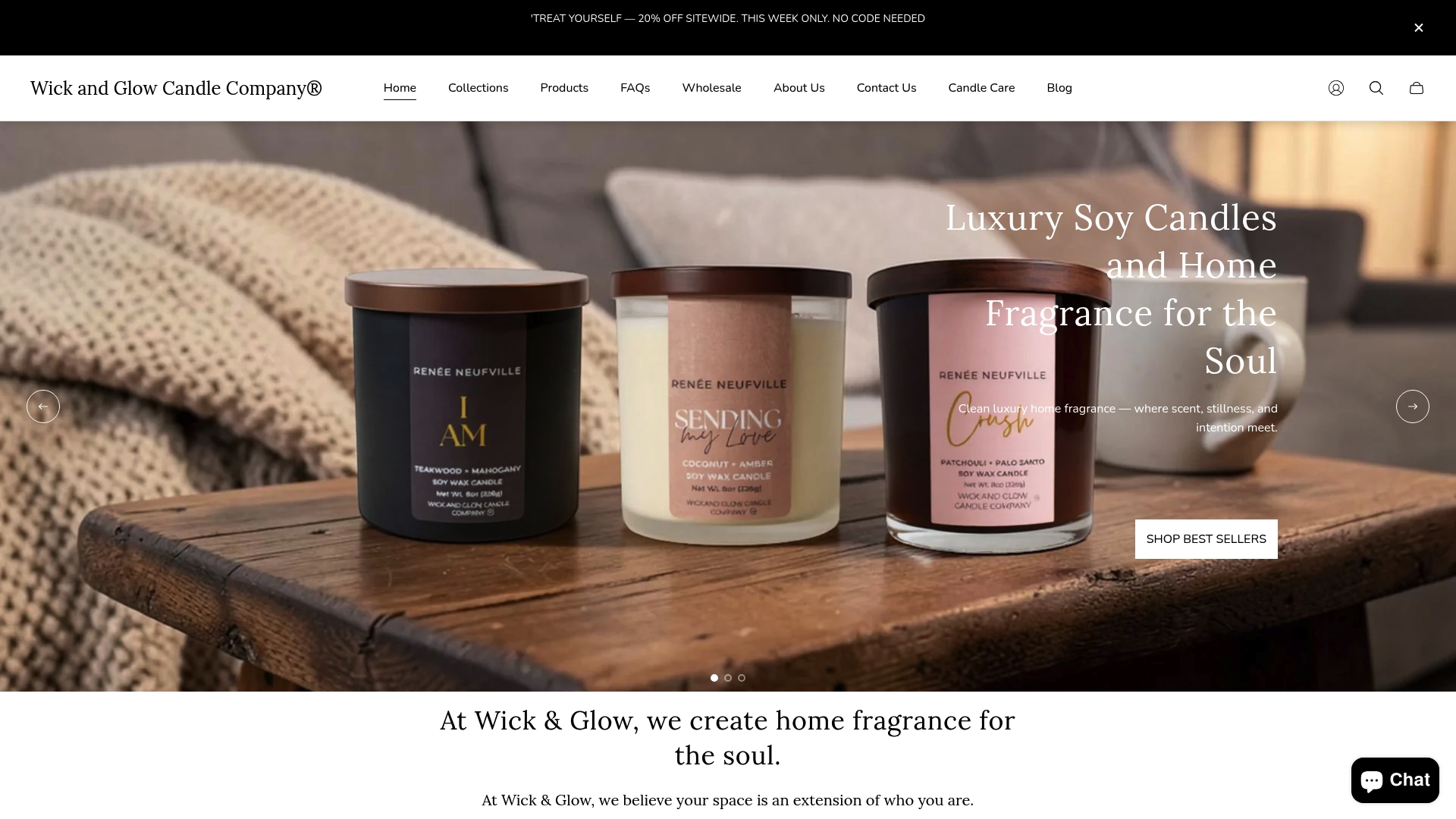
The Men Love Candles Too collection is a strong example: soy-based, phthalate-free, and built around fragrances inspired by R&B music with curated playlists to match. These are candles made for people who want their space to feel intentional, not just scented. If you prefer a flame-free option, the phthalate-free room spray delivers the same quality fragrance without any combustion byproducts. Wickandglow is the kind of brand that makes choosing safer home fragrance feel like an upgrade, not a compromise.
FAQ
What are endocrine disruptors in candles?
Endocrine disruptors in candles are chemicals, primarily phthalates like DBP and BBP, that mimic or interfere with your body’s natural hormones. They are released as aerosols when synthetic fragrance candles burn.
Are all scented candles toxic?
Not all scented candles carry the same risk. Candles made with natural wax and essential oils emit far fewer harmful chemicals than paraffin candles with synthetic fragrance oils, which contain the highest phthalate concentrations.
How do I know if my candle contains phthalates?
Look for “phthalate-free” on the label, and avoid any candle that lists “fragrance” as a generic ingredient without further disclosure. Brands that use synthetic fragrance oils rarely disclose phthalate content voluntarily.
Is it safe to burn candles around children?
Children’s developing endocrine systems are more sensitive to hormone-mimicking chemicals. Health guidance recommends using unscented or natural wax candles around children and always burning them in well-ventilated areas.
What is the safest way to put out a candle?
Use a candle snuffer rather than blowing out the flame. Blowing creates an immediate spike of soot and smoke that raises indoor air pollutant levels, while snuffing eliminates the flame with minimal smoke release.
Recommended


