Unique candles outperform generic alternatives by converting a simple wax product into a personalized sensory experience that engages memory, emotion, and aesthetic identity in ways mass-produced options never reach. The gap between a generic candle from a big-box store and a thoughtfully crafted artisan candle is not just about price. It is about fragrance complexity, burn performance, emotional resonance, and the meaning a buyer attaches to the object before they even light it. This article breaks down every factor that explains why unique candles win on quality, gifting impact, and lasting ambiance, drawing on current market data and consumer psychology research.
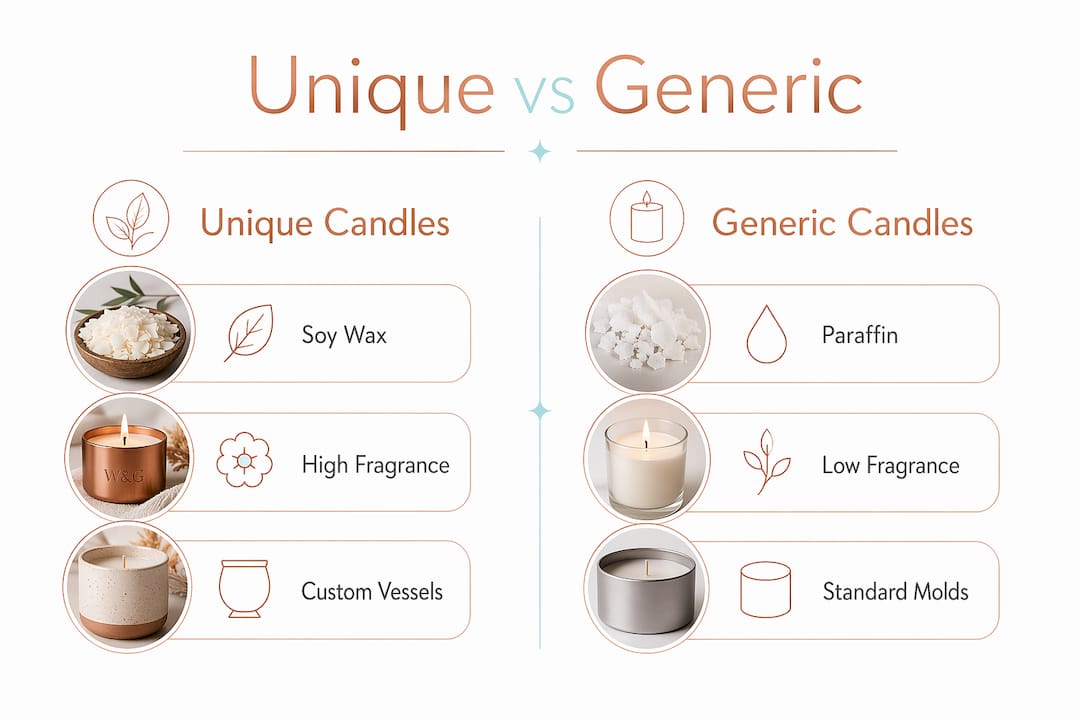
The most measurable difference between unique and generic candles starts with the wax. Generic candles rely almost exclusively on paraffin, a petroleum byproduct that burns faster, produces more soot, and carries fragrance less efficiently than natural alternatives. Unique candles typically use soy blends, beeswax, or coconut wax, all of which offer a cleaner burn, better fragrance throw, and a longer overall lifespan. That material choice alone changes the entire sensory experience in a room.
Fragrance load is the second critical factor. Mass-produced candles average a fragrance oil concentration of 6% to 8%, which produces a faint, one-dimensional scent. Artisan and private-label candles regularly push fragrance loads to 10% to 12%, and the best makers use layered scent profiles, meaning top, middle, and base notes that evolve as the candle burns. This is the same principle perfumers use, and it creates a living, changing atmosphere rather than a static smell.
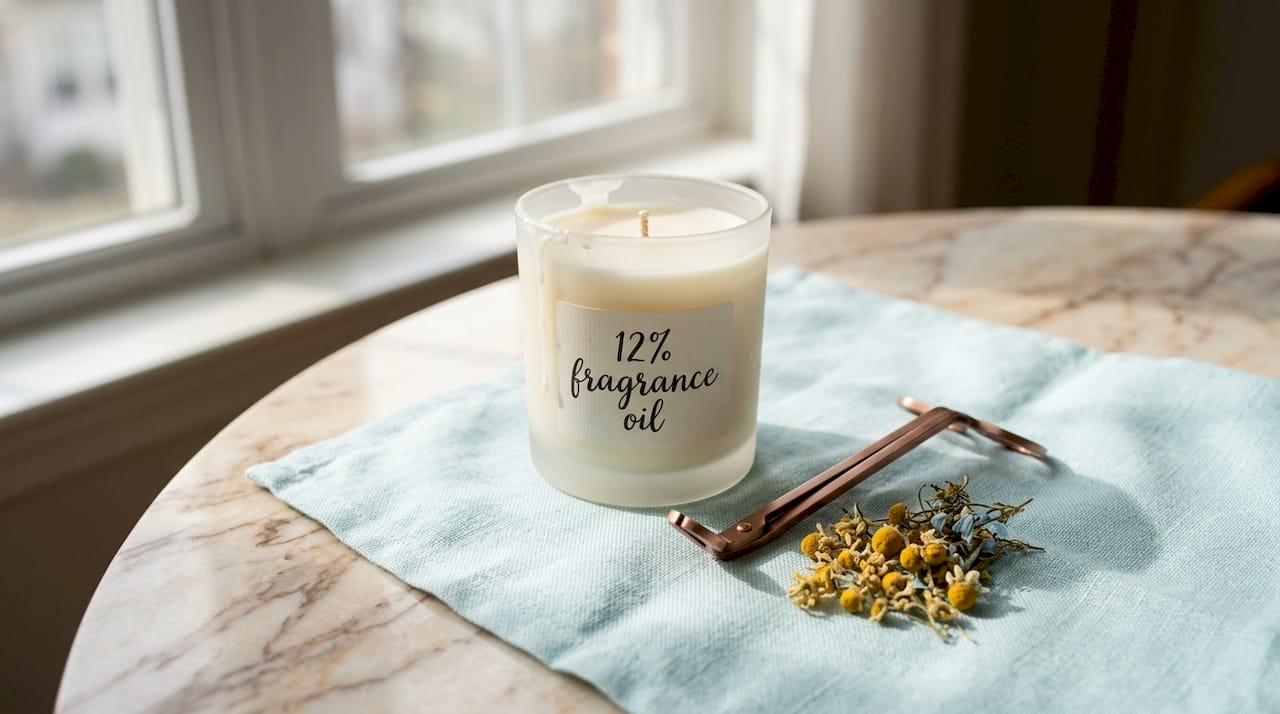
Burn time matters more than most buyers realize. Technical factors like burn performance, fragrance throw, and vessel compatibility are often underestimated but critical for high-quality unique candles. A well-made soy candle in a properly sized vessel can deliver 40 to 50 hours of burn time, compared to 20 to 30 hours for a comparable paraffin candle. That extended performance means the scent and ambiance last longer per dollar spent.
Pro Tip: When comparing candles, check the fragrance load percentage on the product description. Anything below 8% will likely underperform in rooms larger than 150 square feet.
Aesthetic design rounds out the quality picture. Unique candles arrive in custom vessels, with hand-applied labels, curated color palettes, and packaging designed to sit on a shelf and look intentional. Generic candles are designed for shelf space efficiency, not visual impact. The vessel itself becomes part of the room’s decor, and many buyers repurpose the jar after the candle burns down, extending the product’s presence in the home.
| Feature |
Unique candles |
Generic candles |
| Wax type |
Soy, beeswax, coconut blends |
Paraffin |
| Fragrance load |
10–12% |
6–8% |
| Burn time |
40–50 hours |
20–30 hours |
| Vessel design |
Custom, reusable |
Standard, disposable |
| Scent complexity |
Layered top/mid/base notes |
Single-note |
How personalization deepens emotional value in candles
Scent is the only sense with a direct neural pathway to the limbic system, the brain’s center for emotion and long-term memory. Candles engage the limbic system, allowing a specific fragrance to anchor emotional memories and daily rituals like meditation or journaling. This is why a particular scent can instantly transport you to a specific place or feeling. Generic candles with generic fragrances produce generic memories. Unique candles, chosen for their specific scent profile, become what researchers call sensory anchors tied to your personal history.
The experience economy concept, first articulated by B. Joseph Pine II and James H. Gilmore, argues that consumers increasingly pay for experiences rather than objects. Unique candles sit squarely in what has since been called the meaning economy, where customers pay for meaning rather than just the product itself. A candle that comes with a custom label, a handwritten note, or a scent chosen to match a specific mood is not just a candle. It is a curated emotional experience.
The data on personalization backs this up clearly:
- Buyers who select their own scent, label, or vessel design show measurably lower return rates because their emotional investment begins before the product arrives.
- Custom candle buyers report higher satisfaction scores than buyers of standard candles, driven by the sense of ownership and identity the product reflects.
- Personalized candles command price premiums of 200% to 400% over mass-produced equivalents, and buyers consistently rate them as worth the cost.
“The best candles don’t just smell good. They feel like they were made for you, because the best ones actually were.”
Wickandglow takes this principle further by pairing each candle with an R&B-inspired playlist curated to match the fragrance’s emotional tone. The result is a multi-sensory experience where scent and sound reinforce each other, deepening the emotional connection beyond what any generic candle can offer.
The gifting case for unique candles over generic options is supported by concrete data, not just sentiment. Candles burning for 40 to 50 hours create multi-sensory brand associations that outlast consumable gifts and standard branded items. A gift that sits in someone’s home for weeks, releasing a scent they associate with the giver, produces a depth of recall that a gift card or branded pen simply cannot match.
Social visibility is a second major advantage. Handmade, beautifully packaged candles are the most photographed and Instagram-shared corporate gift category in 2025, outperforming luxury hampers and chocolates. That organic sharing translates directly into brand impressions and word-of-mouth reach that no generic gift generates. Understanding how to grow your Instagram audience as a candle brand or gifter amplifies this effect significantly.
The advantages of unique candles as gifts break down into clear categories:
-
Longevity. A 50-hour candle stays in someone’s home for weeks, reinforcing the emotional connection with every burn.
-
Visual appeal. Custom packaging and vessel design make the gift feel considered and premium from the moment it is unwrapped.
-
Reusability. The jar, once empty, becomes a planter, a storage vessel, or a decorative object. Generic candle tins go straight to the recycling bin.
-
Personalization signal. A scent chosen specifically for the recipient communicates attention and care in a way that generic gifts cannot.
-
Social sharing. Aesthetically designed candles prompt recipients to photograph and share them, extending the gift’s reach far beyond the original exchange.
Generic gifts, by contrast, communicate efficiency rather than intention. A box of chocolates or a standard gift basket says “I remembered.” A unique candle says “I thought about you specifically.” That distinction matters to recipients, and it shows in how long they remember the gift.
What consumer trends are driving the shift toward unique candles?
The broader market is moving in one clear direction. Consumers favor curated design palettes such as matte finishes, earth tones, and dusty pastels, which drive superior commercial performance in the 2025 to 2026 candle market. This is not a niche preference. It reflects a widespread shift toward intentional, aesthetically considered home environments where every object earns its place.
Natural materials are central to this shift. Buyers in 2026 actively seek soy wax, beeswax, and coconut wax candles because they associate natural inputs with cleaner burns, better health outcomes, and environmental responsibility. The move toward minimalism and natural aesthetics is not only a trend but a market expectation that now impacts candle sales and brand success at every price point. Brands that still rely on paraffin and synthetic fragrances are losing ground to makers who have made the switch.
Sustainability expectations extend to packaging. Buyers notice when a candle arrives in recyclable or reusable packaging, and they reward brands that make that choice with loyalty and repeat purchases. Generic candles, produced at scale with cost as the primary constraint, rarely meet these expectations. Unique candle makers, by contrast, treat packaging as part of the product experience.
Pro Tip: Look for candles that list their wax source, fragrance load percentage, and wick material on the label. Brands that share this information are confident in their ingredients. Brands that don’t are often hiding something.
The aesthetic trend toward earth tones and matte finishes also reflects a deeper consumer desire for calm, grounded home environments. A candle in a matte black vessel with a minimal label reads as intentional and sophisticated. The same fragrance in a shiny generic jar reads as an afterthought. Visual design is not superficial in this category. It is part of the sensory experience the buyer is purchasing.
Key takeaways
Unique candles outperform generic options because they deliver superior materials, personalized emotional connections, and lasting sensory impressions that mass-produced candles are structurally unable to replicate.
| Point |
Details |
| Material quality matters |
Soy, beeswax, and coconut wax candles burn cleaner and longer than paraffin alternatives. |
| Fragrance load drives performance |
Unique candles with 10–12% fragrance load outperform generic 6–8% options in scent throw and complexity. |
| Personalization builds loyalty |
Custom scent and design choices lower return rates and raise satisfaction scores measurably. |
| Gifting impact is measurable |
Candles burning 40–50 hours create brand recall that outlasts nearly every other gift category. |
| Aesthetic trends favor unique |
Matte finishes, earth tones, and natural materials are now market expectations, not premium extras. |
Why the candle you choose says more than you think
I have spent years paying attention to how people respond to scent in their homes, and the pattern is consistent. The candles that people remember, talk about, and buy again are never the ones from the clearance shelf at a chain store. They are the ones that smelled like something specific, came in a jar worth keeping, and felt like someone made a decision about them.
The generic candle market is built on the assumption that buyers want cheap and convenient. That assumption is increasingly wrong. Buyers in 2026 are choosing home fragrance the way they choose wine or coffee. They want to know where it came from, what is in it, and why someone made it that way. A candle that comes with a playlist, a story, or a scent named after a feeling is not a luxury indulgence. It is the logical result of consumers demanding more meaning from the objects they bring into their homes.
The price premium for unique candles, which can reach 200% to 400% above generic equivalents, is not a barrier for buyers who understand what they are getting. It is a signal that the product was made with intention. And intention, in the home fragrance category, is exactly what buyers are paying for. Generic candles will always exist for buyers who want a flame and a faint smell. But for anyone who wants their home to feel like a specific place, a specific mood, or a specific memory, unique candles are not the premium option. They are the only option.
— B
Experience the Wickandglow difference for yourself
Wickandglow builds every candle around a specific emotional experience, pairing proprietary fragrance blends with R&B-inspired playlists so your home sounds and smells like a feeling you chose intentionally. Each product uses premium soy wax, high-load fragrance oils, and vessels designed to stay on your shelf long after the candle burns down.
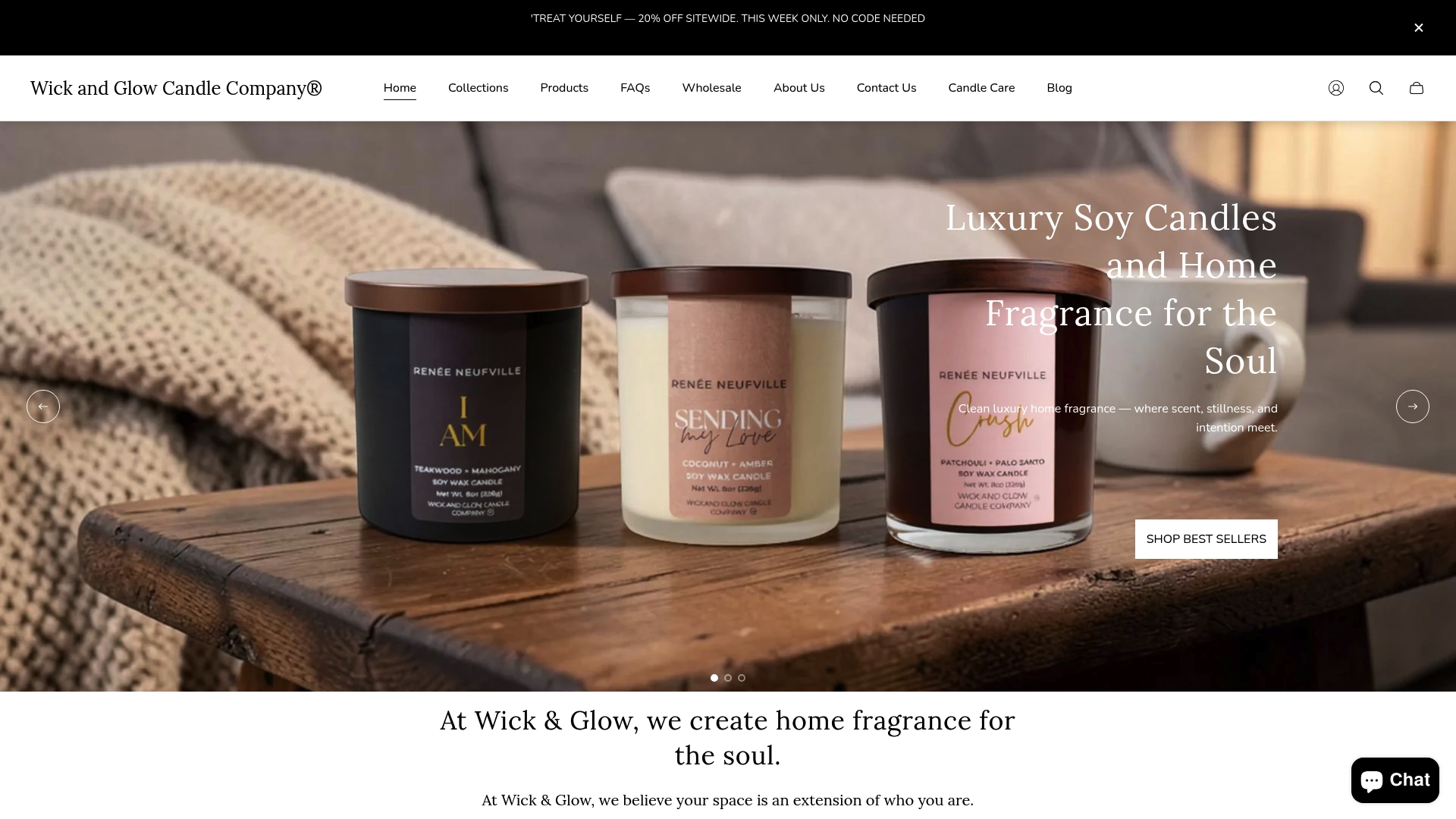
The Come Inside luxury candle and the Reminisce soy candle are two of the most requested scents in the collection, each built to anchor a specific mood in your space. For a full sensory experience, the home fragrance scent bundle pairs a soy candle with a reed diffuser and room spray so your chosen scent reaches every corner of the room. This is what buying unique candles actually looks like in practice.
FAQ
What makes unique candles better than generic ones?
Unique candles use higher-quality wax, greater fragrance loads, and custom vessel designs that generic candles do not. They also engage the limbic system through personalized scent profiles, creating emotional associations that mass-produced candles cannot replicate.
Why do unique candles cost more than generic options?
Unique candles command price premiums of 200% to 400% because buyers are paying for meaning, craftsmanship, and personalization rather than a commodity product. The longer burn time and reusable vessel also deliver better value per dollar over time.
Are unique candles worth it as gifts?
Candles burning 40 to 50 hours create lasting sensory impressions that outlast most other gift categories. Beautifully packaged candles are also among the most shared gifts on social media, making them a gift that keeps generating positive associations well after the occasion.
What wax type is best for a unique candle?
Soy wax and coconut wax blends are the top choices for unique candles because they burn cleanly, hold fragrance efficiently, and align with consumer expectations around natural materials and sustainability. Paraffin, the standard for generic candles, produces more soot and carries fragrance less effectively.
How do I identify a high-quality unique candle?
Look for a listed fragrance load of 10% or higher, a natural wax base, a burn time of at least 40 hours, and packaging that includes ingredient transparency. Brands that disclose these details are confident in their product. Those that don’t typically are not.
Recommended


