Coconut wax is defined as a plant-based wax derived from the hydrogenated oil of coconuts, and it stands as one of the most environmentally responsible candle materials available today. Why coconut wax is eco friendly comes down to three core facts: it comes from a renewable crop, it breaks down completely in the environment, and it burns without releasing the toxic byproducts associated with paraffin. Unlike petroleum-based paraffin or genetically modified soy, coconut wax carries a genuinely low environmental footprint from farm to flame. Certifications like USDA Organic and Fair Trade signal the sourcing standards that separate truly sustainable coconut wax from greenwashed alternatives.
Why coconut wax is eco friendly: the renewable crop advantage
Coconut wax earns its sustainability credentials at the source. Coconut palms are permanent crops that produce fruit for decades without annual tilling or replanting. That single fact separates coconut from soy and corn, both of which require farmers to disturb the soil every single year.
Annual crops like soy demand repeated plowing, which degrades soil structure, accelerates erosion, and releases stored carbon into the atmosphere. Coconut palms, by contrast, anchor the soil, support root ecosystems, and continue producing without mechanical disruption. The long productive life of a coconut palm means less land is needed to generate the same volume of raw material over time.
Responsible coconut farming also supports agroforestry, a practice where coconut palms grow alongside other crops and native plants. This approach preserves biodiversity and reduces the pressure to clear forests for new agricultural land. Sustainably sourced coconut wax avoids deforestation by growing on sandy coastal soils that are unsuitable for most other crops, unlike palm oil, which has driven significant habitat loss in Southeast Asia.
The critical caveat is scale. Large-scale coconut plantation expansion can harm local ecosystems if biodiversity commitments are absent. This is why certification matters as much as the crop itself.
-
USDA Organic certification confirms no synthetic pesticides or fertilizers were used in cultivation.
-
Fair Trade certification verifies that farmers receive fair wages and operate under ethical labor conditions.
-
Rainforest Alliance certification signals a commitment to biodiversity and ecosystem protection.
-
Non-GMO verification confirms the coconut source has not been genetically modified.
Pro Tip: When shopping for coconut wax candles, look for brands that list their sourcing region and hold at least one third-party certification. Vague claims like “natural wax” without a certifying body are a red flag.
Is coconut wax biodegradable? What the science shows
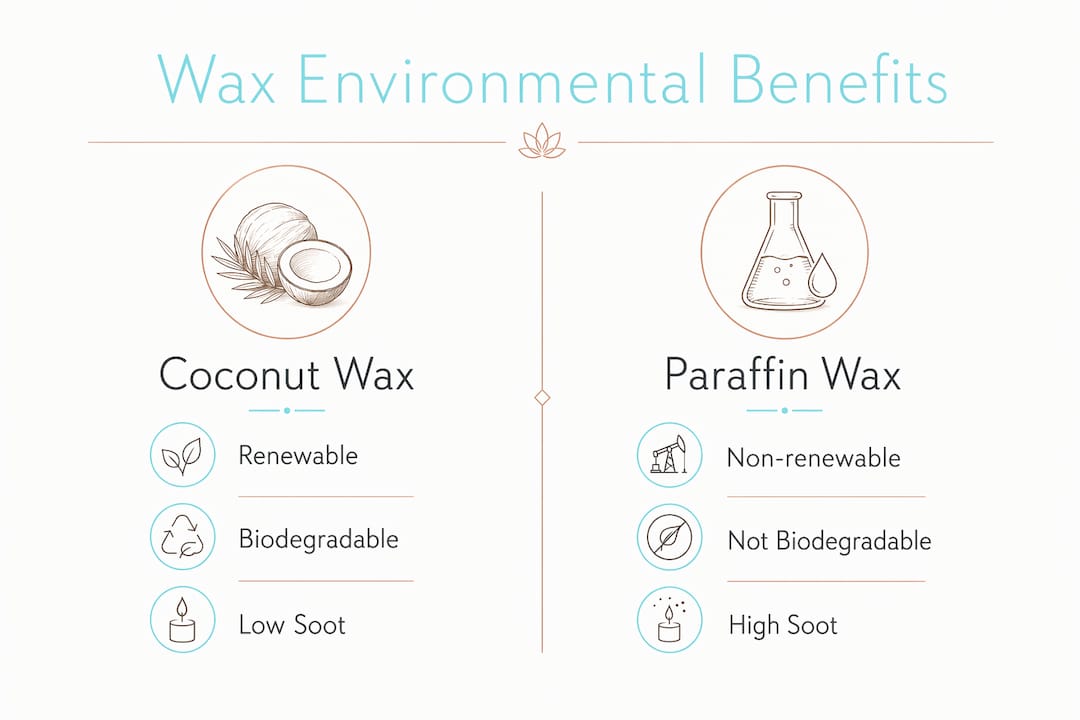
Coconut wax is fully biodegradable and breaks down naturally without leaching harmful chemicals into soil or water. This is a direct contrast to paraffin wax, which originates from petroleum refining and can take centuries to decompose. Paraffin residue in landfills and waterways contributes to long-term chemical pollution in ways that plant-based waxes simply do not.

The biodegradability of coconut wax also extends to candle cleanup. Spilled coconut wax wipes away with warm water and mild soap. Paraffin spills require solvents and often leave permanent stains on fabric and surfaces. That practical difference reflects a deeper chemical reality: coconut wax is fundamentally organic matter, while paraffin is a fossil fuel byproduct.
Coconut wax burns cleaner with significantly less soot and fewer toxins than paraffin. Reduced soot means less black residue on candle jars, walls, and ceilings. More importantly, it means fewer airborne particulates circulating in your home. For people with asthma, allergies, or sensitivities to indoor air pollutants, this distinction is not cosmetic. It is a genuine health consideration.
Pro Tip: Trim your coconut wax candle wick to about a quarter inch before each burn. A shorter wick reduces soot output further and extends the life of the candle.
| Wax type |
Biodegradable |
Soot output |
Toxin emissions |
Decomposition time |
| Coconut wax |
Yes |
Low |
Minimal |
Weeks to months |
| Soy wax |
Yes |
Low to moderate |
Low |
Weeks to months |
| Paraffin wax |
No |
High |
Moderate to high |
Centuries |
The table above makes the environmental gap between coconut wax and paraffin concrete. Soy wax performs similarly to coconut on biodegradability, but coconut wax holds an edge in soot output and scent retention, which is covered in the comparison section below.
How coconut wax is made: production realities and blends
Coconut wax starts as liquid coconut oil. Hydrogenation converts that oil into a stable solid wax without introducing petrochemicals or altering its 100% vegetable nature. The process raises the melting point of the oil so it holds its shape as a candle at room temperature. No synthetic additives are required.
The challenge is that pure coconut wax is naturally soft. Its low melting point makes 100% coconut wax candles prone to warping during shipping and storage, especially in warm climates. This is why most candle makers blend coconut wax with soy wax or beeswax to improve structural stability. A coconut-soy blend, for example, combines the clean burn and scent performance of coconut with the firmer structure of soy.
Blends are not inherently less eco friendly, but they do require scrutiny. A candle labeled “coconut wax” may contain only a small percentage of actual coconut wax, with the remainder being paraffin or synthetic additives. Reading candle ingredient labels carefully is the only reliable way to verify what you are actually burning.
Here is what to check before buying:
-
Full ingredient list: The label should name every wax component, not just the marketing headline.
-
Percentage disclosure: Some brands voluntarily list the ratio of coconut to other waxes. Higher coconut content generally means better eco performance.
-
Fragrance transparency: Phthalate-free fragrance oils or essential oils are the standard for genuinely non-toxic candles.
-
Certifications on the label: Third-party seals should appear on the physical product, not just the brand website.
Coconut wax vs paraffin and other eco friendly wax alternatives
Coconut wax outperforms paraffin on every environmental metric. Paraffin is a petroleum derivative, meaning its production consumes fossil fuels and its combustion releases those stored carbons back into the atmosphere. Coconut wax, by contrast, is carbon-neutral in origin: the coconut palm absorbs CO2 during growth, and burning the wax releases only what the plant originally captured.
Soy wax is the most common eco friendly wax alternative to coconut. It is biodegradable, renewable, and widely available, which keeps its price lower than coconut wax. The trade-off is that most commercial soy wax comes from genetically modified soybeans grown in monoculture systems that rely on herbicides. Soy farming also requires annual tilling, which contributes to soil degradation over time. For plant-based candle choices, coconut wax and soy wax both outperform paraffin, but coconut wax carries a cleaner agricultural profile when responsibly sourced.
Beeswax is natural and burns cleanly, but it is not vegan and its supply is limited by bee colony health and availability. It is not a scalable replacement for paraffin in the broader candle market.
| Wax type |
Renewable |
Biodegradable |
Burn quality |
Scent retention |
Typical cost |
| Coconut wax |
Yes |
Yes |
Excellent |
Excellent |
High |
| Soy wax |
Yes |
Yes |
Good |
Good |
Moderate |
| Beeswax |
Yes (limited) |
Yes |
Excellent |
Low |
High |
| Paraffin |
No |
No |
Moderate |
Good |
Low |
Coconut wax creates a creamy, smooth surface with superior scent throw, which is why premium candle brands favor it. The higher cost reflects both the quality of the material and the more careful sourcing required to keep it genuinely sustainable. For eco-conscious buyers, that premium is the price of integrity. Pairing a quality coconut wax candle with a sustainable cotton or wood wick completes the picture of a truly low-impact candle.
Key takeaways
Coconut wax is the most eco friendly candle wax available because it is renewable, fully biodegradable, and burns without the toxic emissions that define paraffin.
| Point |
Details |
| Renewable at the source |
Coconut palms produce for decades without annual tilling, unlike soy or corn crops. |
| Fully biodegradable |
Coconut wax breaks down naturally without leaching chemicals into soil or water. |
| Cleaner indoor air |
Lower soot and toxin output makes coconut wax the better choice for indoor air quality. |
| Blends are common |
Pure coconut wax is soft, so most candles use coconut-soy blends. Always check the label. |
| Certification is non-negotiable |
USDA Organic or Fair Trade certification confirms the sourcing is genuinely sustainable. |
What I’ve learned from years of choosing coconut wax candles
The eco candle market is full of claims that fall apart the moment you read the ingredient list. I’ve picked up candles at boutiques, farmers markets, and online shops that advertised “coconut wax” in large print, only to find paraffin listed as the second or third ingredient. That experience taught me that the label on the front of a candle is marketing. The ingredient list on the bottom is the truth.
What I genuinely appreciate about coconut wax, beyond the environmental story, is the burn experience. The wax pools evenly, the scent releases steadily rather than in a sharp initial burst, and the jar stays cleaner over the life of the candle. Those are not small things when you are spending real money on a home fragrance product.
My honest advice: stop treating certification as a bonus feature and start treating it as a baseline requirement. A coconut wax candle without a third-party certification is just a claim. The brands worth buying from are transparent about their sourcing, their wax ratios, and their fragrance ingredients. That transparency is not difficult to offer. When a brand withholds it, that tells you something.
Coconut wax’s role in sustainable living is real, but only when the supply chain behind it is held to a standard. Buy from brands that show their work.
— B
Discover Wickandglow’s eco-conscious home fragrances
Wickandglow crafts every candle, diffuser, and room spray with the same intention that makes coconut and soy wax the right foundation: clean ingredients, honest sourcing, and scents that actually last. Each fragrance is inspired by R&B music and comes with a curated playlist, so your home smells and sounds exactly the way you want it to feel.
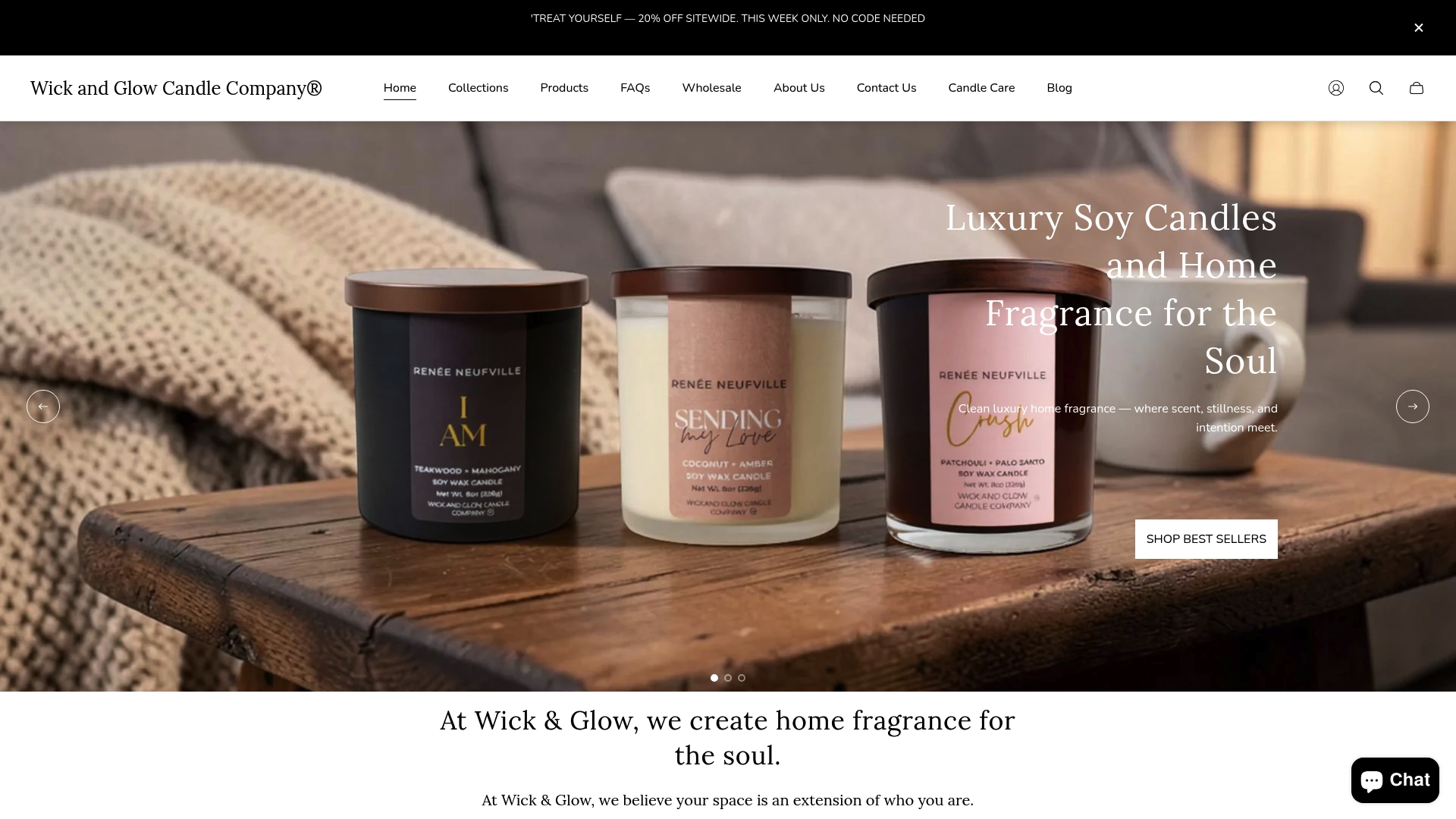
The Home Fragrance Scent Bundle pairs a soy wax candle, a luxury reed diffuser, and a phthalate-free room spray in one set. It is the most complete way to experience what a truly non-toxic, plant-based home fragrance can do. If you want the flameless option, the luxury reed diffuser delivers long-lasting scent without a single burn.
FAQ
What makes coconut wax more eco friendly than paraffin?
Coconut wax comes from a renewable plant source and is fully biodegradable, while paraffin is a petroleum byproduct that can take centuries to decompose. Coconut wax also burns with less soot and fewer toxins, improving indoor air quality.
Is 100% coconut wax candle possible to find?
Pure 100% coconut wax candles exist but are uncommon because coconut wax’s low melting point makes them prone to warping. Most candles use a coconut-soy blend for better structural stability.
How is coconut wax made?
Coconut wax is made by hydrogenating liquid coconut oil into a solid form. The process does not add petrochemicals and preserves the wax’s 100% vegetable composition.
Does sustainable sourcing really matter for coconut wax?
Yes. Large-scale coconut farming can damage ecosystems without proper management. Certifications like USDA Organic and Rainforest Alliance confirm that the sourcing meets genuine environmental and ethical standards.
How does coconut wax compare to soy wax for the environment?
Both are biodegradable and renewable, but coconut palms require no annual tilling, which gives coconut wax a lower soil disruption impact than soy. Coconut wax also produces less soot and holds fragrance more effectively.
Recommended


