Candle placement for maximum scent is the practice of positioning candles in specific spots within a room to get the most fragrance diffusion, the best ambiance, and the safest burn. Where you set a candle matters as much as what’s inside it. A beautifully crafted candle tucked behind a stack of books or sitting next to an air vent will underperform every time. The industry term for how well a candle releases its fragrance into a room is “scent throw,” and placement is one of the biggest variables that controls it. Get the location right, and even a modest candle fills a room with presence.
How does room size and airflow affect candle scent?
Room volume is the first variable to get right. Matching candle size to room square footage creates optimal scent throw. A small single-wick jar works beautifully in a bathroom or bedroom, but it will disappear in an open-plan living room. For larger spaces, multiple candles spaced across the room outperform one large candle placed in a single spot.
Airflow is the silent enemy of scent throw. Drafts and constant airflow steal fragrance molecules before they can build up in the room. Even a strong candle can feel faint when it sits near an open window or an HVAC vent. The moving air carries scent out of the space faster than the candle can replace it.
Here is what to avoid when choosing a spot:
- Air conditioning vents and ceiling fans directly above or beside the candle
- Open windows or exterior doors that create cross-breezes
- Hallway intersections where air moves constantly between rooms
- Spots near kitchen exhaust fans that pull air outward
Positioning candles away from vents and open doors avoids scent loss and uneven burning. Uneven burning also shortens candle life, so this tip protects your investment as much as your fragrance experience.
Pro Tip: Close interior doors for the first 30 minutes of a burn. This lets scent molecules concentrate in the space before you open the room up, creating a noticeably stronger first impression.
What surfaces and elevation work best for candle placement?
Surface choice affects both safety and how far scent travels. Candles placed on stable, non-flammable surfaces such as stone, metal, or ceramic maximize safety and scent dispersion. These materials do not absorb heat the way wood or fabric can, and they keep the candle steady throughout the burn.
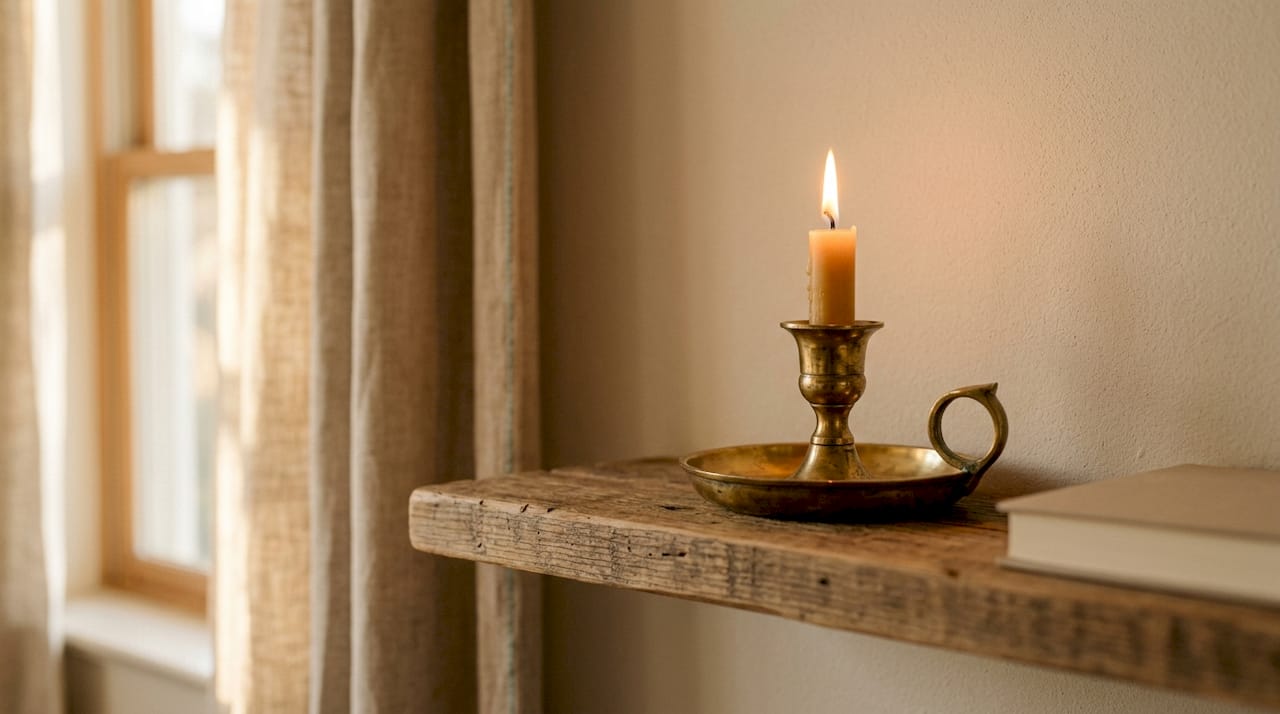
Elevation changes everything. Placing candles at nose height on shelves, mantels, or raised surfaces improves fragrance circulation because warm scented air rises naturally. A candle sitting on the floor or a low coffee table sends most of its fragrance upward and away from the breathing zone of anyone seated in the room.
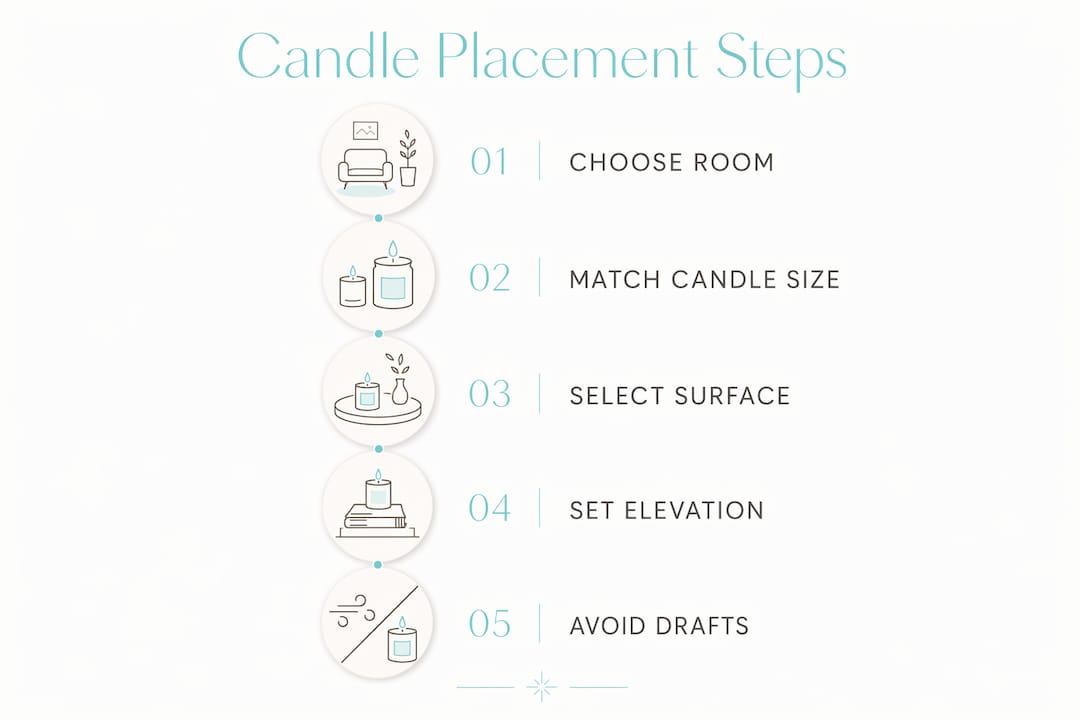
The surface finish also shapes the mood. Reflective surfaces like glass and mirrors amplify candle glow but can create a theatrical effect if overused. Pairing a glass holder with a matte tray or linen runner softens the look and keeps the ambiance warm rather than dramatic.
Placement spots to avoid on any surface:
- Hidden corners or behind tall decor that traps scent in a pocket
- Windowsills where sunlight can warp wax and drafts reduce throw
- Unstable surfaces like stacked books or uneven shelving
- Surfaces within 1 foot of curtains, paper, or other flammable materials
Pro Tip: If you love crystal accents as part of your decor, use them as a base layer around candle holders. They add visual weight, keep holders stable, and reflect light beautifully without blocking airflow.
Room-by-room candle placement strategies
Each room in your home has a different function, a different volume, and a different relationship with airflow. The best candle placement adapts to all three.
-
Entryways and hallways. Place one medium candle on a console table at chest height. Entryways are the first impression of your home’s scent, so choose a welcoming fragrance. Keep it away from the front door itself to avoid draft interference.
-
Living rooms. Use a central coffee table or mantel as your anchor point. For large or open-plan living areas, multiple smaller candles spaced 6–10 feet apart create even, layered scent coverage far better than one oversized candle. Group candles in odd numbers for visual balance.
-
Bedrooms. Dresser tops and bedside tables at nose height work well. Choose gentle, calming scents like sandalwood, amber, or light florals. Avoid placing candles directly on fabric nightstands without a protective ceramic or stone base.
-
Bathrooms. The sink ledge or a corner shelf near the tub are ideal spots. Bathrooms are small and enclosed, so a single-wick candle is usually enough. The natural humidity in the room actually helps carry scent molecules through the air.
-
Dining rooms. Use unscented or very lightly scented candles here. Scented candles near food interfere with how guests perceive the meal. Save the fragrance for before or after dinner, not during.
| Room |
Candle size |
Best surface |
Scent strength |
| Entryway |
Medium |
Console table |
Moderate |
| Living room |
Multiple small |
Coffee table, mantel |
Layered |
| Bedroom |
Small |
Dresser, bedside table |
Gentle |
| Bathroom |
Small single-wick |
Shelf, sink ledge |
Light |
| Dining room |
Unscented |
Table centerpiece |
None or minimal |
Pairing candles with a luxury reed diffuser in adjacent spaces extends your scent story from room to room without relying on open flames in every corner.
Common mistakes that reduce scent and safety
Most candle placement problems come down to a handful of repeatable errors. Knowing them saves you from weak fragrance and wasted wax.
-
Placing candles in direct drafts. Vents and breezes cause uneven burning, which tunnels the wax and traps fragrance in the unmelted pool around the edges.
-
Clustering candles too close together. Avoid clustering candles to prevent overwhelming walls of scent. Strategically spaced candles enhance ambiance without overpowering the senses.
-
Hiding candles behind decor. A candle tucked behind a vase or picture frame traps its scent in a pocket. The fragrance never reaches the center of the room.
-
Ignoring wick condition. Wick size directly impacts scent throw. A wick that is too small melts wax unevenly and traps fragrance. A wick that is too large burns fragrance too hot and degrades the aroma. Trim your wick to about 1/4 inch before every burn.
-
Mismatching candle size to room volume. A small candle in a large room will never fill the space, no matter how well you position it.
Scent throw is not just about the candle. It is about the relationship between the candle, the room, and the air moving through it. Fix the environment first, then choose your fragrance.
Understanding how candle wick size affects scent throw is one of the fastest ways to diagnose why a candle underperforms, even when placement is correct.
How do you test and adjust candle placement?
Finding the best spot in your specific home takes a little experimentation. No two rooms behave the same way, and seasonal changes in ventilation shift the conditions throughout the year.
-
Start with a baseline burn. Light the candle in your first chosen spot and let it burn for 45 minutes. Walk to the far corners of the room and note where the scent is strongest and where it fades.
-
Move and compare. Shift the candle to a different surface or elevation and repeat the test on a separate day. Keep a simple note on your phone: location, surface height, and scent reach.
-
Test in the evening. Candle scent effectiveness is best judged in the evening when ambient lighting and household activity reflect real conditions. Morning light misleads placement decisions because the room temperature, humidity, and air movement are all different.
-
Adjust candle count for room changes. If you rearrange furniture or open up a wall, reassess your placement. A sofa moved to block a doorway changes how air flows through the room and where scent collects.
-
Layer scents intentionally. Combining a candle with a room spray or diffuser in the same scent family deepens the fragrance experience. Learning how to layer candle and room spray prevents competing notes from clashing and creates a cohesive atmosphere.
Pro Tip: Burn a new candle for at least 2 hours on the first use. This creates a full melt pool across the surface and prevents tunneling, which permanently limits scent throw on every future burn.
Key Takeaways
Effective candle placement combines draft-free positioning, nose-height elevation, and room-matched candle sizing to maximize scent throw and create a genuinely inviting atmosphere.
| Point |
Details |
| Match size to room |
Use small single-wick candles in bathrooms and bedrooms; use multiple candles in large living areas. |
| Avoid drafts and vents |
Keep candles away from AC vents, fans, and open windows to prevent scent loss and uneven burning. |
| Elevate to nose height |
Place candles on mantels, shelves, or raised surfaces so warm scented air circulates at breathing level. |
| Space candles evenly |
Position multiple candles 6–10 feet apart to layer scent without creating an overwhelming concentration. |
| Test in the evening |
Evaluate placement at night when lighting and air conditions best reflect how the candle performs in real use. |
What I’ve learned from years of placing candles at home
The advice I see repeated most often is to place candles where they look good. That is not wrong, but it misses the point. A candle that looks beautiful on a low shelf behind a stack of art books is doing almost nothing for the room’s fragrance. I learned this the hard way after spending real money on quality candles that I could barely smell from across the room.
The shift that changed everything for me was evaluating placement in the evening, not during the day. Professional stylists recommend assessing candle placement in the evening when ambient conditions best reflect how scent and atmosphere actually land. Daytime testing is almost useless because the light, the air temperature, and the household activity are completely different from when you actually want the candle to perform.
I also stopped treating reflective surfaces as purely decorative. A mirrored tray under a candle bounces light beautifully, but pairing it with a matte linen runner keeps the glow warm instead of sharp. That balance between reflective and matte is something most people never think about, and it changes the entire mood of a room.
The candles I return to most are the ones that create ritual atmosphere at home. Placement is part of that ritual. Choosing the right spot, trimming the wick, closing the door for the first half hour. These small habits compound into a fragrance experience that a randomly placed candle never delivers.
— B
Wickandglow candles worth placing with intention
Placement strategy only works when the candle itself is worth placing. Wickandglow builds each fragrance around a specific feeling, not just a scent note, which makes choosing the right candle for the right room a genuinely different experience.
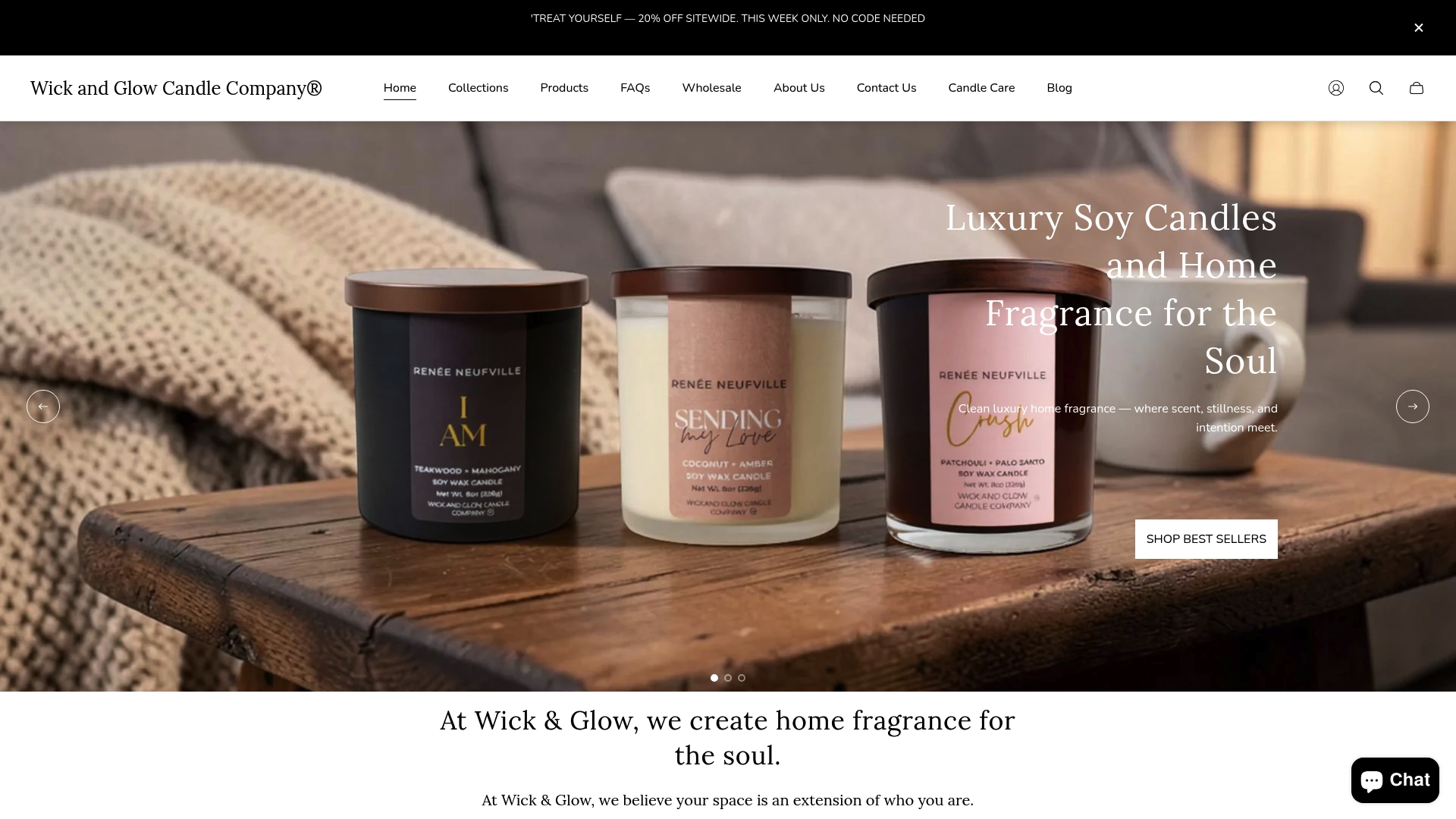
The Men Love Candles Too collection offers warm, grounded fragrances that perform well in living rooms and home offices where you want presence without sweetness. For anyone building a layered scent experience across multiple rooms, the Scenting My Love Trio gives you three complementary candles designed to work together. Wickandglow also publishes a full candle care guide covering wick trimming, burn times, and storage, so your placement strategy stays effective from the first burn to the last.
FAQ
What is the best candle placement for maximum scent?
Place candles at nose height on stable, non-flammable surfaces away from drafts, vents, and open windows. Elevated spots like mantels and shelves allow warm scented air to circulate at breathing level, which maximizes fragrance reach.
How many candles do I need for a large room?
Multiple smaller candles spaced 6–10 feet apart provide better scent coverage in large rooms than one big candle. Even distribution prevents scent from concentrating in one spot and creates a layered fragrance effect.
Should I use scented candles in the dining room?
Unscented or very lightly scented candles are best for dining rooms. Strong fragrances interfere with food aromas and can make the meal less enjoyable for guests.
Why does my candle smell weak even in a good location?
Weak scent throw often comes from wick problems, not placement. A wick that is too small traps fragrance in unmelted wax, while a wick that is too large burns the scent off too quickly. Trim the wick to 1/4 inch before every burn.
When is the best time to evaluate candle placement?
Test candle placement in the evening when household lighting, temperature, and activity levels match the conditions you actually want the candle to perform in. Morning evaluations mislead because the environment is too different from your real use case.
Recommended


