An energizing fragrance profile is built around bright, volatile top notes, mainly citrus, mint, and green accords, paired with formulation choices that keep that lift from fading fast. It’s not just about smelling “fresh.” It’s about which molecules hit your nose first and how the rest of the composition holds that brightness in place. Here’s your quick checklist:
-
Dominant note families: citrus (bergamot, grapefruit, lemon), herbal/green (rosemary, basil), or aquatic/ozonic accords lead the scent.
-
Trigeminal accents present: peppermint, eucalyptus, or menthol add a cooling, almost tingly sensation, not just an aroma.
-
Sparkle modifiers: aldehydes or hedione show up in the ingredient list, adding fizz and diffusion.
-
Projection signal: the scent reads “loud” for the first 20 to 30 minutes, then settles rather than vanishing outright.
-
Setting matters: what energizes on skin (a perfume worn close to the body) behaves differently than what energizes a room (a candle or diffuser pushing scent through open air).
Key Takeaways
An energizing fragrance profile depends on volatile top notes like citrus and mint working alongside fixatives and musks that keep the lift from collapsing too fast.
| Point |
Details |
| Identify the note families first |
Look for citrus, mint, herbal green, or aquatic notes listed near the top of the description. |
| Trigeminal notes add sensation, not just smell |
Menthol and eucalyptus create a physical cooling effect distinct from ordinary odor perception. |
| Structure determines longevity |
A scent needs anchoring base notes or it fades into flatness after the top notes burn off. |
| Match format to setting |
Perfume interacts with skin chemistry; candles and diffusers depend on heat throw and airflow instead. |
| Treat marketing claims skeptically |
Proprietary “energy boost” percentages on product pages are marketing claims, not independent research. |
Table of Contents
Key Scent Notes That Create an Energizing Effect
Walk into any fragrance counter and the “energizing” shelf tends to smell like a farmers market crossed with a spa. That’s not an accident. A handful of note families show up again and again because they physically behave in ways that read as bright and quick.
Citrus notes (lemon, bergamot, grapefruit, orange) are the backbone. They’re highly volatile, meaning their molecules evaporate fast and hit your olfactory receptors within seconds of application. That speed is exactly what makes them feel immediate. Minty and herbal accents (peppermint, eucalyptus, menthol) go further than smell. They trigger a physical cooling sensation on the skin and inside the nasal passage, which the brain interprets as alertness. Green notes like rosemary and basil add a sharp, slightly bitter clarity that keeps a citrus-heavy blend from turning too sweet or fruity. Aldehydes and hedione are synthetic aromachemicals that add sparkle and lift, the “champagne fizz” effect perfumers reach for when a blend needs movement without adding more citrus. Aquatic or ozonic notes round things out with a crisp, just-rained-on quality.
Fragrance description guides commonly group orange, lemon, grapefruit, peppermint, and rosemary together under energizing or invigorating labels, which is a useful shortcut when you’re scanning a product page and trying to figure out what you’re actually buying.
- Citrus: lemon, bergamot, grapefruit, orange
- Minty/trigeminal: peppermint, eucalyptus, menthol
- Herbal/green: rosemary, basil, green leaf accords
- Sparkle: aldehydes, hedione
- Aquatic/ozonic: marine and rain accords
How Energizing Scents Interact With Your Senses
Two separate systems are doing the work here, and most people only know about one of them. The first is your olfactory system, the classic sense of smell, which routes signals almost directly to the limbic system, the brain region tied to mood and memory. That’s why a whiff of citrus can shift your mood before you’ve consciously registered what you smelled. Wickandglow has written about this connection between fragrance and home atmosphere in more depth if you want the fuller picture.
The second system is trigeminal stimulation, and it’s the one people usually don’t know by name. Menthol, eucalyptol, and similar molecules activate nerve endings in your nose and skin that register temperature and physical sensation, not just odor. That’s the cooling “buzz” you feel from peppermint that has nothing to do with actual temperature. It’s a physical sensation layered on top of a smell.
Functional fragrance brands increasingly lean on neuroscience-based testing like MRI and EEG to measure mood-linked brain responses, but that doesn’t mean every “energizing” product on the shelf has been through that kind of testing.
Worth remembering:
- Top notes create fast, noticeable lift because they’re the most volatile part of the blend.
- That lift is real, but it’s a sensory response, not a guaranteed mood transformation.
- Treat bold “boosts your energy” claims with a healthy dose of skepticism until you’ve smelled the thing yourself.
Why Fragrance Structure Determines How Long the Energy Lasts
Every fragrance moves through three phases: top, heart, and base. Top notes are the volatile citrus and mint molecules that hit first and fade within 15 to 30 minutes. Heart notes, often florals or spices, bridge the gap. Base notes, the woods, musks, and resins, anchor everything and determine how long the scent lasts overall. An energizing profile needs deliberate “movement” across all three phases, or it turns into a bright opening that collapses into something flat and forgettable an hour later.
Here’s how perfumers typically manage that:
-
They anchor volatile openers with modern musks or wood synthetics so the lift doesn’t evaporate along with the top notes.
-
They balance projection with fixatives that slow evaporation just enough to keep citrus and mint perceptible longer.
-
They choose fragrance oils over single essential oils for consistency, since formulated fragrance blends generally diffuse more evenly and last longer than pure essential oils in home applications.
Pro Tip: Check the product description for words like “anchored,” “grounded with musk,” or “sustained diffusion.” Those phrases usually signal a formula built to hold its energy, not just flash it in the first ten minutes.
Choosing an Energizing Scent: Perfume vs. Home Fragrance
Skin and air behave completely differently, so the same “energizing” label doesn’t mean the same thing on a wrist versus in a candle.

For perfume, your skin chemistry, body heat, and pH all interact with the oils, which is why a citrus scent that smells sharp on a blotter can turn softer and warmer on your skin within minutes. For home fragrance (candles, diffusers, sprays), there’s no skin chemistry involved at all. What matters is heat throw from a wick or airflow from a diffuser, and how evenly the scent fills a room without turning overpowering.
Match the note family to the setting:
-
Morning routine: citrus-forward perfume or a light room spray near the bathroom or kitchen.
-
Home office: rosemary or green notes in a diffuser, since they read as clarifying rather than sweet.
-
Post-workout: eucalyptus or peppermint in a spray, used sparingly.
-
Kitchen or entryway: aquatic or citrus candles, which read as clean without competing with cooking smells.
Pro Tip: Before buying, test a skin strip for perfume or run a diffuser for 20 minutes in a closed room for home scents. Peppermint and eucalyptus can feel intense in small, enclosed spaces, so ventilate or scale back the dose if anyone in the room is sensitive to strong trigeminal notes.
Note Pairings and Combinations Worth Trying
If you want a shortcut past trial and error, these combinations show up again and again in energizing formulas for a reason:
-
Bergamot + rosemary + hedione for a bright, herbal perfume that reads sophisticated rather than sporty.
-
Grapefruit + peppermint + cashmere wood for a home candle that stays crisp without turning medicinal.
-
Lemon + basil + light musk for a diffuser blend suited to a home office or study space.
-
Orange + eucalyptus + white amber for a spray meant for post-workout or bathroom use.
When translating a perfume note pairing to a candle or diffuser, keep intensity in mind. Too much menthol turns invigorating into overwhelming fast.
How Wickandglow Builds Energizing Home Fragrance
Wickandglow pairs each scent with a curated playlist, treating fragrance and music as two tools working toward the same mood rather than separate products. That approach shows up directly in formulation choices, not just marketing copy.
- Every candle, diffuser, and spray is made with clean, vegan, phthalate-free ingredients, so an energizing blend doesn’t come with a chemical trade-off.
- Collections are built around specific emotional targets, giving you a template for how citrus, green, and musk notes can work together in a finished product rather than a theoretical list.
- Wickandglow’s own guide to scent profiles and its piece on building a signature home scent that lasts both dig into the atmosphere effects and intensity questions covered above.
The Exhale candle from Wickandglow’s collection is a practical example of these principles applied to a finished product, built with brightening top notes anchored by a grounded base so the lift doesn’t burn off in the first hour. If you’re shopping for a gift instead of a single scent, the Scenting My Love Trio demonstrates how curated note pairings work across multiple formats at once. And if you want to feel the difference between a flat citrus candle and one designed with actual movement across its phases, the Can We Talk candle is worth putting next to a cheaper alternative side by side.
What the Research Actually Supports
Most advice on energizing scents treats “citrus and mint” as the whole answer, and that’s where it falls short. The note list matters, but it’s the least interesting part of the story. What actually separates a scent that feels alive an hour in from one that goes flat is the structural work happening underneath: the fixatives, the musks, the deliberate anchoring of volatile top notes so they don’t just flash and disappear.
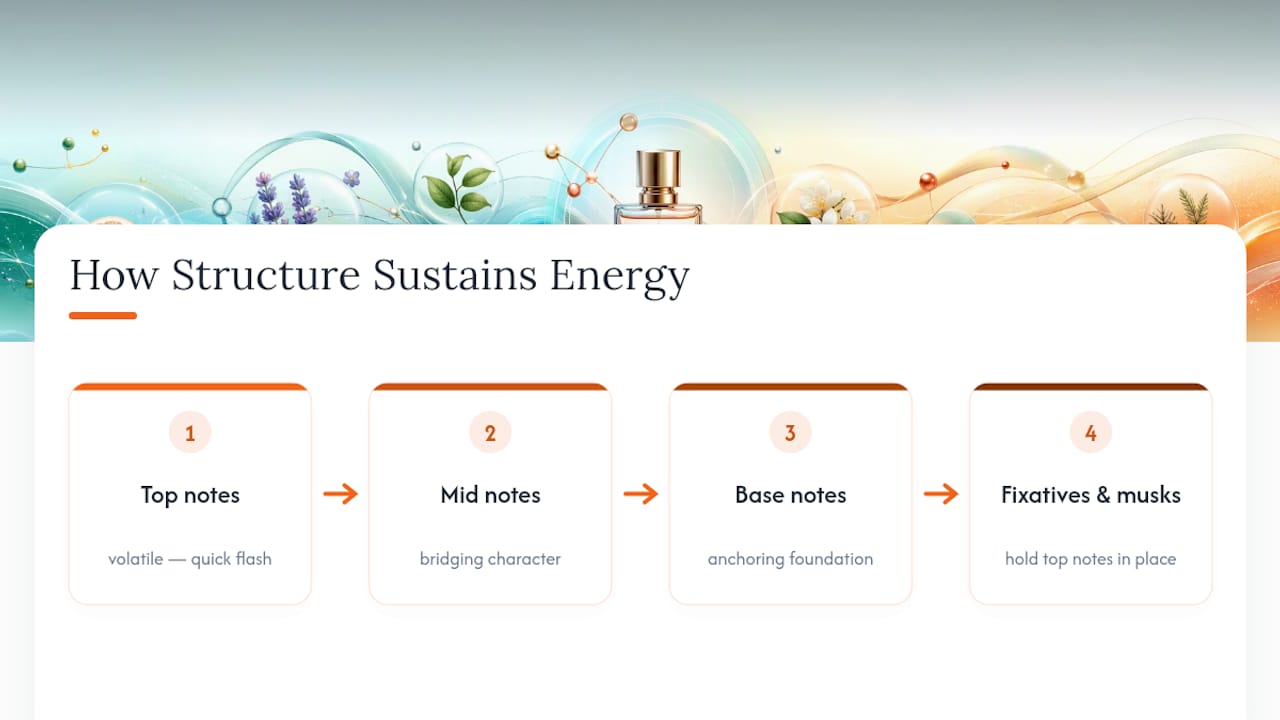
The industry’s own marketing habits don’t help. Functional fragrance brands love citing neuroscience testing, and some of that research is real, but plenty of “energizing” labeling is just citrus notes with confident copywriting attached. If you take one thing from this guide, prioritize structure over note names. Ask what’s holding the top notes in place, not just what they are. A grapefruit candle with no anchoring base will smell like nothing by hour two, no matter how bright it opened.
Recommended


