Fragrance intensity is the perceived strength of a scent, driven mainly by the percentage of aromatic material in the formula, known as its concentration. That single ratio shapes almost everything else you notice about a scent.
- Concentration ranges run from low percentages in a body mist to higher percentages in an extrait or parfum.
- Higher concentration usually means longer wear and a stronger presence in the air around you.
Key Takeaways
Fragrance intensity comes down to aromatic concentration interacting with volatility, application, and room conditions to shape sillage, projection, and longevity.
| Point |
Details |
| Concentration drives strength |
Parfum/extrait has high oil concentration, while body mist has low concentration, shaping both intensity and wear time. |
| Three effects, not one |
Projection, sillage, and longevity are separate outcomes that concentration influences but doesn’t fully control. |
| Test before you commit |
Use blotter and skin patch tests across 30 seconds, 10 minutes, and 2 hours to see how a scent actually evolves. |
| Room size dictates intensity |
Larger, open rooms handle stronger fragrance loads; small bathrooms and bedrooms need gentler formulas. |
| Wick & Glow matches load to room |
Their candles, diffusers, and sprays are built with deliberate fragrance load and clean ingredients, with sample sizes like the Scenting My Love Trio for testing intensity firsthand. |
Table of Contents
What Does Fragrance Intensity Mean at the Chemical Level?
Concentration is the percentage of aromatic oils dissolved into a carrier, typically denatured alcohol for personal fragrance or a wax/oil base for candles and diffusers. That number on the back of the bottle, or the fragrance load a candle maker lists, is doing more work than most shoppers realize.
A formula with a higher oil percentage reads richer the moment it hits skin or air, and it keeps developing over hours instead of flattening out after twenty minutes. A low-concentration spray gives you a quick, bright burst that fades fast. A high-concentration extrait unfolds slower, but it lingers.
This is why concentration and longevity move together, though not in a straight line. According to Perfumer’s Apprentice’s concentration guide, concentration directly influences strength, sillage, projection, and longevity, but it does so alongside the carrier and the specific oils used. Two products with identical percentages can still smell completely different in strength, which is where the categories below become useful shorthand rather than gospel.
Fragrance Strength Definition by Concentration Tier
The industry sorts fragrance strength into rough tiers, and once you know them, reading a label gets a lot easier. None of these names are legally standardized, so one brand’s eau de parfum can run stronger than another brand’s extrait. Think of the ranges below as a starting point, not a guarantee.
-
Parfum/extrait: a high concentration of aromatic oils, often lasting many hours, per Alexandria UK’s breakdown of perfume concentrations.
-
Eau de parfum (EDP): a moderate to high concentration, typically wearing for several hours.
-
Eau de toilette (EDT): around 5–15%, usually lasting 2 to 4 hours.
-
Eau de cologne: a light concentration with short wear time.
-
Body mist/eau fraîche: the lightest concentration with brief longevity.
These ranges come from trade references like Everfumed’s guide to fragrance concentrations, and they’re consistent enough across the industry to trust as a general map. Just don’t treat any single percentage as an exact promise from a specific bottle.
How Intensity Shapes Sillage, Projection, and Longevity
These three words get used interchangeably, and that’s a mistake. Projection is how far a scent reaches from your skin or from a lit candle right now. Sillage is the trail it leaves as you move through a room. Longevity is simply how long you or anyone else can detect it at all.
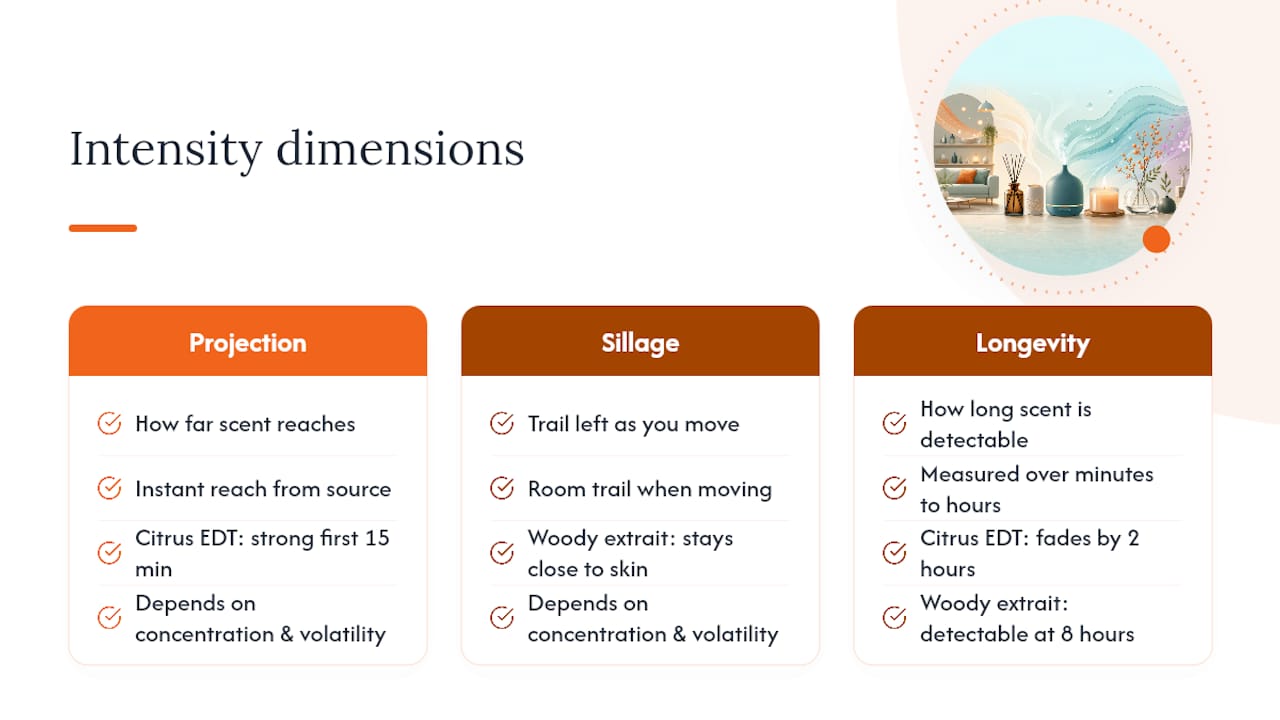
Concentration influences all three, but it doesn’t control any of them alone. ScentGrail’s guide to fragrance strengths separates these terms precisely because concentration interacts with note volatility to produce very different real-world results.
Here’s a contrast worth remembering: a citrus-heavy EDT with a high alcohol content can throw a big, bright projection in the first fifteen minutes, then all but disappear by hour two. A woody, resin-based extrait might stay close to the skin the whole time, barely projecting past arm’s length, yet still be detectable at hour eight. Neither is “more intense” in some absolute sense. They’re intense in different ways, at different distances, for different lengths of time. Perfumer perspectives cited by Vogue on the trend toward intense formulations make a similar point: strength on its own isn’t the goal, balance is.
What Affects Fragrance Intensity Beyond the Percentage
Two products with the same concentration can feel wildly different in strength. Several other variables are doing quiet work behind the scenes.
-
Raw material quality: cheaper synthetic notes often fade faster than well-sourced naturals or high-grade aromachemicals.
-
Note volatility: top notes like citrus evaporate quickly, while base notes like musk or resin linger and build.
-
Application amount: more product means more surface area releasing scent molecules.
-
Surface: fabric holds scent longer than skin because it doesn’t have body heat pushing molecules away as fast.
-
Room size and ventilation: a small, sealed bathroom concentrates scent; an open living room disperses it.
-
Skin chemistry: oilier skin tends to amplify and extend wear compared to drier skin.
Understanding Fragrance Intensity for Candles, Diffusers, and Sprays
Home fragrance uses its own version of the concentration conversation. Candles and diffusers list a fragrance load, the percentage of scent oil blended into wax or diffuser base, and that number behaves a lot like the parfum-to-mist scale above. A candle with a low fragrance load might look pretty but barely scent an empty room. One with a well-balanced high load can fill a space without turning cloying, which is part of why higher-concentration formulas often cost more across the fragrance industry generally, home products included.
Room size should guide your intensity choice. A large, open living room can handle a strong-throw soy candle or a bold reed diffuser without overwhelming anyone. A small bathroom or bedroom usually calls for something gentler, since scent has nowhere to disperse. If you’re deciding how to choose scents for each room in your home, intensity is the first variable to solve for, before you even think about the actual scent family.

Wick & Glow builds each candle, diffuser, and room spray around clean, vegan, phthalate-free ingredients specifically so intensity comes from real aromatic material and thoughtful fragrance load, not filler.
Pro Tip: If a candle smells too faint after burning for the recommended time, the wick size or wax type is probably underperforming the fragrance load, not the scent itself.
How to Test a Fragrance’s Real Intensity
A single sniff off the shelf tells you almost nothing. Real intensity reveals itself over time.
- Smell a paper blotter at 30 seconds, then again at 10 minutes, then at 2 hours to track how the scent evolves.
- Apply a small patch on skin and repeat the same timing, since skin chemistry changes the result versus paper.
- For candles or sprays, test in the actual room size you plan to use them in, not a hallway or store display.
- Note whether the scent projects outward immediately (strong opening) or builds slowly (better for longevity).
- Buy a sample size first. Fragrance educators recommend tracking a scent across a full wear cycle before committing to a full bottle or a multi-candle set.
Fragrance Strength Definition: Quick Label Glossary
-
Extrait/parfum: highest concentration, longest wear.
-
Eau de parfum (EDP): strong middle ground, the most common retail favorite.
-
Eau de toilette (EDT): lighter, faster-fading, good for daily wear.
-
Eau de cologne: light and brief, often citrus-forward.
-
Eau fraîche/body mist: lightest tier, minimal oil content.
-
“Intense” or “elixir”: usually a richer version of an existing formula, but not a regulated term, so treat it as a marketing signal rather than a guaranteed percentage.
How I Actually Pick Intensity for a Room
I ask four questions before choosing anything: What’s the room, what time of day will it burn, who’s going to be there, and what mood am I setting? A bold, spicy candle suits a Saturday night with friends in an open kitchen. Something quieter fits a Tuesday morning bedroom. Wick & Glow’s playlists and scent pairings make that decision almost automatic, since each fragrance is already built around a specific feeling.
Try Wick & Glow’s Intensity-Matched Home Scents
Once you know your ideal fragrance load, the next step is finding products that actually deliver it without guesswork. Wick & Glow builds every candle, diffuser, and spray around a deliberate fragrance load, so a “strong throw” candle really fills a living room and a lighter spray really stays subtle in a bedroom, all without synthetic filler or phthalates.
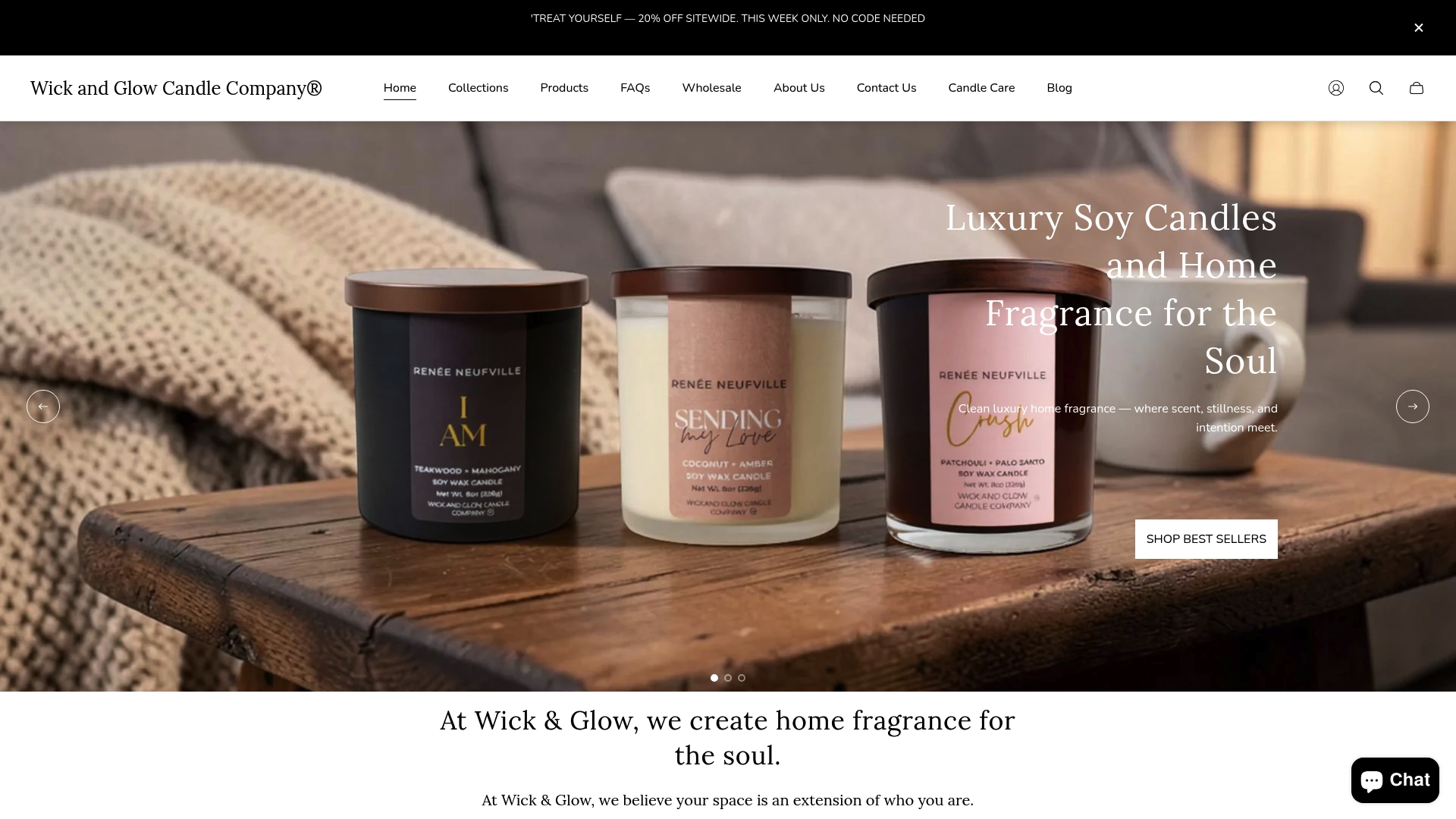
If you’re still narrowing down your preferred intensity, the Scenting My Love Trio lets you test three different strengths side by side before committing to a full-size candle. For readers who already know they want bold, long-lasting presence in a bigger room, the Men Love Candles Too collection leans into stronger, richer fragrance loads built for exactly that. Start with a trio, note which intensity actually holds up in your space after a few hours, then build your collection from there.
Frequently Asked Questions
What does fragrance intensity mean in simple terms?
It means how strong a scent feels to you and to people around you, driven mostly by the percentage of aromatic oils in the formula, plus factors like note type and application.
How to measure fragrance intensity at home?
Test on a blotter and on skin at 30 seconds, 10 minutes, and 2 hours, then repeat in the actual room where you’ll use a candle, diffuser, or spray to judge real projection and longevity.
Is fragrance strength the same as fragrance intensity?
Largely yes. Fragrance strength usually refers to the same concept, the perceived power of a scent, and both terms trace back to concentration and formula quality.
What affects fragrance intensity besides concentration?
Note volatility, raw material quality, how much you apply, the surface it lands on, room size and ventilation, and your own skin chemistry all change how strong a scent feels.
Does higher concentration always mean a better fragrance?
No. Perfumers note that composition and balance matter as much as raw oil percentage, so a well-blended lower concentration can outperform a poorly balanced high one.
Sources
Recommended


