Clean candle waxes are plant-based or natural waxes that burn without releasing petroleum-derived soot, carcinogens, or synthetic byproducts into your home’s air. The four most recognized types of clean candle waxes are soy wax, beeswax, coconut wax, and rapeseed wax. Each carries a distinct chemical profile, fragrance capacity, and environmental footprint. If you’ve been standing in a store wondering which waxes are clean and which are just marketed that way, this guide cuts through the noise.
1. What makes a candle wax “clean”
The industry term for this category is natural wax, though “clean wax” has become the consumer shorthand for any wax free of petroleum derivatives and harmful additives. The cleanliness of a wax comes down to three criteria: its raw material source, what it releases when burned, and how it’s processed.
Paraffin wax fails all three. Paraffin is petroleum-derived and produces carcinogenic soot when burned, making it the benchmark for what clean wax alternatives are designed to replace. That soot coats walls, lingers in your lungs, and degrades indoor air quality over time.
Clean waxes, by contrast, come from renewable plant or animal sources. They produce minimal soot, biodegrade naturally, and leave no petrochemical residue. Sustainability of the raw material matters too. A wax sourced from a crop that depletes soil or requires heavy pesticide use is cleaner than paraffin but still carries an environmental cost.
-
Source: Plant-based (soy, coconut, rapeseed) or animal-based (beeswax)
-
Combustion: Low soot, no known carcinogenic emissions
-
Processing: Minimal chemical refining, no synthetic hardeners
-
Biodegradability: Breaks down naturally after use
Pro Tip: Wick trimming and fragrance load affect soot emissions more than wax type alone. Keep your wick trimmed to 1/4 inch before every burn for the cleanest possible flame.
2. Soy wax
Soy wax is the most widely available eco-friendly candle wax on the market, made by hydrogenating soybean oil into a solid form. Its melting point sits between 49 and 82°C, giving it structural stability across most room temperatures. That range makes it practical for container candles, where a moderate melt pool is desirable.

Soy wax holds fragrance oils well, which is why it dominates the scented candle market. It burns slower and cooler than paraffin, extending the life of the candle. The tradeoff is cosmetic: soy wax is prone to frosting (a white crystalline layer on the surface) and wet spots against glass, neither of which affects burn quality but can look less polished.
For consumers prioritizing plant-based candles for a healthier home, soy wax is the most accessible starting point. It’s affordable, widely certified, and pairs well with both synthetic and natural fragrance oils.
3. Beeswax
Beeswax is the oldest candle material in recorded history and the only animal-derived wax in the clean category. Its chemical makeup is approximately 71% long-chain esters and 14% hydrocarbons, which gives it a naturally warm, honey-like scent that no synthetic fragrance fully replicates.
The high melting point of beeswax, between 62 and 65°C, produces one of the longest burn times of any natural wax. That density also means it holds its shape well in pillar and taper formats without additives. The downside is fragrance capacity. Beeswax does not hold added fragrance oils as effectively as soy or coconut wax blends, making it the best choice for unscented or lightly scented candles rather than heavily fragranced ones.
Cost is the other limiting factor. Beeswax commands a premium price because of the labor-intensive harvesting process. It’s also not vegan, which matters to a growing segment of eco-conscious consumers. For those who want a pure, natural burn with minimal fragrance complexity, beeswax delivers an unmatched experience.
4. Coconut wax
Coconut wax is pressed from the meat of coconuts and is the softest of all plant-based wax options, with a melting point between 39 and 49°C. That low melting point produces a wide, even melt pool that releases fragrance more efficiently than harder waxes. The result is a stronger scent throw, which is why coconut wax has become the premium choice for luxury candle brands.
The creamy, white appearance of coconut wax also gives finished candles a high-end aesthetic that photographs well and feels intentional. However, pure coconut wax is too soft to stand alone in most candle formats. In warm rooms, it can melt unevenly or lose structural integrity entirely. This is why most coconut wax candles are blended with soy or another harder wax to balance performance.
Coconut wax is sustainably sourced from a fast-growing crop with a lower environmental impact than many alternatives. The price point reflects its premium status. If strong fragrance throw and a luxurious look are your priorities, a coconut-soy blend is the most practical way to access coconut wax’s best qualities.
5. Rapeseed wax
Rapeseed wax is the emerging clean wax alternative gaining traction in Europe and increasingly in North America. It’s derived from the rapeseed plant (the same crop that produces canola oil) and is 100% vegan and plant-based, with a shorter supply chain for European consumers than imported soy or coconut wax.
What sets rapeseed wax apart technically is its adhesion to glass. It bonds to jar walls more consistently than soy wax, reducing the side gaps and tunneling that frustrate candle buyers. The finish looks cleaner, and the burn tends to be more even across the life of the candle.
Rapeseed wax also holds fragrance oils well and produces a smooth, matte surface finish. Its sustainability credentials are strong: the crop grows in temperate climates, requires fewer food miles than tropical waxes, and is biodegradable. For consumers who care about supply chain transparency alongside clean burning, rapeseed wax is worth seeking out.
6. Comparing the best candle wax types
Understanding how these waxes stack up side by side makes the choice clearer.
| Wax Type |
Melting Point |
Fragrance Hold |
Vegan |
Best For |
| Soy wax |
49–82°C |
Strong |
Yes |
Scented container candles |
| Beeswax |
62–65°C |
Moderate |
No |
Unscented or lightly scented candles |
| Coconut wax |
39–49°C |
Very strong |
Yes |
Luxury scented candles (blended) |
| Rapeseed wax |
45–55°C |
Strong |
Yes |
Glass jar candles, European market |
Candle performance depends on formulation, fragrance load, and wick type rather than wax origin alone. A poorly wicked soy candle will underperform a well-made beeswax candle every time. The table above reflects general tendencies, not guarantees.
Pro Tip: When reading candle labels, look for the wax type listed as the first or primary ingredient. If a brand lists “natural wax blend” without specifying the components, ask. Transparency about wax sourcing is a reliable signal of overall product quality.
7. How wax blends work and what to look for
Most commercially available natural candle wax options are blends rather than single-source waxes. Blending solves the structural and performance limitations that pure natural waxes carry on their own.
A coconut-soy blend, for example, takes coconut wax’s superior scent throw and pairs it with soy wax’s firmer structure and lower cost. The result is a candle that performs well across temperature ranges, holds fragrance effectively, and stays stable in its container. This is the blend format behind many of the best candle wax types on the market today.
What consumers should watch for is the ratio and the honesty of the labeling. A candle marketed as “coconut wax” that contains 10% coconut and 90% soy is technically accurate but misleading. The ideal natural wax blend balances softness, melt point, fragrance hold, and burn stability. Brands that disclose their blend ratios are giving you the information you need to evaluate the product fairly.
Soy-paraffin blends exist and are common in mass-market candles. They improve fragrance throw and reduce cost, but they reintroduce petroleum derivatives into the formula. A soy-paraffin candle is not a clean wax candle, regardless of how it’s positioned.
8. Choosing the right clean wax for your home
No single best wax exists for every home fragrance need. The right choice depends on what you want from your candle experience.
-
Prioritize scent intensity: Choose coconut wax or a coconut-soy blend. The wide melt pool and low melting point release fragrance more aggressively than harder waxes.
-
Prioritize burn time: Choose beeswax or a high-melt-point soy wax. Both burn slowly and last longer per ounce than softer alternatives.
-
Prioritize sustainability and supply chain: Choose rapeseed wax if you’re in Europe or a certified organic soy wax if you’re in North America. Both minimize environmental impact relative to their region.
-
Prioritize budget: Soy wax is the most cost-effective natural option without sacrificing fragrance performance. It’s the default choice for good reason.
-
Prioritize aesthetics: Coconut wax produces the creamiest, most visually appealing finish. Beeswax has a warm, golden tone that looks beautiful in natural light.
Understanding how fragrance notes work in candles also helps you match wax to scent. Lighter top notes like citrus and florals perform well in soy. Deeper base notes like tobacco, amber, and wood benefit from the wider melt pool of coconut blends.
Key takeaways
The four primary types of clean candle waxes are soy, beeswax, coconut, and rapeseed wax, and each serves a different fragrance and performance priority.
| Point |
Details |
| Soy wax is the most accessible |
Affordable, widely available, and holds fragrance oils well for scented container candles. |
| Beeswax burns longest but holds less fragrance |
Best for unscented or lightly scented candles; not vegan and commands a premium price. |
| Coconut wax needs blending |
Too soft alone, but blended with soy it delivers the strongest scent throw of any natural wax. |
| Rapeseed wax leads on glass adhesion |
Bonds to jar walls better than soy, reducing tunneling and improving candle finish. |
| Wax type alone does not determine quality |
Wick size, fragrance load, and formulation matter as much as the wax source itself. |
Why I stopped chasing the “cleanest” wax and started asking better questions
After years of working with home fragrance, the question I hear most often is some version of “which wax is the cleanest?” The honest answer is that it’s the wrong question. Every wax on this list burns cleaner than paraffin. The real question is which wax performs best for the specific candle you want to burn.
Soy wax is where most people should start. It’s forgiving, affordable, and the fragrance performance is genuinely good when the formulation is right. I’ve seen soy candles outperform coconut blends that cost three times as much, purely because the wick was sized correctly and the fragrance load was dialed in.
Beeswax is the one I reach for when I want a candle that does almost nothing except burn beautifully. No added fragrance, no complexity. Just that warm, faintly sweet scent and a flame that feels alive in a way other waxes don’t quite replicate. It’s not practical for heavily scented candles, and the cost adds up fast, but for a bedside or meditation candle, nothing else comes close.
Coconut wax converted me when I first smelled a well-made coconut-soy blend burning a sandalwood fragrance. The throw was remarkable. But I’ve also burned pure coconut candles in a warm room and watched them turn into a puddle. Blending is not a compromise with coconut wax. It’s a requirement.
Rapeseed wax is the one most consumers haven’t encountered yet, and that’s changing quickly. The glass adhesion alone makes it worth considering if you care about how your candles look as much as how they smell. The sustainability story is also genuinely strong, not just marketing language.
What I’d encourage you to look past is the idea that one wax type makes a candle good. The brands worth buying from are the ones that understand wax, wick, and candle quality as a system, not a checklist.
— B
Explore Wickandglow’s clean wax candle collection
Wickandglow builds every candle around the same principle this article covers: the wax, the wick, and the fragrance have to work together. The collections feature soy wax and coconut-soy blends paired with fragrances inspired by R&B music, so each candle carries both a scent and a feeling.
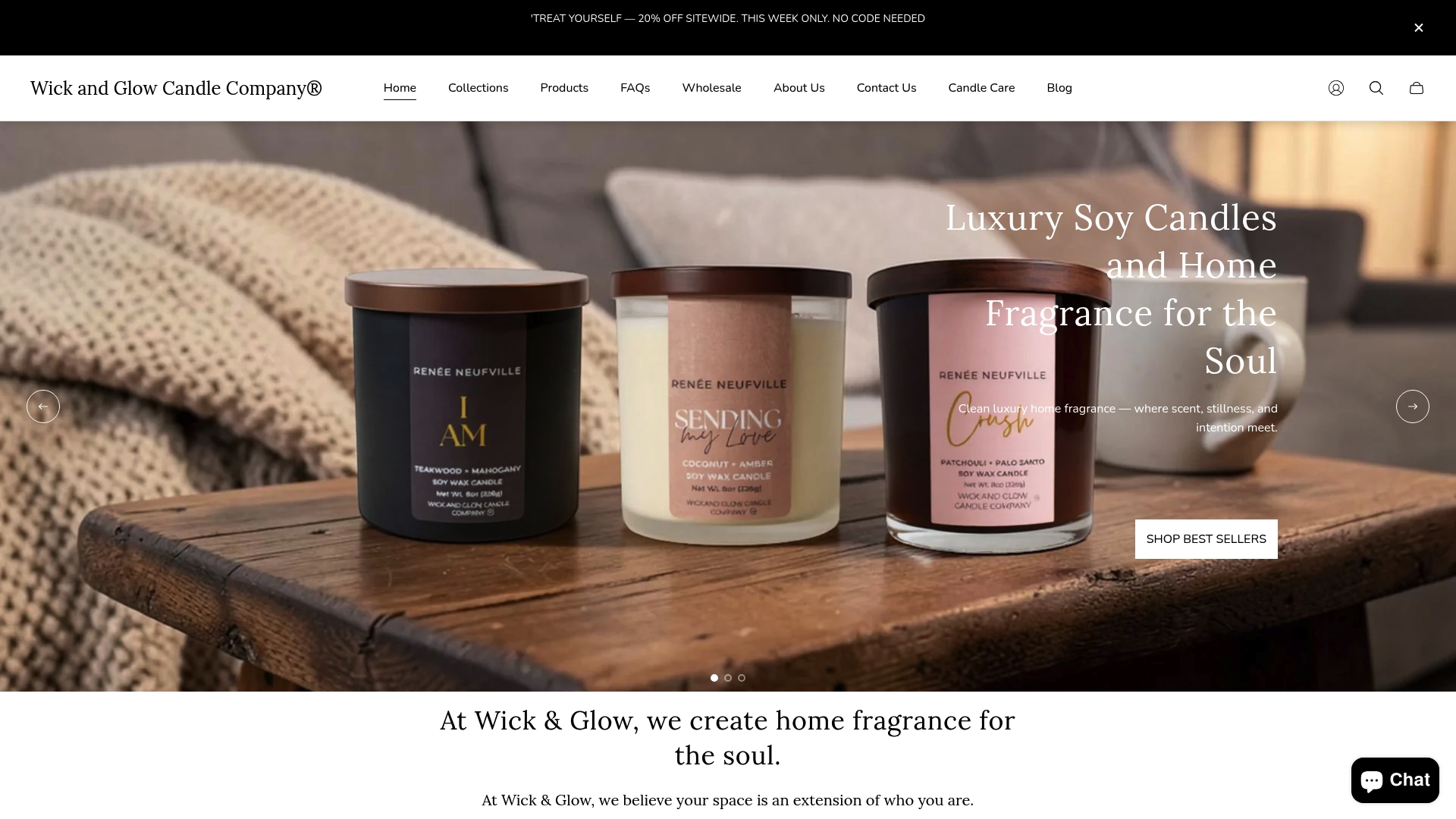
The home fragrance scent bundle pairs a clean soy wax candle with a reed diffuser and room spray, giving you three ways to experience the same fragrance across your space. If you want to explore individual candles, the Sending My Love candle by Renée Neufville uses a luxury soy wax base with a coconut amber fragrance that demonstrates exactly what a well-formulated clean wax candle can do. Every product is made with non-toxic, plant-based ingredients and comes with a playlist.
FAQ
What is a clean candle wax?
A clean candle wax is any plant-based or natural wax free of petroleum derivatives, synthetic hardeners, and harmful additives. Soy, beeswax, coconut, and rapeseed wax are the four most recognized clean options.
Is soy wax actually clean?
Soy wax is plant-based and burns without producing carcinogenic soot, making it a genuinely clean alternative to paraffin. Look for non-GMO or certified organic soy wax for the strongest environmental credentials.
Why is paraffin wax considered unclean?
Paraffin produces carcinogenic soot when burned because it is derived from petroleum refining. That soot degrades indoor air quality in ways that plant-based waxes do not.
Does beeswax hold fragrance as well as soy?
No. Beeswax is composed primarily of long-chain esters that limit its capacity to bind added fragrance oils, making it better suited for unscented or lightly scented candles.
Are coconut wax candles always blended?
Most are, because pure coconut wax is too soft to maintain structural integrity in warm environments. A coconut-soy blend delivers the scent throw benefits of coconut wax with the stability needed for a reliable burn.
Recommended


