A quick label check can tell you a fragrance’s concentration, likely allergens, whether the scent leans natural or synthetic, and whether the supplier follows any transparency standards. Before you buy or test anything, run through these six items:
-
Concentration term (Parfum, EDP, EDT, EDC, or “fragrance oil”) — predicts longevity and intensity
-
“Parfum” vs. full INCI list — a single “parfum” entry hides the formula; named ingredients reveal it
-
Declared EU allergens — names like linalool, limonene, or geraniol after “parfum” signal what’s actually inside
-
Carrier or solvent clues — Alcohol Denat., DPG, or fractionated coconut oil tell you how the scent is delivered
-
Batch code or COA reference — a traceable batch number suggests quality control; its absence is a flag
-
Brand transparency claims — “phthalate-free,” “IFRA-compliant,” or “COSMOS-certified” mean something only when backed by a standard or third-party data
Decoding fragrance oil labels doesn’t require a chemistry degree. Concentration predicts how long a scent lasts on skin or in a room. INCI and allergen names predict skin risk. A batch code or Certificate of Analysis (COA) reference, combined with ISO or IFRA mentions, helps you spot adulteration or quality shortcuts. Wickandglow publishes ingredient pages and uses phthalate-free formulations precisely because these details matter to buyers who want to know what they’re burning or diffusing in their homes.
Pro Tip: If a label lists only “parfum” with no allergen names following it, the brand is using trade-secret protection. That’s legal, but it means you can’t screen for specific sensitizers without contacting the company directly.
Key Takeaways
Decoding a fragrance oil label comes down to six checks: concentration term, INCI visibility, declared allergens, carrier or solvent type, batch code presence, and whether the brand’s transparency claims are backed by a named standard.
Quick checklist for any fragrance label:
- Check the concentration term first (Parfum, EDP, EDT, EDC, or fragrance oil) — it sets longevity expectations before you smell anything
- Look for named allergens after “parfum” in the INCI list — their presence signals voluntary disclosure beyond U.S. minimums
- Confirm a batch code exists on the packaging — no batch number means no traceability
- Treat “clean,” “natural,” and “phthalate-free” as unverified until backed by a named standard (COSMOS, IFRA, ISO) or third-party COA
- Patch test any fragrance oil on skin before full use, especially if you have known sensitivities — dilute to 1–2% in a carrier oil first
- For essential oils or fragrance oils used in DIY applications, request a GC-MS report or COA matched to the batch number
| Point |
Details |
| Concentration predicts longevity |
Parfum (~20–30%) lasts 6–12 hours; EDT (~5–15%) lasts 3–5 hours on skin. |
| “Parfum” hides the formula |
A single “parfum” entry is a legal trade-secret shield; named allergens after it signal real transparency. |
| Batch codes enable traceability |
A batch number on packaging means the product can be matched to a COA and production record. |
| “Clean” needs a standard |
Without a named certification (COSMOS, IFRA, ISO), “clean” or “natural” is unverified marketing language. |
| Wickandglow publishes ingredient details |
Phthalate-free formulations, ingredient pages, and blog education let buyers verify before they buy. |
Table of Contents
What do concentration terms on a fragrance label actually mean?
The word “parfum” on a label can mean two very different things depending on context: it’s both the French word for perfume and the INCI term for a fragrance blend. Understanding which is which is the first real skill in reading any fragrance label.
Concentration ranges are the most standardized signal on a perfume label, and most products fall into one of five categories:
| Concentration Term |
Fragrance Oil % |
Expected Wear Time |
| Parfum / Extrait de Parfum |
typically highest concentration |
typically longest wear time |
| Eau de Parfum (EDP) |
a moderate concentration |
moderate wear time |
| Eau de Toilette (EDT) |
a lighter concentration |
shorter wear time |
| Eau de Cologne (EDC) |
~2–5% |
2–3 hours |
| Eau Fraîche |
~1–3% |
1–2 hours |
| Fragrance Oil (undiluted) |
variable concentration |
wear time depends on use |
“Fragrance oil” is a separate category entirely. Unlike alcohol-based perfumes, fragrance oils are mixtures of essential oils, synthetic aroma chemicals, solvents, and resins, with no water or alcohol base. Fragrance houses formulate these for specific applications: candles, reed diffusers, room sprays, and skin-safe body products each require a different formulation. A fragrance oil designed for candles is not automatically safe for direct skin application, and the label should specify intended use.
For home fragrance products like soy candles and diffusers, concentration works differently than it does on skin. The “throw” (how far the scent travels in a room) depends on wax type, wick size, and oil load percentage, not just the fragrance oil’s own concentration.
- Alcohol Denat. at the top of an INCI list confirms an alcohol-based spray or perfume
- DPG (dipropylene glycol) or fractionated coconut oil near the top signals a carrier-diluted fragrance oil
- “Aqua” (water) appearing early in the list usually means an EDT or lighter concentration
Pro Tip: When comparing two products side by side, check whether they’re the same format (both EDPs, both fragrance oils) before judging longevity. An EDP and a fragrance oil at the same price point are not the same product.
How do fragrance notes and the scent pyramid show up on labels?
The fragrance pyramid is the industry’s standard framework for describing how a scent unfolds over time. Perfumers and fragrance databases like Fragrances of the World use it to classify scents into three layers, each with a different evaporation rate.

Top notes are what you smell first, usually within 15 minutes of application. They’re typically light, volatile molecules: citrus (bergamot, lemon, grapefruit), light herbs (basil, mint), or green notes. They smell bright and fresh but fade quickly, often within 30 minutes on skin.
Heart (middle) notes emerge as the top notes evaporate. These form the core character of the fragrance and tend to last 2–4 hours. Florals (rose, jasmine, ylang-ylang), spices (cardamom, cinnamon), and soft fruits live here. Jasmine is a useful example of why “natural” doesn’t simplify a label: a single jasmine absolute contains dozens of chemical constituents, several of which are classified as potential allergens under EU disclosure rules.
Base notes are the anchor. Musks, woods (sandalwood, cedarwood), resins (benzyl benzoate, labdanum), and vanilla provide depth and fix the other layers to skin or wax. They can last 6–12 hours and are often what you smell on a sweater the next morning.
On product packaging, notes usually appear as a simple three-line list: Top / Heart / Base. Online product pages often expand this into descriptive copy (“opens with sparkling bergamot…”). Neither format tells you whether the materials are natural or synthetic, which matters for both allergen risk and scent behavior.
Synthetic materials tend to be more stable and consistent batch to batch. Natural materials, especially citruses and florals, can vary by harvest and may oxidize faster. A fragrance heavy in natural citrus top notes will smell noticeably different after six months of storage than a synthetic version of the same profile.
Pro Tip: Test a fragrance on a blotter first to catch the top notes, then apply to skin and wait 20 minutes before judging. What you smell on the blotter at the counter is almost never what you’ll wear for the next four hours. Learn more about how fragrance notes behave in candles specifically, since the pyramid works differently in a wax medium.
What do labels tell you about sillage and how long a scent will last?
Sillage (pronounced “see-yazh”) refers to the trail a fragrance leaves in the air as you move through a space. Projection is how far from your body the scent radiates. Longevity is simply how many hours it stays detectable. Labels almost never use these words directly, but concentration terms are a reliable proxy.
A few real-world factors matter more than the label alone:
-
Skin chemistry — dry skin absorbs fragrance faster and holds it less; oily skin tends to extend wear
-
Application point — pulse points (wrists, neck, inner elbows) generate heat that amplifies diffusion
-
Base materials — heavy musks and woods fix a scent; light citrus top notes evaporate regardless of concentration
-
Solvent or carrier — alcohol diffuses quickly and loudly; oil-based carriers release more slowly and stay closer to skin
-
Humidity and temperature — warm, humid conditions intensify projection; cold, dry air mutes it
For home fragrance, the same logic applies differently. Wax type shapes how a candle releases scent throughout a burn, which is why two candles with identical fragrance loads can smell completely different in a room.
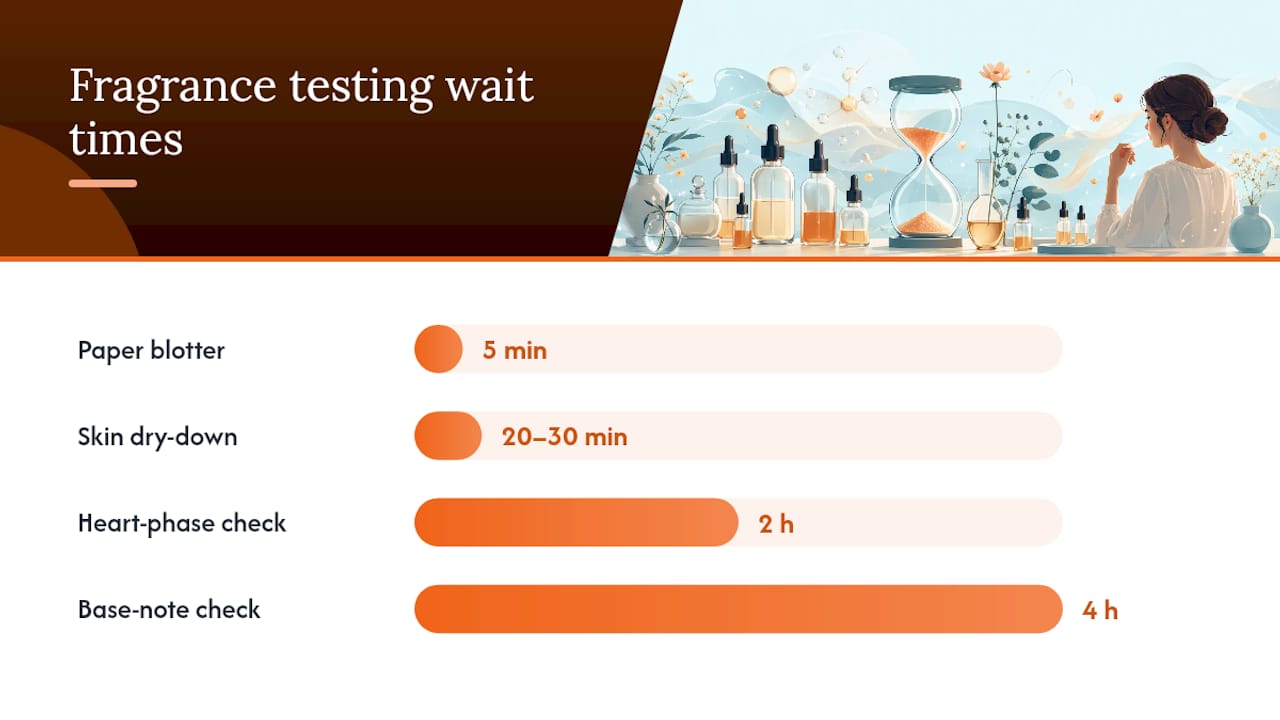
Testing sequence before you commit:
- Smell the cap or bottle first — this gives you the raw oil, not the finished experience
- Spray or dab onto a paper blotter and wait 5 minutes for the alcohol to evaporate
- Apply a small amount to the inner wrist and wait 20–30 minutes for the dry-down
- Check again at 2 hours — this is the heart note phase and the truest read of the fragrance
- Note whether the scent is still detectable at 4 hours — that tells you base note strength
For fragrance oils specifically, dilute before any skin contact (more on that in the allergen section below). A patch test on the inner forearm for 24 hours before full use is the minimum safety step for anyone with sensitive skin or known fragrance allergies.
Concentration is the strongest label signal for longevity, but it’s not the whole story. A well-formulated EDT with strong base notes will outlast a poorly constructed EDP every time.
How do ingredient lists and “fragrance/parfum” declarations work?
Most perfume labels list three ingredients near the top of the INCI list: Alcohol Denat., parfum (or “fragrance” in the U.S.), and Aqua. That “parfum” entry is legally permitted to cover an entire formula as a trade secret, which means a single word can hide dozens of individual chemical compounds.
The FDA does not preapprove fragrance ingredients before they reach the market. Cosmetic fragrance in the U.S. is largely self-regulated, with brands responsible for their own safety assessments. The EU operates under stricter rules: the European Cosmetics Regulation requires that specific allergens above threshold concentrations be declared individually on the label, and the EU has expanded its required disclosure list to 81 allergens.
IFRA (the International Fragrance Association) publishes usage guidelines that cap the concentration of specific materials in different product categories. ISO maintains identification and analytical standards for essential oils. Neither body has regulatory authority in the U.S., but a brand that references IFRA compliance or ISO standards is signaling that it follows a recognized industry framework, which is more than most labels offer.
Practical checks when reading an ingredient list:
- Named allergens appearing after “parfum” (linalool, limonene, geraniol, citral, etc.) mean the brand is disclosing beyond the minimum U.S. requirement
- Certification marks like COSMOS or Ecocert indicate third-party verification of ingredient standards
- A batch code on the label or packaging means the product is traceable to a specific production run
- “Clean” is an unregulated marketing term with no legal definition in the U.S. — it means whatever the brand decides it means unless backed by a named standard
Pro Tip: Look for the allergen names after “parfum” in the ingredient list, not before. INCI order is by descending concentration, so allergens declared at trace levels appear near the end. Their presence there is a transparency signal, not a danger flag.
Which fragrance ingredients are common sensitizers to watch for?
Fragrance oils are mixtures of essential oils, synthetic aroma chemicals, solvents, and resins. The solvents historically included diethyl phthalate (DEP), though many suppliers now offer phthalate-free formulations. The fragrance compounds themselves are where most sensitization risk lives.
These are the names worth scanning for on any label, particularly if you have sensitive skin:
-
Linalool — found in lavender and many florals; can oxidize on skin and become a stronger sensitizer
-
Limonene — the dominant molecule in citrus peels; also oxidizes and is a common contact allergen
-
Geraniol — present in rose, geranium, and palmarosa; a frequent sensitizer in floral fragrances
-
Citral — the sharp, lemony note in lemongrass and verbena; irritating at higher concentrations
-
Eugenol — the spicy-warm note in clove and cinnamon; a known sensitizer, especially in dental and cosmetic products
-
Cinnamal — cinnamon aldehyde; one of the more potent contact allergens in the fragrance world
-
Citronellol — rose and citronella character; milder than some but still disclosed under EU rules
-
Coumarin — sweet, hay-like note used in fougères and orientals; restricted in leave-on products
-
Hydroxycitronellal — lily-of-the-valley character; a sensitizer at higher concentrations
-
Isoeugenol — clove-like, related to eugenol; restricted by IFRA in many product categories
The difference between natural and synthetic versions of these compounds matters less than concentration and oxidation state. A natural lavender oil and a synthetic linalool molecule carry similar sensitization potential at equivalent concentrations.
Leave it for 24 hours without washing. Redness, itching, or swelling means avoid that formula. Understanding why fragrance irritates skin goes deeper on the dermatology side if you want the mechanism explained.
Pro Tip: Oxidized citrus oils are among the most common causes of fragrance contact dermatitis. If a product smells “off” or sharper than expected, that’s often oxidation. Don’t use it on skin.
How do you test a fragrance oil safely before committing?
Testing a fragrance properly takes about 30 minutes of active attention and 24 hours of patience. Rushing it is how people end up wearing something they hate for the rest of the day, or worse, reacting to an ingredient they could have screened out.
Step-by-step testing sequence:
- Read the label first. Check concentration, carrier, and any declared allergens before the scent touches anything.
- Smell the bottle or cap without applying. This gives you the raw formula, which is useful but not representative of the finished experience.
- Apply to a paper blotter. Wait 5 minutes for the alcohol or carrier to settle, then smell again.
- Apply a small amount to the inner wrist. Wait 20–30 minutes for the full dry-down before forming an opinion.
- Check at the 2-hour mark. This is the heart note phase — the most accurate read of what you’ll actually wear.
- For fragrance oils going on skin, dilute first (1–2% in a carrier oil) and patch test on the inner forearm for 24 hours before broader use.
When shopping online, the 3:1:1 approach is practical: order one sample, test it on skin, and wait through at least one full day before ordering a full size. It sounds slow, but it eliminates most buyer’s remorse and all the skin reactions.
A few additional checks worth building into your shopping habit:
- Compare similar concentrations side by side — an EDP against an EDP, not an EDP against an EDT
- Request a COA or batch information from the brand if you’re buying a fragrance oil for DIY use
- Check batch codes against the brand’s website or contact the company to confirm production date — older stock can mean oxidized top notes
- Prefer brands that publish full ingredient lists or allergen declarations, even when not legally required to do so
- For reading candle ingredient labels specifically, the same principles apply but the safety focus shifts from skin contact to air quality and burn performance
How can you spot adulteration or quality issues on a label?
Adulteration of fragrance and essential oils is a documented industry problem. Common methods include dilution with vegetable oils or cheaper essential oils, substitution of synthetic compounds for natural materials, and addition of extenders that change the scent profile subtly. Minor adulteration is genuinely hard to detect by smell alone, which is why label signals matter.
Label and packaging signals that warrant closer scrutiny:
-
No batch code — legitimate manufacturers track every production run; no batch number means no traceability
-
Vague or absent origin claims — “natural fragrance” with no named materials or sourcing information is a marketing phrase, not a fact
-
Unusually low price — genuine essential oils like rose absolute, oud, and neroli have real commodity costs; a price far below market rate usually means dilution or substitution
-
Suspiciously short INCI list — a product claiming to contain multiple natural botanicals but listing only two or three ingredients is missing something
-
No IFRA or ISO reference — not every legitimate product carries these, but their complete absence on a fragrance oil sold for cosmetic use is worth noting
When to ask for documentation: if you’re buying a fragrance oil for DIY candles, cosmetics, or skin-care formulation, request a Certificate of Analysis (COA) and, for essential oils, a GC-MS (gas chromatography-mass spectrometry) report. A legitimate COA shows the batch number, production date, test results for key quality parameters, and the testing lab’s name. A GC-MS report shows the actual chemical profile of the oil, which is the only reliable way to confirm authenticity.
Sustainably sourced fragrance claims follow similar logic: “sustainably sourced” means something specific only when it references a named certification (Rainforest Alliance, Forest Stewardship Council) or a verifiable supply chain practice, not when it appears as standalone marketing copy.
Pro Tip: Ask the supplier for the batch number before you buy, then request the COA for that specific batch. If they can’t match a COA to a batch number, that’s your answer.
What does responsible label transparency actually look like?
Reputable brands don’t just list ingredients because regulations require it. They do it because buyers with sensitivities need that information to make safe choices, and because transparency is the only way to back up claims like “clean,” “natural,” or “phthalate-free.”
A brand practicing genuine transparency will typically:
- Publish a full INCI list on the product page, not just on the physical label
- Declare EU allergens individually when present above threshold concentrations, even for products sold in the U.S.
- Display a batch code on every unit and be able to match it to a COA on request
- Reference a named standard (IFRA, COSMOS, ISO) rather than using unqualified marketing language
- Avoid vague claims like “clean” or “natural” without specifying what standard or exclusion list they follow
Certification marks worth recognizing: COSMOS (verified by Ecocert or similar bodies) indicates that ingredients meet defined natural and organic standards. An IFRA adherence note means the brand has checked its formulas against IFRA’s usage guidelines for the relevant product category. ISO references on essential oil specifications indicate the oil has been tested against a published analytical standard.
Fragrance houses test their oils for application performance and may reformulate when an ingredient no longer meets their internal safety or quality thresholds. That kind of ongoing quality control is what batch codes and COAs document.
Wickandglow practices this kind of transparency directly: all formulations are phthalate-free, ingredient information is published on product pages, and the brand’s blog covers the regulatory and safety context behind those choices. Why fragrance transparency matters to brands goes into the reasoning behind these commitments in more detail. For buyers who want to verify rather than trust, that published information is the starting point.
Pro Tip: When a brand publishes its allergen declarations voluntarily for a U.S. product, that’s a strong signal of genuine transparency. It costs them nothing to hide behind “parfum,” so choosing not to is a deliberate choice.
Wickandglow makes label transparency easy to act on
Every Wickandglow candle, diffuser, and spray is formulated without phthalates, and that claim is backed by published ingredient information on each product page, not just a label sticker. When you’re shopping for a home fragrance and want to know exactly what’s in it before it burns in your living room, that kind of published detail is the difference between guessing and knowing.
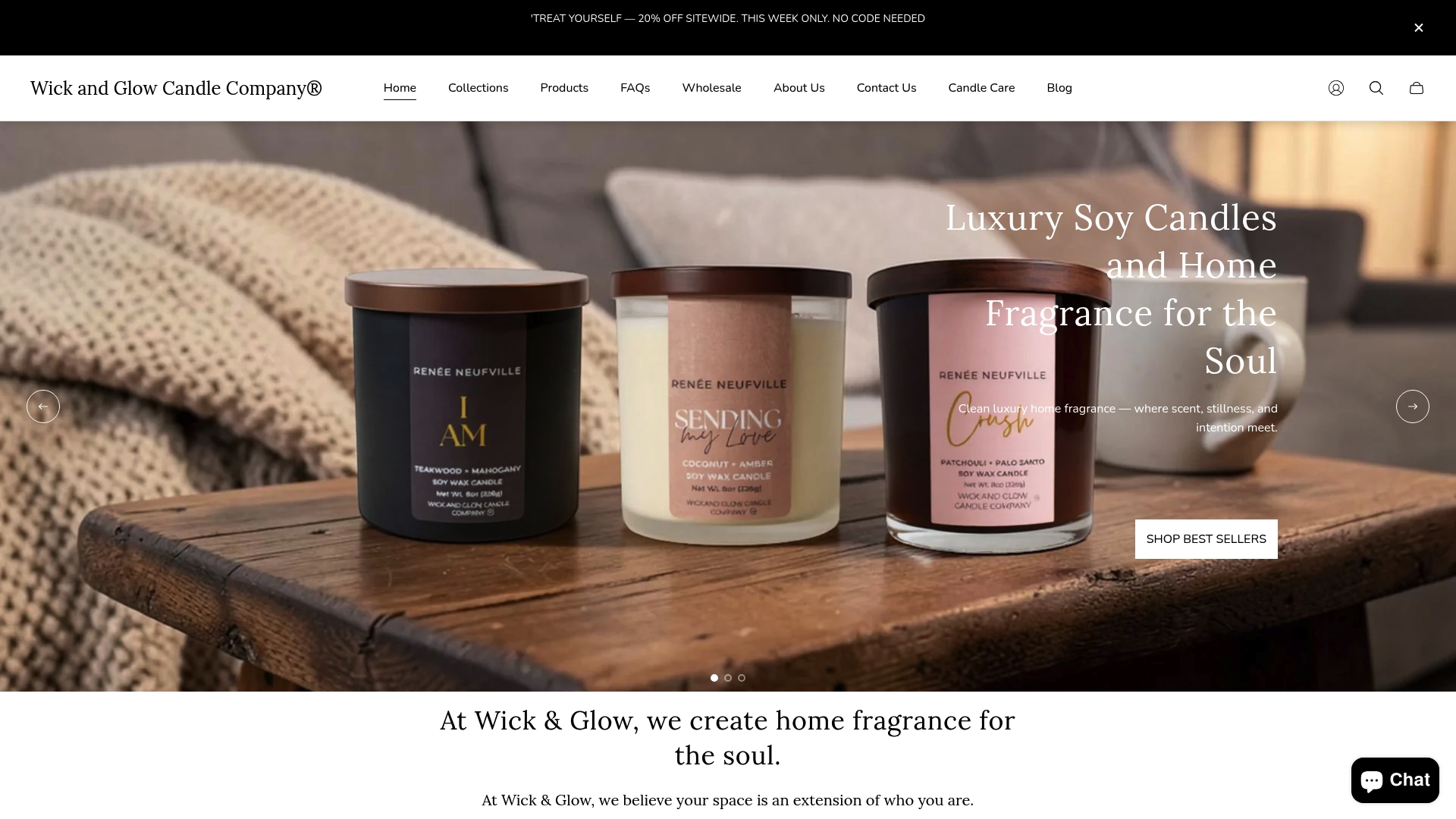
The Exhale Luxury Candle is a good place to start if you want to see what transparent ingredient labeling looks like in practice on a hand-poured soy candle. Each product pairs a carefully formulated scent with a curated R&B playlist, so the experience goes beyond what any label can capture. Browse the full collection at Wickandglow and check the ingredient pages directly — the information is there because you deserve to know what you’re bringing into your home.
Why label transparency matters more than most buyers realize
The fragrance industry has a transparency problem that most buyers don’t notice until they have a reaction. A label that lists only “parfum” is technically compliant in the U.S. — and completely uninformative for anyone trying to avoid a known allergen. The EU’s expanded allergen disclosure rules exist because the evidence for sensitization risk is real, not because regulators are being overcautious.
What gets underestimated is how much a single label decision by a brand reveals about its broader practices. A company that voluntarily names its allergens, publishes batch codes, and backs “phthalate-free” with a named standard is doing more than checking boxes. It’s making a bet that informed buyers are better customers than uninformed ones. That bet tends to be right.
The practical takeaway: use the six-item checklist every time, not just when you’re worried about a reaction. Concentration, INCI visibility, allergen disclosure, carrier type, batch traceability, and verified claims are the six questions that separate a label you can trust from one that’s mostly marketing. The more you practice reading them, the faster it gets.
This article is general information, not a substitute for advice from a qualified doctor. Consult a qualified healthcare professional about your own circumstances before acting on anything here.
Sources
These are the sources behind the key claims in this article, worth bookmarking if you want to verify details or read further:
Recommended


