Diffusers deliver therapeutic scent by converting essential oils into airborne particles fine enough to inhale, triggering responses in the olfactory system that cascade into measurable physiological and psychological effects. The mechanism matters because not all diffusion is equal. Particle size, oil concentration, and whether heat or water enters the process all determine whether the oil’s chemistry arrives intact at your olfactory receptors or arrives compromised.
Here is what governs scent delivery across every diffuser type:
-
Particle size: Micron-sized droplets stay airborne longest and penetrate the respiratory tract most effectively; larger droplets fall quickly and dilute ambient concentration.
-
Chemical integrity: Heat above 40–50°C and water dilution both alter essential oil chemistry, reducing therapeutic potency before the molecules ever reach you.
-
Diffusion mechanism: Ultrasonic vibration, pressurized air atomization, passive evaporation, capillary wicking, and heat-driven evaporation each produce a different particle profile and scent intensity.
-
Room environment: Airflow, room size, and humidity affect how long molecules stay suspended and how evenly they distribute.
-
Oil purity: Pure, undiluted oils preserve the full aromatic compound profile; synthetic or diluted oils deliver a fraction of the therapeutic load.
Understanding how fragrance affects mood and atmosphere starts with understanding the physics behind the delivery.
Table of Contents
1. How nebulizing diffusers atomize pure oil for maximum potency
Nebulizing diffusers are the most technically sophisticated option for therapeutic delivery, and the physics behind them is genuinely elegant. They apply Bernoulli’s Principle to essential oil diffusion: a high-speed stream of pressurized air passes through a narrow tube, creating a low-pressure zone that draws pure oil upward from a reservoir. The airstream then shears the oil into an aerosol of micron-sized droplets that remain suspended in the air for a duration that supports effective inhalation.
No water. No heat. The oil goes in undiluted and comes out as a cold-air aerosol with its full chemical profile intact.
-
Coverage: Typically 400–900+ sq ft, making nebulizers the right choice for open-plan living areas.
-
Therapeutic potency: Highest among all diffuser types because concentration and chemistry are both preserved.
-
Oil consumption: Noticeably higher than ultrasonic; pure oil depletes faster when nothing dilutes it.
-
Noise: A low hiss from the air pump, audible but not disruptive.
-
Maintenance: Periodic cleaning with alcohol to prevent resin buildup in the glass reservoir; thick or resinous oils like vetiver or myrrh can clog the atomizer.
Pro Tip: Run a nebulizer in 15–20 minute intervals rather than continuously. You get full therapeutic concentration without burning through oil or overwhelming a room.
The trade-off is cost and oil consumption. Nebulizers sit at the premium end of the price range and demand pure, single-origin oils to function correctly. Blends with carrier oils will clog the mechanism. For anyone serious about aromatherapy versus home fragrance as a therapeutic practice, the nebulizer is the closest thing to a clinical delivery device available for home use.
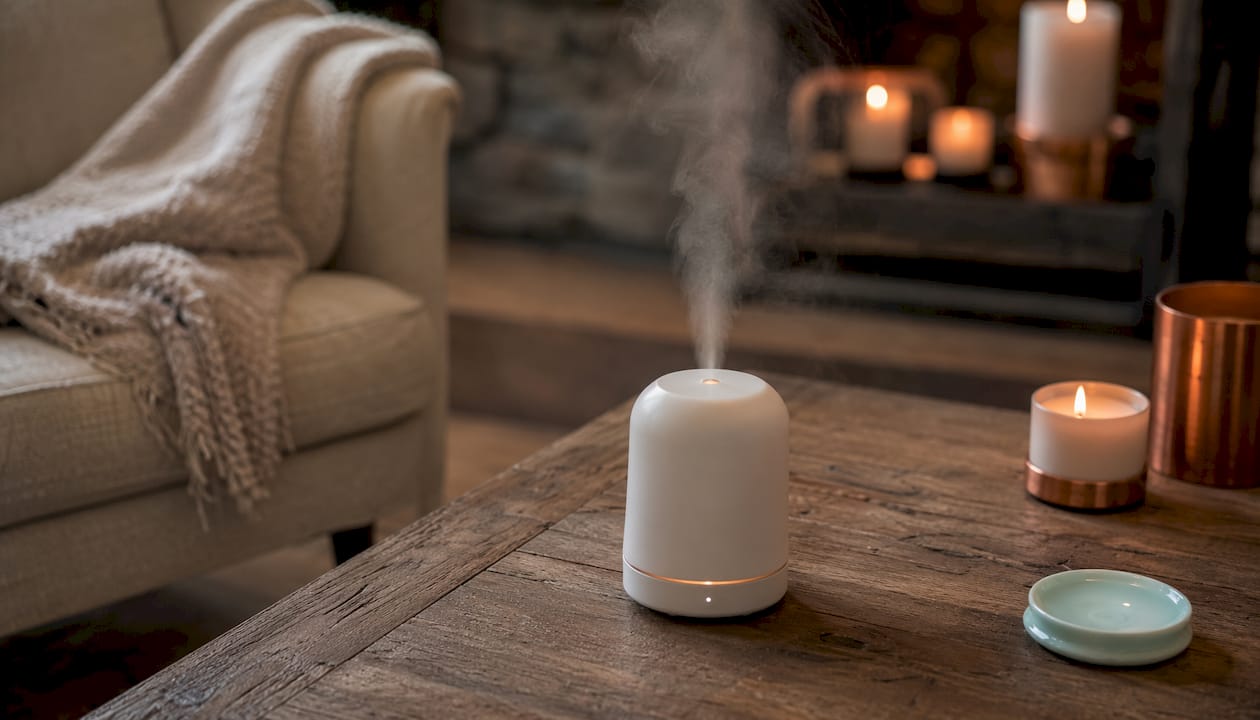
2. How ultrasonic diffusers generate water-based mist to carry aroma
Ultrasonic diffusers work through piezoelectric ceramics. A small disc vibrates at 1.7–2.4 MHz, disrupting the surface tension of a water-oil mixture in the reservoir and breaking it into a cool mist of 2–5 micron droplets. A fan underneath the disc pushes that mist upward through the nozzle and out into the room.
The result is a visible, gentle vapor that most people associate with the classic diffuser experience.
-
Mist composition: Roughly 95% water by volume, with essential oils at approximately 5% concentration, meaning the aroma is noticeably softer than nebulized delivery.
-
Humidity effect: The water vapor adds moisture to the air, which can be genuinely comfortable in dry climates or during winter heating season.
-
Room coverage: Best suited for smaller spaces, typically 100–250 sq ft, where the diluted concentration is still sufficient to register.
-
Noise level: Near-silent operation makes ultrasonic diffusers ideal for bedrooms, meditation spaces, and offices.
-
Maintenance: Regular cleaning is non-negotiable. Oils polymerize over time and leave a sticky film on the ceramic disc; skip cleaning and you will notice degraded mist output within days.
The water dilution is both the feature and the limitation. You get a pleasant, humidifying ambiance, but the oil’s chemical profile is altered by the emulsification process. Thick, resinous oils like sandalwood or benzoin are particularly problematic in ultrasonic units because they resist mixing with water and accelerate residue buildup. Lighter, more volatile oils such as lavender, peppermint, and citrus blends perform best.
Many people start with ultrasonic diffusers and eventually upgrade to nebulizing units when they notice the scent experience feels muted. That shift reflects a real difference in delivery, not just preference.
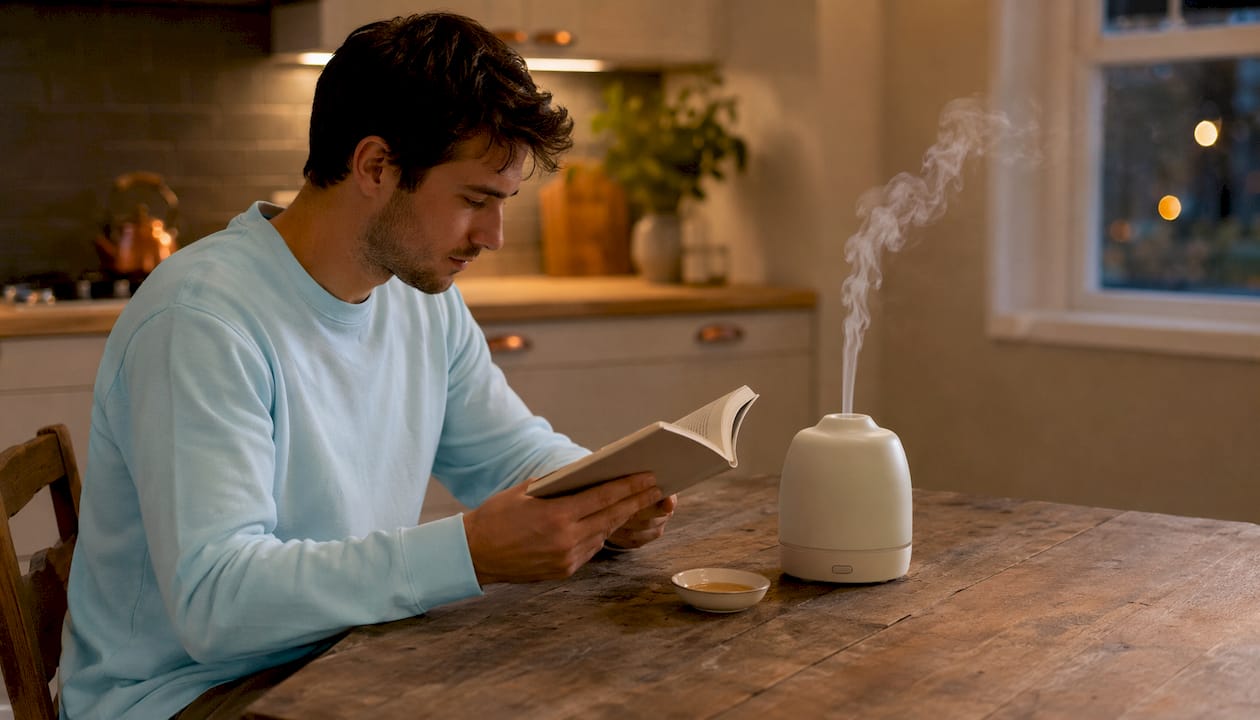
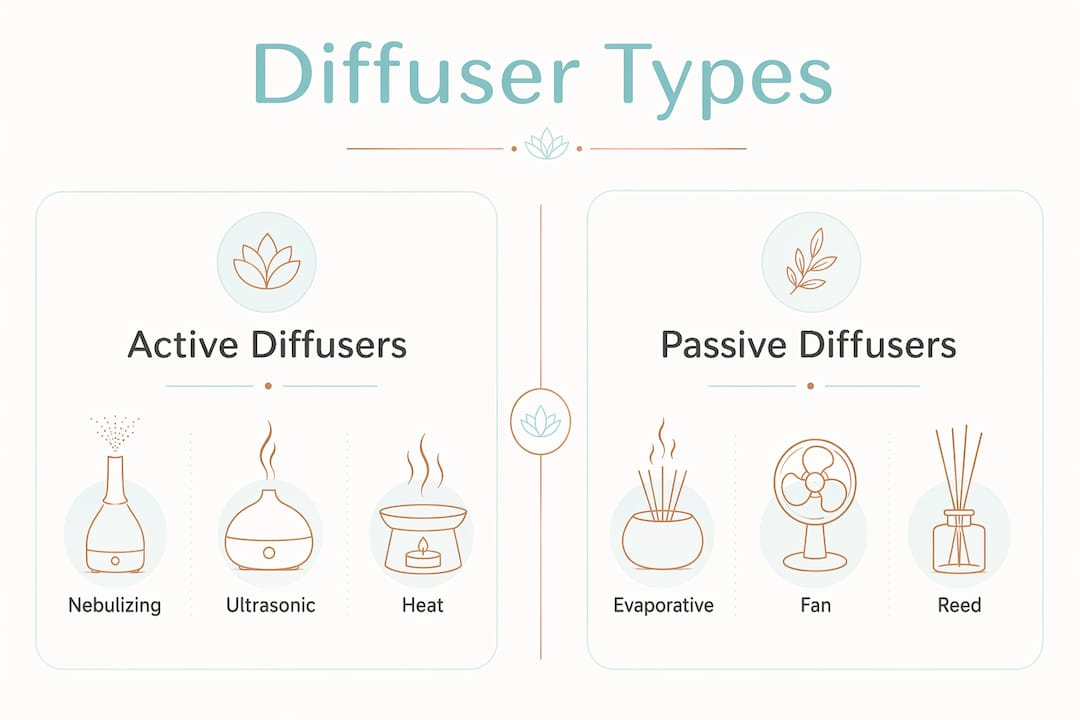
3. Passive scent delivery: how evaporative, fan, and reed diffusers work
Passive diffusion methods require no electricity for the core mechanism (fan diffusers aside) and no heat. They release essential oils gradually through evaporation or capillary action, producing a continuous, low-intensity scent rather than a concentrated burst.
Evaporative and fan diffusers work by exposing oil-saturated pads or filters to airflow. In a fan diffuser, a small motor drives air across the pad, accelerating evaporation. Without a fan, the oil simply evaporates at room temperature, driven by ambient air movement. Either way, the lighter volatile compounds in the oil evaporate first, which means the scent profile shifts over time as the heavier molecules are left behind.
Reed diffusers operate on capillary action. Porous rattan or fiber reeds draw oil upward from a glass vessel, and the oil evaporates from the exposed surface of each reed into the surrounding air. The rate of diffusion depends on the number of reeds, the viscosity of the oil, and ambient temperature.
-
Scent intensity: Low and continuous, not adjustable in real time.
-
Therapeutic potency: Limited. The concentration reaching your olfactory receptors is too low for measurable physiological effects, but sustained background scent does influence mood over time.
-
Best use case: Entryways, bathrooms, and small rooms where you want a consistent ambient fragrance rather than a targeted therapeutic session.
-
Maintenance: Replace reeds periodically as they become saturated and clogged; flip reeds periodically to refresh the scent output.
For a closer look at how luxury reed diffusers fit into a home fragrance setup, the vessel design and oil quality matter as much as the reed count.
4. Heat diffusers and HVAC scenting: coverage versus chemistry
Heat-based diffusion is the oldest and simplest method. A warming plate, candle flame, or electric element heats the oil, accelerating evaporation and releasing fragrance into the air. The problem is straightforward: heat above 40–50°C begins to alter the chemical structure of essential oil compounds, breaking down the same molecules responsible for therapeutic effects.
You get the scent, but you may not get the full benefit.
-
Aroma duration: Shorter than other methods because heat drives rapid evaporation; the oil depletes quickly and scent fades fast.
-
Scent distribution: Uneven, concentrated near the heat source and weaker at distance.
-
Safety: Overheating creates combustion risk with certain oils; always follow manufacturer temperature limits and never leave heat diffusers unattended.
-
Affordability: The lowest entry cost of any active diffusion method, which explains their continued popularity despite the chemistry trade-off.
An aromatherapy candle lamp sits in this category, combining gentle heat with ambient candlelight for a dual sensory effect. At low temperatures, the chemical degradation is minimal, making candle-warmer style devices a reasonable middle ground for fragrance ambiance even if they fall short of clinical therapeutic delivery.
HVAC scenting scales the heat-diffusion concept to whole-building coverage. Scent cartridges or oil reservoirs integrate into the ventilation system, dispersing fragrance through ductwork. Coverage is broad, but the oil is diluted enormously across the air volume of an entire building, and residue accumulates in ducts over time. Professional cleaning is required to prevent buildup and maintain air quality. For home use, HVAC scenting is rarely practical or cost-effective.
5. Key factors that determine therapeutic efficacy and safe diffuser use
The diffuser type sets the ceiling for therapeutic delivery, but several other variables determine whether you actually reach it.
Particle size and concentration are the two most direct levers. Particles in the 1–3 micron range penetrate the respiratory tract efficiently and stimulate olfactory receptors at the depth needed to trigger limbic system responses. Larger particles settle before they reach the receptor sites; smaller particles may pass through without sufficient contact. Concentration matters equally: a room too large for a given diffuser’s output means the molecules disperse below the threshold for physiological effect.
Room size and airflow shape dosing in ways most people underestimate. An open-plan kitchen-living area with ceiling fans running will disperse a nebulizer’s output so quickly that the effective concentration drops significantly. Closing doors, reducing drafts, and matching diffuser output to room volume all improve delivery.
Essential oil selection affects both efficacy and equipment longevity. Different oils have different volatility, viscosity, and chemical profiles. Citrus oils are highly volatile and work well in every diffuser type. Thick resins and absolutes are best reserved for nebulizers with glass reservoirs that can be cleaned with alcohol. Carrier-oil blends should never go into a nebulizer.
-
Ventilation: Always diffuse in a ventilated space. Prolonged exposure to high concentrations of essential oil vapor can cause respiratory irritation, particularly for people with asthma or chemical sensitivities.
-
Session length: Diffusion sessions with breaks are safer and often more effective than continuous diffusion.
-
Cleaning schedule: Residue buildup degrades output and creates conditions for microbial growth in water reservoirs. Clean ultrasonic units every 3–7 days; nebulizers after each oil change.
-
Oil purity: Synthetic fragrance oils damage equipment and deliver no therapeutic compounds. Use 100% pure essential oils.
Pro Tip: If you share a space with children, pets, or anyone with respiratory conditions, run diffusers at lower intensity settings and keep the room ventilated. Several essential oils, including eucalyptus and tea tree, require extra caution around young children and cats.
Understanding intentional home fragrance means treating diffusion as a dosing decision, not just an aesthetic one.
6. What the science actually says about aromatherapy scent delivery
The physiological case for aromatherapy is real, though it comes with important scope conditions. When essential oils are inhaled in sufficient concentration, the aromatic molecules activate olfactory receptors that connect directly to the limbic system, the brain region governing emotion, memory, and autonomic function. This pathway produces measurable changes in blood pressure, pulse rate, muscle tension, and hormone levels, according to clinical aromatherapy research.
The delivery method determines whether those concentrations are actually reached.
Aromatherapy inhalation induces measurable physiological changes in pulse rate, blood pressure, endocrine function, and blood oxygenation when essential oils are delivered in concentrated forms. A study of 465 participants showed concentrated essential oil delivery yields immediate, clinically relevant effects versus diluted or intermittent delivery.
Nebulizing diffusers deliver the intact chemical profile at concentrations sufficient to produce these effects. Ultrasonic diffusers, with their water dilution and altered emulsion chemistry, produce gentler responses, more appropriate for mood support and relaxation than for targeted physiological intervention. Heat-based methods risk degrading the active compounds before they ever reach the air.
Home aromatherapy sits in a different category from clinical treatment. The concentrations achievable in a living room are lower than those used in controlled studies, and individual responses vary considerably. That said, the mechanism is not pseudoscience: olfactory stimulation genuinely triggers limbic responses, and the diffuser technology you choose directly affects how much of that mechanism you engage. Choosing a diffusion method is, in a real sense, choosing your dose.
Wickandglow brings intentional scent delivery to your home
Most diffusers on the market are built for fragrance output, not for the experience of what that fragrance means. Wickandglow approaches home scent differently: every product is crafted around a specific emotional intention, with fragrances inspired by R&B music and paired with curated playlists so the scent and sound work together on your mood.
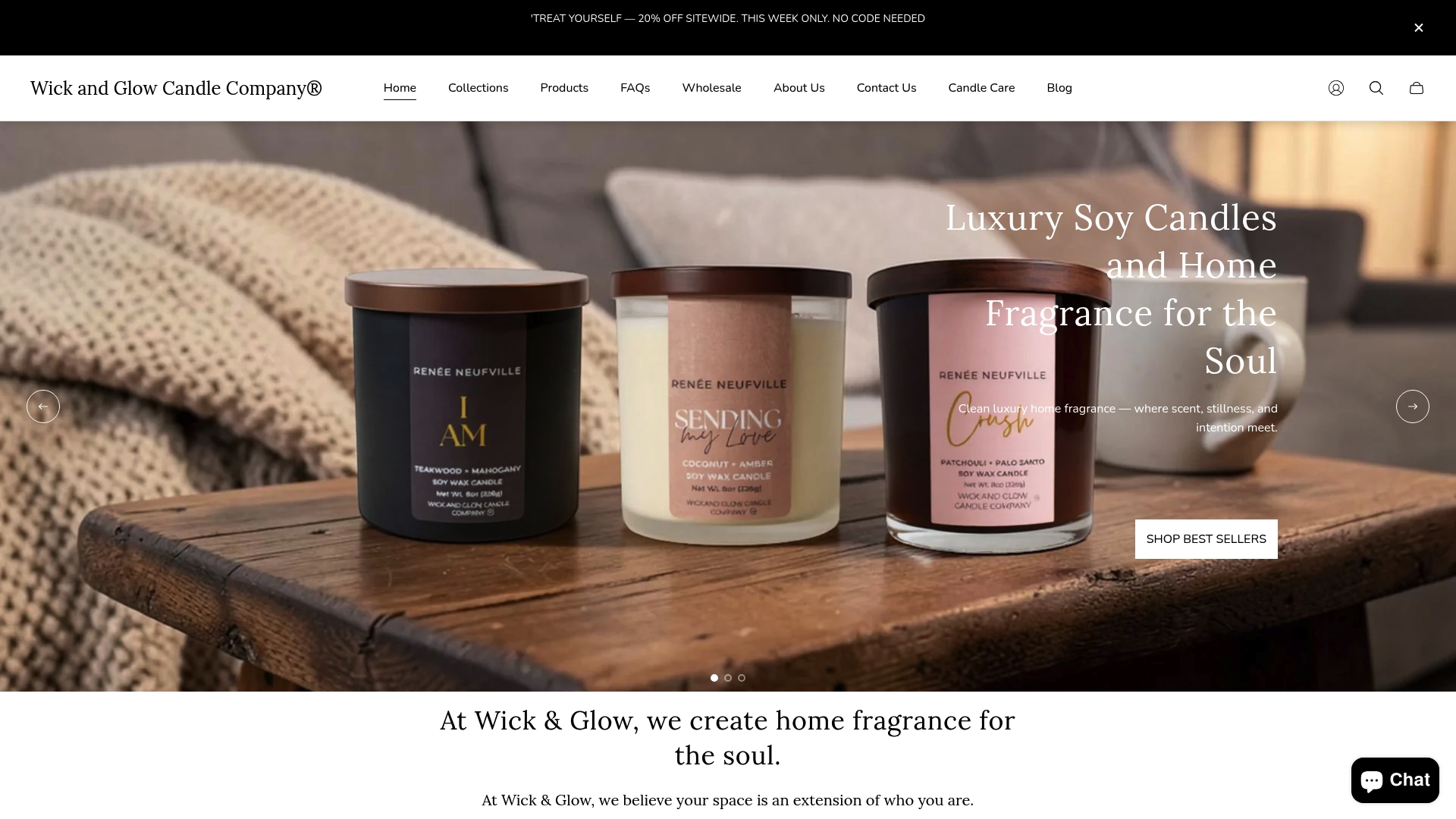
If you have been reading about passive diffusion and wondering whether a reed diffuser can actually carry that kind of weight, the answer is yes, when the oil quality and fragrance composition are built for it. Wickandglow’s glass reed diffuser with hanging stand uses premium fragrance oils in a vessel designed for consistent, long-lasting passive release. For a curated starting point, the Scenting My Love Trio brings together three complementary scent profiles built for layering across a space. Browse the full collection and find the fragrance that fits the feeling you are after.
Key Takeaways
Nebulizing diffusers deliver the highest therapeutic potency because they atomize pure oil into 1–3 micron droplets with no heat or water dilution, preserving the full chemical profile that drives physiological response.
| Point |
Details |
| Particle size drives delivery |
Droplets in the 1–3 micron range stay airborne longest and stimulate olfactory receptors most effectively. |
| Nebulizers preserve oil chemistry |
Cold-air atomization produces undiluted aerosol covering 400–900+ sq ft with intact therapeutic compounds. |
| Ultrasonic diffusers trade potency for comfort |
Water dilution creates a mist that is roughly 95% water, softening scent intensity but adding humidity. |
| Heat degrades active compounds |
Temperatures above 40–50°C alter essential oil chemistry, reducing therapeutic benefit before the scent reaches you. |
| Wickandglow reed diffusers |
Premium fragrance-forward passive diffusion built for intentional, mood-specific scent delivery at home. |
Recommended


