Aromatherapy is defined as the therapeutic use of plant-derived essential oils to produce measurable effects on the body and mind, while home fragrance is designed to scent a space for ambiance without targeting physiological outcomes. Understanding how aromatherapy differs from home fragrance matters because the two are routinely confused, and that confusion leads to mismatched expectations. Buying a lavender candle and expecting clinical stress relief is like taking a multivitamin and expecting surgery-level results. The U.S. National Cancer Institute classifies aromatherapy as a complementary practice, not a medical treatment. That distinction shapes everything from how products are formulated to how you should use them.
How aromatherapy differs from home fragrance: mechanisms and intent
Aromatherapy works through the olfactory system. Scent molecules from aromatic plants bypass conscious brain centers and travel directly to the limbic system, the part of the brain that governs emotion, memory, and autonomic nervous system responses. That direct neural pathway is what separates aromatherapy from simply making a room smell good. The scent does not just register as pleasant. It triggers a biological response.
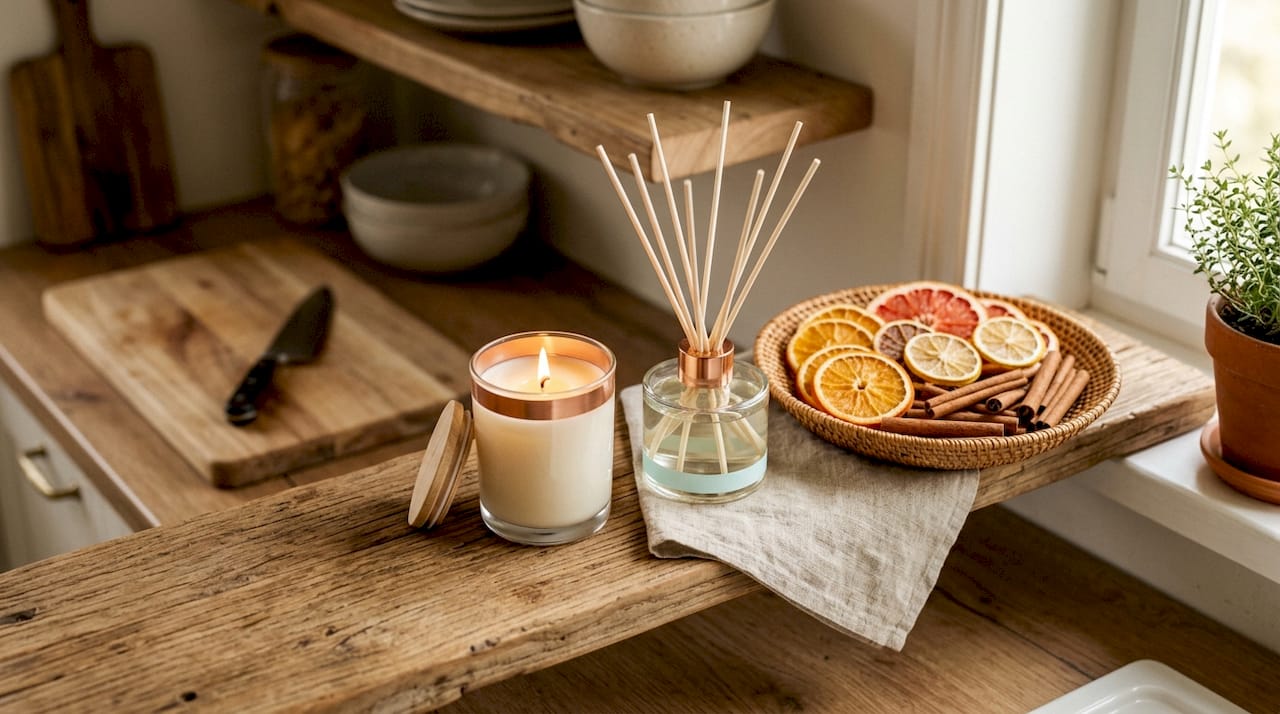
Home fragrance, by contrast, is formulated for projection, longevity, and aesthetic appeal. A reed diffuser or room spray is engineered to fill a space with a consistent scent over time. The goal is atmosphere, not physiology. Functional fragrance experts describe aromatherapy as “functional first,” meaning ingredient selection is driven by target effects on the nervous system, while home fragrance prioritizes how a scent performs in a room.
The formulation difference is significant. Aromatherapy products use specific essential oils at concentrations chosen for their documented effects. Home fragrance products often blend synthetic and natural compounds selected for scent character and throw, not for any physiological action. This is not a quality judgment. It is a design priority.
What does aromatherapy actually do to your body?
The science behind aromatherapy is more specific than most people realize. A 2026 EEG study found that blended essential oils reverse stress-induced neural abnormalities within minutes, with blended formulas showing stronger brain connectivity enhancement than lavender alone. That finding matters because it challenges the popular assumption that any single oil covers all bases.
A June 2026 systematic review of 18 studies covering 1,236 participants found that aromatherapy achieved positive outcomes across anxiety, sleep quality, pain management, and sedation in critical care patients. Those are not trivial populations or trivial outcomes. The same review noted limited effectiveness on respiratory outcomes, with eucalyptus being the exception at 75% effectiveness. Specificity matters here. A sleep blend and a focus blend are not interchangeable.
Common aromatherapy applications include:
-
Inhalation: Direct or via personal diffuser for immediate limbic system engagement
-
Topical application: Diluted essential oils applied to pulse points or skin for localized and systemic effects
-
Room diffusion: Ultrasonic or heat diffusers dispersing essential oils into breathing space
-
Steam inhalation: Used for respiratory support, particularly with eucalyptus or peppermint
Pro Tip: Never use undiluted essential oils directly on skin. A carrier oil like jojoba or sweet almond reduces irritation risk while preserving the therapeutic compounds.
Aromatherapy is also a complementary practice, not a cure. The Australian Government and the NCI both state that aromatherapy lacks sufficient clinical evidence to prevent or treat disease. Using it alongside medical care is reasonable. Replacing medical care with it is not.
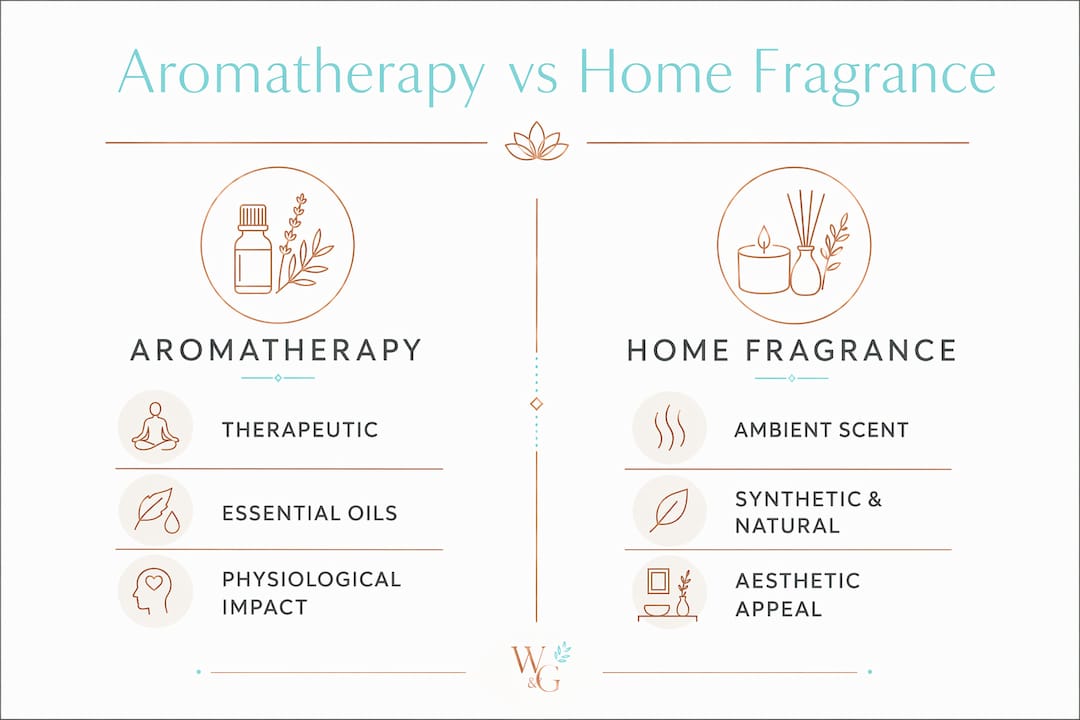
Home fragrance is the category of products designed to scent a living space continuously and pleasantly. The primary formats are candles, reed diffusers, and room sprays. Each format is engineered for a different scent delivery profile, not a different therapeutic target.
Candles release fragrance through heat, which vaporizes scent compounds into the air as the wax melts. Reed diffusers use capillary action to draw fragrance oil up through reeds and evaporate it slowly into a room. Room sprays deliver an immediate burst of scent that fades over minutes to hours. All three formats share the same design goal: ambient scenting fills a room to shape atmosphere subconsciously, without requiring any active engagement from the person in the space.
The table below shows how the two approaches compare across key dimensions:
| Dimension |
Aromatherapy |
Home fragrance |
| Primary goal |
Physiological or psychological effect |
Ambient atmosphere and aesthetic |
| Ingredient selection |
Specific essential oils for target effects |
Natural and synthetic compounds for scent character |
| Application mode |
Active, near-body ritual |
Passive, room-filling presence |
| Engagement required |
Conscious, consistent practice |
None; always-on background scent |
| Regulatory status |
Complementary practice (NCI, Australian Gov) |
Consumer product, no therapeutic claims |
Home fragrance is not a lesser category. It serves a real and valuable purpose. Scenting your home well affects how you feel in that space, how guests perceive it, and how quickly you mentally shift into relaxation mode after work. The fragrance effects on home atmosphere are real, even without a physiological mechanism behind them.
How do you actually use each one, and when?
The practical difference between aromatherapy and home fragrance comes down to intention and proximity. Aromatherapy involves conscious rituals targeting specific emotional or physical states, while home fragrance operates as a passive, background sensory experience. You choose aromatherapy deliberately. Home fragrance works on you without you thinking about it.
Consider two scenarios. You sit down to meditate and diffuse a blend of frankincense and vetiver near your face, breathing intentionally for 20 minutes. That is aromatherapy. You light a cognac and tobacco candle before guests arrive because it makes your living room feel warm and sophisticated. That is home fragrance. Both are valid. Neither replaces the other.
Aromatherapy also requires active engagement and consistency to develop conditioned nervous system responses. The more you pair a specific scent with a specific state, like lavender with sleep, the stronger the conditioned association becomes. Home fragrance does not require that kind of repetition to work. It shapes the room’s character immediately.
Pro Tip: If you want to use a candle for both ambiance and a mild therapeutic effect, choose one made with genuine essential oils rather than synthetic fragrance compounds. The best candles for self-care rituals combine scent quality with ingredient transparency.
Scent layering is another practical consideration. Mixing a reed diffuser with a candle in the same space creates a more complex scent profile. Understanding layering diffuser and candle scents helps you build a richer ambient environment without the scents competing or clashing.
Benefits and limitations of both approaches
Aromatherapy’s validated benefits cluster around mood, stress, and sleep. The 2026 systematic review confirmed positive outcomes in anxiety and sleep quality across clinical populations. The EEG research confirmed measurable neural changes within minutes of exposure to blended oils. These are real effects, not placebo-level impressions. The limitation is specificity: single all-purpose aromatherapy blends do not deliver physiological benefits across multiple states. A blend formulated for sleep will not sharpen focus. Targeted formulation is the only approach that works.
Home fragrance benefits include:
-
Mood shaping: Warm, woody scents create a sense of comfort; fresh citrus scents increase alertness
-
Aesthetic identity: Scent is one of the most powerful ways to define the character of a space
-
Social signaling: A well-scented home communicates care and intentionality to guests
-
Memory anchoring: Consistent scents become associated with specific places and feelings over time
Both categories carry limitations worth knowing. Synthetic fragrance compounds in home fragrance products can trigger reactions in people with asthma or fragrance sensitivities. Essential oils in aromatherapy products are not risk-free either. Certain oils, including cinnamon bark and clove, cause skin irritation at low concentrations. Phthalate-free and non-toxic formulations reduce these risks significantly. Pairing home fragrance with complementary wellness tools, like crystal suncatchers for light and mood, can create a layered sensory environment without over-relying on scent alone.
Key Takeaways
Aromatherapy targets specific physiological states through essential oils and active ritual, while home fragrance shapes ambient atmosphere through passive, continuous scenting with no therapeutic intent.
| Point |
Details |
| Different design goals |
Aromatherapy targets the nervous system; home fragrance targets the room’s atmosphere. |
| Formulation specificity matters |
Generic all-purpose blends do not deliver therapeutic effects; targeted essential oil blends do. |
| Engagement level differs |
Aromatherapy requires conscious, consistent practice; home fragrance works passively in the background. |
| Both have real benefits |
Aromatherapy supports mood and sleep; home fragrance shapes identity, comfort, and social perception. |
| Safety applies to both |
Synthetic compounds and essential oils both carry sensitivity risks; phthalate-free options reduce them. |
Why the distinction changed how I think about scent
Most people treat aromatherapy and home fragrance as the same category with different price points. That framing is wrong, and it leads to real disappointment. I have seen people burn a lavender candle every night expecting clinical anxiety relief, then conclude that aromatherapy does not work. What did not work was the application, not the concept.
The more useful mental model is this: home fragrance sets the stage, and aromatherapy performs on it. You use ambient scenting to create an environment that supports a mood. You use aromatherapy to actively shift a physiological state. When you align the tool to the goal, both work better.
The other misconception I encounter constantly is that natural always means therapeutic. A candle made with natural fragrance oils is still a home fragrance product. It is not aromatherapy unless the essential oils are present at concentrations with documented effects and you are using it with intention and proximity. Ingredient sourcing matters, but so does application method.
My practical advice: start with home fragrance to establish the sensory character of your space. Add aromatherapy as a deliberate ritual for specific goals like sleep, focus, or stress recovery. Keep expectations matched to the tool. That combination is more effective than either approach used alone without clarity about what it is supposed to do.
— B
Wickandglow’s collections for every scenting goal
Wickandglow builds home fragrance products with the kind of intention that makes the aromatherapy-versus-ambiance distinction feel less like a trade-off. Every candle, diffuser, and spray is formulated without phthalates and with lasting scent throw in mind.
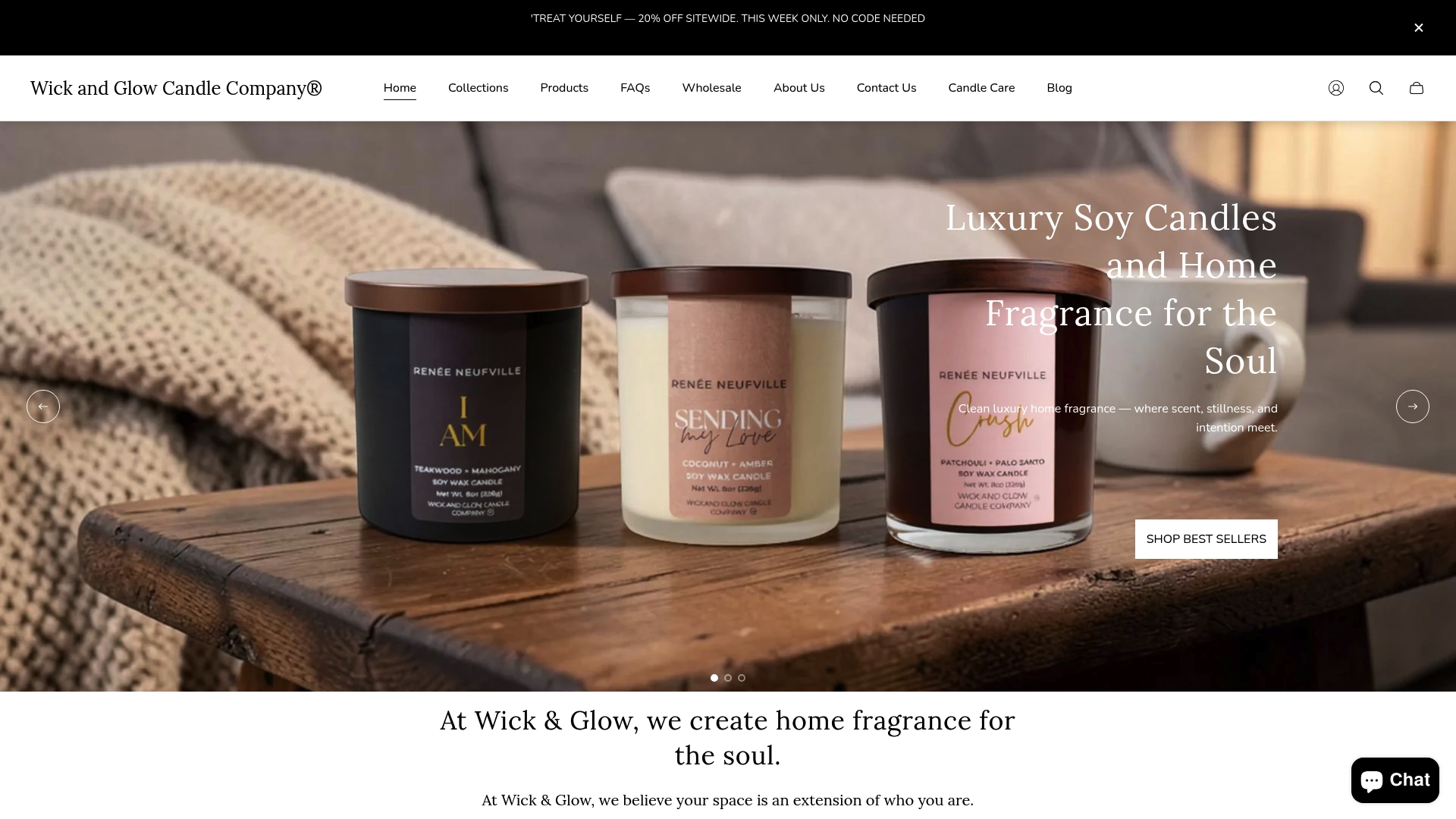
The Men Love Candles Too collection is a strong starting point for anyone who wants ambient scenting that feels grounded and sophisticated rather than floral or generic. For a complete layered scent experience, the home fragrance scent bundle pairs a soy candle, reed diffuser, and room spray in a single scent, giving you passive background coverage and an on-demand burst option in one purchase. The collaboration with Renée Neufville in the Scenting My Love Collection adds an artistry layer that most home fragrance brands do not attempt.
FAQ
What is the core difference between aromatherapy and home fragrance?
Aromatherapy uses specific essential oils to produce physiological effects on the nervous system through active, near-body application. Home fragrance uses natural and synthetic compounds to scent a room for ambiance, with no therapeutic intent.
Can a scented candle count as aromatherapy?
A candle qualifies as aromatherapy only if it contains essential oils at effective concentrations and is used with conscious intention and close proximity. Most scented candles are home fragrance products designed for ambient scenting, not therapeutic outcomes.
Is aromatherapy medically approved?
The U.S. National Cancer Institute and the Australian Government classify aromatherapy as a complementary practice. It is not approved to prevent, treat, or cure any disease, though 2026 research confirms measurable benefits for anxiety, sleep, and stress in clinical settings.
Do essential oils in home fragrance products provide aromatherapy benefits?
Not reliably. Essential oils in home fragrance products are typically present for scent character, not at concentrations or in formulations designed for physiological effect. Therapeutic benefit requires targeted blends applied with intention and consistency.
Are home fragrance products safe for people with sensitivities?
Synthetic fragrance compounds can trigger reactions in people with asthma or fragrance allergies. Phthalate-free, non-toxic formulations significantly reduce that risk. Always check ingredient transparency before purchasing if you have known sensitivities.
Recommended


