The carbon footprint of candle production is defined as the total greenhouse gas emissions generated across a candle’s full lifecycle, from raw material extraction through manufacturing, packaging, shipping, burning, and disposal. Wax type alone can shift that footprint dramatically. Switching to recycled wax cuts carbon consumption by up to 75% compared to virgin wax production. Understanding where emissions come from gives you real power to make choices that matter, whether you burn one candle a week or fill your home with them.
Wax is the single largest variable in a candle’s environmental impact. The four main types, paraffin, soy, beeswax, and recycled wax, each carry a distinct emissions profile tied to how they are sourced and processed.
Paraffin wax is a petroleum byproduct. Its production is tied directly to fossil fuel refining, which means its carbon footprint starts high before the candle even reaches a shelf. Paraffin candles also release volatile organic compounds (VOCs) during burning, adding to their indoor air quality burden.

Soy wax is often marketed as the clean alternative, but the reality is more complicated. Commodity soy supply chains are linked to South American land-use changes, including deforestation, which can make soy’s lifecycle emissions higher than they appear on the label. Certified, domestically grown soy is a better choice, but it requires verification.
Beeswax sourced from honey-harvest cappings carries a near ecologically neutral footprint because it is a natural byproduct of honey production. No additional land or crops are required. The trade-off is cost and limited supply, which makes it less common in mass production.
Recycled and upcycled waxes represent the most significant emissions reduction available today. Reprocessing used wax requires far less energy than refining virgin materials, and the lifecycle carbon savings are substantial.
Pro Tip: Look for wax sourcing certifications like USDA Organic or Rainforest Alliance on soy candles. A brand that cannot name its wax supplier is one worth questioning.
2. What manufacturing and packaging factors drive candle carbon emissions?
Production choices inside the factory matter as much as the wax itself. Energy consumption during wax melting, blending, and pouring adds to a candle’s total emissions. Facilities powered by renewable energy produce significantly lower manufacturing footprints than those running on coal or natural gas grids.
Packaging is a less obvious but meaningful contributor. Sustainable packaging must balance ecological materials with physical protection. A plastic-free box that fails during shipping creates a larger carbon footprint than a conventional package that arrives intact, because reshipment doubles the transportation emissions and generates additional waste.
Key manufacturing and packaging factors that affect candle sustainability include:
-
Energy source at the production facility. Renewable energy reduces manufacturing emissions at the source.
-
Fragrance additives. Candles without fragrance additives produce lower combustion byproducts. Synthetic fragrance oils often require more intensive chemical processing than essential oils.
-
Vessel material and weight. Heavy glass jars increase shipping weight and fuel consumption per unit.
-
Packaging durability. Protective packaging that prevents breakage avoids the carbon cost of replacement shipments.
-
Refillable vessel design. Candles built for refilling eliminate the need to manufacture a new container with every purchase.
Refillable candle systems reduce lifecycle emissions by cutting single-use container production. Brands that offer refill programs, often with a discount incentive, deliver a measurably lower footprint per burn hour than single-use alternatives.
Pro Tip: When buying candles online, choose brands that use molded pulp or double-walled cardboard packaging. These materials absorb shock without adding plastic, and they protect the vessel without adding to landfill.
3. How does candle burning affect indoor air quality and overall environmental impact?
Burning a candle releases CO2, water vapor, ultrafine particles, and VOCs into your home. The type of wax determines which of these emissions dominate, and the difference is not what most people expect.
Research shows that natural candles produce a mean ultrafine particle concentration of 8.4 × 10¹¹ particles per cubic meter, compared to 2.0 × 10⁷ particles per cubic meter for paraffin candles in the 0.3–10 µm size range. That means natural wax candles generate far more ultrafine particles than paraffin, even though paraffin releases more VOCs. Ultrafine particles penetrate deep into lung tissue, making long-term exposure a genuine health concern.
The practical steps to reduce your exposure are straightforward:
-
Trim your wick to approximately 6mm before every burn. A shorter wick produces a smaller, cleaner flame with less soot and fewer particles.
-
Ventilate the room while burning. Increasing room airflow produces a shorter, more efficient flame and reduces CO2 and particle emissions through better combustion mixing.
-
Avoid burning candles in drafts. Drafts cause uneven burning, excess soot, and faster wax consumption, all of which increase emissions per hour.
-
Extinguish candles after two to four hours. Longer burns accumulate particles in enclosed spaces faster than ventilation can clear them.
-
Choose candles with clearly labeled fragrance ingredients. Fragrance additives increase combustion emissions, and unlabeled scents offer no way to assess their chemical load.
Understanding indoor air quality from candles is not just a health issue. It is also an emissions issue, because every gram of unburned wax and every VOC released represents wasted material and added pollution.
Pro Tip: Keep a window cracked at least one inch while burning candles in small rooms. This single habit reduces ultrafine particle buildup without noticeably affecting scent throw.
Consumer behavior accounts for a significant share of a candle’s total environmental impact. The choices you make at purchase and during use directly affect how much carbon your candles generate over their lifetime.
The most effective steps are:
-
Choose candles made with recycled or certified sustainable wax. Recycled wax cuts carbon consumption by up to 75% compared to virgin alternatives, making it the highest-leverage material choice available.
-
Buy candles in refillable vessels. Returning an empty jar for a refill eliminates the production emissions tied to a new container entirely.
-
Trim the wick before every burn. Trimming the wick to around 6mm reduces soot output and extends the candle’s burn life, meaning fewer candles purchased over time.
-
Burn candles for full, uninterrupted sessions. Allowing the wax pool to reach the edges of the vessel on each burn prevents tunneling, which wastes wax and shortens the candle’s life.
-
Choose locally or regionally made candles. Supply chain length and shipping weight are major emissions drivers. A candle made 200 miles away has a fundamentally different transport footprint than one shipped from overseas.
-
Recycle or repurpose empty vessels. Glass jars are infinitely recyclable. Cleaning and returning them to a brand’s refill program is the best outcome. Curbside recycling is the second best.
-
Avoid toxic candle ingredients like lead-core wicks, synthetic dyes, and phthalate-based fragrances. These add chemical load to your air and complicate end-of-life recycling.
The full candle lifecycle covers raw materials, manufacturing, packaging, transport, use, disposal, and repeat purchase potential. Addressing even three or four of these stages meaningfully reduces your personal footprint.
The emissions differences across wax types are real, but no single wax is universally best. Trade-offs exist at every stage of production and use.
| Wax Type |
Key Emission Driver |
Relative Carbon Impact |
Best For |
| Paraffin |
Fossil fuel refining, VOC emissions |
Highest |
Budget buyers accepting trade-offs |
| Soy (commodity) |
Land-use change, agricultural inputs |
Moderate to high |
Buyers who verify certification |
| Beeswax |
Minimal. Byproduct of honey production |
Low |
Buyers prioritizing natural sourcing |
| Recycled wax |
Reprocessing energy only |
Lowest |
Buyers prioritizing carbon reduction |
Supply chain length amplifies every category. A beeswax candle shipped from overseas may carry a higher total footprint than a locally made soy candle, because heavy glass vessels and long-distance transportation increase emissions disproportionately. The vessel material, the shipping mode, and the distance traveled all compound the wax-level differences shown above.
For consumers who prioritize cost, certified soy with verified domestic sourcing is the most accessible lower-impact option. For consumers who prioritize health and indoor air quality, plant-based ingredient candles with minimal fragrance additives reduce both VOC and particle exposure. For consumers who prioritize the lowest possible carbon number, recycled wax in a refillable vessel is the clear answer.
The role of glassware in candle sustainability is also worth noting. Vessel design affects both shipping emissions and reuse potential. Sustainable glassware design increasingly factors in refillability and weight reduction as core sustainability criteria, not just aesthetics.
Key Takeaways
The carbon footprint of candle production is determined by wax type, manufacturing energy, packaging durability, supply chain length, and consumer burning habits working together, not by any single factor alone.
| Point |
Details |
| Wax type is the biggest variable |
Recycled wax cuts carbon consumption by up to 75% compared to virgin wax production. |
| Packaging durability matters |
A package that fails during shipping doubles transport emissions and adds waste to the footprint. |
| Natural wax burns dirtier in particles |
Natural candles produce far higher ultrafine particle concentrations than paraffin during combustion. |
| Consumer habits shift the total footprint |
Wick trimming, full burn sessions, and room ventilation each reduce emissions and extend candle life. |
| Local sourcing reduces transport impact |
Supply chain length and vessel weight are major emissions drivers that wax type alone cannot offset. |
The part of candle sustainability nobody talks about
Most sustainability conversations about candles stop at the wax. That is the wrong place to stop. I have spent enough time reading lifecycle assessments and sourcing guides to know that the wax is just the opening chapter.
The uncomfortable truth is that “natural” on a candle label means almost nothing without supply chain transparency. A soy candle sourced from deforested land in South America, shipped in a heavy glass jar from overseas, wrapped in plastic-lined paper, and burned in a sealed room is not a sustainable candle. It is a marketing story. The label “natural” carries no strict regulatory definition in the candle industry, and brands know it.
What actually moves the needle is the combination of choices: recycled or certified wax, durable packaging designed to survive shipping without plastic, a refillable vessel, and a consumer who trims the wick and opens a window. None of those steps is dramatic. Together, they cut the lifecycle footprint more than any single ingredient swap.
I also think the indoor air quality angle is underreported. The research on ultrafine particle emissions from natural candles is striking, and most consumers have no idea that their beeswax candle produces more airborne particles than a paraffin one. That does not make paraffin better overall. It means the picture is genuinely complex, and complexity requires honest communication, not greenwashing.
Support brands that publish their sourcing, name their wax suppliers, and offer refill programs. That transparency is the real signal of a brand that takes candle production sustainability seriously.
— B
Wickandglow candles built for conscious burning
Wickandglow approaches candle production with the same intention it brings to every fragrance. Each candle in the collection is crafted with care around wax quality, burn performance, and the kind of scent experience that lasts.
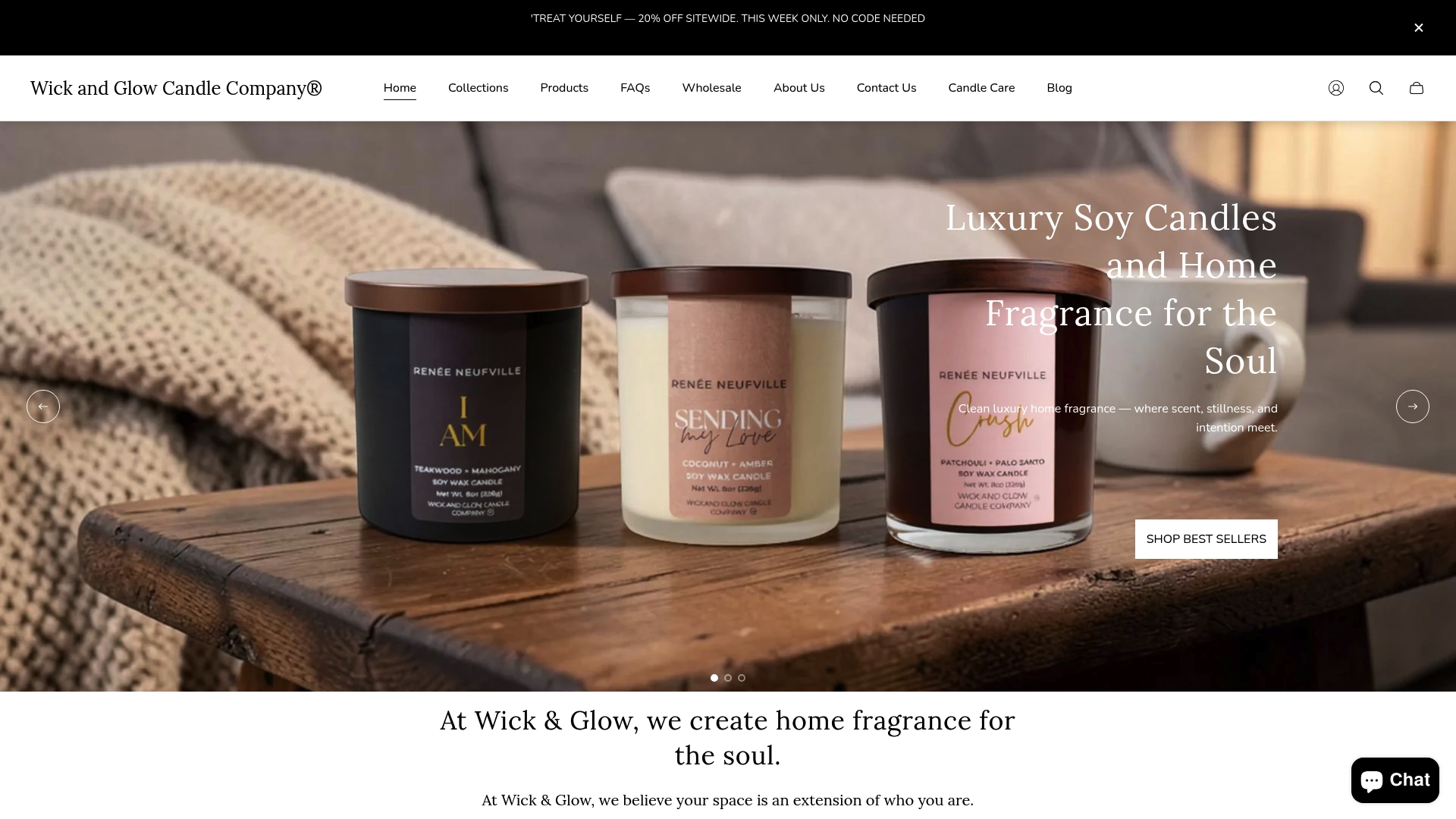
The Men Love Candles Too collection offers a range of candles built for anyone who wants luxury fragrance without compromise on quality or sourcing. For consumers who want to extend the life of every candle they own, the candle care guide covers wick trimming, burn timing, and storage practices that reduce waste and lower your personal carbon footprint per burn. Wickandglow also offers a reed diffuser as a flameless alternative for continuous scenting without combustion emissions.
FAQ
A candle’s carbon footprint varies by wax type, size, and supply chain, but lifecycle emissions generally range from 0.15 to 2.5 kg CO2e per candle. Recycled wax candles sit at the low end of that range.
Is soy wax actually better for the environment than paraffin?
Certified, domestically grown soy wax carries a lower fossil fuel footprint than paraffin, but commodity soy linked to South American deforestation can offset those gains. Certification and sourcing transparency are the deciding factors.
Do natural candles pollute indoor air less than paraffin?
Not in terms of particles. Natural candles produce significantly higher ultrafine particle concentrations than paraffin during burning, though paraffin releases more VOCs. Ventilation and wick trimming reduce exposure from both types.
How does a refillable candle vessel reduce carbon emissions?
Refillable vessels eliminate the production emissions tied to manufacturing a new container with every purchase. Reuse programs lower the per-burn carbon cost of packaging across the candle’s full lifecycle.
Choosing a candle made with recycled wax in a refillable vessel delivers the largest combined reduction, cutting both material production emissions and packaging waste in one decision.
Recommended


