Soy wax is defined as a plant-based, biodegradable wax made from hydrogenated soybean oil, and its role in environmental impact is more complex than most candle labels suggest. The material comes from a renewable crop, which gives it a clear edge over petroleum-derived paraffin. Yet the full picture of soy wax sustainability depends on where and how those soybeans were grown, how the wax was processed, and what ends up in the finished candle. Understanding these layers is what separates a genuinely eco-friendly purchase from a well-marketed one.
What is the role of soy wax environmental impact?
Soy wax earns its reputation as an eco-friendly material for two core reasons. First, soybeans are a renewable crop that can be replanted each season. Second, soy wax breaks down naturally in soil within weeks, while paraffin can persist for decades. That biodegradability matters when you consider how much wax residue ends up in landfills or washed down drains each year.
The carbon footprint story is more nuanced. Soy cultivation sequesters carbon during the growing season, which gives soy wax a lower lifecycle carbon footprint than paraffin under ideal conditions. The problem is that ideal conditions are not guaranteed. When soy farming expands into forests or grasslands, the carbon stored in those ecosystems is released, and the climate benefit disappears. This is why the environmental benefits of soy wax cannot be evaluated by wax type alone.
Paraffin wax is a byproduct of petroleum refining. Its production is tied directly to fossil fuel extraction, which carries a carbon cost that no amount of careful burning can offset. Soy wax, even imperfectly sourced, starts from a fundamentally different position on the sustainability spectrum. The gap between the two materials is real. It just requires honest accounting to measure it accurately.
How does soybean farming affect soy wax sustainability?
The agricultural origin of soy wax is where the environmental story gets complicated. Large-scale soy farming drives deforestation and monoculture farming, particularly in South America, where soybean expansion has been linked to Amazon rainforest loss. That deforestation releases stored carbon, destroys biodiversity, and disrupts water cycles. A candle made from Brazilian soy carries a very different environmental footprint than one made from Iowa-grown soy.
US and Canadian soybean production generally carries lower environmental risks. American soy farming operates under stricter land-use regulations, and the land converted for soy in the US was largely already in agricultural use. That distinction matters enormously when calculating the true impact of soy wax production.
Pesticide and fertilizer use adds another layer of concern. Conventional soy farming relies heavily on herbicides, particularly glyphosate, which can cause chemical runoff into waterways and degrade soil health over time. Monoculture planting also depletes soil nutrients faster than diverse crop rotations, creating long-term land degradation risks.
Certifications cut through the noise here. Look for these labels when evaluating soy wax sourcing:
-
USDA Organic: Prohibits synthetic pesticides and fertilizers, reducing chemical runoff.
-
Non-GMO Project Verified: Addresses genetic modification concerns, though not a direct sustainability guarantee.
-
RSPO (Roundtable on Sustainable Palm Oil): Less common for soy but signals supply chain accountability.
-
Rainforest Alliance Certified: Indicates verified land-use and biodiversity protections.
Certified organic soy reduces chemical input and soil degradation risks compared to conventional soy. Certification is not perfect, but it is the most reliable signal available to consumers who cannot audit supply chains themselves.
Pro Tip: When a candle brand lists its soy source by country or region, that transparency is a stronger sustainability signal than any single certification label.
Soy wax vs paraffin: which is actually better for the environment?
The comparison between soy wax and paraffin wax breaks down across several dimensions. Neither material is perfect, but the differences are meaningful.
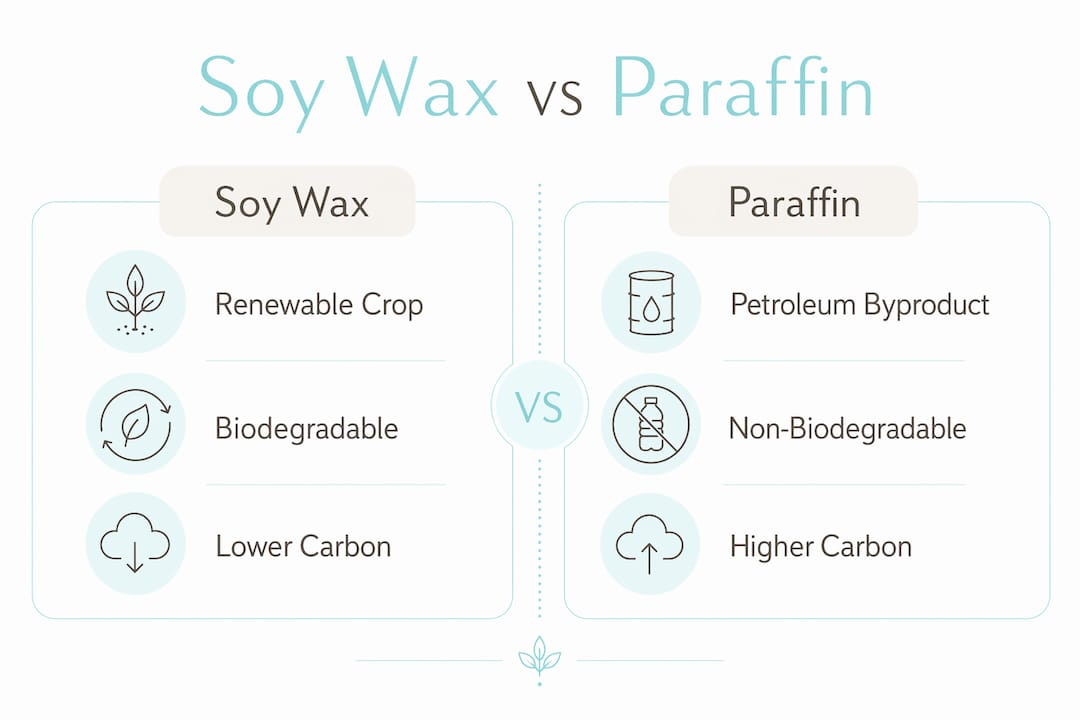
| Factor |
Soy wax |
Paraffin wax |
| Source |
Renewable soybean crop |
Petroleum byproduct |
| Biodegradability |
Breaks down in weeks |
Persists for decades |
| Carbon footprint |
Lower if sustainably sourced |
Higher, tied to fossil fuels |
| Indoor air quality |
Comparable with proper wick |
Comparable with proper wick |
| Deforestation risk |
Yes, if South American sourced |
No direct link |
The indoor air quality debate deserves special attention because it drives a lot of consumer decisions. The claim that soy candles burn “cleaner” than paraffin is widely repeated but oversimplified. Oversized wicks cause black smoke more than wax chemistry does. A well-wicked paraffin candle burns as cleanly as a soy candle. A poorly wicked soy candle produces just as much soot.
Both wax types emit volatile organic compounds (VOCs) during burning. The fragrance load and fragrance type in a candle affect VOC emissions far more than whether the wax is soy or paraffin. Phthalate-free, essential oil fragrances reduce VOC emissions regardless of wax type. That means a paraffin candle scented with clean fragrance oils can outperform a soy candle loaded with synthetic fragrance compounds.
Where soy wax holds a genuine advantage is in its lifecycle carbon footprint. Soy cultivation sequesters carbon during the growing season, while paraffin production adds to the carbon already extracted from fossil reserves. That advantage holds as long as the soy is not sourced from deforested land. When it is, the carbon math reverses.
Pro Tip: Check whether a candle brand uses cotton or wood wicks rather than zinc-core wicks. Zinc-core wicks are a bigger indoor air quality concern than wax type.
Do soy wax blends and additives affect environmental claims?
Most soy candles on the market are not pure soy wax. Pure soy wax is temperamental and prone to frosting, tunneling, and poor scent throw. Manufacturers typically blend soy with paraffin, coconut wax, or synthetic additives to improve performance. That blending is not inherently bad, but it does complicate “100% soy” claims.
A candle labeled “soy blend” could contain anywhere from 10% to 90% soy wax. Without disclosure of the blend ratio, consumers cannot accurately assess the environmental profile. Brands that publish their wax composition are more trustworthy than those that rely on vague “natural” or “plant-based” language.
Fragrance load is the other major variable. High fragrance concentrations, typically above 10% by weight, increase VOC output during burning regardless of wax type. Fragrance type and load influence indoor air quality more than wax origin alone. A soy candle with a heavy synthetic fragrance load is not a clean-burning candle, no matter what the label says.
Wick material also matters more than most people realize. Cotton wicks are the standard eco-friendly choice. Wood wicks create a pleasant crackling effect and burn cleanly when properly sized. For a deeper look at how wick choices affect sustainability, the sustainable candle wick guide from Wickandglow covers the key variables in detail. Zinc-core wicks, still found in some lower-cost candles, release trace metals during burning and are worth avoiding.
Supply chain transparency is a better sustainability indicator than marketing labels like “natural” or “soy.” A brand that discloses its wax source, fragrance ingredients, and wick materials gives you the information you need to make an informed choice. A brand that just says “natural soy” does not.
How to choose eco-friendly soy wax candles: a practical guide
Choosing a genuinely eco-friendly soy candle requires reading beyond the front label. These steps make the process straightforward:
-
Check the wax source. US or Canadian soy carries lower deforestation risk than South American soy. Brands that name their supplier or growing region are more credible.
-
Look for certifications. USDA Organic and Non-GMO Project Verified are the most meaningful for soy wax. They signal reduced pesticide use and greater supply chain accountability.
-
Read the fragrance disclosure. Phthalate-free and essential oil fragrances reduce VOC exposure. Avoid candles that list “fragrance” without further detail.
-
Inspect the wick. Cotton or wood wicks are preferable. If the wick has a metal core, confirm it is lead-free and zinc-free.
-
Consider local sourcing. Transportation emissions affect total footprint significantly. A locally produced candle with regional soy often has a lower overall carbon footprint than an imported one, even if the imported version carries more certifications.
-
Practice proper candle care. Trim your wick to 1/4 inch before every burn. Burn candles for no more than four hours at a time. Proper care reduces soot output and extends candle life, which reduces how often you need to buy replacements.
For a full breakdown of toxic ingredients to avoid in candles, Wickandglow’s guide covers fragrance chemicals, synthetic dyes, and wick materials that affect indoor air quality.
Pro Tip: Burn your candle until the wax pool reaches the edge of the jar on the first burn. This prevents tunneling and ensures you get the full life of the candle, which is the most sustainable use of the material.
Key takeaways
Soy wax is a genuinely better environmental choice than paraffin, but only when sourced from certified, non-deforested farmland and paired with clean fragrances and proper wick care.
| Point |
Details |
| Soy wax biodegradability |
Soy wax breaks down in weeks; paraffin persists for decades in soil. |
| Farming origin matters |
US and Canadian soy carries far lower deforestation risk than South American soy. |
| Certifications to seek |
USDA Organic and Non-GMO Project Verified are the most reliable sustainability signals. |
| Wick care beats wax type |
Proper wick trimming reduces soot more than switching from paraffin to soy. |
| Fragrance drives air quality |
Phthalate-free fragrances lower VOC emissions regardless of wax type. |
Why “natural” on a candle label means almost nothing
The word “natural” on a candle is one of the least regulated claims in consumer goods. I have spent years looking at candle ingredient lists, and the pattern is consistent: brands that lean hardest on “natural” and “soy” in their marketing are often the least transparent about where their soy comes from or what else is in the wax.
Soy wax is a genuinely good material. The plant-based origin, the biodegradability, the lower carbon footprint compared to paraffin. These are real advantages. But they only hold if the supply chain behind the wax is honest. A soy candle made from deforested Amazon soy, loaded with synthetic fragrance, and wicked with a zinc-core wick is not an eco-friendly product. The wax type is the least important variable in that equation.
What I have found actually works is treating supply chain transparency as the primary filter. If a brand cannot tell you where their soy comes from, that absence of information is itself informative. Wickandglow’s approach of plant-based ingredient transparency is the standard I think every candle brand should be held to. Consumers who ask these questions push the whole industry toward better practices.
Soy wax is a good starting point. Informed purchasing is what makes it a good outcome.
— B
Bring intentional fragrance home with Wickandglow
Wickandglow builds every candle around soy wax sourced with care, paired with phthalate-free fragrances and clean wicks. Each scent is inspired by R&B music and comes with a curated playlist, so the experience goes beyond fragrance into something you actually feel. The brand’s collaboration with Renée Neufville is a strong example of how artistry and conscious ingredient choices can coexist in one product.
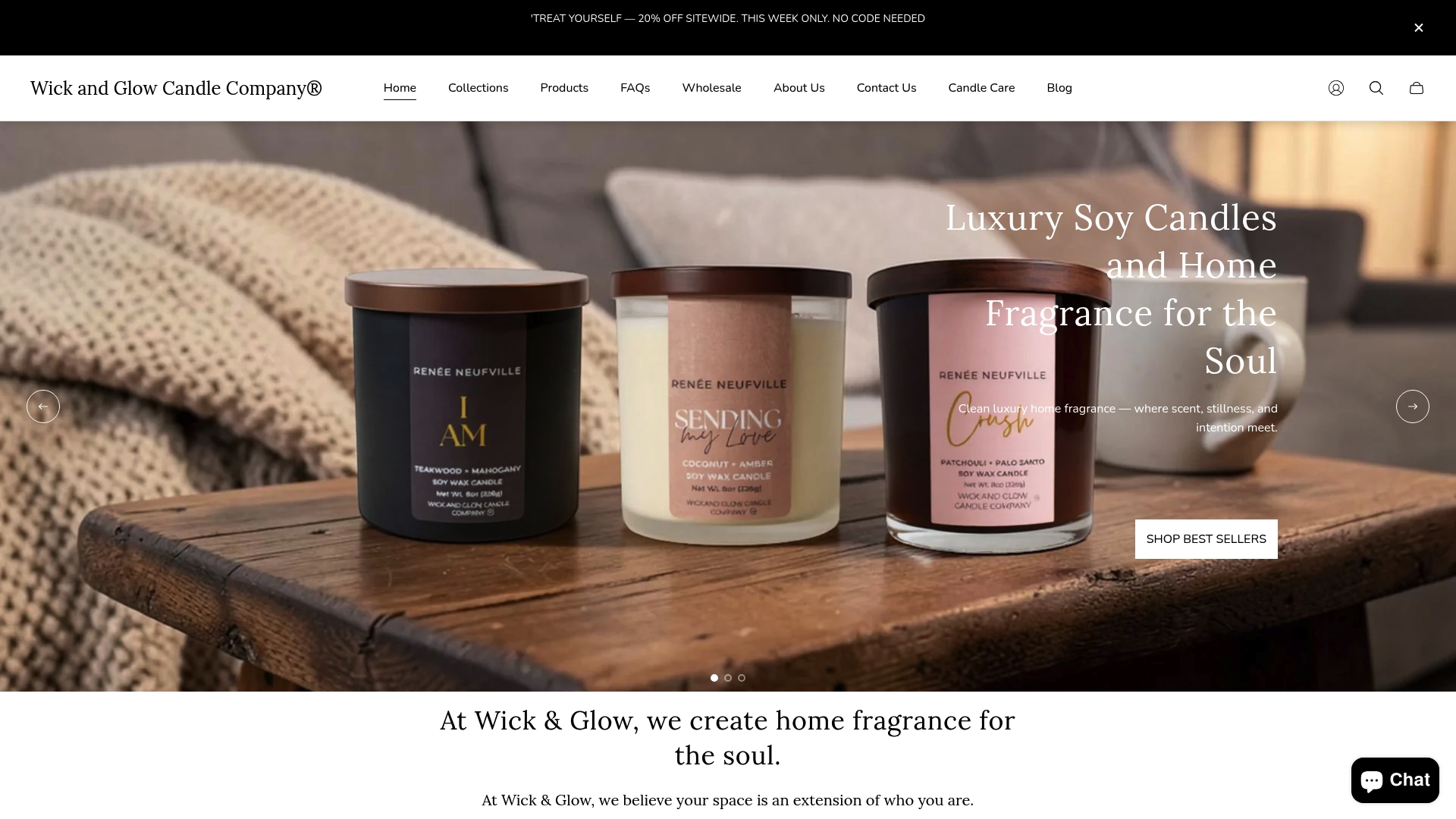
If you want a complete eco-friendly home fragrance setup, the soy candle scent bundle from Wickandglow includes a soy wax candle, reed diffuser, and room spray in one package. It is the most efficient way to experience the brand’s commitment to quality and clean ingredients across multiple formats.
FAQ
What makes soy wax more eco-friendly than paraffin?
Soy wax is plant-based and biodegradable, breaking down in soil within weeks, while paraffin is a petroleum byproduct that persists for decades. Soy also has a lower lifecycle carbon footprint when sourced from sustainably farmed soybeans.
Does soy wax burn cleaner than paraffin?
Not automatically. Wick size and material affect soot output more than wax type, and a well-wicked paraffin candle burns as cleanly as soy. Fragrance type matters more than wax for indoor air quality.
What certifications should I look for in eco-friendly soy candles?
USDA Organic and Non-GMO Project Verified are the most meaningful certifications for soy wax. They indicate reduced pesticide use and greater supply chain accountability compared to uncertified soy.
Is all soy wax linked to deforestation?
No. US and Canadian soy farming carries significantly lower deforestation risk than South American soy production, which has been linked to Amazon rainforest loss. Geographic origin is the key variable.
Are “100% soy” candles actually pure soy wax?
Most are not. Pure soy wax is prone to frosting and tunneling, so most manufacturers use blends or additives to improve performance. Brands that disclose their wax composition are more trustworthy than those that rely on vague “100% soy” claims.
Recommended


