Prioritize products with fully disclosed fragrance ingredients, and skip anything that lists only “fragrance” or “parfum” on the label. That single habit does more to reduce your exposure than any other change you can make this week.
Here’s what to do right now, before you read another word:
- Flip over one product you use daily (lotion, shampoo, laundry detergent) and check whether “fragrance” appears alone or with a full ingredient breakdown.
- Cross-check any suspicious product against EWG’s Skin Deep database before you buy it again.
- Swap one high-exposure item this week, ideally a leave-on product like body lotion or a plug-in air freshener, since those sit closest to your skin or run continuously in your air.
- Look for a genuine third-party mark like EPA Safer Choice or MADE SAFE rather than a vague “clean” or “natural” claim on the front label.
- Bookmark Safe Cosmetics’ fragrance guidance from Breast Cancer Prevention Partners as your go-to reference when you’re standing in an aisle unsure what a term means.
Three organizations anchor almost everything in this guide: the EPA’s Safer Choice program, the Environmental Working Group, and Safe Cosmetics from Breast Cancer Prevention Partners. Two industry bodies, IFRA and RIFM, also matter, though for a different reason. They set the fragrance industry’s own safety standards, and understanding their limits is part of shopping smart.
Key Takeaways
Avoiding synthetic fragrance chemicals comes down to one discipline: choosing products with full ingredient disclosure over anything that hides behind the word “fragrance,” as explained in detail in why avoid synthetic ingredients in your skincare.
| Point |
Details |
| Skip vague “fragrance” listings |
Prioritize brands that publish full fragrance ingredient lists rather than a single umbrella word. |
| Watch functional ingredients too |
Stabilizers and preservatives, not just aroma chemicals, account for many high-concern findings in fragrance formulas. |
| Target leave-on products first |
Lotions, deodorants, and continuous-release air fresheners create the highest and most constant exposure. |
| Use two or three verification tools together |
Combine EWG Skin Deep, EPA Safer Choice, and Safe Cosmetics guidance since none covers every gap alone. |
| Choose transparency over blanket avoidance |
Wickandglow’s phthalate-free, fully disclosed candles and diffusers show how intentional scenting can replace undisclosed, mass-market alternatives. |
Table of Contents
What Does “Fragrance” Actually Mean on a Label?
When a label says “fragrance,” “parfum,” or “aroma,” it’s not naming an ingredient. It’s naming a category that can legally contain dozens, sometimes hundreds, of individual chemicals, none of which the manufacturer has to name individually.
U.S. labeling rules treat fragrance formulas as trade secrets. Companies can bundle everything from synthetic musks to solvents to stabilizers under one umbrella word, and current EWG guidance confirms there’s no requirement to break that list apart for consumers. That protects a company’s formula from competitors copying it. It also means you, as the shopper, have no way to know what’s actually in the bottle unless the brand chooses to tell you voluntarily.
This is where marketing language gets slippery. A few terms worth knowing:
-
“Unscented” doesn’t mean fragrance-free. It often means the product contains masking agents, which are themselves fragrance chemicals used to cancel out a raw-material smell.
-
“Naturally scented” or “botanical blend” sounds reassuring, but plant-derived doesn’t equal hazard-free. Essential oils are complex chemical mixtures, and some contain allergens or compounds that react badly with sunlight.
-
“Fragrance-free” is closer to what most people want, but it’s not a regulated term either, so it’s worth confirming against the actual ingredient list rather than trusting the front-of-package claim alone.
The safest read of any of these labels is to treat marketing language as a hint, not a guarantee, and go straight to the ingredient list itself.
Pro Tip: Before trusting a “clean” or “natural” claim, search the brand’s website for a full fragrance ingredient disclosure page. If you can’t find one in under a minute, that absence is itself useful information.
The evidence is strongest for respiratory and skin reactions, and weaker or still emerging for longer-term systemic effects. That distinction matters because it tells you where to focus your caution.
A peer-reviewed review found that fragrance chemicals, both synthetic and natural, behave as volatile organic compounds that can affect indoor air quality and are linked to cutaneous, respiratory, and systemic effects. Limonene and linalool, two extremely common fragrance components, showed up repeatedly across the household products the researchers tested. These aren’t obscure lab chemicals. They’re in the candle on your shelf and the dryer sheet in your laundry room right now.
The scale of what’s unverified is the bigger story, though. A 2025 analysis found that 56% of fragrance ingredients had minimal or no public hazard data, and a small percentage were classified as high concern for links to cancer, mutagenicity, reproductive harm, or endocrine disruption. That same analysis identified numerous potentially harmful substances as fragrance ingredients in everyday personal care products sold in California.
| Finding |
Figure |
| Fragrance ingredients with minimal or no public hazard data |
56% |
| Fragrance ingredients classified as high concern |
Nearly 4% |
| Potentially harmful substances identified in California product data |
108 |
Interestingly, a lot of the high-concern findings trace back to functional ingredients, not the aroma chemicals themselves. Stabilizers, solvents, and preservatives used to hold a fragrance together accounted for a majority of the high-hazard flags in that same 2025 analysis, which is a detail most shoppers never think to consider.
Children, pregnant people, and anyone with asthma face higher stakes here. Developing lungs and skin barriers are more reactive to VOC exposure, and asthma in particular can be triggered or worsened by fragrance compounds circulating indoors. If you’re shopping for a nursery or a household with a respiratory condition, treat every “fragrance” listing as a reason to look closer, not a reason to relax.

Which Synthetic Fragrance Chemicals Should You Watch For?
A handful of names and chemical classes show up again and again, and knowing them turns an intimidating ingredient list into something scannable.
Individual chemicals worth recognizing:
-
Limonene — a citrus-derived compound found in roughly 72% of common household product formulations reviewed in the indoor air quality study; it can oxidize into skin sensitizers over time.
-
Linalool — present in about 45% of the same formulations; also a known sensitizer for some people with repeated exposure.
-
Synthetic musks — used to add depth and longevity to a scent; some persist in the environment and in human tissue.
-
Phthalates — often used as fixatives to make scent last longer, and flagged for suspected endocrine activity.
Grouped by class, the pattern gets easier to spot: synthetic musks, terpenes like limonene and linalool, phthalates, aldehydes, and functional additives (solvents, stabilizers, preservatives) each carry a different type of concern, from sensitization to endocrine disruption to plain old irritation.
The most commonly encountered sensitizers in fragranced products aren’t exotic industrial chemicals. They’re everyday terpenes like limonene and linalool, hiding in plain sight in lotions, candles, and cleaning sprays that most households already own.
Natural doesn’t automatically mean safer here either. Essential oils, the ingredients most often marketed as the “clean” alternative, are themselves complex chemical mixtures that can include allergens and phototoxic compounds, according to Safe Cosmetics’ analysis. The safest approach isn’t natural-versus-synthetic. It’s full disclosure and lower total fragrance load, regardless of the source.
Which Everyday Products Commonly Hide Synthetic Fragrance?
Personal care products are the obvious category. Household products are where most people get caught off guard.
Here’s where synthetic fragrance chemicals turn up most often:
-
Personal care: lotions, shampoos, conditioners, deodorants, and body wash, often at the highest concentrations because they sit directly on skin.
-
Laundry products: detergents and, notably, dryer sheets, which leave fragrance residue on every fabric surface in your home.
-
Household cleaners: all-purpose sprays, dish soap, and floor cleaners, where fragrance is added purely for perceived “cleanliness.”
-
Air fresheners and plug-ins: continuous-release devices that keep VOCs circulating in indoor air around the clock.
-
Candles: particularly mass-market paraffin candles using synthetic fragrance oils at high load percentages.
-
Scented packaging: gift bags, tissue paper, and even some mailers are treated with fragrance to create a “premium unboxing” impression.
Scent transfer is the sneaky part. A dryer sheet doesn’t just scent your clothes. It leaves a chemical film on the fabric that then rubs against your skin all day. Scented paper goods packed next to unscented items in a box can transfer odor and residue during shipping. If you’ve ever wondered why a “fragrance-free” item smelled faintly of something else after arriving in the mail, that’s usually why.
Fastest swaps for biggest impact: replace dryer sheets with wool dryer balls or a fragrance-free liquid softener, switch one leave-on personal care item (lotion or deodorant) to a disclosed-ingredient version, and unplug any continuous air freshener device. Those three changes alone eliminate most of your highest, most constant exposures.
How Do You Read a Label for Hidden Fragrance Chemicals?
Look for full ingredient disclosure first. Walk away from anything that lists only “fragrance” with nothing else beneath it, especially on a multi-ingredient product where you’d expect a longer list anyway.
Here’s a repeatable process for evaluating any product before it goes in your cart:
-
Check the ingredient list on the package. If “fragrance” or “parfum” appears with no further detail, treat that as a flag, not an automatic dealbreaker.
-
Search the brand’s website for a fragrance disclosure page. Transparent brands increasingly publish the full list of fragrance components used, sometimes down to individual essential oils and aroma chemicals.
-
Look for specific chemical names within that disclosure, then check them against a database like EWG’s Skin Deep if a name is unfamiliar.
-
Verify any certification claims. A logo means nothing if you can’t confirm it against the certifying body’s actual database.
-
Read the brand’s customer Q&A section, if one exists. Sensitized shoppers often ask pointed questions there, and how (or whether) a brand answers tells you a lot.
-
Compare “fragrance-free” claims against the ingredient list itself, since the term isn’t strictly regulated and masking agents can still be present.
The biggest red flag isn’t a scary chemical name. It’s the absence of any names at all next to a bold “naturally scented” or “clean fragrance” claim on the front of the package. Bloomberg’s analysis of California disclosure data found preservatives and other functional ingredients flagged as potential carcinogens sitting quietly inside products marketed as gentle or clean, which is exactly the gap that a bold claim with no ingredient backup should make you suspicious of.
Pro Tip: If a brand’s product page has no ingredient list and no fragrance disclosure page, email their customer service and ask directly. A company with nothing to hide usually answers within a day. Silence, or a copy-pasted marketing line, is an answer in itself.
Start small. You don’t need to overhaul your entire home in one weekend, and trying to usually backfires into abandoning the effort halfway through.
A realistic plan looks like this:
-
Pick one room or one product category to tackle first. Bathroom personal care items are a good starting point since they touch skin directly.
-
Cross-reference every product in that category against EWG’s Skin Deep database or a similar resource before repurchasing.
-
Choose EPA Safer Choice certified alternatives where they exist for that category, since Safer Choice criteria exclude listed carcinogens, mutagens, and known respiratory sensitizers.
-
Patch test any new product on a small area of skin for 48 hours before full use, especially if you have a history of sensitivity.
-
Run a short home trial, swapping one item at a time so you can tell which change actually made a difference if symptoms improve.
Quick reference checklist, worth screenshotting for your next shopping trip:
- Full ingredient list, not just “fragrance,” listed on the package or brand website
- Third-party certification you can verify independently (Safer Choice, MADE SAFE)
- No masking agents hiding behind an “unscented” claim
- Reasonable fragrance load, favoring products disclosing lower total concentrations
- A brand transparency page or public fragrance disclosure policy
- A patch test completed before full household use
Cost is a real consideration here, and it’s worth being honest about the trade-offs. DIY options, like scenting your home with essential oil sachets, cost less upfront but require more research to use safely. Certified products cost more per item but remove the guesswork. Fully disclosed branded products sit in the middle: often priced similarly to mass-market alternatives, with the added value of knowing exactly what you’re bringing into your home.
Which Databases and Certifications Actually Help You Verify Safety?
No single resource covers everything, which is exactly why using two or three together works better than trusting one logo on a bottle.
EPA Safer Choice certifies household and cleaning products that meet specific ingredient safety criteria. Its published criteria exclude listed carcinogens, mutagens, reproductive toxicants, persistent bioaccumulative toxics, and known respiratory sensitizers, and it applies extra scrutiny to natural complex substances like essential oil blends. Its scope, though, is mostly cleaning and household products, not the full range of personal care items.
EWG’s Skin Deep database rates personal care and household products based on ingredient hazard data, and it’s the most accessible tool for a quick lookup while shopping. Its limitation is that ratings depend on available public data, and as the 2025 hazard analysis showed, more than half of fragrance ingredients have minimal or no public hazard data to rate against in the first place.
Safe Cosmetics, run by Breast Cancer Prevention Partners, publishes plain-language guidance on fragrance chemicals and explicitly recommends avoiding products that list only “fragrance”. It leans advocacy rather than certification, so treat it as an education resource rather than a shopping seal.
IFRA (the International Fragrance Association) and RIFM (Research Institute for Fragrance Materials) set and assess safety standards used across the fragrance industry. Their assessments carry real technical weight, but some functional ingredients fall outside IFRA’s evaluation scope entirely, and much of RIFM’s underlying data remains proprietary rather than publicly searchable.
| What to check |
Trust signal |
Best for |
Practicality and cost |
| Full ingredient disclosure vs. “fragrance” only |
Safer Choice, MADE SAFE certification logos |
Sensitive skin, asthma, indoor air concerns |
Free to check; certified products often cost slightly more |
| Third-party hazard ratings |
EWG Skin Deep score |
Quick decisions while shopping |
Free database lookup; no cost to use |
| Advocacy and ingredient warnings |
Safe Cosmetics guidance |
Understanding which terms to distrust |
Free educational resource |
| Industry safety assessments |
IFRA standards, RIFM data |
Understanding formal industry limits |
Limited public access; more relevant to brands than shoppers |
How Can You Reduce Fragrance Exposure at Home Right Now?
Ventilation is the cheapest, fastest fix available to you, and most people underuse it. Opening windows for even ten minutes a day measurably clears accumulated VOCs, including the limonene and linalool that build up from cleaning products, candles, and personal care items.
Low-effort steps you can do today:
- Open windows daily, even briefly, to cycle indoor air.
- Remove plug-in air fresheners and continuous-release scent devices entirely.
- Switch to a fragrance-free laundry detergent for your next purchase.
Medium-effort changes worth planning for:
Higher-effort projects for later:
- Audit every scented product category in your home over a month, one category at a time.
- Replace dryer sheets with reusable wool dryer balls or a fragrance-free liquid alternative.
- Consider indoor air quality testing if you or a family member has ongoing, unexplained respiratory symptoms.
None of this requires throwing everything out at once. Layering these changes gradually gets you most of the exposure reduction without the overwhelm of a total home overhaul.
What Symptoms Suggest Fragrance Sensitivity, and When Should You See a Doctor?
Headaches, skin rashes, eye irritation, and worsening asthma symptoms after exposure to a scented product are the most commonly reported signs of fragrance sensitivity. If you notice a pattern where symptoms show up shortly after using a candle, cleaner, or lotion, that timing itself is useful diagnostic information.
Seek urgent medical care if you experience difficulty breathing, swelling of the face or throat, or a severe skin reaction after exposure. Those are not “wait and see” symptoms.
For everything short of that, documentation helps enormously:
- Keep a simple symptom diary noting the date, product used, and how you felt afterward.
- Photograph the product label and, where available, the full ingredient list before you finish or discard it.
- Save the product’s fragrance disclosure page if the brand publishes one, since that gives a clinician something concrete to review.
- Note the room, ventilation, and duration of exposure if the reaction happened at home.
A clinician can’t diagnose a fragrance sensitivity from a vague description of “feeling off around candles.” A dated log with specific product names and ingredient photos turns a fuzzy complaint into something an allergist can actually act on.
This guidance is educational, not a substitute for a professional medical evaluation. If symptoms persist or worsen, an allergist or your primary care provider is the right next step.
What Does Real Fragrance Transparency Look Like?
Genuine transparency isn’t a badge on a website. It’s a specific, checkable set of practices, and most brands that claim “clean” fragrance quietly skip most of them.
The concrete signals worth looking for: a full fragrance ingredient list published on the product page rather than buried in a PDF, disclosed fragrance oil suppliers, a stated restricted-substance policy that names what the brand won’t use, and a willingness to share batch testing information when a customer asks.
Wickandglow builds its home fragrance line around this exact standard. Every candle, diffuser, and room spray is formulated with clean, vegan, phthalate-free ingredients, and the brand treats fragrance transparency as a baseline expectation rather than a marketing bonus. That approach extends to how scents are built in the first place. Understanding how fragrance notes actually work in a candle makes it obvious why disclosure matters: a well-built scent profile depends on knowing exactly which materials create top, heart, and base notes, not just a vague “fragrance” line item.
Use this short checklist to evaluate any brand, not just candles:
- Does the product page list fragrance ingredients specifically, or just the word “fragrance”?
- Can you find a stated policy on restricted substances (phthalates, certain synthetic musks)?
- Does the brand disclose whether ingredients are vegan, cruelty-free, or third-party tested?
- Will customer service answer a direct ingredient question with specifics, not a script?
Why Intentional Scenting Beats Blanket Avoidance
Total fragrance avoidance sounds appealing in theory, but it’s not realistic or even necessary for most people. The more useful goal is intentional scenting: choosing fewer, better-disclosed products instead of filling every room with a dozen competing scent sources.
Health-conscious shoppers often assume the safest path is avoiding scent altogether. That’s overcorrecting. The actual risk driver isn’t scent itself, it’s undisclosed formulation stacked across too many products at once, from laundry to lotion to air freshener, each adding to a cumulative VOC load you never see coming. One well-disclosed candle burned occasionally in a ventilated room is a fundamentally different exposure than five different scented products running simultaneously with no ingredient transparency behind any of them.
Stewardship, in this context, means being deliberate rather than restrictive. Choose the products that tell you what’s inside. Skip the ones that won’t. That single filter does more work than any absolutist “fragrance-free everything” rule ever could.
See How Wickandglow Applies the Checklist
Every item on the checklist above, full ingredient disclosure, no hidden phthalates, transparent sourcing, is exactly what Wickandglow builds into its candles, diffusers, and room sprays from the first formulation step. You won’t find a bottle here that lists “fragrance” and nothing else.
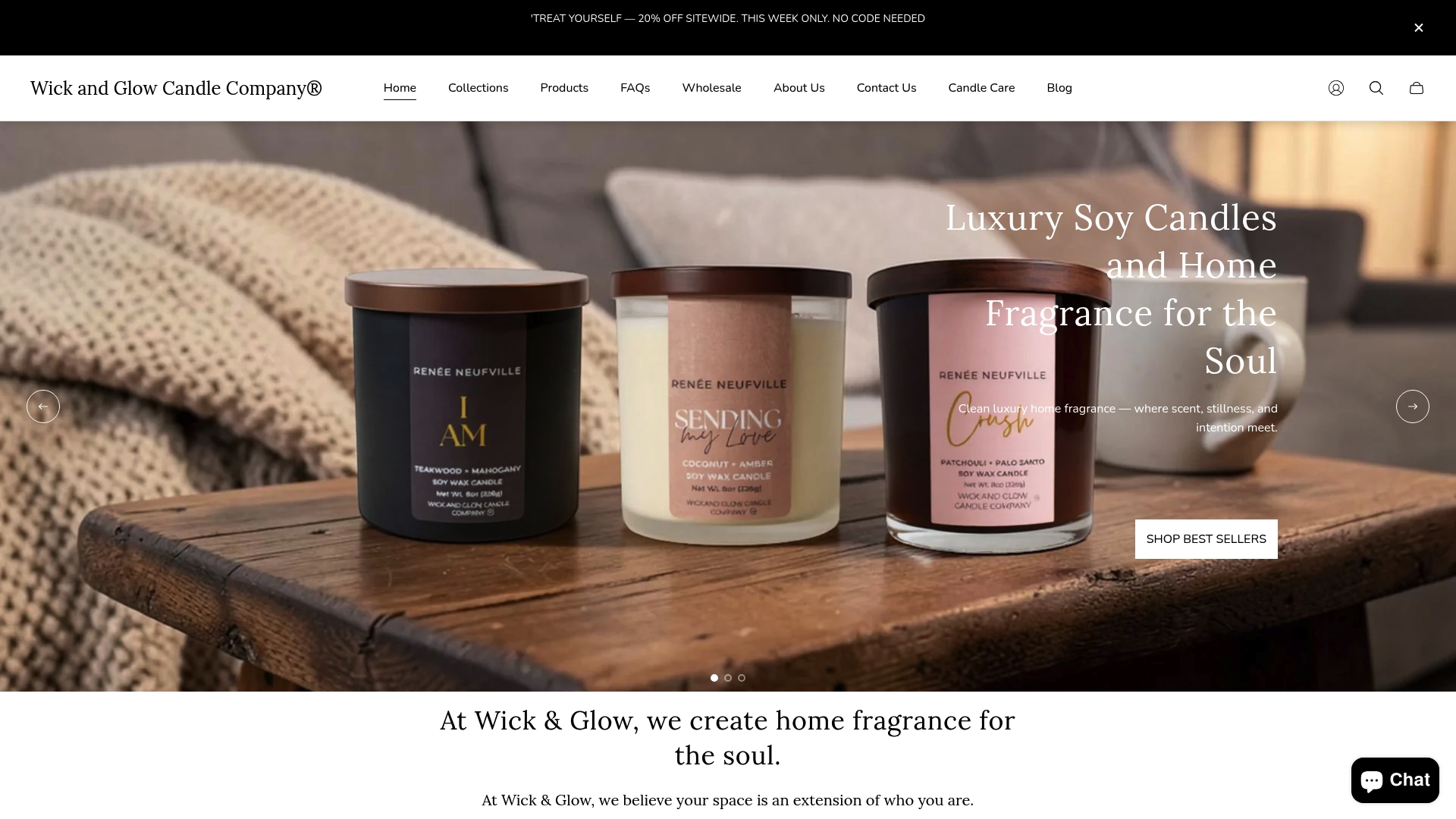
Each product is hand-poured with clean, vegan, phthalate-free ingredients, and the scent profiles are built around R&B songs with curated playlists attached, so the fragrance choice is intentional rather than an afterthought. If you want a starting point, the Men Love Candles Too collection is a good place to see the transparency standard in action across a range of scent profiles. Browse the collection, check the ingredient details on any product page, and pick one candle to replace a mass-market, undisclosed option currently sitting in your home.
Frequently Asked Questions
Does “fragrance-free” guarantee a product has no fragrance chemicals at all?
Not automatically. The term isn’t strictly regulated in the U.S., and some “fragrance-free” products still contain masking agents used to neutralize the raw-material smell of other ingredients. Check the full ingredient list to confirm.
Are natural essential oils always safer than synthetic fragrance chemicals?
No. Essential oils are complex mixtures that can include allergens and compounds that react with sunlight. The safer factor is full disclosure and appropriate concentration, not whether the source is natural or synthetic.
Which everyday products should I check first when avoiding synthetic fragrance chemicals?
Start with leave-on personal care items like lotion and deodorant, plus any continuous-release air freshener or plug-in, since those create the most sustained exposure.
Can synthetic fragrance chemicals actually affect indoor air quality?
Yes. A peer-reviewed review found fragrance chemicals behave as volatile organic compounds that measurably affect indoor air, with limonene and linalool detected across a wide range of household products.
Is a certification logo enough to trust a product’s fragrance claims?
Verify it against the certifying body’s actual database rather than trusting the logo alone. EPA Safer Choice, for example, publishes specific exclusion criteria you can check a product against directly.
Sources
A few resources are worth bookmarking if you plan to keep checking products over time, rather than relying on memory alone.
Each resource has real limits worth knowing. Safer Choice’s scope leans toward cleaning products, EWG’s ratings depend on hazard data that often doesn’t exist yet, and industry bodies like IFRA and RIFM keep much of their underlying safety data proprietary. Using them together closes most of those gaps, but none of them replaces reading the ingredient list in front of you.
Recommended


