Artisan candles are defined as handcrafted candles made in small batches using premium natural waxes, quality wicks, and carefully blended fragrances. Unlike factory-produced alternatives, each one is poured by hand with attention to temperature, cure time, and scent composition. That process produces a candle that performs differently, smells richer, and burns cleaner than anything made on an assembly line. If you have been curious about what separates a $6 store candle from a $40 hand-poured one, the answer lives entirely in the craft. Wickandglow is one brand that treats this process as an art form, pairing premium soy candles with R&B playlists to create a full sensory experience.
What are artisan candles explained: materials and process
Artisan candles start with the wax. Soy wax acts as a neutral, sustainable base that holds fragrance well and burns without the black soot associated with paraffin. Rapeseed and coconut waxes are also common in artisan production, each offering a slightly different burn rate and texture. The choice of wax is not aesthetic. It directly controls how long the candle lasts and how well it carries scent.
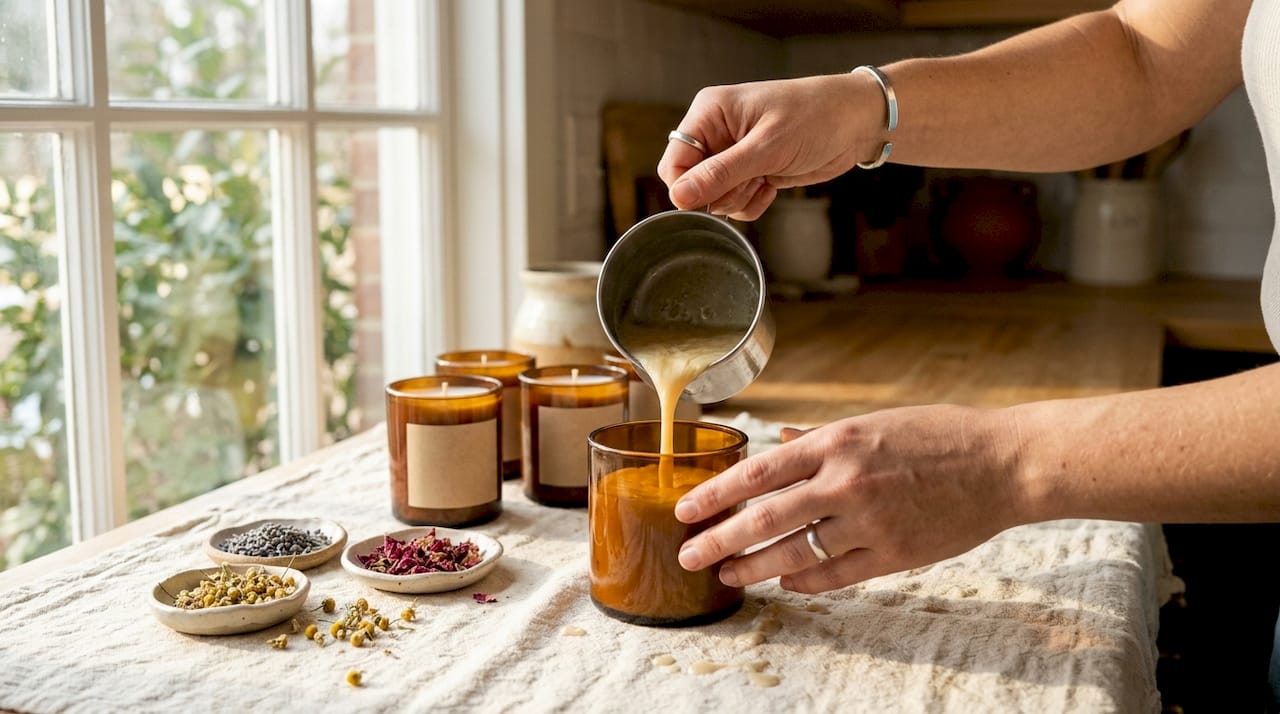
Wick selection matters just as much as wax. Quality artisan makers use natural cotton wicks that are lead-free and zinc-free, sized precisely to the container diameter. Wood wicks are another option, and they bring a soft crackling sound that adds a second sensory layer to the burn. Starting in may 2026, stricter European emission regulations will make wick quality a legal standard, not just a preference.
The production process follows a precise sequence:
-
Wax melting: Raw wax is melted to a controlled temperature before anything else is added.
-
Fragrance addition: Oils are blended in at 70–80°C to bond properly with the wax without evaporating key scent notes.
-
Controlled pouring: Wax is poured at 50–55°C to prevent sinkholes and create a smooth, even surface.
-
Curing: The finished candle rests for 7–14 days before it is sold or burned.
-
Quality check: Each candle is inspected by hand before packaging.
That curing step is where most people are surprised. Skipping it does not just reduce scent strength slightly. It fundamentally changes the candle’s performance because the fragrance molecules have not fully bonded with the wax.
Pro Tip: Never burn a freshly poured artisan candle. A cure time of 7–14 days allows fragrance oils to fully integrate with the wax, producing a noticeably stronger and more consistent scent throw when lit.
What benefits do artisan candles offer over mass-produced ones?
The most immediate difference is scent performance. Mass-produced candles are optimized for cold throw, meaning they smell strong in the store before you buy them. Artisan candles prioritize hot throw, the fragrance released while the candle actually burns. That shift in priority changes everything about how the candle performs in your home.
Beyond scent, the materials themselves matter for your health and your space. Natural waxes like soy and coconut burn without releasing synthetic soot into the air. Luxury hand-poured candles use small batches and premium ingredients, which means tighter quality control and better fragrance throw compared to high-volume factory production. That is not marketing language. It is a direct result of the process.
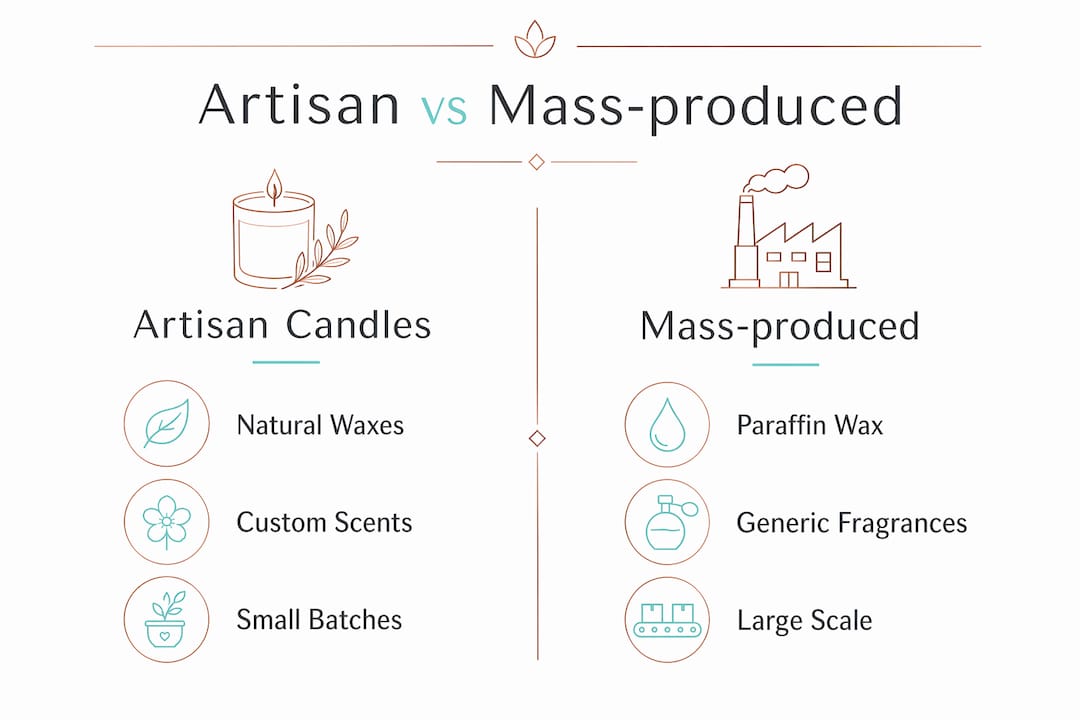
Here is a clear comparison of what separates the two categories:
| Feature |
Artisan candles |
Mass-produced candles |
| Wax type |
Soy, coconut, rapeseed |
Primarily paraffin |
| Wick material |
Natural cotton or wood |
Often synthetic blends |
| Scent focus |
Hot throw (while burning) |
Cold throw (in-store appeal) |
| Batch size |
Small, hand-poured |
High-volume factory output |
| Cure time |
7–14 days |
Minimal or none |
| Environmental impact |
Lower, renewable waxes |
Higher, petroleum-based |
The environmental case for artisan candles is straightforward. Soy and rapeseed waxes come from renewable crops. Paraffin is a petroleum byproduct. If you burn candles regularly, that difference adds up over months of use.
Artisan candles also give you real customization. You can choose specific fragrance profiles, container styles, and wick types. That level of choice does not exist in mass retail. Brands offering artisan candles treat each product as a considered object, not a commodity.
How do artisan candles create a ritual atmosphere?
Artisan candles do more than scent a room. They anchor a moment. The shift toward artisan candles reflects a broader lifestyle choice: slow living, where lighting a candle becomes a deliberate act of presence rather than a background habit. That distinction sounds small, but it changes how you experience your own home.
The sensory experience of a quality artisan candle works on multiple levels at once:
-
Scent: A well-cured candle with a strong hot throw fills a room gradually and consistently, without the sharp synthetic spike of cheaper alternatives.
-
Sound: Wood wicks produce a gentle crackling that mimics a fireplace, adding auditory texture to the atmosphere.
-
Visual: A clean, even flame on a smooth hand-poured surface looks different from a tunneled, uneven mass-market burn.
-
Ritual: The act of choosing a scent, trimming the wick, and lighting the candle creates a small but meaningful pause in the day.
Wickandglow builds this ritual layer directly into its products by pairing each candle with an R&B playlist. The scent and the music work together to create a specific emotional tone, which is something no factory line can replicate.
“Lighting a candle is a daily ritual contributing to wellbeing and presence, shifting shopping patterns towards artisanal products. Consumers increasingly value the personal and sensory experience over basic light or fragrance needs.”
For candles used in meditation or self-care routines, the artisan difference is especially pronounced. A candle that burns evenly, smells true to its fragrance, and adds a crackling sound creates a much more grounding environment than one that tunnels and fades within an hour.
What should you know when choosing and caring for artisan candles?
Choosing a quality artisan candle starts with reading the label. A reputable maker will list the wax type, wick material, and fragrance load clearly. If those details are missing, that is a signal worth noting. Reading candle ingredient labels gives you the information you need to compare products honestly and avoid candles that use “artisan” as a marketing word without the craft to back it up.
Once you have a quality candle, how you burn it determines how long it lasts and how well it performs. The most common mistake is burning a candle for too short a time on the first use. Soy wax has a memory. If the first burn does not reach a full melt pool across the surface, the candle will tunnel for its entire life.
Key care practices that protect your investment:
-
First burn: Let the candle burn until the entire top layer is liquid, typically 2–3 hours for a standard jar.
-
Wick trimming: Trim the wick to about 1/4 inch before every burn to prevent mushrooming and soot.
-
Burn sessions: Keep each session to 4 hours maximum to avoid overheating the container and degrading the wax.
-
Storage: Keep candles away from direct sunlight and heat, which can cause the fragrance to fade before the candle is even lit.
Matching wick size to container is something artisan makers handle during production. That precision is one reason a well-made artisan candle burns evenly while a poorly made one does not, regardless of how carefully you use it.
Pro Tip: If your candle has a wood wick, trim it slightly shorter than you would a cotton wick, around 1/8 inch. Wood wicks that are too long produce a large, unsteady flame and burn through the wax too quickly.
Key Takeaways
Artisan candles deliver superior scent, cleaner burns, and a richer sensory experience because they are made with premium natural waxes, quality wicks, and a precise crafting process that mass production cannot replicate.
| Point |
Details |
| Premium wax matters |
Soy, coconut, and rapeseed waxes burn cleaner and hold fragrance better than paraffin. |
| Cure time is non-negotiable |
A 7–14 day cure allows fragrance to bond fully with wax for a stronger hot throw. |
| Hot throw beats cold throw |
Artisan candles perform while burning, not just while sitting on a shelf. |
| Label transparency signals quality |
Reputable makers list wax type, wick material, and fragrance load clearly. |
| First burn sets performance |
Allowing a full melt pool on the first burn prevents tunneling for the candle’s entire life. |
Why artisan candles are worth the attention they are getting
I have spent years paying attention to what makes a candle worth buying, and the honest answer is that most people underestimate how much the process matters. The artisan candle category has grown because consumers got tired of candles that smelled great in the store and delivered almost nothing at home. That gap between cold throw and hot throw is real, and once you notice it, you cannot un-notice it.
What I find genuinely interesting about the current moment is that artisan candles have become a proxy for a larger value shift. People are choosing things that were made carefully, by someone who cared about the result. That is not nostalgia. It is a rational response to years of buying disposable products that underperformed.
The challenge is that “artisan” has become a label that anyone can apply. I always tell people to look past the branding and check the wax, the wick, and whether the maker lists a cure time. Those three details separate the real thing from the imitation. Wickandglow is a good example of a brand that earns the label. The collaboration with Renée Neufville and the R&B playlist concept shows that the artistry extends beyond the candle itself into the full experience it creates.
The best candles for self-care rituals are not necessarily the most expensive ones. They are the ones made with enough care that they perform consistently, burn cleanly, and make the room feel different when they are lit. That is the standard worth holding.
— B
Wickandglow’s artisan candle collections
Wickandglow crafts small-batch luxury soy candles with fragrance profiles inspired by R&B music, each paired with a curated playlist that deepens the sensory experience.
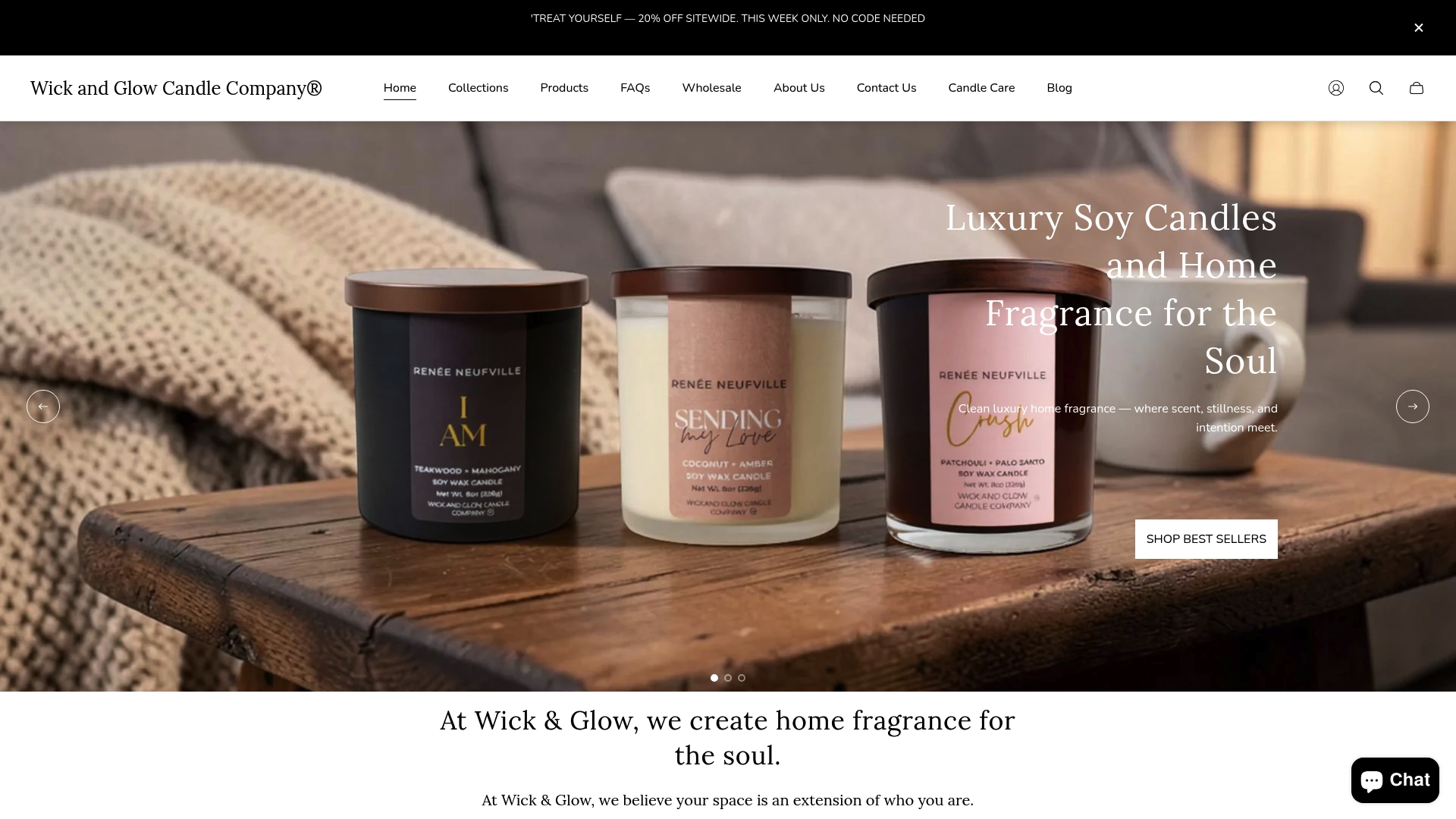
The Scenting My Love Collection, created in collaboration with artist Renée Neufville, brings together premium fragrance and musical artistry in a way that no mass-produced candle can match. For those who want a complete self-care set, the R&B Mixtape Self-Care Edition offers a curated collection of luxury soy candles built around mood and ritual. Every product is made with the same attention to wax quality, wick selection, and cure time that defines genuine artisan craft. Visit Wickandglow’s candle care guide to get the most from every burn.
FAQ
What makes a candle “artisan”?
An artisan candle is handmade in small batches using premium natural waxes, quality wicks, and carefully blended fragrances. The defining factors are the materials used, the precision of the process, and the cure time applied before sale.
Are artisan candles better for indoor air quality?
Natural waxes like soy and coconut burn without the synthetic soot produced by paraffin, making artisan candles a cleaner choice for indoor environments. Lead-free and zinc-free wicks further reduce emissions during burning.
Why do artisan candles smell stronger when lit than in the store?
Artisan makers prioritize hot throw, the scent released while the candle burns, rather than cold throw, which is the unlit fragrance designed to attract buyers in retail settings. A properly cured soy candle delivers its full fragrance profile only when the wax is melted and warm.
How long should I let an artisan candle cure before burning it?
A cure time of 7–14 days allows fragrance oils to fully bond with the wax. Burning before this period produces a noticeably weaker scent and diminishes the candle’s overall performance.
What is the most common mistake when burning artisan candles?
The most common mistake is ending the first burn too early. Soy wax develops a burn memory, so stopping before a full melt pool forms across the surface causes tunneling that persists for the life of the candle.
Recommended


