A refillable candle system lets you reuse one vessel indefinitely by swapping a premeasured wax refill and a matched wick into the same jar each time. The mechanism is straightforward: a silicone insert holds the wick centered inside the glass, the refill wax (beads or a puck) fills the vessel around it, and the candle burns exactly as a traditional one would. When it’s done, you clean the jar, pop in a new refill, and start again.
Three things you need for every refill:
-
Starter jar + silicone wick insert (reusable, kept between refills)
-
Matched wick (sized to the brand’s soy wax blend and fragrance load)
-
Refill wax (beads or a poured puck, pre-fragranced and premeasured)
Wickandglow builds its refillable line around clean, vegan, phthalate-free soy wax formulas, so every component you’re putting back into that jar is as considered as the first pour.
Table of Contents
What parts make up a refillable candle system?
Understanding the hardware before your first refill saves a lot of guesswork.
-
The starter jar. Heavy glass is the standard for good reason: it handles heat evenly, resists cracking as wax pools form, and looks intentional on a shelf. This is the piece you’re investing in and keeping forever.
-
The silicone insert. This small, flexible ring sits inside the jar and does two jobs: it centers the wick during the burn, and it makes cleanup easy. After the last burn, you flex the insert to pop out the remaining wax disk cleanly.
-
The matched wick. Wick sizing is calibrated to the specific wax blend and fragrance concentration a brand uses. A wick that’s too thin produces a weak flame and poor scent throw; one that’s too thick runs hot and generates soot. Never substitute a generic wick for the one included in your refill kit.
-
Refill wax forms. Beads pour freely and pack around the wick without pouring hot wax. A pre-poured puck or disk drops in as a single piece. Both deliver the same result; beads give you slightly more control over packing density, which affects burn consistency.
Pro Tip: Before every refill, inspect the silicone insert for residue buildup in the wick channel. Wax trapped there can hide small wick damage that causes uneven burns later.
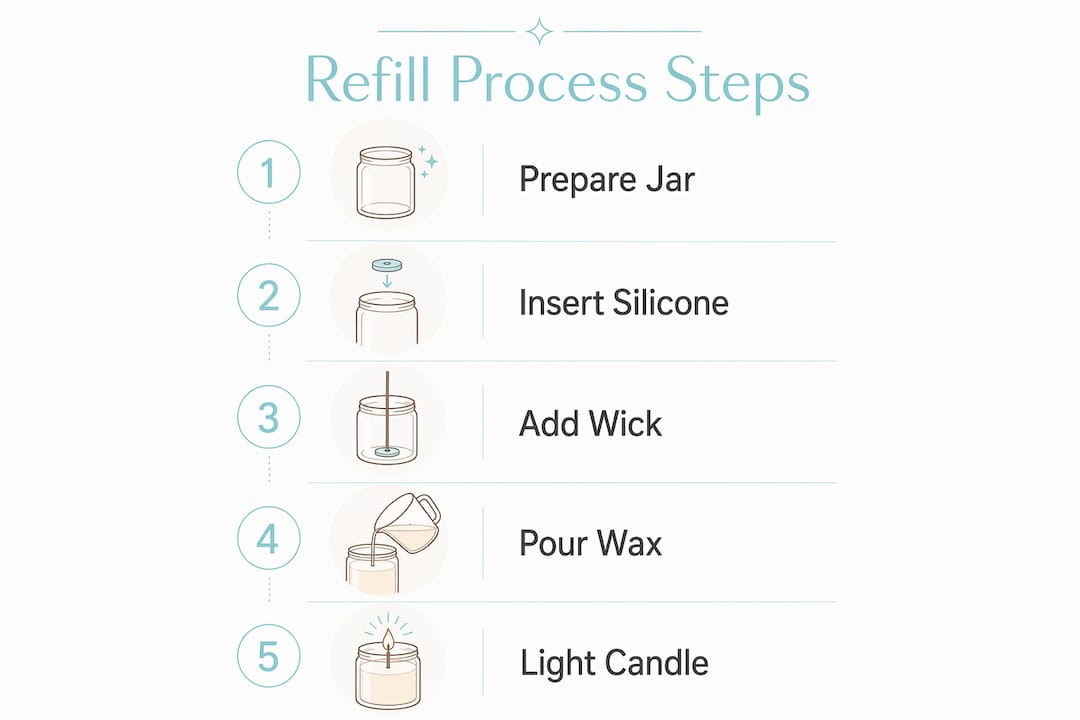
How do you actually do a refill, step by step?
The workflow runs: prep → wick → fill → set → first burn. Follow it in order and you’ll get the scent throw and burn life the refill was designed to deliver.
-
Unpack the refill kit. Lay out the wax beads (or puck), the matched wick, and your clean starter jar with its silicone insert.
-
Prepare the jar. Wipe the inside with a dry cloth to remove any residue from the previous burn. The glass should be completely cool before you start.
-
Thread the wick. Push the wick through the hole at the bottom of the silicone insert, leaving enough length to trim above the wax line later.
-
Place the insert. Set the silicone insert into the jar so it sits flush against the bottom. The wick should hang centered in the vessel.
-
Fill with wax. Pour the entire bag of beads in one go, or seat the puck. Pack beads down gently as you go to fit the full amount.
-
Re-center the wick. Once all the wax is in, adjust the wick so it sits straight in the middle. A crooked wick burns unevenly.
-
Trim the wick. Cut it to about a quarter inch above the wax surface before the first light. A longer wick produces a larger, hotter flame and coats the glass with soot.
-
First burn. Let the candle burn until the entire top layer has melted into a full pool. This prevents tunneling and opens up the fragrance fully. Don’t cut it short.
Pro Tip: When filling with wax beads, pack them slightly mounded at the top rather than level. The mound gives the flame consistent fuel as the outer beads cascade inward during the burn, and it prevents the wick from being extinguished by loose, shifting wax.
Safety reminders worth keeping in mind: burn on a heat-safe surface, keep the room ventilated, and never leave a lit candle unattended. Avoid burning longer than four hours in a single session.
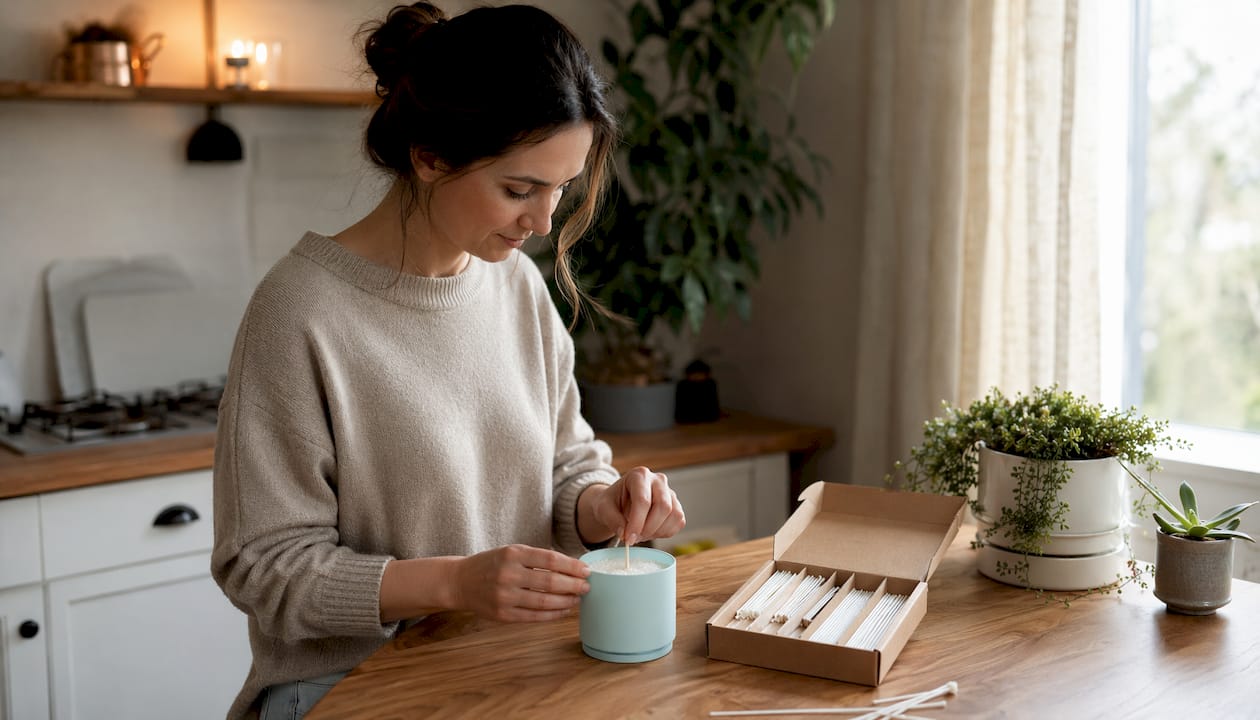
How do you care for the jar and stay safe between refills?
Regular maintenance keeps the glass looking like a design object rather than a used container.
- Wipe the rim and inner walls with a dry cloth after each burn while the wax is still slightly warm but not liquid.
- Rinse the silicone insert with warm water after removing it. Soap is fine; just dry it completely before the next refill.
- When the candle reaches its last quarter inch of wax, extinguish the flame, let it cool, then flex the silicone insert to pop out the remaining wax disk. That disk still carries fragrance and can be used in a wax warmer or tea-light warmer. Use it with caution in any alternate application.
- Inspect the glass for cracks before every refill. A hairline crack that’s invisible when cold can widen under heat.
Signs to stop burning immediately: a flame taller than half an inch, heavy black soot on the glass, or any visible crack in the vessel. If any of these appear, extinguish the candle and contact the brand before relighting.
Store unused refills in a cool, dry spot away from direct sunlight. Heat and UV exposure degrade fragrance oils before the refill even goes into the jar.
Why do luxury buyers choose refillable candle systems?
The sustainability case for refillables is real, but for design-conscious buyers, the stronger argument is about the vessel itself.
-
Less waste. One jar, many burns. No stack of empty glass containers.
-
Lower long-term cost. Refill kits cost less than a full new candle because you’re not paying for a new jar each time.
-
Scent flexibility. Swap fragrances seasonally or to match a mood, a playlist, or a room’s purpose without buying new hardware.
-
Design continuity. A jar you love stays on your shelf indefinitely. The object keeps its place in your home’s aesthetic.
-
Ingredient confidence. Clean wax blends (soy, coconut/rapeseed), vegan fragrance oils, and phthalate-free formulas are the standard for quality refillable brands, and that transparency matters when you’re burning something in your living space regularly.
How do you choose the right refillable candle system?
Not all refill systems are interchangeable. A few non-negotiables before you buy:
-
Compatible refill format. The refill must be designed for your specific jar diameter and insert. A mismatched fit means an off-center wick and an uneven burn.
-
Matched wick included. If the refill kit doesn’t include a wick sized for that formula, look elsewhere.
-
Transparent ingredient list. Soy burns cleanly and carries fragrance well. Coconut/rapeseed blends tend to have a stronger cold throw. Know what you’re burning.
-
Clear refill instructions. A brand that makes refilling easy is one that wants you to actually do it.
Decision tips by wax type:
-
Soy wax burns cooler and slower, with a softer scent throw. Good for everyday ambient fragrance.
-
Coconut/rapeseed blends run slightly warmer and project scent more aggressively. Better for larger rooms.
-
Soy blends with added fragrance load hit the middle ground most luxury brands prefer.
On buying models: a single refill purchase suits occasional burners who want to try a new scent before committing. A seasonal refill subscription makes sense if you burn consistently and want your scent rotation handled for you.
Troubleshooting common refillable candle problems
Tunneling on first burn. You didn’t let the melt pool reach the edges. The fix for next time is a longer first burn. For bead-based systems, some tunneling early on is normal as beads cascade inward.
Weak scent throw. Usually a wick that’s too short, a jar that hasn’t warmed up fully, or a refill stored in a warm spot before use. Trim to a quarter inch, let the candle burn for at least an hour before judging the throw, and check storage conditions.
Excess soot on the glass. The wick is too long. Extinguish, let it cool, trim it back, and wipe the glass before relighting.
Flame too large or flickering. Drafts are the most common cause. Move the candle away from vents or open windows. If the flame stays large after eliminating drafts, the wick may be the wrong size for the refill.
Wick won’t stay centered. The silicone insert isn’t seated properly. Extinguish, let the wax cool slightly, and reposition the insert before the wax sets.
Pro Tip: For persistent tunneling in a bead system, gently press the outer beads toward the center while the wax is still warm (not liquid). This helps the melt pool widen without disturbing the flame.
If soot buildup, cracking, or flame issues persist after troubleshooting, stop burning and reach out to the brand. Some hardware problems aren’t fixable at home.
How long does a refill last, and what does it cost?
Burn life depends on refill size, how long you burn per session, wick size, and fragrance load. Here are typical ranges:
| Refill size |
Estimated burn hours |
Approximate U.S. price range |
| Small (4–6 oz) |
Typically enough for multiple burn sessions |
— |
| Medium (8 oz) |
Designed for longer use per refill |
— |
| Large (16 oz) |
Suitable for extended burn durations |
— |
Starter jars typically cost a moderate amount depending on vessel design and brand positioning. After that initial purchase, you’re paying only for refills.
Factors that shorten burn life: burning more than four hours at a stretch, a wick that’s too long, and high fragrance loads (which burn slightly faster). Factors that extend it: shorter sessions, proper wick trimming before every burn, and keeping the jar away from drafts.
Why Wickandglow approaches refillables differently
Wickandglow’s refillable candles are built around a specific idea: that scent should tell a story, and the vessel that holds it should be worth keeping. Every product uses clean, vegan, phthalate-free soy wax, and the fragrance lineup is drawn from R&B music, each scent paired with a curated playlist so the sensory experience extends beyond the burn.
-
Starter jars and refill kits are designed as a system, so compatibility is built in from the start.
-
Artist collaborations, including work with Renée Neufville, ground the scent curation in real creative partnerships rather than generic fragrance naming.
-
Scent swaps by season or mood are the intended use case, not an afterthought. The playlist pairing makes each refill feel like a new chapter rather than just a replacement.
-
Single-refill and curated seasonal options are both available, so you can explore before committing to a rotation.
Pro Tip: Match your refill choice to the room’s purpose and the playlist you’re building. A warm, woody scent with a late-night R&B playlist works differently in a bedroom than a bright citrus refill in a kitchen. Let the music guide the scent selection.
For readers who want to layer fragrance beyond candles, Wickandglow’s phthalate-free reed diffuser refill oil uses the same clean-ingredient philosophy and pairs well with candle refills in the same room.
Key Takeaways
A refillable candle system works because one reusable vessel, a silicone insert, and a matched wick let you swap premeasured wax refills indefinitely without sacrificing scent performance or burn quality.
| Point |
Details |
| Three core components |
Every refill needs a starter jar, a silicone insert, and a matched wick sized to the wax blend. |
| First burn is critical |
Burn until a full melt pool forms across the top to prevent tunneling and unlock full scent throw. |
| Wick trimming before every burn |
Trim to a quarter inch above the wax surface to prevent soot and unsafe flame height. |
| Refill cost drops over time |
After the starter jar purchase, you pay only for refill kits, which cost less than a full new candle. |
| Wickandglow’s approach |
Music-inspired soy wax refills, artist collaborations, and playlist pairings make each refill a curated sensory experience. |
The ritual is the point
There’s a version of the refillable candle conversation that stays entirely practical: cost per burn, wick diameter, wax type. That’s all real and worth knowing. But the more interesting argument for a well-made refillable system is what it does to the act of burning a candle.
When you keep the same jar for years and rotate what goes inside it, the object accumulates meaning. You start to associate that vessel with specific seasons, specific moods, specific music. A refill becomes a decision, not just a replacement. You’re choosing the scent for tonight’s playlist, for this week’s atmosphere, for the shift from summer to fall. That’s a different relationship with fragrance than buying a new candle every few months and discarding the last one.
Wickandglow’s music-inspired approach makes this explicit. The playlist isn’t a marketing add-on; it’s the mechanism by which scent becomes memory. Pair a warm cognac and tobacco refill with a late-night R&B set, and that combination becomes its own kind of ritual. The jar stays. The scent rotates. The ritual deepens.
Wickandglow’s refillable starter kits are worth trying
If you’ve been burning through full candles and discarding the jars, a starter kit from Wickandglow is a low-friction way to change that habit. The kit gives you a heavy glass vessel, a silicone insert, a matched wick, and your first refill, all calibrated to work together. Clean soy wax, vegan fragrance oils, no phthalates.

From there, you can pick up a single refill to try a new scent, or move into a curated seasonal rotation that swaps fragrances as your mood and playlists shift. Each refill comes with instructions, so your first solo refill is straightforward. Browse the full collection, including the Men Love Candles Too lineup, to find the vessel and scent that fits your space. Follow the refill instructions for the best scent throw and a safe, even burn.
Useful sources and next steps
Recommended


