Candle scent families are defined groups of fragrances organized by their dominant aromatic character, and knowing them is the fastest way to stop buying candles you end up hating. The main fragrance categories include Floral, Citrus, Woody, Gourmand, Fresh & Clean, Spicy/Warm, and Fruity. Each family carries a distinct emotional signature that shapes how a room feels. Brands like Yankee Candle use these categories to help customers navigate their collections, and understanding them gives you the same advantage whether you’re shopping online or standing in a store.
1. candle scent families explained: the full breakdown
Most candle fragrances fall into a handful of families that define their scent profile and guide how they blend with other oils. Here is a clear profile of each one.
Floral
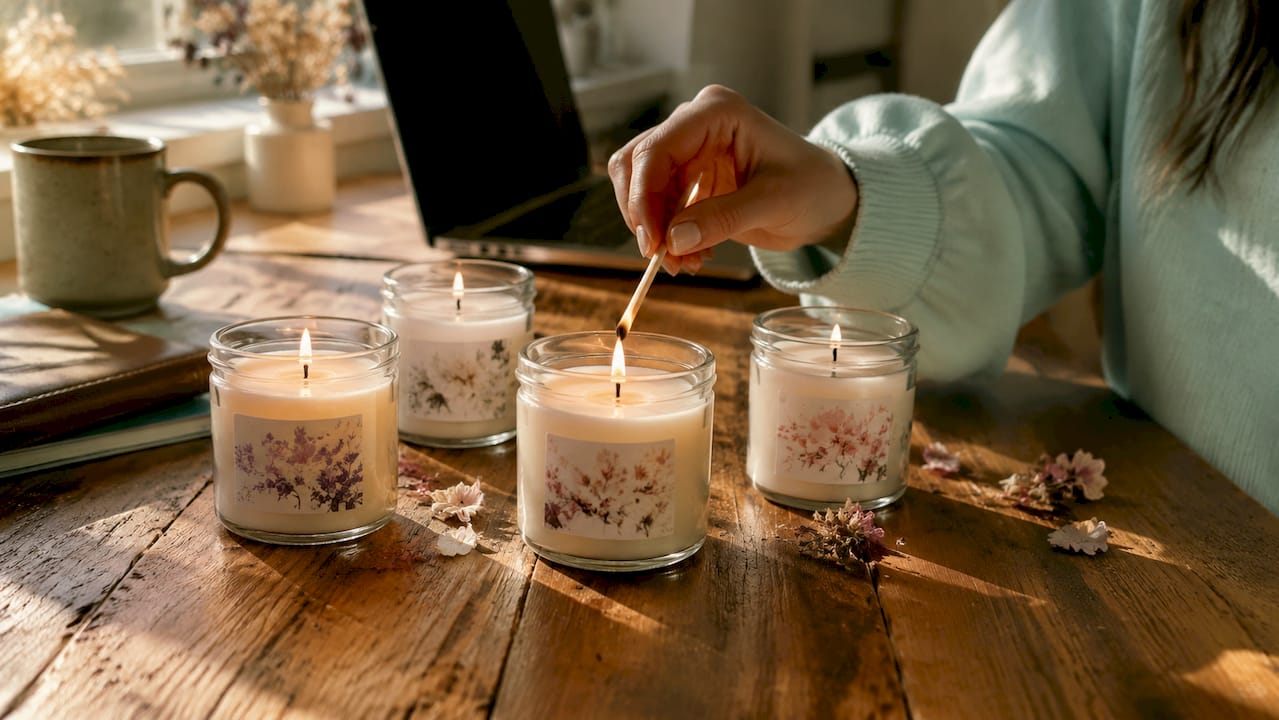
Floral candles center on notes like rose, jasmine, peony, and lavender. Floral scents are the most traditional candle family with broad appeal across age groups and decorating styles. They create a clean, romantic atmosphere that works especially well in bedrooms and guest bathrooms. Lavender sits at the softer end of the family, while jasmine and tuberose push toward something more intense and sensual.
Citrus
Citrus candles use lemon, bergamot, grapefruit, and orange to deliver a sharp, energizing lift. Citrus and Fresh families add a vibrant focal point without overwhelming a space with heavy scent. Kitchens and home offices benefit most from this family because the brightness counteracts cooking odors and mental fatigue. Bergamot in particular bridges citrus and floral, which is why it appears in so many premium blends.
Woody
Woody candles feature cedar, sandalwood, patchouli, and oakmoss. Cedar and sandalwood create warm, grounding atmospheres that feel elegant without being heavy. This family suits living rooms, studies, and home libraries where you want a sense of depth and permanence. Woody scents are relatively niche compared to Floral or Citrus, but they carry a sophistication that enthusiasts return to repeatedly.
Gourmand
Gourmand candles smell edible. Vanilla, caramel, brown sugar, coffee, and toasted almond are the signature notes. The Gourmand family peaks in popularity during fall and winter when people want their homes to feel like a warm bakery. Dining areas, reading nooks, and living rooms are the natural home for this family. The risk with Gourmand is going too sweet. The best versions anchor the sweetness with a woody or spicy base note.
Fresh & clean
Fresh & Clean candles use sea salt, clean linen, white tea, cucumber, and mint. This family is the most versatile of all because it works in nearly every room without demanding attention. Think of it as the neutral wall color of home fragrance. It refreshes without transforming, which makes it a reliable choice for shared spaces and open floor plans.
Spicy/warm
Spicy candles bring cinnamon, clove, cardamom, amber, and black pepper into the room. This family is bold and seasonal, peaking in fall and winter alongside the Gourmand category. The difference between Spicy and Gourmand is texture. Spicy scents feel drier and more complex, while Gourmand scents lean sweet and soft. A cinnamon and clove candle feels like a fireplace. A vanilla caramel candle feels like dessert.
Fruity
Fruity candles use apple, peach, berries, mango, and fig. This family is the most playful of the group and works well in spaces where you want a lighthearted, casual energy. Sunrooms, guest rooms, and children’s spaces respond well to Fruity scents. Fig is the exception in this family. It carries a green, slightly earthy quality that pushes it toward Woody territory, which is a good example of how families can overlap.
Pro Tip: When a candle description lists both a fruity top note and a woody base, the family classification depends on which note dominates after the first 30 minutes of burn. Light it, wait, and then decide if it belongs in your rotation.
2. how to choose candle scents by room and mood
Matching a scent family to a room is not about personal preference alone. Room function shapes which family performs best.
-
Kitchen: Use Citrus or Fresh & Clean. Lemon and grapefruit neutralize cooking smells and keep the space feeling hygienic. Avoid Gourmand candles here because sweet vanilla layered over garlic is not the combination you want.
-
Bedroom: Use Floral or Woody. Lavender is the most studied scent for sleep support, and sandalwood adds a grounding quality that slows the mind down. Keep intensity low in bedrooms. A subtle scent works harder than an overpowering one.
-
Living room: Use Woody, Gourmand, or Spicy depending on the season. These families create warmth and intimacy, which is exactly what a shared gathering space needs.
-
Home office: Use Citrus or Fresh & Clean. Bergamot and mint support focus and reduce the mental drag that comes with long work sessions.
-
Bathroom: Use Floral or Fresh & Clean. Both families reinforce the clean, refreshed feeling the room is already designed to deliver.
-
Dining area: Use Gourmand or Fruity at low intensity. You want a scent that complements food without competing with it.
Pro Tip: Seasonality matters as much as room function. Rotate your Citrus and Fresh candles into spring and summer, and bring your Spicy and Gourmand candles out from september through february. Your home will feel intentional rather than accidental.
3. how fragrance notes work inside scent families
Every candle fragrance is built from three layers: top notes, heart notes, and base notes. Understanding this structure changes how you shop.
| Note Layer |
Volatility |
Common Examples |
How Long It Lasts |
| Top notes |
Highest |
Citrus, mint, light florals |
First 15–30 minutes |
| Heart notes |
Medium |
Lavender, rose, spice |
30 minutes to 2 hours |
| Base notes |
Lowest |
Vanilla, cedar, musk, amber |
2+ hours, lingers after burn |
Top citrus notes dissipate quickly, while woody and gourmand base notes are the ones that linger in a room long after the flame goes out. This is why a candle that smells like pure lemon in the store often reveals a warm, musky base once you burn it at home. The store experience captures the top note. The home experience reveals the full fragrance.
Professional blenders use 1:1 or 4:1 ratios of note levels to create balanced candles that evolve well over a burn session. A 4:1 ratio of base to top notes produces a scent that opens bright and settles into something deeper. That structure is what separates a well-made candle from one that smells flat after the first hour.
Scent families can overlap when the dominant notes shift the overall character. A woody candle with strong fresh undertones may classify as Fresh rather than Woody, depending on which accord leads. Classification is based on the emotional vibe and overall character, not just the ingredient list. This is why reading the full note breakdown on a candle label matters more than trusting the family name alone. You can learn more about how fragrance notes work in candles to sharpen your eye for these distinctions.
4. popular candle scent combinations worth knowing
The best candle scent combinations pair notes that share a common character while adding contrast. Here are the pairings that consistently work.
-
Eucalyptus and lavender: Fresh meets Floral. This is one of the most popular spa-inspired combinations because eucalyptus adds a clean sharpness that keeps lavender from feeling too soft.
-
Vanilla and leather: Gourmand meets Woody. The sweetness of vanilla softens the dry, smoky quality of leather. Wickandglow’s Reminisce candle, built around cognac and tobacco, works on exactly this principle.
-
Bergamot and cedar: Citrus meets Woody. This is the backbone of many premium men’s fragrances and translates beautifully into candle form.
-
Peach and white tea: Fruity meets Fresh. Light, airy, and universally appealing. This combination works in any room without demanding attention.
-
Cinnamon and orange: Spicy meets Citrus. A classic fall pairing that feels festive without being aggressively seasonal.
Testing blends on Q-tips before committing to a full candle is the method professional makers use to check harmony before pouring. You can apply the same logic at home by holding two candles close together and breathing slowly. If the combined scent feels coherent rather than chaotic, the pairing works.
“The most memorable home fragrance is never a single note. It’s a conversation between two or three scents that agree on the mood they want to create.”
For layered home fragrance, try running a diffuser and candle together from the same scent family. The diffuser handles the background, and the candle adds warmth and depth. Lavender and vanilla candles from partners like Sayhey Gifting show how this Floral-Gourmand pairing translates into a gift-ready format that appeals to a wide range of preferences.
Key takeaways
Choosing the right candle scent family is the single most reliable way to create a consistent, intentional atmosphere in any room of your home.
| Point |
Details |
| Match family to room function |
Use Citrus and Fresh for active spaces, Floral for bedrooms, Woody for living rooms. |
| Base notes define lasting scent |
Woody and Gourmand base notes linger longest after the candle burns out. |
| Families can overlap |
Classification depends on dominant character and emotional vibe, not ingredients alone. |
| Test before committing |
Hold two candles together or use Q-tips to check if a combination feels harmonious. |
| Layer for depth |
Pair a diffuser and candle from the same family to build a richer, more cohesive aroma. |
What i’ve learned from living with these scents
The biggest mistake I see people make is buying candles based on a single sniff in a store. That top note experience is real, but it tells you maybe 20% of the story. The base note is what you actually live with, and it’s what scent memory is built on. I learned this the hard way after buying three “fresh linen” candles that all turned out to be musky and heavy once I burned them at home.
The second thing I’d push back on is the idea that you need to stay strictly within one family. The most interesting home fragrance setups I’ve encountered mix a Woody candle in the living room with a Citrus diffuser in the kitchen and a Floral spray in the bedroom. The rooms feel distinct but connected. That’s the goal. You want your home to have a signature, not a single note.
For beginners, I always recommend starting with Fresh & Clean. It’s forgiving, universally appealing, and gives you a clean baseline to build from. Once you know what “neutral” smells like in your space, you can start layering in Floral or Woody accents without the risk of creating something overwhelming. The emotional connection candle scent creates is real and worth taking seriously. Scent is the fastest route to memory and mood, and your home deserves that level of intention.
— B
Build your scent wardrobe with Wickandglow

Wickandglow makes it easy to explore multiple scent families without committing to a single candle. The Home Fragrance Scent Bundle pairs a soy candle, reed diffuser, and room spray in one curated set, so you can layer scents across a room the way professionals do. Each product is made with care and inspired by R&B music, with playlists included to match the mood. The collection spans Floral, Woody, Gourmand, and Fresh families, giving you real range to experiment. If you want to start with something bold and complex, the Scenting My Love Collection in collaboration with Renée Neufville is the place to start.
FAQ
What are the main candle scent families?
The main candle scent families are Floral, Citrus, Woody, Gourmand, Fresh & Clean, Spicy/Warm, and Fruity. Each family groups fragrances by their dominant aromatic character and emotional effect.
How do i choose the right candle scent for my room?
Match the scent family to the room’s function. Use Citrus or Fresh & Clean in kitchens and offices, Floral or Woody in bedrooms, and Gourmand or Spicy in living rooms and dining areas.
Can candle scents belong to more than one family?
Yes. A candle classified as Woody may lean Fresh if its supporting notes are light enough to shift the overall character. Classification is based on dominant vibe, not ingredients alone.
What candle scent lasts the longest?
Base notes like vanilla, cedar, sandalwood, and amber last the longest because they have the lowest volatility. Citrus top notes dissipate within the first 15–30 minutes of burning.
How do i layer candle scents without clashing?
Stay within the same scent family or choose families that share a common note. Testing combinations by holding candles close together before purchasing helps confirm harmony before you commit.
Recommended


