
- Article published at:
- Article author: Wick and Glow
- Article tag: en
- Article comments count: 0
Transform your space with romantic bedroom scents like jasmine and sandalwood. Create an intimate atmosphere that lingers in memory.
Learn More
Drawer menu

Choose candles when you want a flame you can watch, the kind that makes a dinner table feel like an occasion. Choose wax melts when you want the strongest scent throw, the easiest way to switch fragrances, and zero open flame in the room. That’s the whole decision, almost all of the time.
The other ten percent comes down to your household. Homes with young kids, curious pets, or an open-plan layout usually lean toward wax melts and electric warmers simply because there’s no flame to knock over. Homes built for slow evenings, a bath, a dinner party, a reading nook, tend to pull toward candles because the flicker is the point, not just the smell.
Read on for how they actually differ in scent throw, safety, cost, and daily use, because the right answer changes room by room.
The right choice between candles and wax melts depends on whether you’re prioritizing flame-driven ambiance or the strongest, most flexible scent coverage with no open flame.
| Point | Details |
|---|---|
| Candles suit ambiance | Choose candles for dinners, date nights, and bedroom rituals where the flame itself sets the mood. |
| Melts suit strength and safety | Choose wax melts when you want stronger scent throw, faster scent switching, and no flame around kids or pets. |
| Follow NFPA rules every burn | Never leave a candle unattended, keep it 12 inches from anything flammable, and trim the wick before lighting. |
| Cost favors melts per hour | A typical candle runs about $0.56 per hour of burn versus roughly $0.21 per hour for a reused warmer and melt cubes. |
| Wick & Glow fits the ambiance pick | Wickandglow’s soy-based, phthalate-free candles match readers who chose candles for clean, long-lasting flame-driven scent. |
A candle burns because the wick draws melted wax upward and vaporizes the fragrance oil suspended in it. That molten pool near the flame is where almost all the scent comes from, not the solid wax around the edges. A wax melt skips the wick entirely. An electric warmer or tealight sits underneath a dish, heats the wax from below, and turns the whole cube into a shallow, steady puddle that releases fragrance without ever combusting anything.
The wax formulation matters more than people expect. Wax type shapes how much scent actually escapes, since soy, paraffin, and coconut blends all hold and release fragrance oil differently.
Wax melts generally throw scent faster and stronger because warmers expose more melted surface area to air than a candle’s small wick pool ever does, and makers frequently load melts with more fragrance oil per ounce than they’d put in a candle. Candles build scent slower and steadier, which suits smaller, enclosed spaces where a blast of fragrance would feel like too much.
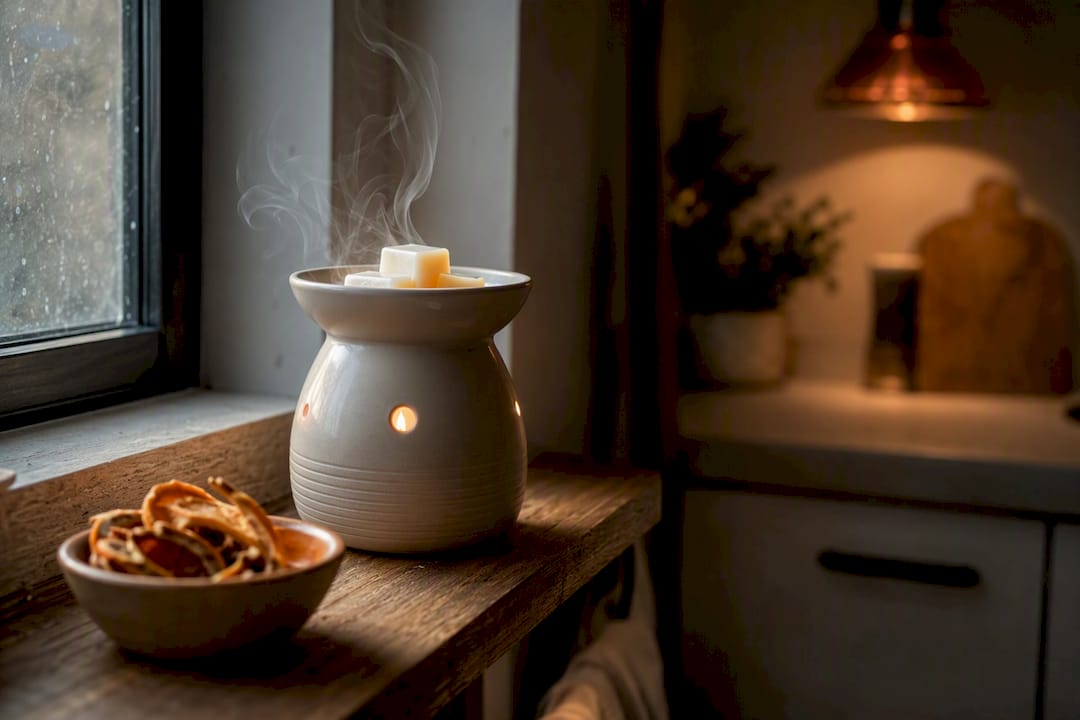
Factors you actually control: the wax type you buy, how many cubes you melt at once, your warmer’s wattage, and (for candles) wick diameter, since wick size directly affects scent throw by changing how large the melt pool gets.
Room-by-room, here’s what tends to work:
Fragrance strength isn’t fixed by the format alone. A curated scent library shows just how much concentration and layering vary even within one category, which is why two “strong” candles can smell nothing alike in the same room.
Yes, and it’s not sentimental fluff. A live flame does something a warmer physically can’t: it moves, casts shadow, and gives a room a pulse. That’s why candles are often chosen for dinner tables, date nights, and bedrooms where the whole point is slowing down. The visual is the product, not a side effect of the fragrance.
Wax warmers can’t replicate that, but they make up for it in a different way. A sleek warmer sits on a shelf like a small design object and lets you layer scents, running two dishes with different melts, in a way an open flame never allows safely.
Décor matters too. A candle in a well-designed vessel doubles as a shelf piece even unlit, while a warmer’s design has to carry the room on its own since there’s no flame to draw the eye.
Candles carry the higher baseline risk simply because they involve open flame in a room full of furniture, curtains, and bedding. The NFPA’s home candle safety guidance is blunt about it: never leave a burning candle unattended, keep it at least twelve inches from anything flammable, and always extinguish it before leaving the room or going to sleep.
Follow these basics every time you burn a candle:
Warmers remove the flame risk but bring their own rules: use a certified electric unit, never leave a tealight-style warmer running near flammable surfaces, and check the cord and outlet regularly. On the air-quality side, certain candle ingredients raise more concern than others, which is why phthalate-free, clean-burning wax and good ventilation matter for both candles and melts.
Pro Tip: Crack a window or run a fan for the first ten minutes after lighting a new candle or starting a melt. That initial burn produces the most soot and the strongest fragrance release.
A standard candle burns for many hours depending on size and wick, while a single wax melt cube typically holds scent for several hours of warmer use before it fades. That gap changes the math: a $28 candle burning 50 hours costs roughly $0.56 an hour, while a $12 melt pack with eight cubes at seven hours each runs closer to $0.21 an hour, assuming you’re reusing the same warmer.
Switching scents takes seconds with melts: pull the spent cube, drop in a new one. Candles require the wax to cool and solidify, or swapping to a second vessel entirely, before you can change the mood of a room.
Cleanup differs too. Warmer dishes need an occasional wipe once wax residue builds up, while candle vessels can be reused once the last of the wax is scraped or melted out.
Run through four questions: How much do you care about the visual flame? How large is the room? How strict are your safety constraints? Do you want to switch scents often? Weigh those against each other and the answer usually falls out on its own.
Pro Tip: Testing a new scent? Burn a candle for just one hour or run a melt for thirty minutes before committing to a full session. That’s enough time to judge whether the fragrance is too strong, too faint, or just right for the room’s size.
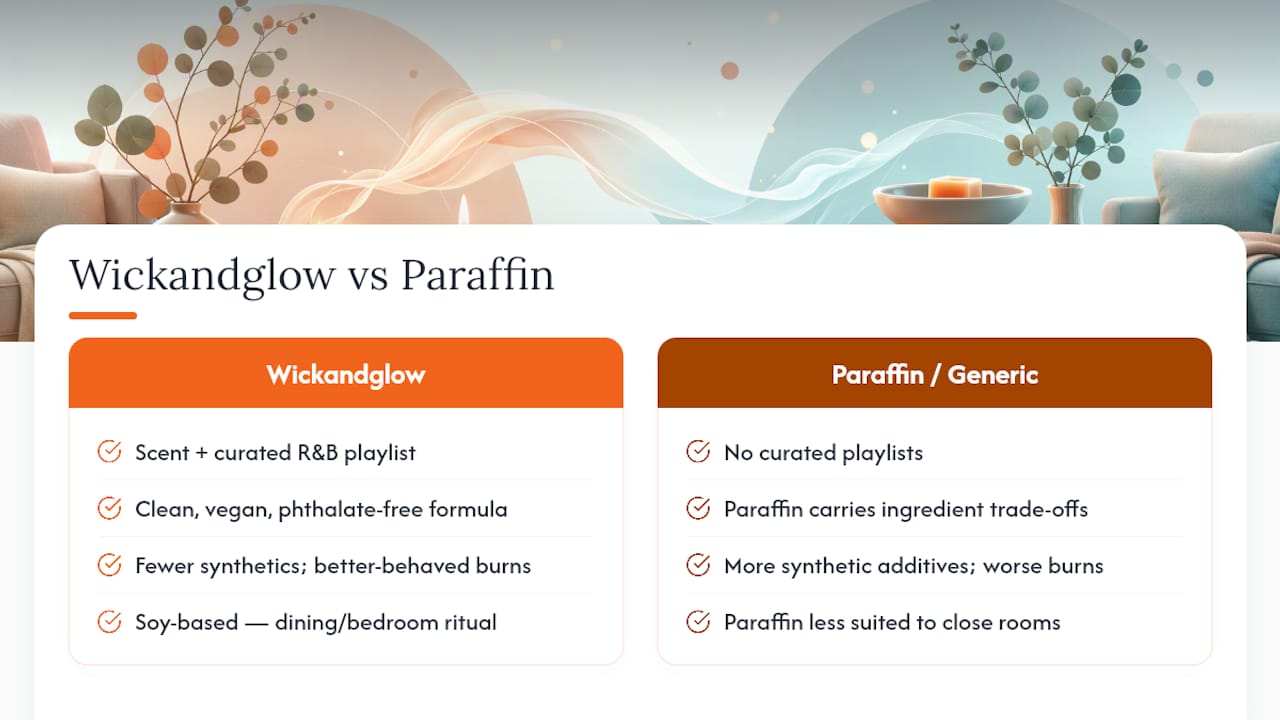
Wickandglow builds its candles and room sprays around R&B songs, pairing each scent with a curated playlist, and every formula is clean, vegan, and phthalate-free. That matters directly against the safety checklist above: fewer synthetic additives, better-behaved burns, less guesswork about what’s in the air.
For readers who landed on “candle” for their dining room or bedroom ritual, Wickandglow’s soy-based candles fit that use-case without the ingredient trade-offs paraffin candles carry. The brand’s collaborations, including one with Renée Neufville, reflect the same intentionality this guide recommends: pick a scent that matches the mood you’re actually trying to create, not just whatever smells nice on a shelf.
— B
If the checklist above pointed you toward candles, specifically for dinners, date nights, or a bedroom ritual, Wickandglow’s candle lineup is built for exactly that job. Every candle is soy-based, vegan, and phthalate-free, so the ambiance doesn’t come with an ingredient trade-off.
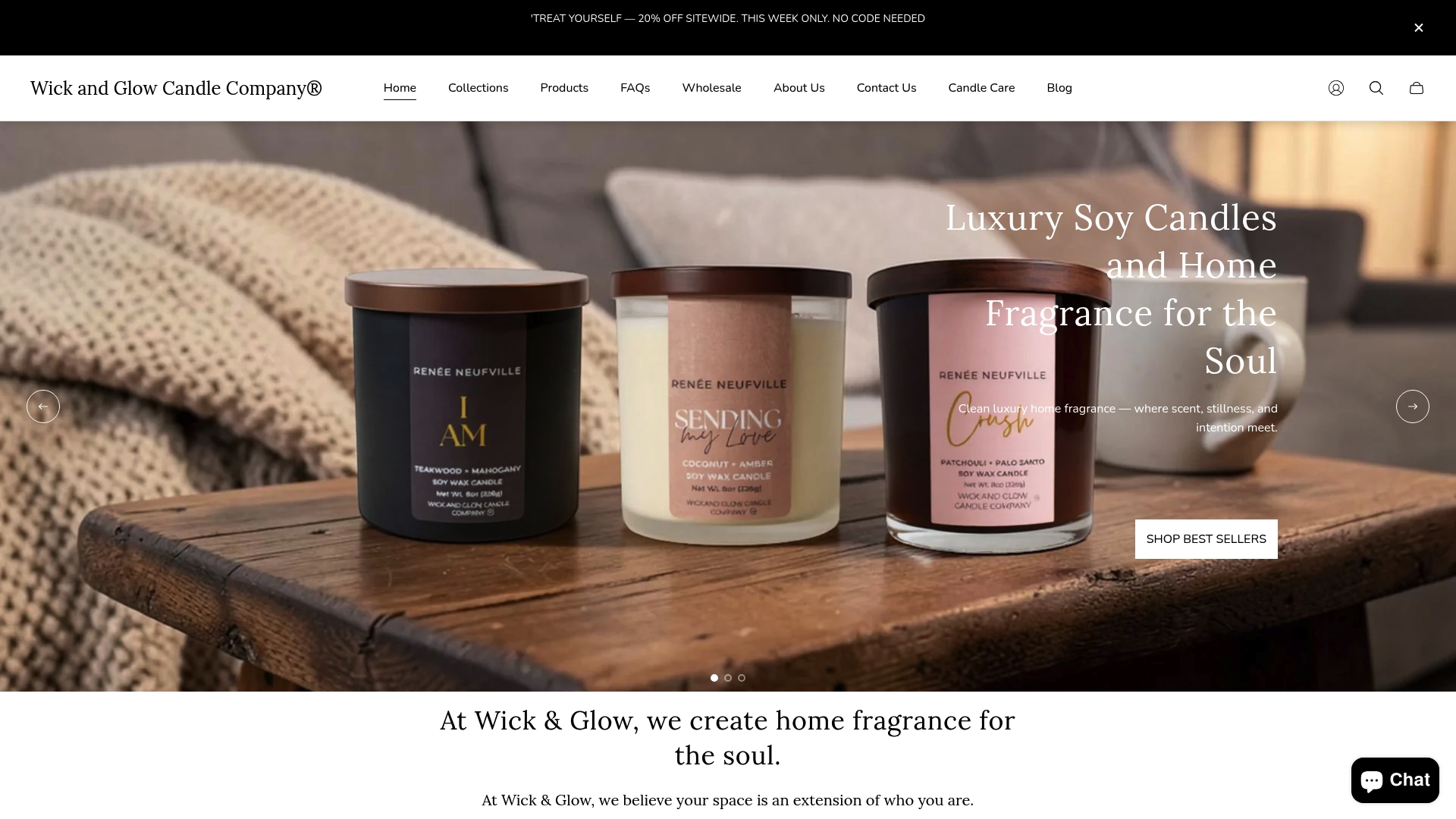
Three things set these apart from a standard drugstore candle: clean formulation with no phthalates, an R&B-inspired scent story paired with a matching playlist, and fragrance built to last through the full burn rather than fading by hour ten. If you want ambiance without giving up on flame safety, the Men Love Candles Too Collection is a solid starting point. Not ready to commit to a full candle? The Scenting My Love Trio lets you test three scents before choosing your signature one.

