Candle scent evokes memories because olfactory signals travel directly to the brain’s limbic system, bypassing the thalamus relay used by every other sense. This direct connection to the amygdala and hippocampus, the brain’s emotional and memory processing centers, explains why a single whiff of vanilla or cedar can pull you back to a specific afternoon years ago with startling clarity. Psychologists and neuroscientists call this the Proustian effect, named after Marcel Proust’s famous account of involuntary autobiographical memory triggered by scent. No other sensory input, not sound, not sight, not touch, reaches these emotional centers as quickly or as directly. That neurological shortcut is why candle scents and nostalgia are so deeply intertwined.
Why candle scent evokes memories: the brain’s direct pathway
The olfactory system is the only sensory system that sends signals directly to the limbic system without first routing through the thalamus. When you light a candle, aromatic molecules bind to olfactory receptors in your nasal cavity. Those receptors send signals to the olfactory bulb, which sits at the base of the brain, just millimeters from the amygdala and hippocampus. From there, the signal fans out to the piriform cortex, the entorhinal cortex, and the prefrontal cortex, all regions involved in learning-related processing that links scent to meaningful context.
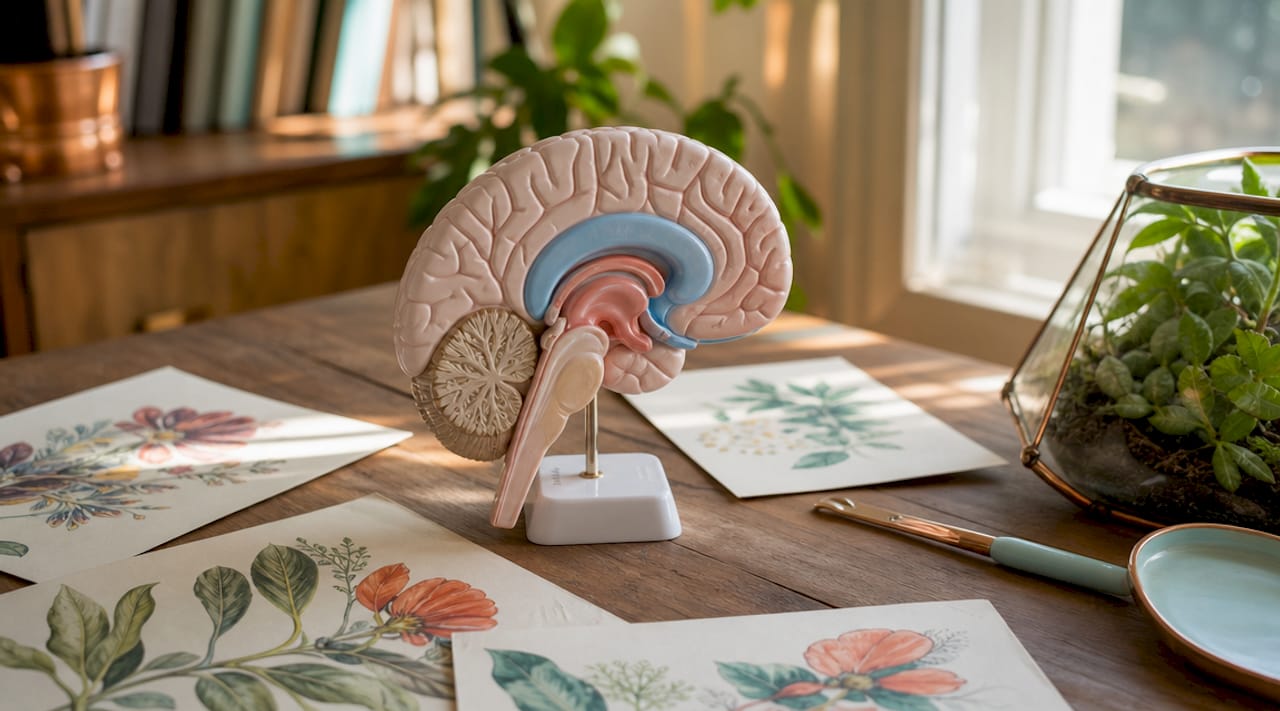
The amygdala assigns emotional weight to incoming information. The hippocampus encodes and retrieves episodic memories, the kind tied to specific places, times, and feelings. Because scent arrives at both structures almost simultaneously, the emotional tone and the memory content get encoded together. This co-encoding is why recalling a scent often feels less like remembering and more like re-experiencing.
The Proustian effect describes what happens when scent triggers involuntary autobiographical memories that feel like reliving the past instantly. You are not consciously searching for the memory. The scent retrieves it for you, complete with the emotional state you were in when it was first formed. That involuntary quality is what makes fragrance and emotional recall so different from looking at an old photograph.
-
Olfactory bulb: First stop for scent signals; located adjacent to the amygdala
-
Amygdala: Processes emotional significance and intensity of the memory
-
Hippocampus: Encodes and retrieves episodic, context-specific memories
-
Piriform cortex: Primary olfactory cortex; routes information to higher-order regions
-
Entorhinal cortex: Integrates olfactory cues into episodic and spatial memory mapping
Pro Tip: If you want to understand how the specific fragrance notes in a candle contribute to its emotional impact, the Wickandglow guide on how fragrance notes work breaks down top, middle, and base notes in plain language.
Why candle scents trigger nostalgia more than other sensory cues
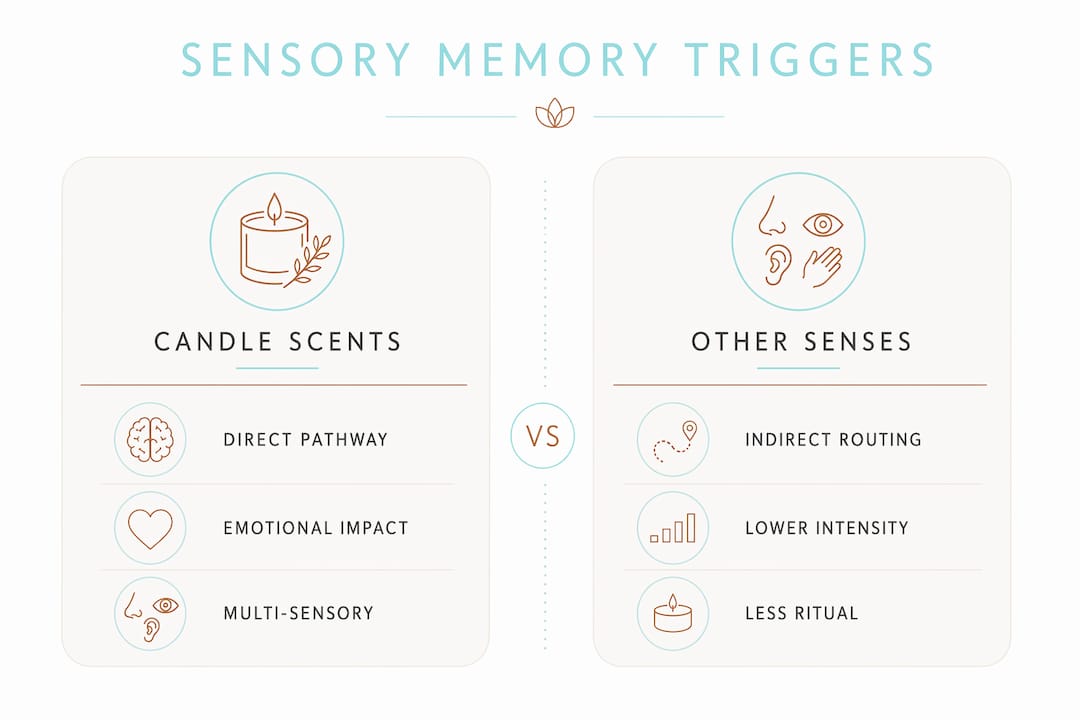
Not all scents are equally powerful memory triggers. Distinctive candle scents reduce confusability with other odors, which makes memory retrieval more precise. A generic floral scent shared by dozens of products competes with too many stored associations. A specific cognac and tobacco blend, or a cedar and bergamot combination, has fewer competing memories attached to it. The brain retrieves the right episode more cleanly.
Candles also create a multi-sensory ritual context that other scent sources rarely match. The visual warmth of the flame, the soft crackling sound, the deliberate act of lighting it, all of these cues combine with the fragrance to create a richer encoding event. Richer encoding means stronger, more specific recall later. A room spray delivers scent alone. A candle delivers scent plus atmosphere, which is why unique candles outperform generic alternatives in creating lasting emotional associations.
The comparison below shows how candle scents stack up against other common sensory memory triggers.
| Sensory trigger |
Memory pathway |
Emotional intensity |
Involuntary recall frequency |
| Candle scent |
Direct to limbic system |
Very high |
Very high |
| Music |
Auditory cortex to limbic |
High |
High |
| Photograph |
Visual cortex to prefrontal |
Moderate |
Low |
| Taste |
Gustatory cortex via thalamus |
High |
Moderate |
| Touch |
Somatosensory cortex |
Moderate |
Low |
Pro Tip: Pair a candle with a specific playlist during a meaningful ritual. Wickandglow builds this principle directly into its products, pairing each fragrance with a curated R&B playlist so the auditory and olfactory memories encode together.
How individual experience shapes your scent-memory connection
The same fragrance can be deeply comforting for one person and genuinely painful for another. Scent associations depend entirely on the unique emotional context in which the scent was first encountered. A lavender candle might calm someone who burned it during a peaceful period of their life. For someone who associates lavender with a hospital stay, the same scent activates grief instead of calm.
This subjectivity is not a flaw in the system. It is the system working exactly as designed. The amygdala does not evaluate whether a memory is pleasant before storing it. It encodes emotional intensity. The stronger the feeling at the moment of first exposure, the more reliably that scent will retrieve the associated state later. This is why scents that evoke specific memories tend to be tied to emotionally charged life events, first apartments, holiday traditions, relationships, losses.
Several factors shape how powerfully a scent-memory connection forms for any individual:
-
Emotional salience at encoding: Scents encountered during high-emotion moments form stronger, more durable associations
-
Age of first exposure: Scents first encountered between ages 6 and 10 tend to produce the most vivid adult nostalgia, a phenomenon researchers call the “reminiscence bump” for olfactory memory
-
Frequency of re-exposure: Repeated encounters with a scent in the same context deepen the neural pathway
-
Sensory sensitivity: Highly Sensitive Persons, a trait identified by psychologist Elaine Aron, process sensory input more deeply and often report more intense emotional responses to fragrance
-
Cultural context: Scents tied to shared cultural rituals, like pine at Christmas or incense at religious ceremonies, carry layered personal and collective meaning
Understanding this variability matters when you choose candles for your home. A scent that works beautifully for someone else may not resonate with you at all, and that is not a preference failure. It reflects a completely different memory architecture.
What scientific studies reveal about scent and memory recall
Research published in 2026 confirms that odor-evoked nostalgia is tied to scent interaction with the brain’s emotion and memory systems. Participants in recall studies showed measurably improved memory performance when the same scent was present during both the learning phase and the recall phase. This is called cue reinstatement, and it works because the scent becomes part of the encoded memory trace. Reintroducing the scent at retrieval effectively reactivates the original neural pattern.
Brain imaging studies show that the olfactory cortex does not work in isolation. Feedforward and feedback neurons in the piriform cortex have distinct odor coding dynamics that change based on prior learning. This means the brain’s response to a scent is not fixed. It updates every time you encounter that scent in a new context, which is why a fragrance can accumulate layers of meaning over years.
One of the most counterintuitive findings from recent research is that the brain does not timestamp scent-triggered memories. Visual and auditory memories carry contextual time markers that help you locate them in your personal timeline. Scent memories often arrive without those markers, which is why they feel immediate and immersive rather than historical. You do not remember the past. You feel like you are briefly inside it.
| Research finding |
Mechanism |
Practical implication |
| Cue reinstatement improves recall |
Scent becomes part of encoded memory trace |
Use the same candle during study and review sessions |
| Piriform cortex updates with learning |
Odor coding changes based on prior exposure |
Scents accumulate emotional meaning over time |
| No temporal timestamp on scent memories |
Limbic encoding lacks time markers |
Scent recall feels present-tense, not historical |
| Emotional state returns before narrative |
Amygdala activates before hippocampus retrieves story |
Feelings arrive first; the memory story follows |
How to use candle scents intentionally for memory and mood
Scent is one of the few tools you can use to deliberately shape your emotional environment. The key is pairing a novel, distinctive fragrance with a specific context or emotional state, then repeating that pairing consistently. Repeatedly pairing a distinct scent with a relaxation ritual, for example, trains the brain to associate that scent with calm. Over time, the scent alone can reliably trigger the relaxed state, even without the full ritual.
Here is a practical framework for building intentional scent-memory connections:
-
Choose a novel, distinctive scent. Avoid fragrances you already encounter frequently in cleaning products, personal care items, or other candles. A scent with no prior associations gives you a clean slate for encoding.
-
Pair it with a specific, repeated activity. Meditation, journaling, a Sunday morning reading ritual, or a pre-sleep wind-down routine all work well. The activity provides the emotional and contextual frame.
-
Use it consistently for at least three to four weeks. Neural associations strengthen through repetition. Occasional use produces weak, inconsistent recall. Daily use during the same activity builds a reliable trigger.
-
Avoid using the scent in unrelated contexts during the encoding period. If you burn your meditation candle while cooking or working, you dilute the association. Specificity is the goal.
-
Layer scents thoughtfully if you want richer associations. Wickandglow’s guide on mixing diffuser and candle scents explains how combining complementary notes can deepen the sensory experience without creating olfactory confusion.
Pro Tip: If you want to evoke a specific nostalgic memory rather than build a new one, try to identify the dominant scent note from that memory. Warm amber and vanilla often anchor childhood comfort memories. Fresh linen and citrus tend to anchor memories of new beginnings. Start there and refine.
Key takeaways
Candle scent evokes memories because olfactory signals reach the amygdala and hippocampus directly, encoding emotion and episodic context together in a way no other sense replicates.
| Point |
Details |
| Direct neural pathway |
Scent bypasses the thalamus and reaches the limbic system faster than any other sensory input. |
| Emotion arrives before memory |
The amygdala activates first, returning the feeling before the hippocampus retrieves the full story. |
| Distinctiveness drives precision |
Unique candle scents with fewer competing associations produce cleaner, more specific memory retrieval. |
| Individual history shapes response |
The same fragrance can comfort one person and distress another based on their unique encoding history. |
| Repetition builds reliable triggers |
Consistently pairing a novel scent with a specific activity trains the brain to use that scent as a mood cue. |
Scent is personal, and that is the whole point
I have spent years paying attention to how fragrance moves through a room and through a person. The science is clear and genuinely fascinating, but what strikes me most is how deeply personal the scent-memory connection is. Two people can sit in the same room with the same candle burning and be in completely different emotional places because of it. One is transported to their grandmother’s kitchen. The other feels nothing in particular. Neither response is wrong.
What I find underappreciated is how much agency you actually have here. Most people treat scent as passive, something that happens to them. But the research on cue reinstatement and associative learning shows that you can deliberately architect your own scent-memory library. You can decide what a fragrance means to you by choosing the context in which you first encounter it. That is a genuinely unusual form of emotional self-authorship.
The brands that understand this, Wickandglow being one of the clearest examples, are not just selling candles. They are selling the conditions for a specific kind of emotional experience. Pairing a cognac and tobacco fragrance like the Reminisce luxury candle with an R&B playlist is not a marketing gimmick. It is a recognition that memory encoding is multi-sensory, and that the more intentional you are about the context, the more powerful and personal the result.
My honest advice: stop buying candles based on what smells pleasant in the store. Buy based on what emotional state you want to build or revisit. Then use them with intention.
— B
Discover scents built for memory and meaning
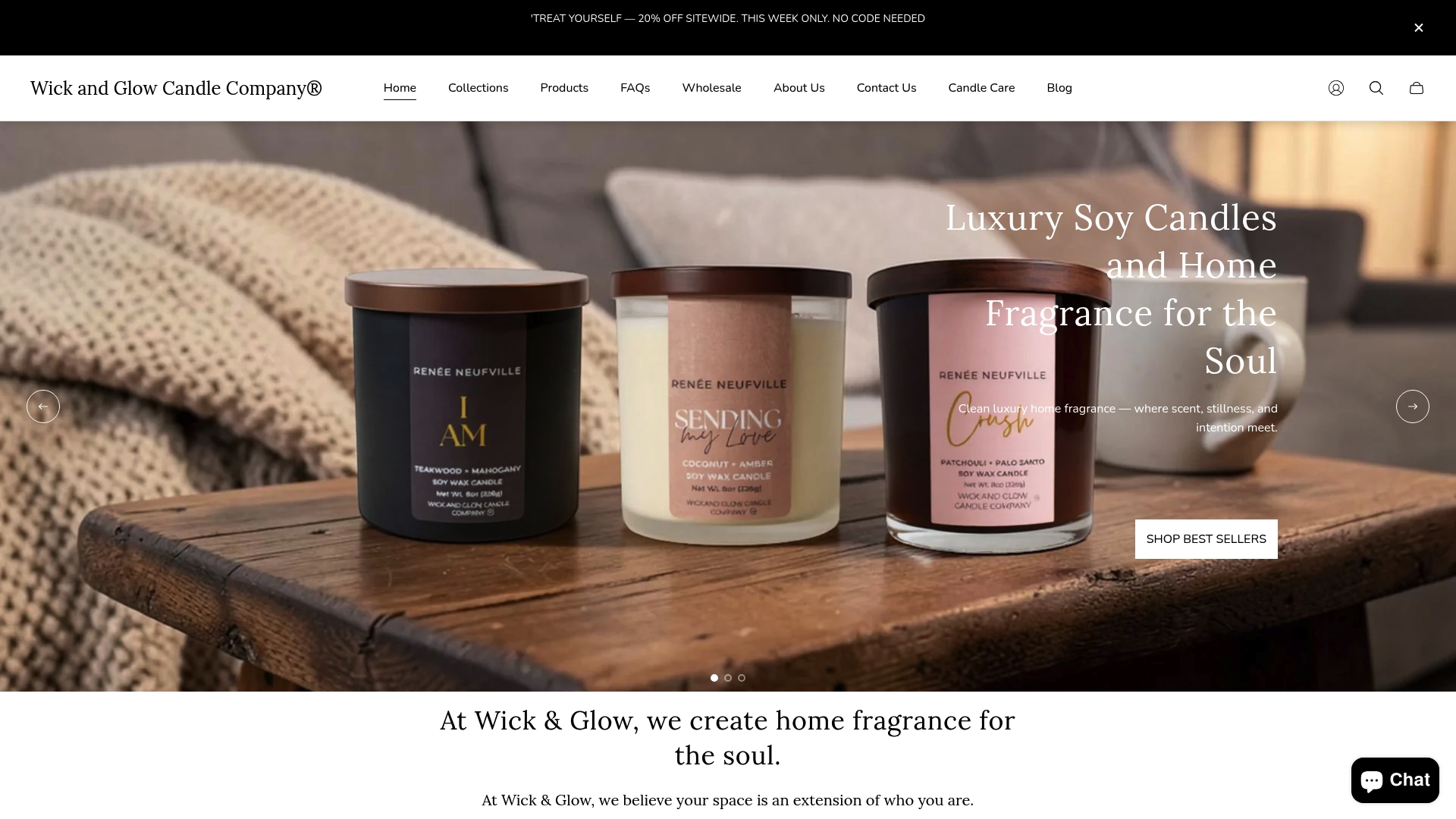
Wickandglow designs every fragrance with emotional intentionality at its core. Each candle, diffuser, and spray is crafted to pair with a curated playlist, so your olfactory and auditory memories encode together from the first burn. The home fragrance scent bundle gives you a soy candle, reed diffuser, and room spray in a single scent, so you can layer the fragrance across your space and reinforce the association throughout the day. Every formula is non-toxic and made with care, because the memories you build with a scent should not come with compromises. If you want a starting point for calm and emotional clarity, the Exhale luxury candle is where most people begin.
FAQ
Why do smells evoke memories more powerfully than other senses?
Smell is the only sense that sends signals directly to the amygdala and hippocampus without routing through the thalamus. This direct connection means scent and emotional memory are encoded together, producing stronger and more involuntary recall than visual or auditory cues.
Can you create new scent-memory associations intentionally?
Yes. Consistently pairing a novel, distinctive scent with a specific activity or emotional state over several weeks trains the brain to use that scent as a reliable memory and mood cue. The key is repetition and contextual specificity during the encoding period.
Why does the same candle scent affect people so differently?
The same fragrance can comfort one person and distress another because scent associations depend entirely on the emotional context of first exposure. Personal history, not the fragrance itself, determines the emotional response.
The brain does not attach time stamps to scent-encoded memories the way it does with visual or auditory ones. Without a temporal marker, the recalled experience feels present-tense rather than historical, which creates that immersive, “reliving it” quality.
What makes a candle scent better at triggering specific memories?
Distinctiveness is the critical factor. A scent with fewer competing associations in your memory produces cleaner, more precise retrieval. Generic fragrances shared across many products create interference; a unique or unusual scent combination gives the brain a single, unambiguous retrieval cue.
Recommended


