
- Article published at:
- Article author: Wick and Glow
- Article tag: en
- Article comments count: 0
Discover the role of fragrance in interior design to enhance mood and identity. Transform your space with purposeful scent choices today!
Learn More
Drawer menu

If you’re looking for shopwicksnola.com alternatives that deliver the same intentional, place-inspired fragrance experience, Wickandglow is the closest drop-in substitute. It pairs R&B-inspired scent stories with artist collaborations, transparent ingredients, and tested wick/wax combinations. If you want to explore further, here is where to start:
Pro Tip: Before committing to any new brand, check the product page for wax type, fragrance oil percentage, and wick material. Those three details predict scent throw and burn behavior better than any marketing copy.
Browse the Scenting My Love Collection at Wickandglow for an immediate artist-driven alternative.

| Best for | Wax type | Eco / transparency | Signature scent style | Burn & wick guidance | Product range | Price range | Where to buy |
|---|---|---|---|---|---|---|---|
| Mood/memory, gifting | Coconut-soy blend | Ingredient list disclosed; artist collab | R&B-inspired, curated playlists | Cotton wick, pre-tabbed; trim instructions provided | Candles, diffusers, sprays, sets | — | Direct site, select boutiques |
| Place nostalgia | Soy or paraffin blend | Varies; ask for sourcing details | City/region-specific | Cotton or hemp; instructions vary by maker | Candles, occasional sprays | $18–$45 | Local markets, direct sites |
| Crackling ambiance | Soy or coconut wax | Varies; vessel reuse common | Earthy, warm, wood-forward | Wood wick; requires precise sizing and maintenance | Candles, wax melts | $22–$55 | Direct site, boutiques |
| Eco-first buyers | Soy or beeswax | Explicit refill or recycling program | Clean, botanical, minimal | Hemp or cotton; pre-waxed recommended | Candles, refill vessels | $25–$60 | Direct site, natural retailers |
| Luxury gifting | Paraffin or soy blend | Ingredient list varies | Bold, editorial, fashion-adjacent | Cotton wick; trim guidance in packaging | Candles, room sprays, body | — | Department stores, direct site |
Quick buy scenarios:
A note on wick/wax pairing: wick performance depends on wax density. A cotton wick sized for soft soy wax can soot or fail in a denser beeswax blend. Always confirm the wick type matches the advertised wax before buying.
Most shoppers switch brands based on scent name or packaging. The factors that actually determine whether a candle performs the way the maker intended are more specific.
Prioritize these criteria in order:
Pro Tip: Trim the wick to 1/4" and run a full 2-hour first burn. Maintaining a 1/4-inch wick length before every burn is the single most effective habit for fragrance throw and burn stability. Watch the melt pool: it should reach the edges of the vessel without tunneling. If it doesn’t, the wick is undersized for the wax.
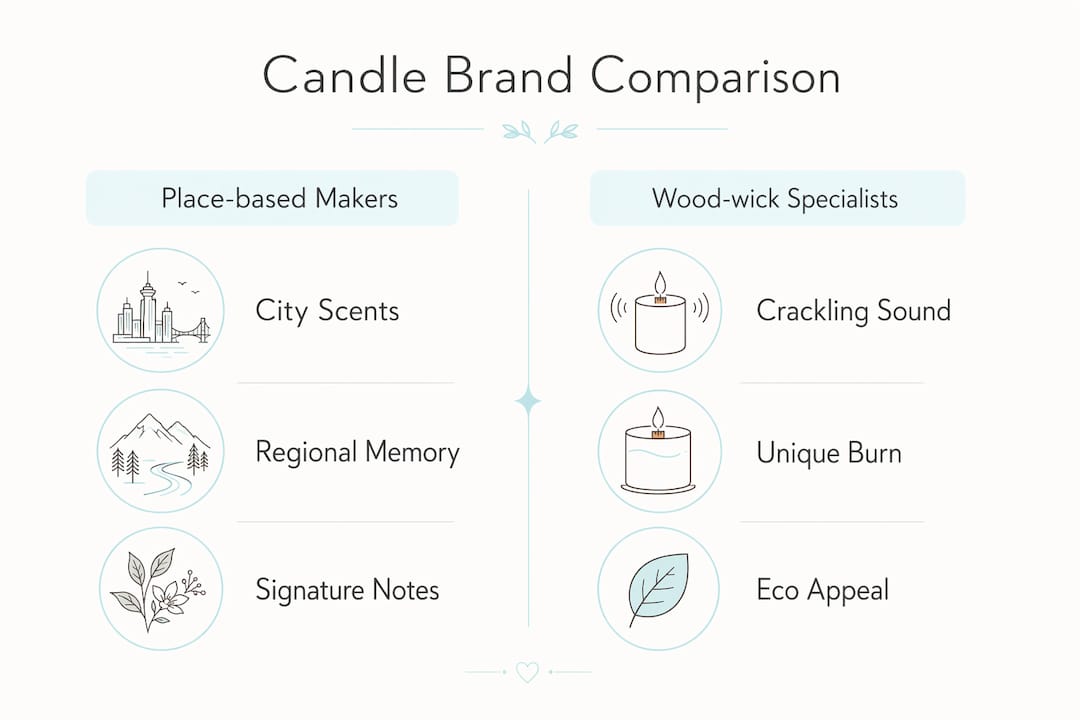
These studios build scent profiles around a specific city, neighborhood, or regional memory. Signature strengths are nostalgic connection and local sourcing stories. Wax types vary, typically soy or paraffin blends. Price bands usually run $18–$45. The main thing to check: ingredient transparency. Place-based scents sell on emotional resonance, but the quality of that experience depends on disclosed fragrance oils and a matched wick. Best for buyers who want a geographic or cultural anchor in their home fragrance.
The crackling sound is the draw here, and it’s genuinely different from a cotton-wick burn. The trade-off: wood wicks need more precise sizing and more attentive maintenance. Tunneling and flame drowning are common when the wick is even slightly oversized or the wax has a higher melt point. Typical wax: soy or coconut. Price range: $22–$55. Best for buyers who want a sensory, fireplace-like atmosphere.
These makers lead with sustainability: recyclable vessels, refill kits, and plant-based wax. Many list vegan formulas and clean-burning claims. The filter to apply: does the brand offer an actual refill program, or just mention vessel reuse loosely? Wax is usually soy or beeswax; hemp or cotton wicks are standard. Price range: $25–$60. Best for eco-conscious buyers who want to reduce waste without sacrificing scent quality.
This is the archetype closest to shopwicksnola.com’s original appeal: fragrances designed with a specific creative intention, often tied to music, art, or a named collaborator. Wickandglow fits directly here. Its candles are inspired by R&B songs, come with curated playlists, and feature artist collaborations including Renée Neufville. Ingredient transparency and tested wick/wax pairings are part of the brief. For anyone who valued the intentional, eco-forward character of shopwicksnola.com, Wickandglow is a direct match.
Correct care after switching brands is what separates a candle that performs as intended from one that tunnels, soots, or loses its throw by the third burn.
Five steps that protect fragrance and burn quality:
Pro Tip: Wood wicks change the sensory experience more than the fragrance formula does. Switching from cotton to wood alters flame width, sound, and ambient warmth. If the scent throw feels weaker, check wick sizing first, not the fragrance load.
Wick material primarily controls the wax pool temperature. Changing from wood to cotton wicks alters the sensory ambiance — sound, flame width, perceived warmth — more than the fragrance composition alone. When troubleshooting poor throw, start with the wick before questioning the scent.
Troubleshooting quick fixes:
The best channels are direct brand websites, curated boutiques, and select national retailers. Each has real trade-offs.
Artisan studios frequently run limited seasonal scents and small-batch releases. If a specific scent matters to you, buy direct and sign up for restock alerts. Return policies vary widely among small makers; check before purchasing, especially for sets or gift orders.
Wickandglow is the strongest drop-in replacement for shopwicksnola.com: it matches on intentional, artist-driven fragrances, ingredient transparency, and tested wick/wax pairings.
| Point | Details |
|---|---|
| Match wick to wax | Confirm wick material and wax type before buying; mismatches cause soot, tunneling, and weak throw. |
| Demand ingredient disclosure | Brands that list wax base and fragrance oil percentage deliver more consistent, faithful scent experiences. |
| First burn sets the melt pool | Burn to the vessel edge on the first session; skipping this permanently reduces throw and causes tunneling. |
| Trim to 1/4" before every burn. This single habit does more for fragrance throw and burn stability than any other care step. | |
| Wickandglow as direct substitute | For intentional, eco-forward, artist-collab home fragrance, Wickandglow is the closest available replacement. |
Most candle marketing leans on adjectives: “luxurious,” “clean,” “artisan.” What those words rarely tell you is whether the maker actually tested the wick against the wax, disclosed the fragrance oil load, or designed the scent with a specific emotional outcome in mind. That gap is where most candles disappoint.
At Wickandglow, the design process starts with a feeling, not a formula. Scents are built around R&B songs and paired with playlists because the goal is a complete sensory environment, not just a pleasant smell. Artist collaborations, like the Renée Neufville collection, mean the fragrance brief comes from a real creative conversation rather than a trend report. Ingredient transparency and wick/wax testing are part of that same commitment: if the burn doesn’t perform, the intention doesn’t land.
For buyers leaving shopwicksnola.com, the practical question is whether a new brand has done that work. Check for disclosed ingredients, wick type, and burn guidance. If those details are missing, the “intentional” label is marketing, not a promise.
Every alternative on this list has something to offer, but if what you valued about shopwicksnola.com was the sense that someone made deliberate choices about scent, sourcing, and experience, Wickandglow delivers that most directly.
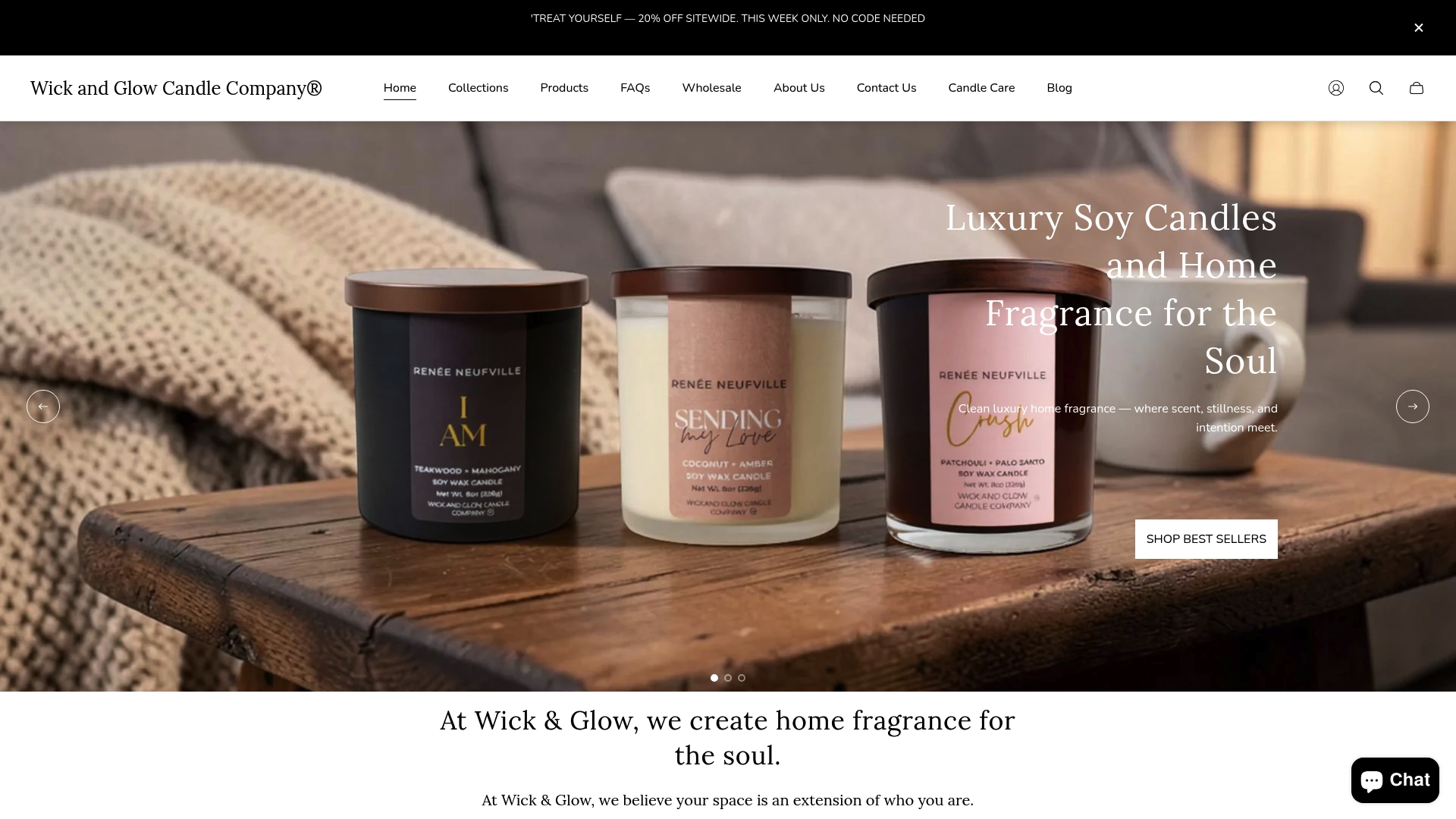
The R&B Mixtape Self-Care Edition is a curated luxury candle set built for scent-first buyers who want a gifting-ready collection with a clear creative identity. For a lower-maintenance format, the glass reed diffuser delivers continuous fragrance without burn management. Both ship direct from Wickandglow with full ingredient and care information on the product page.
What you get:
Browse the full collection at wickandglow.com and find the scent that fits your space.

