Winter candle scents lean toward woods, balsams, warm gourmands, and seasonal spices. Try balsam fir, vanilla-amber, cinnamon-clove, cedar-smoke, or peppermint hot cocoa if you want a fast starting point. These families cut through cold, dry air better than lighter summer notes, and they’re just as easy to shop for as they are to blend yourself.
TL;DR:
- When blending winter candles, start with a woody or balsam base and add a warm spice or gourmand note for balance.
- Avoid overpowering scents like cinnamon and clove, which can dominate a blend, and introduce bright accents to keep it lively.
- Testing fragrance oils in small batches and room-specific choices help ensure the scent throw matches your space and temperature conditions.
- Cold, denser air favors richer, deeper scents over light florals or citrus, which tend to fade indoors during winter.
- Using a full first burn and consistent wick trimming prolongs candle life and maintains optimal scent throw in colder environments.
Table of Contents
What Are the Main Winter Candle Scent Families?
Every winter fragrance you’ve ever loved probably falls into one of five families. Knowing them makes shopping (or blending) infinitely easier, because you stop guessing based on a candle’s name and start reading its actual composition.
Woody and resinous scents anchor a room. Cedar, sandalwood, and oud show up constantly in winter collections because they’re grounding and long-lasting, the kind of base note that lingers in a sweater you forgot you left near the fireplace. These work well alone or as a foundation under sweeter accents.
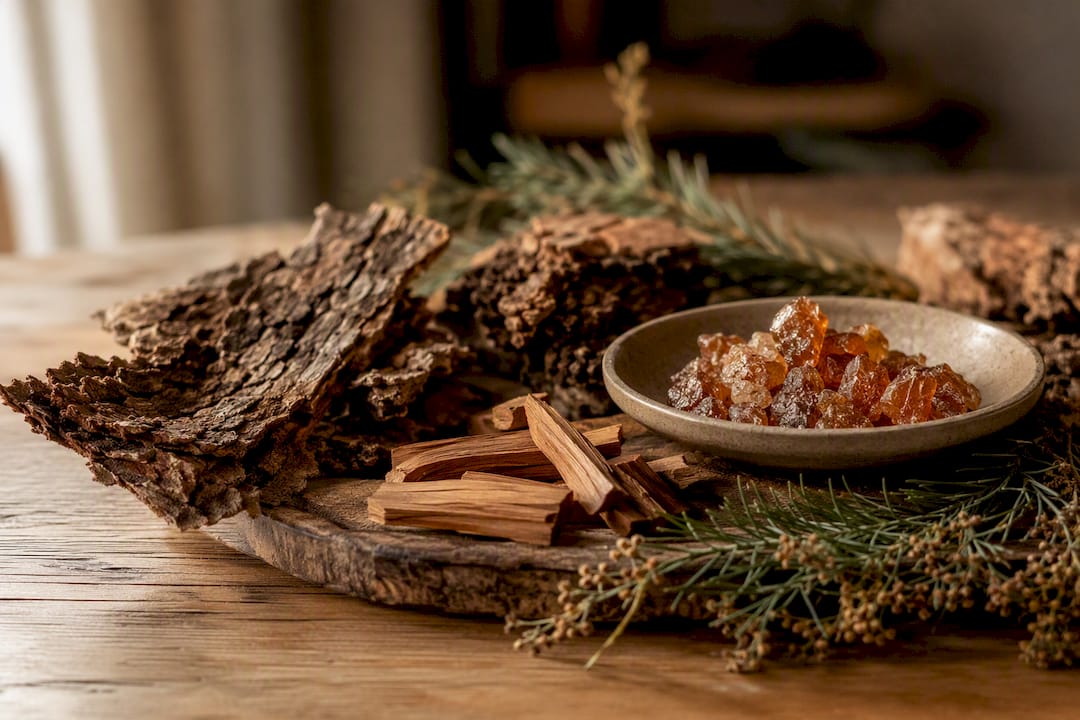
Evergreen and balsam notes are the most literal expression of winter. Pine, fir, and spruce read as outdoorsy and resinous, almost like bringing a trimmed tree indoors without the needles on your floor. Retailers consistently list balsam, pine, and fir among their top-selling seasonal notes for exactly this reason.
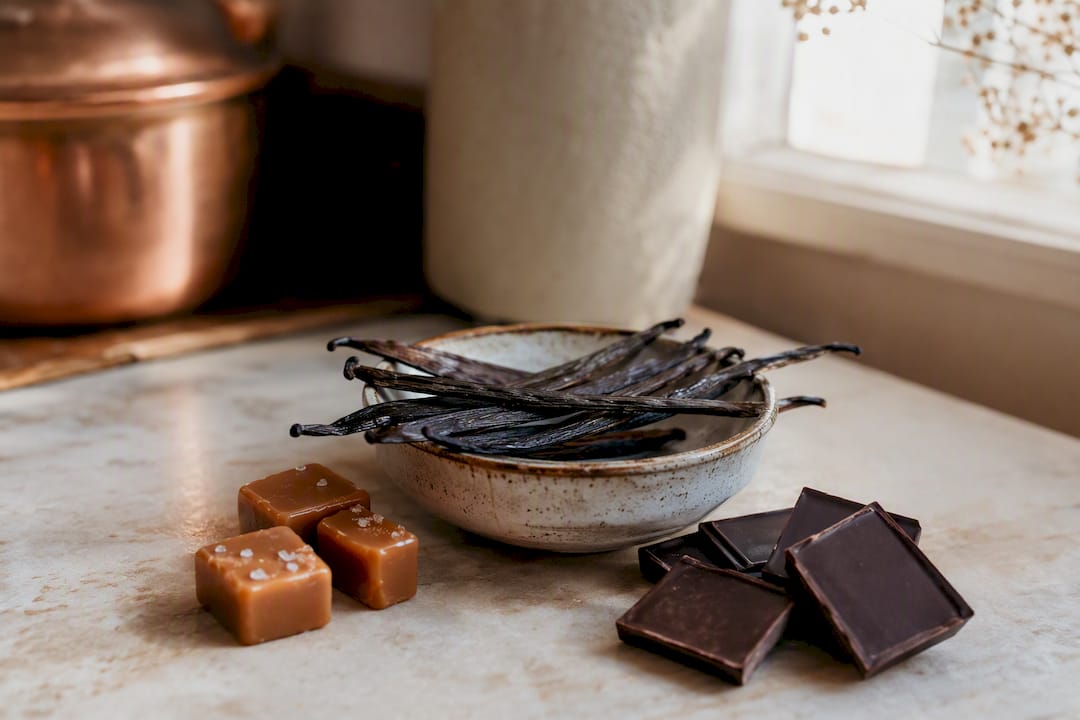
Gourmand scents smell edible: vanilla, caramel, chocolate. They’re the ones that make a room feel like a bakery on a snow day. Used carefully, they add warmth without tipping into artificial or cloying territory.
Spiced and baked notes, cinnamon, clove, nutmeg, ginger, carry the emotional weight of the holidays. They’re warming in the literal sense (your nose registers them as “hot”) and in the nostalgic sense, since most people associate them with kitchens and family gatherings.
Bright accents round everything out. Orange peel, cranberry, and peppermint cut through the density of woods and gourmands, keeping a blend from feeling heavy or one-note.
Here’s how those families typically show up in finished candles:
-
Woody/resinous: cedarwood, sandalwood, oud, dry birch
-
Evergreen/balsam: Fraser fir, blue spruce, juniper, pine needle
-
Gourmand: vanilla bean, caramel, brown sugar, dark chocolate
-
Spiced/baked: cinnamon bark, clove bud, nutmeg, ginger, gingerbread
-
Bright accents: orange peel, cranberry, peppermint, eucalyptus
Fragrance professionals note that colder, denser air tends to favor deeper gourmands and wood-based scents over the lighter florals and citrus that dominate spring and summer candles. That’s not a coincidence. Cold air carries scent differently, and thin fragrances tend to disappear in a heated room the way a delicate perfume vanishes in dry winter air; our guide on how to select seasonal fragrance can help you build the right scent wardrobe for every time of year. Our own guide to how seasonal fragrances work at home breaks down why your nose craves richer notes once the temperature drops. If you want more detail on how these categories are defined and labeled, our breakdown of candle scent families is a good next stop.
Popular Winter Fragrance Notes and How to Blend Them
Once you know the families, individual notes start to make more sense. Here’s a quick profile of the notes that show up again and again in winter collections, plus how to combine them.
-
Pine smells sharp and green, almost medicinal in small doses. It works best paired with something warmer so it doesn’t read like cleaning product.
-
Balsam is softer and sweeter than raw pine, with a slightly resinous, sap-like quality. It’s the backbone of most “Christmas tree” candles.
-
Cedar brings dry, woody depth. Pair it with vanilla or amber for a scent that feels like a cabin, not a lumberyard.
-
Amber is warm, slightly sweet, and a little musky. It’s a workhorse base note that makes almost any blend feel richer.
-
Vanilla softens sharper notes and adds a comforting, dessert-like warmth. Too much on its own can feel flat, so pair it with spice or wood.
-
Cinnamon and clove bring heat and festivity. A little goes a long way. Overdo either and the blend starts smelling more like a spice cabinet than a candle.
-
Peppermint adds a cool, sharp lift. It’s the note most likely to cut through heavier gourmands without clashing.
-
Orange peel and cranberry contribute brightness and a touch of tartness that keeps sweeter blends from feeling one-dimensional.
A few combinations to try or look for: balsam and cedar, cinnamon and orange, vanilla and amber, peppermint and cocoa, clove and fir, cranberry and clove, gingerbread and vanilla, and smoked cedar with a whisper of citrus.
The trick to a good winter blend is balance, not addition. Every note wants to dominate: cinnamon and clove will overpower everything if you let them, vanilla will flatten a blend if it’s the loudest voice, and pine will smell like floor cleaner without something warm underneath it. Start with one wood or resin as your base, add one warm spice or gourmand note, and finish with a small amount of a bright accent. Two or three notes usually beats five.
Choosing and Testing Fragrance Oils for Winter Candles
If you’re making candles yourself, the fragrance oil you pick matters more than almost any other decision. A note that smells perfect in the bottle can behave completely differently once it’s suspended in hot wax.
Before you commit to a full batch, run through this checklist:
- Confirm the oil is specifically candle-rated, not a reed diffuser or soap fragrance oil, since those don’t always perform the same way in wax.
- Check the manufacturer’s recommended fragrance load and don’t exceed it just to boost throw.
- Pour a small test batch first. Cold-sniffing an oil straight from the bottle tells you almost nothing about how it will smell once burned.
- Let the test candle cure for at least a few days before judging scent throw.
Maker-focused roundups consistently point to a handful of winter profiles that perform reliably: fir/balsam, spiced cider, baked apple, peppermint cocoa, and vanilla-amber all show up as dependable seasonal choices across multiple maker communities. Evergreen and spiced fruit blends in particular tend to deliver on the seasonal impression people expect, according to maker reviews that test holiday fragrance oils side by side.
Pro Tip: Test winter fragrance oils in a small unlit sample first, then burn a full test candle in the actual room you plan to use it in. Scent throw changes with room temperature, so a blend that seems weak in a warm kitchen might be perfect in a cooler bedroom.
Matching a Winter Scent to the Room and Occasion
Not every winter scent belongs in every space. Intensity and character both need to match the room’s size and function, or you’ll end up with a hallway that smells like a bakery and a bedroom that smells like a forest.
-
Bedroom: softer gourmands like vanilla-amber or a light cinnamon blend. You don’t want to sleep next to something sharp or resinous.
-
Living room: resinous woods and balsam. These fill larger, higher-traffic spaces without disappearing.
-
Kitchen: bright spice or fruit accents, like cranberry-clove or orange-cinnamon, since kitchens already have competing smells from cooking.
-
Entryway: a welcoming balsam and citrus combination gives guests an immediate seasonal impression the moment they walk in.
For quiet solo evenings, lean toward one dominant note done well. For entertaining or holiday parties, a slightly bolder, more layered blend reads better in a room full of people and conversation. Keep ventilation in mind, especially with resinous or heavily spiced candles, and if anyone in your home is sensitive to strong fragrance, rotate no more than two or three scents through the house at a time rather than running five different candles at once. Our room-by-room scent guide goes deeper on pairing specific notes to specific spaces.
Winter Candle Care: How to Burn for the Best Throw
Cold rooms change how a candle burns, and most tunneling problems trace back to the first burn. In a cool or poorly heated room, wax takes longer to liquefy, which means candles are more prone to tunneling if you don’t give them enough time on that first light.
A few habits make a real difference:
- Trim the wick to about 5 to 6 millimeters before every single light. A wick that’s too long burns hotter, smokes more, and shortens the candle’s life.
- On the first burn, let the wax melt all the way to the edges of the container before blowing it out. Rushing this step is the number one cause of tunneling later on.
- In colder rooms, plan for longer burn sessions, sometimes an extra 30 to 60 minutes beyond what you’d need in a warmer space, to fully establish that melt pool.
- Never leave a burning candle unattended, especially near curtains, bedding, or anything else that burns fast.
Consistent wick trimming paired with a full first melt pool is the most reliable way to keep a candle burning evenly and to preserve scent throw for the life of the wax.
Ready-to-Buy Fragrance Oils vs. Building Your Own Blend
You don’t have to choose between buying a finished candle and blending your own from scratch. Plenty of makers start with a single well-tested fragrance oil, like a fir/balsam or vanilla-amber blend, and layer in a second note once they know how the first one performs in their wax.
If you’d rather skip the testing phase entirely, ready-made winter fragrance oils save time and remove the guesswork around fragrance load and scent throw. Suppliers and maker communities tend to agree on the same handful of dependable options: balsam and juniper for anything evergreen, spiced cider or baked apple for something more dessert-like, and peppermint-cocoa for a scent that reads as both festive and comforting. Buyers currently gravitate toward layered, refined blends over anything overtly sugary, which tracks with what most winter candle shoppers say they want: complexity, not just sweetness.
If you’re newer to blending, start with a two-note combination from a reputable candle-rated supplier before attempting anything more elaborate. Once you understand how a fir/balsam base behaves in your specific wax and container size, adding a third note (a spice, a gourmand accent) becomes a much smaller risk. For readers weighing a finished candle against a room spray for the same space, our comparison of candles versus room sprays walks through when each format makes more sense.
How We Curate Winter Scents at Wick & Glow
Curating a winter collection starts with a mood, not a note list. We think about the moment a scent should create, a slow Sunday morning, a holiday gathering, a quiet evening alone, and build the fragrance around that feeling first. Each candle pairs with a curated playlist, so the scent and the sound reinforce the same emotional register.
Winter blends get built the same way a song gets arranged: a grounding base (cedar, amber), a warming middle (vanilla, spice), and a bright top note that keeps the whole thing from feeling heavy. Customers frequently pair our woodier winter scents with quieter rooms and our brighter, spiced blends with entryways and gathering spaces, which lines up with the room-by-room logic worth applying to any winter candle, ours or otherwise.
— B
Try Wick & Glow’s Winter Scent Picks
If the scent families above have you ready to actually bring one home, Wickandglow built its Men Love Candles Too collection around exactly the woody, resinous, and spiced notes that dominate winter fragrance, without the overly sugary edge some seasonal candles lean on.

If a candle isn’t the right format for every room in your home, the Come Inside room and linen spray delivers a similar warm, welcoming character for entryways, closets, or bedding, and it’s vegan and phthalate-free like everything else Wickandglow makes. Pair a woodier candle in your living room with the spray in your bedroom or hallway, and you get a coordinated scent moment through the whole house instead of one candle doing all the work. Browse the collection, pick the mood you’re after, cozy, festive, or clean, and check out online to get your winter fragrance sorted before the season’s in full swing.
Sources


