Handcrafted gifts carry more value because they signal love, effort, and rarity in ways a factory-made item simply cannot fake. Researchers studying the “handmade effect” found people rate identical products as more attractive and gift-worthy the moment they learn a person’s hands made them, and one incentive-based experiment found buyers willing to pay about 17% more for a bar of soap labeled handmade versus the identical bar labeled machine-made. A separate line of research out of the University of Bath found that personalized items paired with an explanation of why the giver chose them produce something researchers call “vicarious pride,” a measurable jump in how much recipients appreciate and hold onto the gift.
None of this works automatically. The premium depends on:
-
Closeness of the relationship between giver and recipient
-
Quality of execution (a poorly made item can backfire)
-
How the gift is presented and whether the reasoning behind it gets communicated
If you’re choosing a gift right now: buy from a maker who shares their process, write a short note explaining why you picked it, and if your own crafting skill falls short of the item you have in mind, commission someone who can execute it well rather than forcing a shaky DIY attempt.
Key Takeaways
Handcrafted gifts carry more value because they signal effort, love, and rarity that recipients pick up on almost instinctively, and that signal converts into measurable willingness to pay and lasting attachment.
| Point |
Details |
| Handmade label raises WTP |
Controlled experiments found buyers pay about 17% more for items labeled handmade over identical machine-made versions. |
| Explanation multiplies impact |
Personalized gifts paired with a stated reason produce stronger attachment than personalization alone. |
| Effort only helps if it works |
A poorly executed handmade gift can read as less thoughtful than a store-bought one, not more. |
| Authenticity drives purchase intent |
Perceived authenticity, not just the handmade label itself, is what actually pushes people to buy. |
| Not every recipient responds equally |
Fast, convenience-driven shoppers and some demographic groups show a weaker handmade premium. |
Table of Contents
Why Handcrafted Gifts Carry More Value, According to Research
The clearest evidence comes from a series of controlled experiments built specifically to isolate the “handmade” label from everything else about a product. Researchers showed participants identical items, told half of them the item was machine-made and half that it was handmade, and then measured attractiveness ratings and willingness to pay. The handmade version won every time, and the WU Vienna research team’s paper that coined the term “handmade effect” found the gap wasn’t about perceived quality at all. It was about perceived love. People assumed the maker had invested emotional care into the object, and that assumption alone shifted the price they’d pay.
Key data point: Participants in the WU Vienna soap experiment were willing to pay roughly 17% more for a product labeled handmade, even though the actual soap in both conditions was identical.
The University of Bath’s personalization research adds a second layer. Across four separate experiments, personalized gifts paired with an explanation generated stronger attachment than personalized gifts given without context. The recipients weren’t just pleased with the object. They felt something closer to pride on the giver’s behalf, as if the effort reflected well on both people in the exchange. That’s a different emotional register than simple gratitude, and it tends to last longer.
Not every buyer responds the same way, though. Research summarized by Phys points to a personality trait called locomotion orientation as a moderating factor. Shoppers who are “grab and go,” fast decision makers focused on getting the task done, respond far less to handmade cues than shoppers who take a slower, more deliberate approach to purchasing. If you’re buying for someone who treats gift shopping as a chore to finish quickly, don’t expect the same emotional payoff you’d get with someone who lingers over choices.
A few other patterns worth knowing:
- The effect strengthens when the gift goes to someone emotionally close to the giver, and weakens for casual or transactional relationships.
- Buyer demographics matter. Field research on willingness to pay for handicraft products found women and employed respondents often show higher WTP for handmade goods than other groups, though age and income shift the numbers too.
- Sample sizes in several of these studies are modest, and most rely on self-reported ratings rather than tracked long-term behavior, so treat the findings as a strong, consistent signal rather than an ironclad law.
What Makes a Handmade Gift Feel More Meaningful?
Three named psychological mechanisms explain most of what’s happening when someone unwraps something handmade and reacts differently than they would to something mass-produced.
Symbolic contagion is the first, and it’s the one researchers keep coming back to. The idea, borrowed from broader psychology research on how objects absorb meaning from the people who touch them, is that a handmade item feels like it “contains” some of the maker’s care. People aren’t consciously reasoning their way to this. They infer it almost instantly, the same way a handwritten letter feels different from a typed one even when the words are identical.
Effort justification, better known as the IKEA effect, is the second mechanism, and it works in both directions. When a gift-giver puts visible effort into something, whether by making it themselves or commissioning careful work, recipients read that effort as a stand-in for affection. The catch, and it’s an important one, is that effort only raises perceived value when the result actually works. A wobbly shelf you assembled yourself feels sentimental. A wobbly shelf that collapses feels like a mistake.
Statistic to remember: The same handmade effect research that found the 17% WTP premium also found the effect held specifically because participants attributed love, not superior craftsmanship, to the handmade label.
Personalization and vicarious pride round out the picture. Telling someone why you chose an item, what memory it connects to, or what you hope they’ll feel when they use it does more than add a nice touch. It gives the recipient a story to attach to the object, and stories are what people actually remember years later, not the object’s material cost.
Pro Tip: Write your explanation before you wrap the gift, not after. A note scribbled in ten seconds at the last minute reads differently than one you clearly thought about.
What Do Uniqueness and Authenticity Actually Mean for a Gift?
Authenticity, in consumer research terms, means the object reads as genuine, connected to a real person and a real process, rather than manufactured to fit a market gap, as explained in this overview of distinct types of handcrafted silver gift jewelry. Uniqueness means no one else received the exact same thing. Both concepts sound abstract until you see how directly they influence buying behavior.
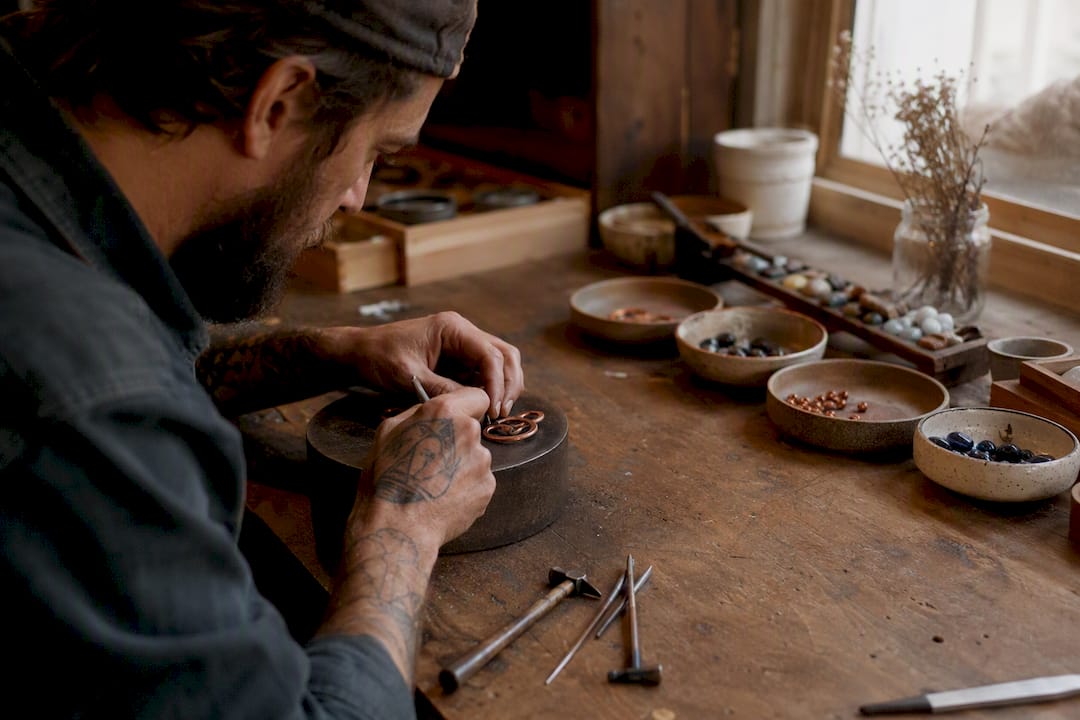
Multiple experiments summarized in research on handmade consumption and purchase intention found that authenticity mediates the entire relationship between “this was handmade” and “I want to buy this.” In plain terms: the handmade label only boosts purchase intent because it triggers a feeling of authenticity. Strip that feeling away, say by mass-producing something with fake “handmade” branding, and the effect collapses. The same research found that a buyer’s personal need for uniqueness strengthens the pull even further, meaning gift recipients who already value standing out from the crowd respond most strongly to one-of-a-kind items.
What actually signals authenticity to a recipient holding the object in their hands?
- A visible maker bio or short story about who created it and why
- Small imperfections or hand marks that prove no machine made it
- Limited production runs rather than open-ended restocking
- Visible technique, like uneven glaze on ceramics or hand-stitched seams, rather than a flawless factory finish
A candle with a slightly uneven pour or a wick that’s just off-center tells a different story than one stamped out identically ten thousand times. Wick & Glow’s artisan candle process leans into exactly this, treating small variation as proof of care rather than a flaw to engineer away.
Do Handcrafted Gifts Actually Last Longer?
Emotional value gets most of the attention in handmade research, but the practical case matters too. Small-batch makers frequently use higher-grade materials than mass manufacturers because they’re producing dozens or hundreds of units instead of hundreds of thousands, which means the economics of sourcing better inputs actually work out. A leather wallet stitched by hand from full-grain leather will typically outlast a machine-stamped version made from bonded leather scraps. The same logic applies to ceramics fired at proper temperatures and hardwood furniture joined without shortcuts.
Three categories where the durability gap tends to show up clearly:
-
Leather goods — hand-stitched seams distribute stress differently than machine stitching and often resist tearing longer.
-
Ceramics — proper kiln firing by an experienced potter produces fewer hairline cracks than rushed industrial batches.
-
Woodwork — joinery methods like dovetails or mortise-and-tenon, common in handmade furniture, hold up better over decades than glued particleboard.
Before you buy, vet the maker the way you’d vet any purchase that matters: look at close-up photos of the actual finish, read reviews that mention how the item held up after months of use, check whether the maker describes their process in specific terms rather than vague marketing language, and confirm there’s a real return policy. Choosing a quality candle gift set means checking wax type, wick material, and burn-time claims the same way you’d check stitching on a leather bag.
How Do You Present a Handcrafted Gift So It Actually Lands?
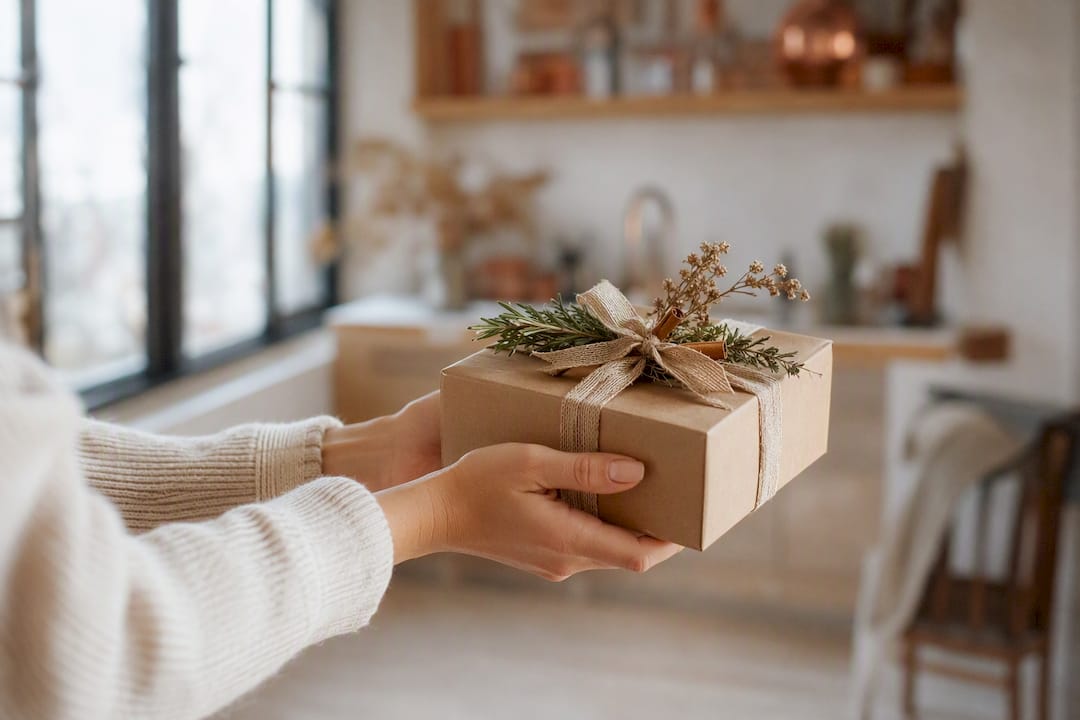
The research on vicarious pride points to one clear, low-effort tactic: explain your reasoning. Recipients who understand why a giver chose something report stronger attachment than recipients who receive the same item with no explanation at all, according to the University of Bath findings on personalization. The explanation is doing real psychological work, not just adding politeness.
A few templates worth stealing:
- “I picked this scent because it reminded me of [specific memory] the moment I smelled it.”
- “This maker hand-pours every candle in small batches, and I thought of you because [specific reason tied to the recipient].”
- “I almost bought the generic version, but this one felt like you specifically.”
Pro Tip: Keep the note under three sentences. Long explanations start to feel like justification instead of genuine thought.
One more decision worth making upfront: commission custom work only when you have a specific vision that off-the-shelf artisan pieces can’t match. If a ready-made piece already captures what you’re going for, buy it. Commissioning adds time, cost, and risk of miscommunication that isn’t worth it unless the personalization genuinely requires it.
When Does a Handmade Gift Backfire?
The IKEA effect has a hard limit: effort only raises perceived value when the finished item actually works. A visibly rushed, sloppy, or impractical handmade gift reads as less thoughtful than something bought ready-made, not more, because it signals the giver either lacked the skill or didn’t check the result before wrapping it.
A simple rule handles most of this: if your own skill level is below what the piece requires, don’t attempt it yourself. Buy from a vetted maker instead, or add a written note explaining the intention even if the execution isn’t gallery-quality; the story can carry some of the weight the craftsmanship doesn’t.
Watch for these red flags before you commit to handmade:
- A finish that looks obviously unfinished rather than intentionally rustic
- A design that’s impractical for how the recipient actually lives (a delicate item for someone with kids or pets, for instance)
- A gift that reflects the giver’s taste rather than the recipient’s, with no attempt to bridge the gap
- No explanation offered at all, leaving the recipient to guess at the intention
Research on demographic variance in willingness to pay also suggests some recipients simply respond less to handmade cues regardless of quality. If you know the person you’re buying for treats gifts practically rather than sentimentally, weigh that before assuming the handmade premium will apply.
Does Buying Handmade Support Something Bigger Than the Gift Itself?
Handmade gifts carry a secondary layer of value that has nothing to do with the object itself: where the money actually goes. Independent maker marketplaces channel income directly to small sellers rather than corporate supply chains, and platforms like Etsy report millions of active independent sellers generating real income from small-batch production, a very different economic model than mass retail.
The environmental case matters too. Global textile waste alone runs into the hundreds of millions of metric tons annually, largely driven by overproduction built for a mass market that never fully sells through. Small-batch makers typically produce to order or in limited runs, which cuts overstock and tends to produce longer-lived goods in the first place.
If sustainability claims matter to you, check for specifics: ingredient or material lists, sourcing location, and whether the maker describes batch sizes rather than vague “eco-friendly” language with nothing behind it. Supporting BIPOC-owned fragrance makers is one concrete way that moral and economic value layer directly onto the emotional value already covered above.
How Wick & Glow Puts These Signals Into Practice
Every mechanism covered above shows up in how a genuinely artisan brand operates, not just in what it claims. Wickandglow hand-pours each candle in small batches and pairs every scent with a curated playlist tied to the R&B song that inspired it, a storytelling layer that turns “authenticity” from a marketing word into something the customer can actually experience.
Collaborations with artists like Renée Neufville aren’t decoration on top of the product. They’re the maker-reputation signal that research on handcrafted willingness to pay identifies as a genuine driver of perceived value, the same way a potter’s signature on the bottom of a bowl changes how a buyer feels holding it.
Clean, vegan, phthalate-free ingredient lists add the practical trust layer that supports the emotional one, giving buyers a concrete reason to believe the intentional-craft story holds up.
What This Research Actually Tells Us to Do Differently
Most gift advice stops at “make something yourself” and treats effort as the whole story. It isn’t. The research points somewhere more specific: effort matters only when paired with competence and explanation, and skipping either one wastes the psychological advantage handmade gifts have built in.
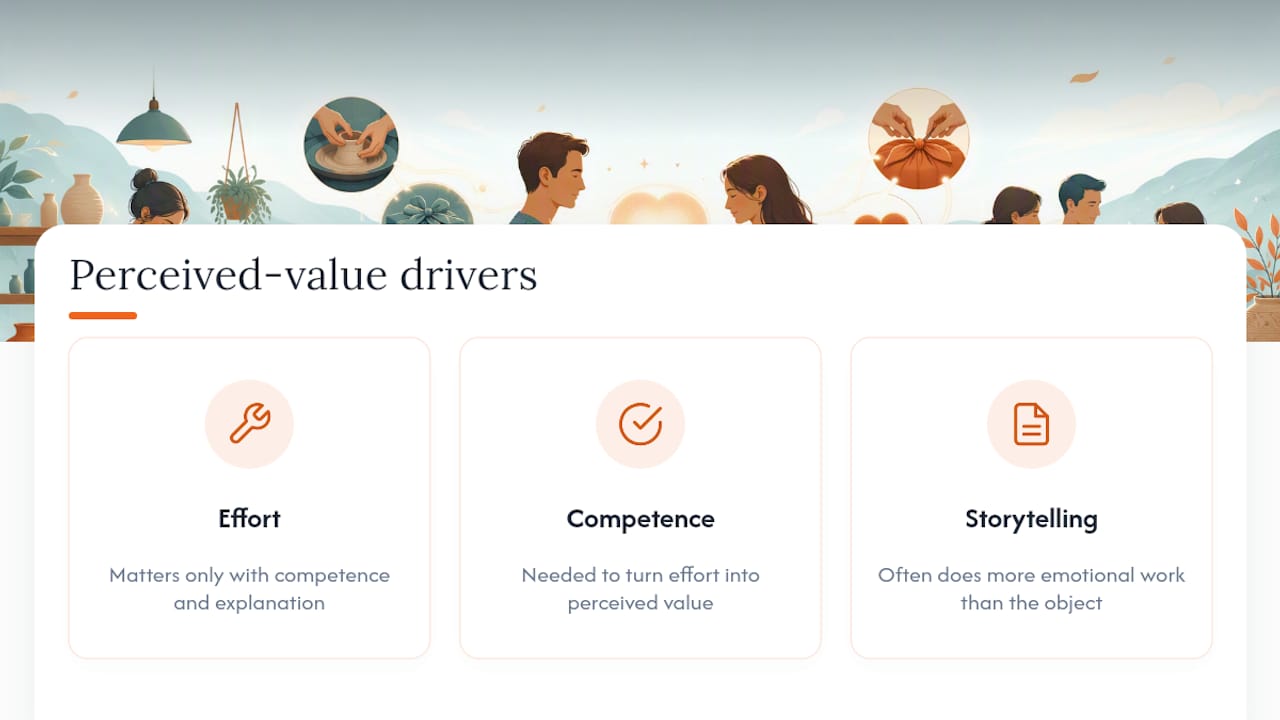
The overlooked piece is storytelling. People treat it as a nice extra, a bow on top of the real gift. The data says otherwise: the explanation is often doing more emotional work than the object itself. A well-made item with no context underperforms a decent item with a clear, specific reason behind it.
If you take one thing from this: stop optimizing for the fanciest handmade item you can find or make. Optimize for the clearest reason you can give someone for why you chose it. That’s the lever with the most evidence behind it, and it’s also the one almost everyone skips.
Sources
Recommended


