
- Article published at:
- Article author: Wick and Glow
- Article tag: en
- Article comments count: 0
Discover why handcrafted gifts hold more emotional value than store-bought ones, reflecting love and effort that touch hearts deeply.
Learn More
Drawer menu

Luxury gifting etiquette is the set of social rules that prioritize proportion, relationship fit, presentation, and cultural sensitivity over raw price. A moderately priced candle chosen with real attention can outclass a more expensive impulse buy, because the etiquette isn’t about the receipt. It’s about calibration.
Five rules govern almost every situation you’ll face:
Luxury gifting etiquette succeeds when proportion, presentation, and cultural awareness outweigh price as the deciding factor in every gift decision.
| Point | Details |
|---|---|
| Fit over price | Calibrate every gift to the relationship’s closeness and the occasion’s weight, not to a dollar figure. |
| Presentation is part of the gift | Quality wrapping, a handwritten note, and discreet branding matter as much as the object inside. |
| Personalize the safe stuff | Monograms and shared memories work; medical details and surprise heirlooms don’t. |
| Receive with grace, not guilt | Thank sincerely in person, follow up in writing within days, and skip the urge to reciprocate instantly. |
| Wick & Glow as a low-risk option | A curated candle or spray with a matching playlist fits most occasions without the scale risk bigger gifts carry. |
The word “luxury” in this context has nothing to do with a price tag. It describes attention: how precisely a gift is calibrated to the person receiving it, how permanent or memorable it becomes, and how well its scale fits the moment. A gift that’s technically expensive but poorly matched to the recipient often reads as careless, or worse, transactional.
Consider two scenarios. Someone gifts a $600 handbag to a new coworker after one project together. It’s generous on paper, but it creates discomfort, maybe even suspicion about motive. Compare that to a colleague who remembers a team member mentioned loving amber and vanilla scents, and shows up with a candle in exactly that profile alongside a short note referencing the memory. The second gift costs a fraction of the first and lands ten times harder, because it proves someone was paying attention.
Etiquette authorities frame this the same way. Dandelion Chandelier’s analysis of gift psychology argues that successful luxury gifting depends on calibrating scale, intimacy, and tone to the relationship, not on assuming bigger automatically means better. Price is a variable. Fit is the rule.
The occasion sets the boundaries before you even think about budget. A gift perfect for a five-year anniversary can feel wildly inappropriate for a new neighbor’s housewarming.
Birthdays and anniversaries call for gifts with personal history baked in. A curated fragrance tied to a shared memory, a piece of jewelry with subtle engraving, or a bottle of something the recipient mentioned in passing months ago all work because they signal that you listened. These occasions tolerate more intimacy than almost any other category.

Milestone events (retirements, graduations, major promotions) reward gifts with permanence. Robb Chateau’s guide to connoisseur-level gifting points to specificity, surprise, and permanence as the three traits that make a gift memorable years later. A well-chosen watch or a piece meant to last decades fits this frame far better than something consumable.
Housewarmings and host gifts should skip anything too personal. This is where home fragrance shines: a diffuser or room and linen spray works in almost any home, requires no sizing or taste-guessing, and signals thought without overstepping.
Corporate and colleague gifts need the most restraint. Skip anything that could be read as favoritism or, worse, a personal overture. Think:
When in doubt between an object and an experience, lean toward the object for professional relationships and the experience for close personal ones. Objects are easier to calibrate publicly. Experiences require the kind of intimacy that only close relationships can support gracefully.
Spend is a function of three variables: how close the relationship is, how significant the occasion feels, and how visible the exchange will be to other people. Get any one of those wrong and even a beautifully chosen gift can misfire.
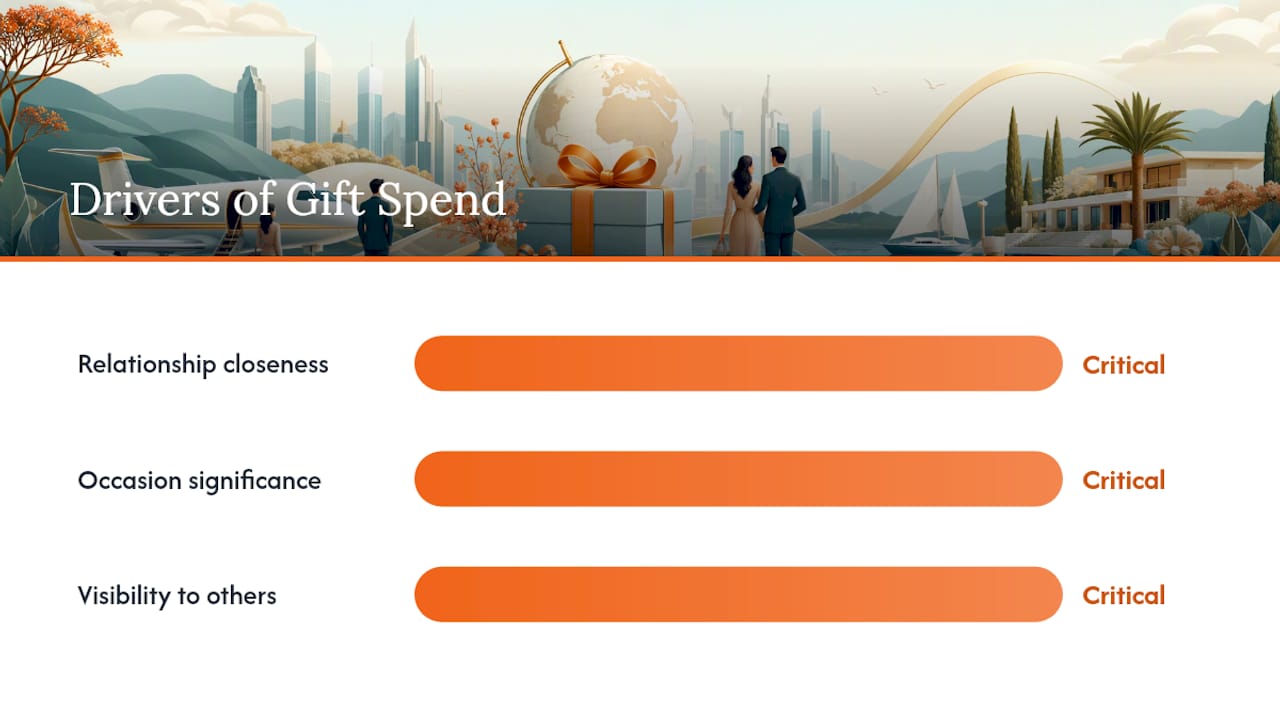
Dandelion Chandelier’s take on how much is too much makes a point worth sitting with: a gift can fail by being too grand just as easily as by being too slight. Overspending on a new acquaintance creates pressure. Underspending on a milestone for someone close to you can read as distracted.
Instead of thinking in dollar figures, think in tiers:
Pro Tip: Set your gifting budget as a percentage of the relationship’s “weight,” not a flat number. Ask yourself how many years you’ve known this person and how often you see them, then let that answer, not a dollar figure you saw in someone else’s gift, set your ceiling.
Personalization works when it shows you paid attention to something low stakes. It backfires when it exposes something private or assumes intimacy that isn’t there yet.
Safe personalization includes initials on a leather accessory, a scent blend chosen around a memory you both share, or a note referencing an inside joke. These add warmth without crossing a line.
Risky personalization includes:
Grant Macdonald’s guide to luxury gift etiquette recommends personalizing thoughtfully rather than dramatically, and that advice holds across cultures too. In some traditions, engraved gifts carry ancestral or ceremonial weight that a casual monogram doesn’t. When you’re unsure, keep the personalization small and reversible, like a card, rather than permanent, like an engraving.
The unboxing matters almost as much as what’s inside the box. Grant Macdonald’s research on luxury gifting notes that presentation should match the gift’s level, and that holds whether you’re wrapping a watch or a candle set.
A few rules make the difference:
For note wording, match tone to closeness. To a close friend: “I thought of you the second I found this.” To a colleague: “A small thank-you for making this year easier to get through.” To a host: “Thank you for opening your home to us. Hope this adds something nice to it.” Pair your note-writing instincts with ideas from a thank-you card customization guide if you want more range in tone.
Cross-cultural gifting carries risks that domestic gifting doesn’t. What reads as generous in one culture can read as insulting or presumptuous in another.
A few recurring issues show up across cultures: certain colors carry funeral associations in parts of East Asia, so white or black wrapping can misfire badly. Clocks and sharp objects carry symbolic bad luck in some Chinese traditions. Handing a gift with the left hand alone is considered disrespectful in several Middle Eastern and South Asian cultures. Even quantities matter. Even-numbered gift sets are lucky in some traditions and unlucky in others.
Pro Tip: Before gifting across a culture you’re not deeply familiar with, run three fast checks: ask someone from that culture directly, search for etiquette guidance specific to the country (not the broader region), and default to something universally neutral, like a beautifully packaged fragrance, if you’re still unsure.
Grace matters more than reciprocation in the moment. Emily Post’s guidance on receiving gifts well emphasizes a sincere, present-focused reaction rather than an immediate scramble to match the gesture.
In person, keep it simple: “This is incredibly thoughtful, thank you.” Follow with a specific detail, like naming the scent or noticing the craftsmanship, so the giver knows you actually registered the gift rather than reacting on autopilot.
For gifts that feel disproportionately large, Miss Manners advises sincere, enthusiastic thanks in the moment, followed by a written note within a few days, and then stopping there. Don’t spiral into anxious over-explaining about how you can’t possibly reciprocate at that level.
Rarely, and only under specific conditions. Run four checks before you consider it: the item must be brand new and unopened, it must carry no personalization tying it to the original giver, you must be confident the original giver and the new recipient don’t share social circles, and the item has to genuinely suit the new recipient’s taste rather than just being convenient to offload.
Etiquette guidance on gift giving consistently urges caution here, since the social risk of discovery outweighs the convenience most of the time. An unopened, universally appealing item, like an unused fragrance set still in its original box, is about as safe as re-gifting gets. A monogrammed item or anything from a close relative almost never qualifies.
Home fragrance sits in a rare category: personal enough to feel considered, universal enough to rarely misfire. Choosing well starts with matching scent family to what you know about the recipient. Warm, amber-forward scents suit cozy, low-key personalities. Citrus and green notes suit people who gravitate toward brighter spaces.
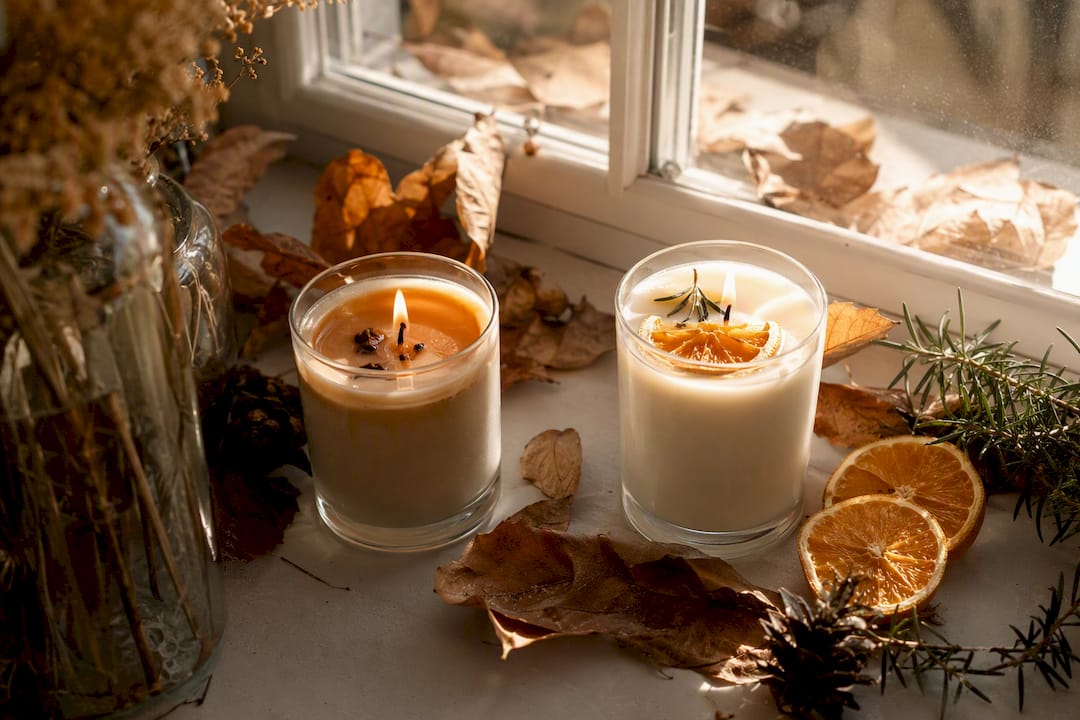
Longevity matters too. A candle that loses its throw after two hours isn’t a luxury experience, no matter how nice the vessel looks. Check burn time and scent strength before buying, and always note allergen information clearly, since fragrance sensitivities are common and easy to overlook.
For packaging, keep outer wrapping understated, include a handwritten note, and consider pairing the piece with a short curated playlist, the kind of detail that turns a candle into a memory rather than a commodity. A luxury diffuser gift paired with a matching room spray makes an easy, elegant small set without overcomplicating the gesture.
Pro Tip: If you’re assembling a set from scratch, follow a buyer’s guide to gift-ready fragrance products to match candle, diffuser, and spray so the scent story feels intentional rather than assembled at random.
A friend once spent months saving for an engraved watch for a colleague’s promotion, then hesitated at checkout, worried it read as excessive for someone she’d known less than a year. She swapped it for a candle in a scent tied to their shared inside joke about late nights at the office, paired with a two-line note. The colleague mentioned that candle for a year afterward. The watch, expensive as it was, would have said less.
A candle solves the exact problem this whole guide keeps circling back to: how do you show real thought without overstepping scale, budget, or intimacy? Wick & Glow builds each fragrance around an R&B song and a curated playlist, so the sensory story is already built in, no extra assembly required on your end. Every formula is vegan and phthalate-free, which sidesteps the allergen worry that trips up a lot of fragrance gifting.
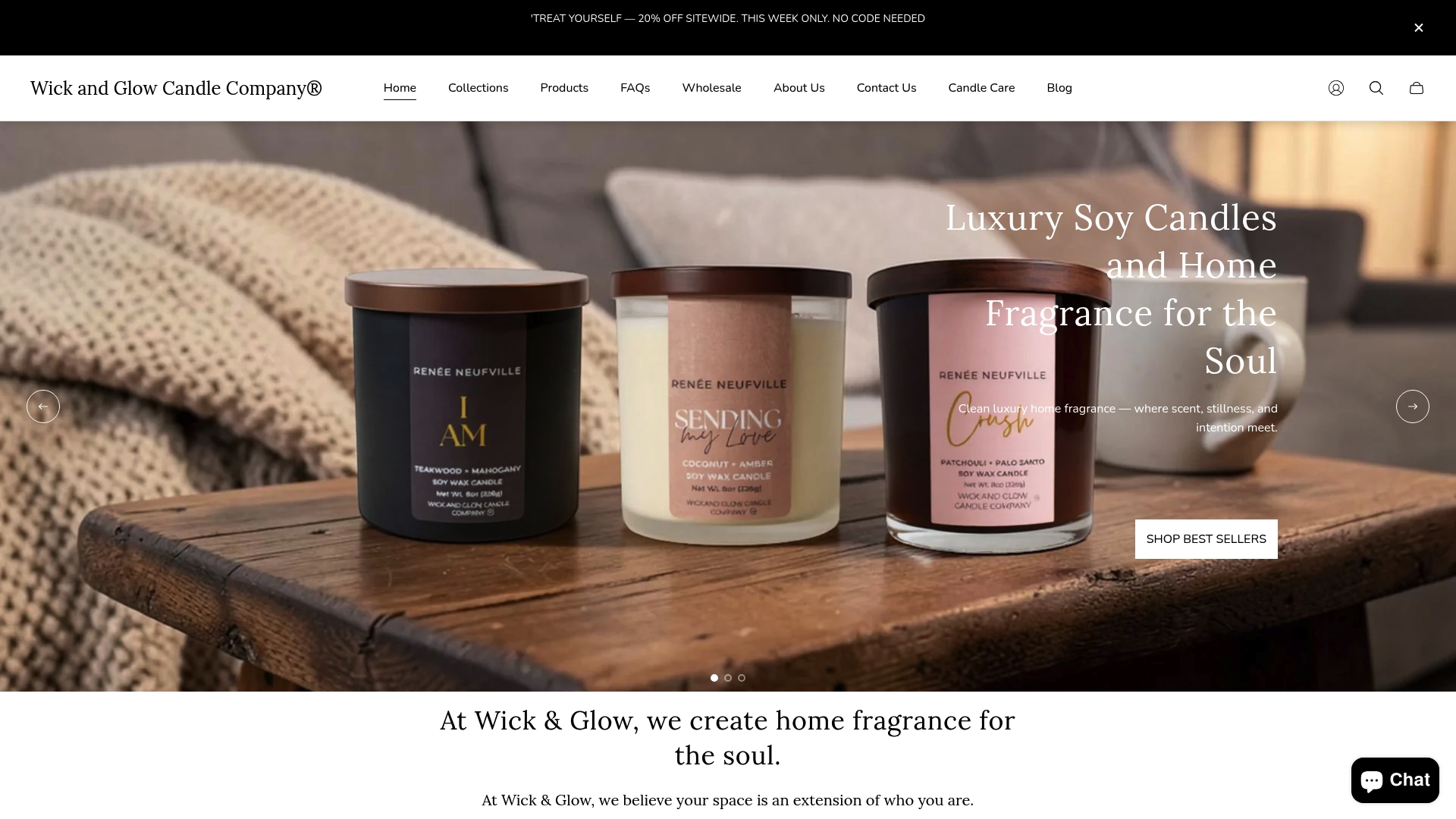
For a gift that fits nearly any relationship tier without guesswork, the Men Love Candles Too collection covers birthdays, housewarmings, and corporate gifting in one place. If you need something specific to a host or a new home, the Come Inside room and linen spray is sized and priced for exactly that occasion. Pick one, add a short note, and you’re done.
What is luxury gifting etiquette, in one sentence? It’s the set of social rules that judge a gift by how well it fits the relationship, occasion, and cultural context, not by its price tag.
Should you give luxury gifts to coworkers? Yes, but keep them modest, consumable, and free of anything that could read as personal favoritism, like a shared team gift set rather than an individual keepsake.
How do you know if a luxury gift is too much? If it creates a sense of obligation or discomfort rather than delight, it’s miscalibrated. Scale should match the relationship, not exceed it.
Is it rude to re-gift a luxury item? It’s risky. Only do it if the item is unopened, unpersonalized, and there’s no chance the original giver and new recipient will ever compare notes.
How should you thank someone for an unexpectedly expensive gift? React sincerely and specifically in the moment, then send a written note within a few days. Don’t spiral into apologizing for the gift’s size.

