For an instant, reliable citrus lift, a non-toxic room spray or a high-throw citrus soy candle is the fastest way to freshen a room. A spray works in seconds and gives you full control over intensity, while a candle builds steady scent over time and lasts longer per use. Either one delivers the mood-boosting citrus effect people are after. Once you know which format fits your space, the right notes and placement make it last.
TL;DR:
- Room sprays offer instant citrus scent that lasts less than two hours, ideal for entryways and quick odor removal.
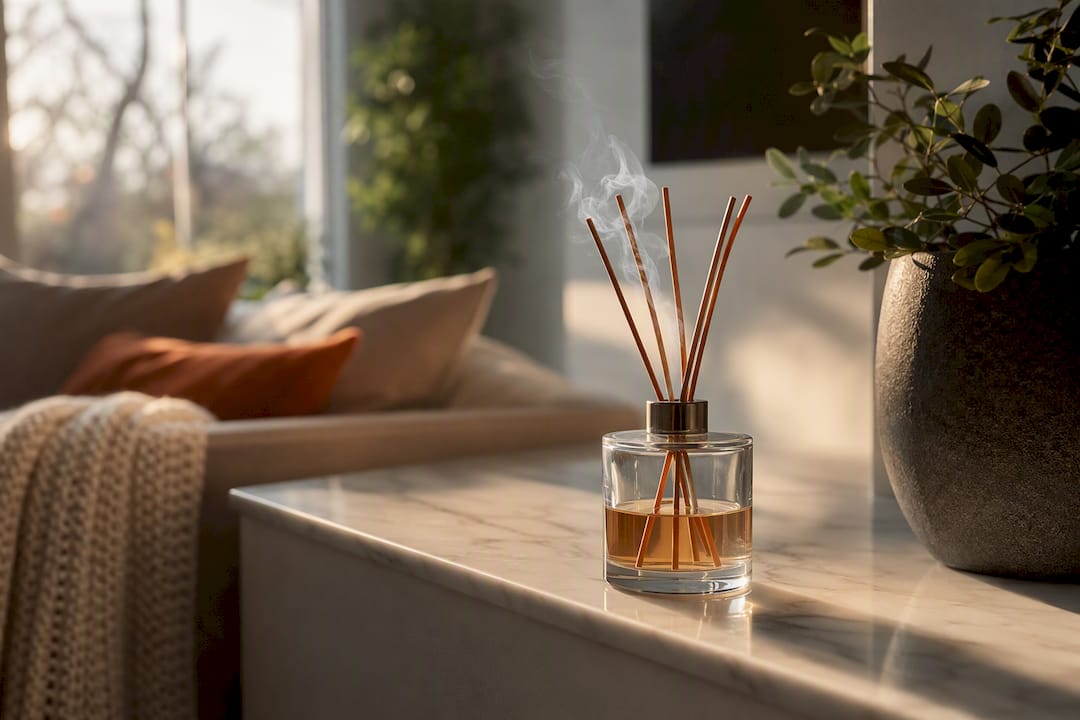
- Reeds diffusers provide several weeks of low-maintenance, steady scent suitable for bathrooms and hallways.
- Soy candles deliver hours of strong throw in living rooms and kitchens but may feel weaker in larger or poorly ventilated spaces.
- Pairing citrus with herbal or woody notes softens sharpness and creates more balanced, home-friendly fragrances.
- Check product labels for essential oil content, phthalate-free and vegan claims, and consider refill options for long-term savings.
Table of Contents
Every format handles citrus differently, and that difference matters more than the scent itself. Sprays give you an instant burst but fade within an hour or two, which makes them the right pick for quick fixes rather than all-day ambiance. Reed diffusers work the opposite way: slow, steady, and mostly hands-off, since the reeds pull oil up through natural capillary action and release scent gradually into the air. Candles sit in the middle. They need a flame and some attention, but a good citrus soy blend throws scent hard once the wax pool forms, and it keeps going for hours after you blow it out.
-
Room sprays: instant scent that typically lasts under a couple of hours, best for entryways and quick odor fixes before guests arrive.
-
Reed diffusers: low maintenance, lasts several weeks per set of reeds, best for bathrooms, hallways, and rooms you don’t want to monitor.
-
Soy candles: strong sustained throw, lasting several dozen hours per burn cycle depending on wick and wax quality, best for living rooms and kitchens.
-
Electric diffusers and plug-ins: consistent low-level scent with no flame, good for bedrooms and offices where safety or ventilation is a concern.
Room size changes the math. A citrus candle that fills a small bathroom will feel thin in an open-plan kitchen, and a reed diffuser that’s perfect for a hallway can vanish in a room with poor airflow. Match the format to the space before you match the scent.
Which Citrus Notes Work Best at Home
Not all citrus smells the same, and knowing the difference saves you from buying a scent that reads as cleaning-product sharp instead of inviting. Lemon is the brightest and most familiar, closer to fresh-cut fruit than candy. Bergamot is softer and slightly floral, the note that gives Earl Grey tea its signature lift. Grapefruit leans tart and a little bitter, with real energizing character. Yuzu is more complex, somewhere between mandarin and lime, and reads as more expensive than straightforward lemon. Orange is the warmest and roundest of the group, easiest to live with day after day.
A few blend combinations consistently work well in home settings:
- Lemon + basil for a kitchen that needs to smell clean without smelling like a cleaning product.
- Grapefruit + sage for a home office, since the herbal note tempers the sharpness and keeps it from feeling artificial.
- Yuzu + thyme for a living room blend that reads sophisticated rather than sweet.
- Orange + cedar for an evening-friendly citrus that doesn’t feel too energetic for wind-down hours.
- Bergamot + light florals for a bathroom that wants softness over brightness.
Pairing citrus with herbal or woody notes like sage, thyme, and cedar softens the sharpness and makes the blend feel more balanced and home-friendly rather than like an air freshener. Straight citrus on its own can read as harsh in enclosed spaces, especially at full strength.
Pro Tip: If a citrus scent feels too sharp in a small room, it’s rarely the citrus at fault. It’s usually the lack of a base note. Look for blends with a hint of wood, musk, or vanilla underneath, and the same citrus will feel warmer without losing its freshness.
Where Citrus Fragrance Works Best in Your Home
Citrus scents are strongest as daytime and high-traffic fragrances rather than bedside relaxation blends. Research on aromatherapy consistently associates citrus notes like grapefruit, bergamot, and lime with mood-lifting and energizing effects, which is why they perform best where people actually move through and think, not where they’re trying to fall asleep.
-
Entryway: a citrus spray by the door gives visitors an immediate, clean first impression without lingering for hours.
-
Kitchen: citrus neutralizes cooking odors fast, and a candle with real throw can outcompete lingering food smells.
-
Home office: citrus is one of the few scent families linked to mental clarity and alertness during work hours, which pairs with other productivity-driving environmental cues in a home workspace.
-
Bathroom: a reed diffuser handles humidity better than a candle and refreshes the space continuously.
To control strength, adjust the mechanics rather than switching scents. Fewer reeds mean a lighter diffuser throw. A quick two-second spray beats a long spray for testing intensity before committing. Candles placed farther from foot traffic feel less overpowering than ones set at nose height on a low table. If a room’s citrus scent has gone flat, a fresh spray layer often revives it faster than relighting a candle.
What to Check Before Buying a Citrus Home Fragrance
Vague labeling is the biggest trap in home fragrance shopping. A product that just says “fragrance” on the ingredient list could mean synthetic compounds, essential oils, or a mix of both, and there’s no way to tell without more specific labeling. Look for products that explicitly state phthalate-free and vegan formulation, since those are concrete claims a brand has to stand behind rather than vague marketing language.
- Check for a clear essential-oil statement rather than a generic “citrus fragrance” listing.
- Confirm phthalate-free and vegan claims are stated outright, not implied.
- Compare burn time or spray count against price to calculate actual cost per use.
- Look for refill options on diffusers, since refillable reeds cost less over time than replacing the whole unit.
- Check for allergen notes if anyone in the household has sensitivities to essential oils.
Mainstream sprays often lead with instant odor-fighting claims and formulation details like the absence of parabens, while natural-focused brands tend to foreground essential-oil sourcing and mood-lifting positioning. Neither claim is inherently better, but reading which one a brand emphasizes tells you what you’re actually paying for. A $12 candle that burns for 15 hours costs more per hour than a $30 candle rated for 60 hours, even though the sticker price looks cheaper. Refillable reed diffusers usually win the long-game math once you’ve bought the vessel once.
Wick & Glow’s Citrus Lineup and What Sets It Apart
Wickandglow builds its citrus offerings around the same clean-ingredient standards covered above, with formats that match the placement guidance already outlined. The Come Inside Room and Linen Spray works as the instant-fix format for entryways and linens, formulated vegan and phthalate-free rather than relying on a vague “fragrance” listing. The Men Love Candles Too collection includes citrus-forward soy blends built for sustained throw in living spaces and kitchens. The Scenting My Love Trio gives you three complementary scents in one set, useful for testing citrus alongside warmer notes without committing to a single full-size candle.
- Room spray for instant, controllable citrus bursts near entryways and linens.
- Soy candle collection for long-burning citrus throw in shared spaces.
- Trio gift set for sampling multiple blends, including citrus paired with deeper base notes.
Every Wick & Glow fragrance ships with a curated playlist, so the scent and the mood arrive together instead of as separate decisions you have to make yourself.
That playlist pairing turns a citrus candle from background scent into an actual routine cue, the kind of thing that makes a morning kitchen or a home office feel intentional rather than incidental.
Citrus Sensitivities: What to Know Before You Light Up
Citrus oils are generally well tolerated, but they’re not risk-free for everyone. Bergamot and other cold-pressed citrus oils contain compounds that can cause skin irritation with direct contact, which is a separate concern from inhaling scent in a room. That risk applies mainly to topical use, not to a candle burning across the room or a diffuser on a shelf.
Airborne sensitivity is a different issue. People with asthma, migraine history, or general fragrance sensitivity sometimes react to any strong scent, citrus included, especially in small or poorly ventilated rooms. The fix is usually simple: crack a window, use less product, or switch from a candle to a reed diffuser, which releases scent more gradually than an open flame heating wax.
Pets are worth a separate mention. Cats in particular process certain citrus compounds poorly, and concentrated essential oils left where a cat could lick them pose a real risk. A citrus candle or spray used normally in a room isn’t the same exposure level as oil applied directly, but households with cats should keep concentrated oils and diffuser reeds out of paw’s reach.
If anyone in the home has a known sensitivity, start with a lighter format like a spray, test it in one room, and watch for reactions before layering in a candle or diffuser on top.
Why Clean Ingredients Matter More Than Scent Strength
The home fragrance industry has trained people to shop for throw and longevity first, ingredients second. That priority is backward. A candle that fills a room but relies on an unlabeled “fragrance” blend is a worse buy than a quieter one that tells you exactly what’s in it, phthalate-free and vegan, stated plainly rather than implied through green packaging.

The bigger blind spot is treating citrus as a one-note category. Straight lemon or straight grapefruit at full strength is a different experience than citrus layered with sage, cedar, or a soft base note, and most shoppers never get past the “citrus candle” label to ask what’s actually supporting it. That’s where the real quality gap sits, not in throw distance or burn-time claims on the box.
Prioritize the label first: phthalate-free, vegan, and a real ingredient statement instead of a generic fragrance line. Then pick the format that matches how you actually use the room, not the one with the biggest marketing claim about strength. A spray tested for two days beats a full-size candle bought on a guess.
— B
Bring Citrus Home Fragrance Into Your Space With Wick & Glow
If the formats and blends above have you ready to shop, Wickandglow gives you clean-ingredient citrus options without the guesswork of a vague “fragrance” label. Every candle, spray, and diffuser is vegan and phthalate-free, built with the same ingredient transparency this guide recommends checking for, and paired with a curated playlist so the scent becomes part of an actual routine instead of background noise.
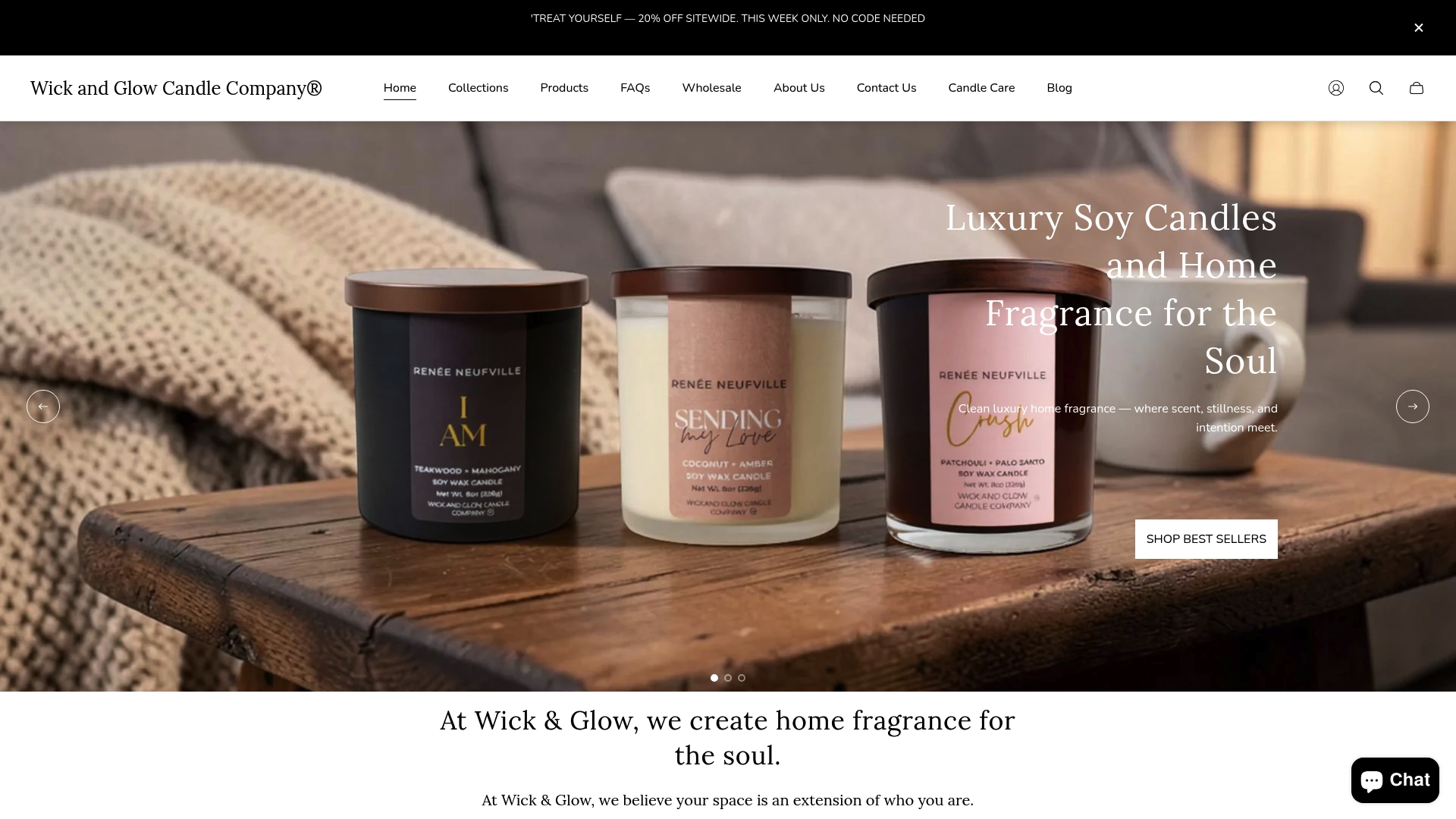
For an instant citrus fix in an entryway or linen closet, the Come Inside Room and Linen Spray delivers the quick, controllable burst this guide covered in the format section. Want to sample a few blends before committing to a full-size candle? The Scenting My Love Trio lets you test complementary scents side by side. Browse the Men Love Candles Too collection for citrus-forward soy candles built for sustained throw in kitchens and living rooms, and pick the format that matches how you actually plan to use the room.
Sources
Recommended


